

Debussy: Preludes (Volume I): Piano Book
By Claude Debussy
Level: Advanced
Item: 00-PK-0003912

$12.99
Pickup currently not available
Buy Extra Parts (Digital PDF Download)
| Product | Price | Quantity |
|---|---|---|
| Debussy: Preludes (Volume I) | $0.99 | |
| Debussy: Preludes (Volume I) | $0.99 | |
| Debussy: Preludes (Volume I) | $0.99 | |
| Debussy: Preludes (Volume I) | $0.99 | |
| Debussy: Preludes (Volume I) | $0.99 | |
| Debussy: Preludes (Volume I) | $0.99 | |
| Debussy: Preludes (Volume I) | $0.99 | |
| Debussy: Preludes (Volume I) | $0.99 | |
| Debussy: Preludes (Volume I) | $0.99 | |
| Debussy: Preludes (Volume I) | $0.99 | |
| Debussy: Preludes (Volume I) | $0.99 | |
| Debussy: Preludes (Volume I) | $0.99 |
Parts Added to Cart!
Related Items
Preludes, Volume I: Piano Book |
$12.95
|
View |
Description
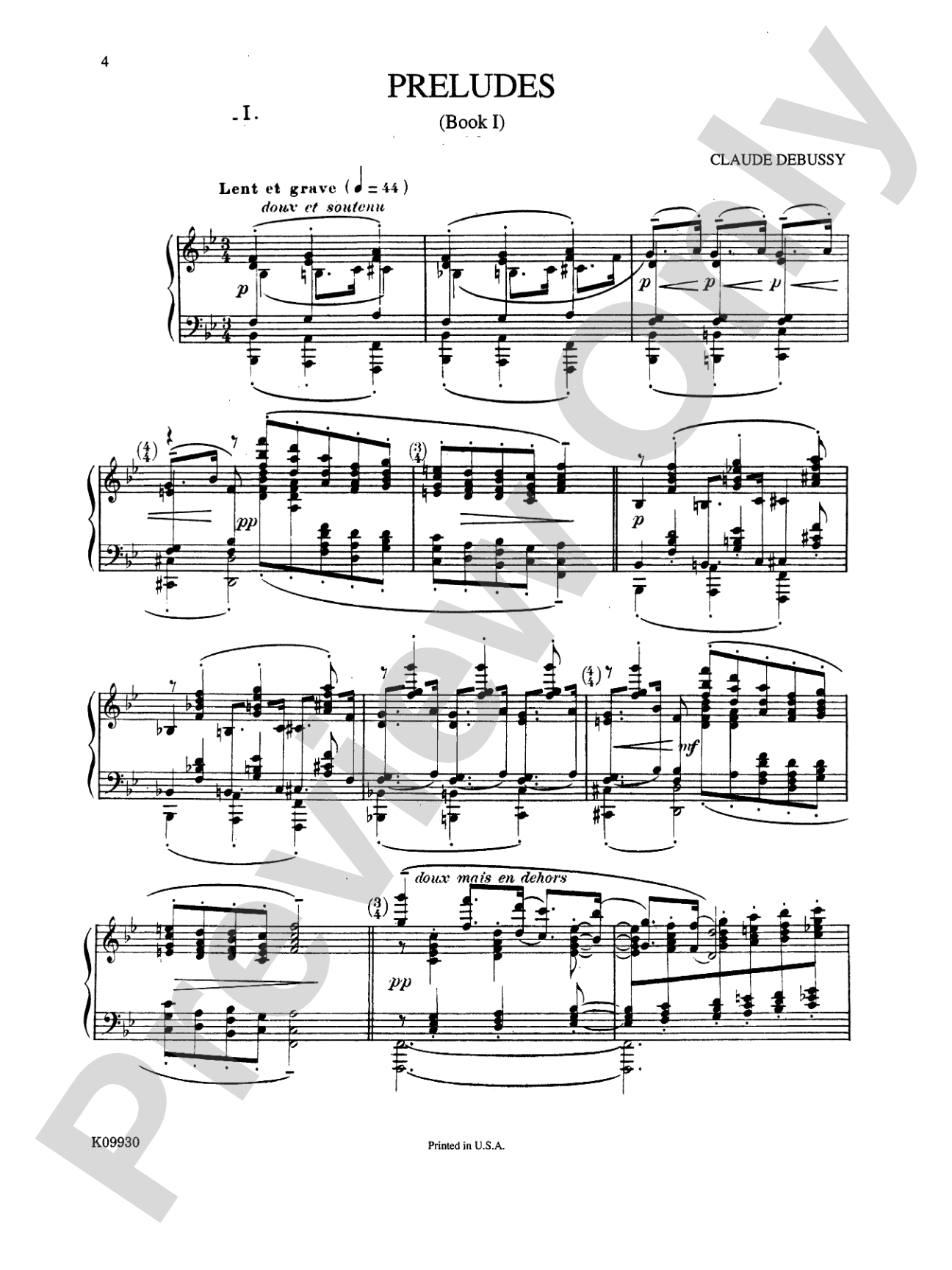
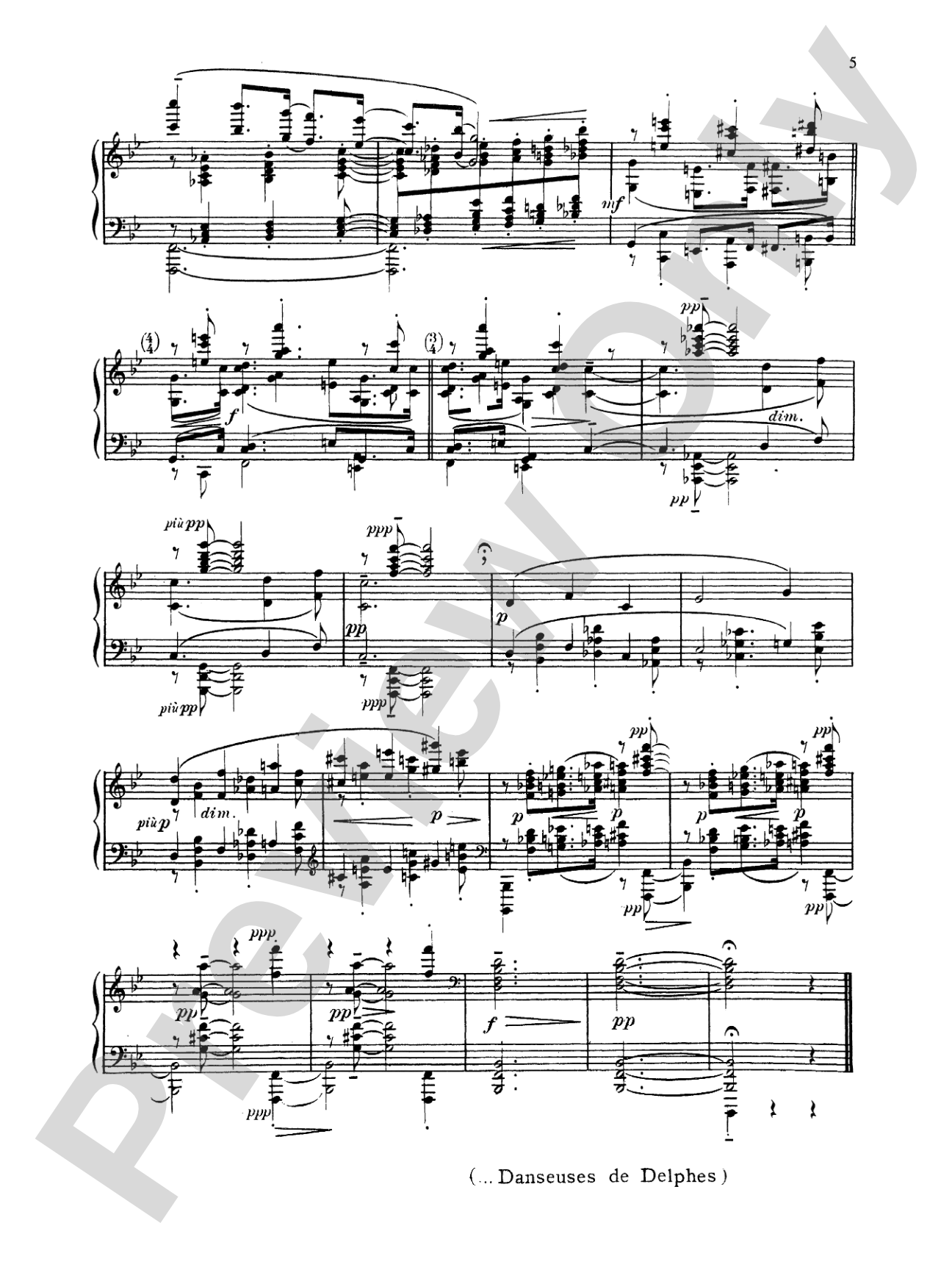
A collection of Piano Preludes by Claude Debussy. Songs: Danseuses de Delphes * Voiles * Le Vent dans la plaine * Les sons et les parfums tournent dans l'air du soir * Les collines d'Anacapri * Des pas sur la neige * Ce qu'a vu le vent d'Ouest * La fille aux cheveux de lin * La Sérénade interrompue * La Cathédrale engloutie * La Danse de Puck * Minstrels.


Don't just read it, hear it, play along with it, and watch your students grow with it. In MakeMusic Cloud, Debussy: Preludes (Volume I): Piano Book comes alive with professional accompaniment, adjustable tempo, and built-in practice tools that turn solo practice into real progress.
Open in the Player
Jump straight in and assign it today.
Start Your Free Trial
Open this title and explore the full library in minutes.
Sample Audio
No sample audio found.
Sample Video
No sample videos found.
Additional Details
Series:
Kalmus Edition
Publisher:
Alfred Music
Page Count:
56
SKU:
00-PK-0003912
More about this title
About the Composer: Claude Debussy
Claude Debussy (1862, 1918) fundamentally changed how composers thought about harmony, timbre, and form. Rather than follow the rigid structures of the Romantic tradition, he pursued sound as an end in itself, building pieces from color and suggestion rather than narrative or thematic development. His innovations in harmony and his fascination with non-Western music and visual art made him the architect of musical Impressionism.
For piano students and teachers, Debussy's influence is inescapable. His works demand a complete rethinking of technique: pedal work becomes compositional, voicing requires transparency and blending, and rhythm loosens into something fluid and breathing. Teaching Debussy means teaching students to listen differently and to see the piano not as a percussion instrument but as an orchestral palette.
Why we love this
These twelve preludes demand everything from an advanced pianist: textural clarity, tonal imagination, secure pedal technique, and the maturity to resist rhetorical excess. They reveal themselves through repeated engagement, and students who work through this collection develop a sophisticated ear for how harmony creates meaning without relying on traditional structural landmarks.
What to expect
These preludes float between the concrete and the dreamlike. A title conjures an image or scene, dancers, wind, snow, a sunken cathedral, but the music rarely describes it directly. Instead, fragments of melody, harmonic color, and shifting textures create impressions that linger and transform.
Who it's for
Pianists who have mastered Romantic-era technical requirements and are ready to engage with 20th-century harmonic language and coloristic writing. This collection serves advanced students preparing for conservatory auditions, adult amateur pianists seeking substantial repertoire, and teachers who need authentic editions of essential modernist works.
How to get the most out of it
- Approach the score as notation of sound rather than motion. Mark color and textural goals before attending to tempo; let the musical atmosphere guide your pacing rather than imposing a predetermined speed.
- Differentiate between the pedal's role in creating sustained resonance (as in 'La Cathédrale engloutie') and its role in blending disparate registers (as in 'Voiles'). Each piece asks for a distinct pedaling philosophy.
- Identify the harmonic anchor points in each prelude; they are often obscured by surface activity. Knowing where stability lives helps you shape phrases with confidence even when the harmonic language feels unstable.
- Record yourself regularly and listen for clarity of individual voices within the texture. Advanced Debussy often sacrifices apparent simplicity for compositional sophistication, and clarity reveals the architecture.
How to use it
Program individual preludes or small groups of them on recitals where you want to establish artistic maturity and versatility. Pairing one or two with Romantic-era showpieces creates strong contrasts. They also work brilliantly as the centerpiece of a thematic program exploring French impressionism or 20th-century piano literature.
Skills your students will build
- Pedal techniques for tonal blending, resonance control, and color creation
- Reading whole-tone and pentatonic harmonic language
- Voice leading within impressionistic textures where traditional part-writing rules do not apply
- Tonal imagination and the ability to shape phrasing through color rather than dynamic gesture
- Interpretive independence and score study skills that develop musical judgment beyond notation