
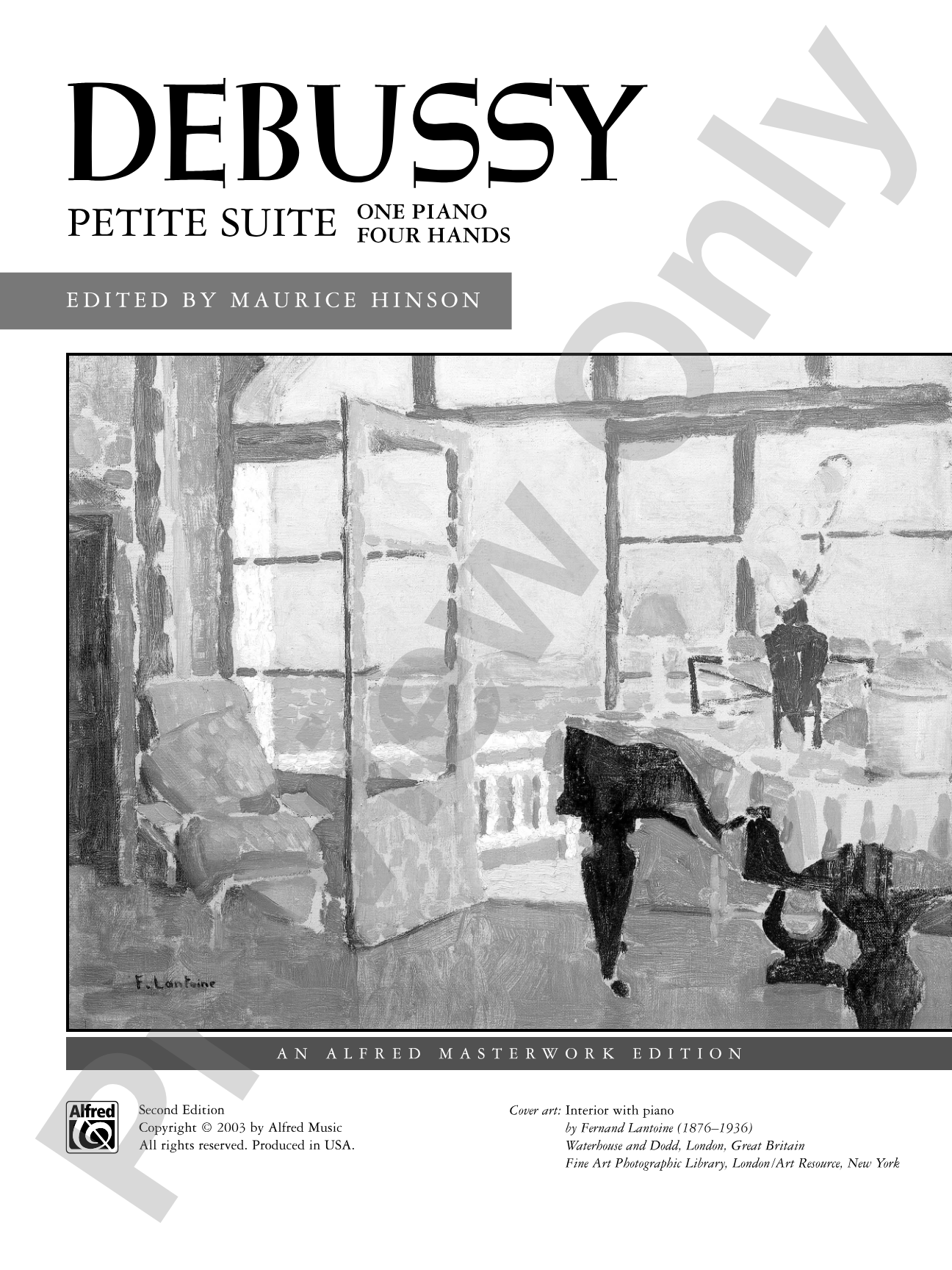
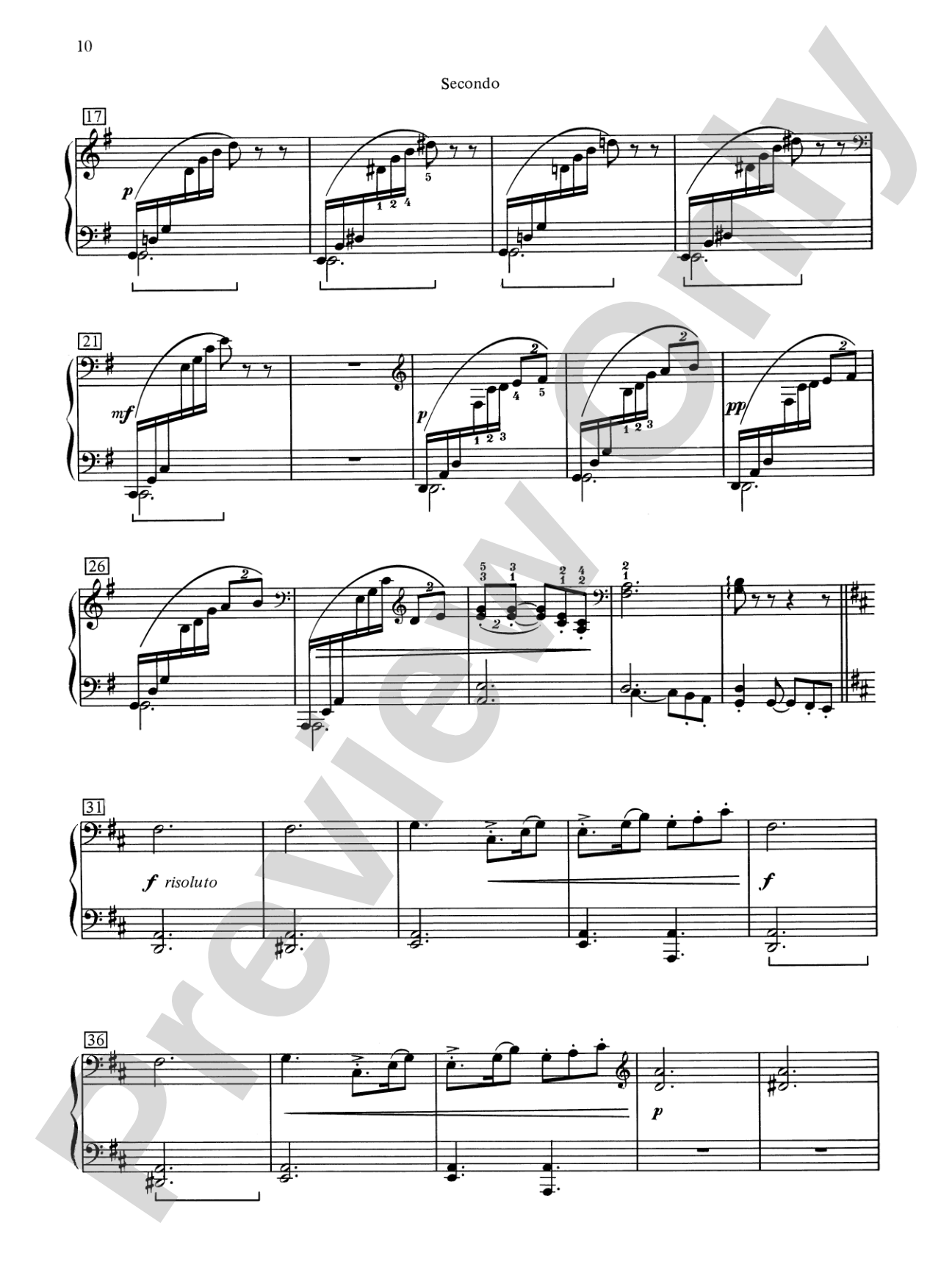
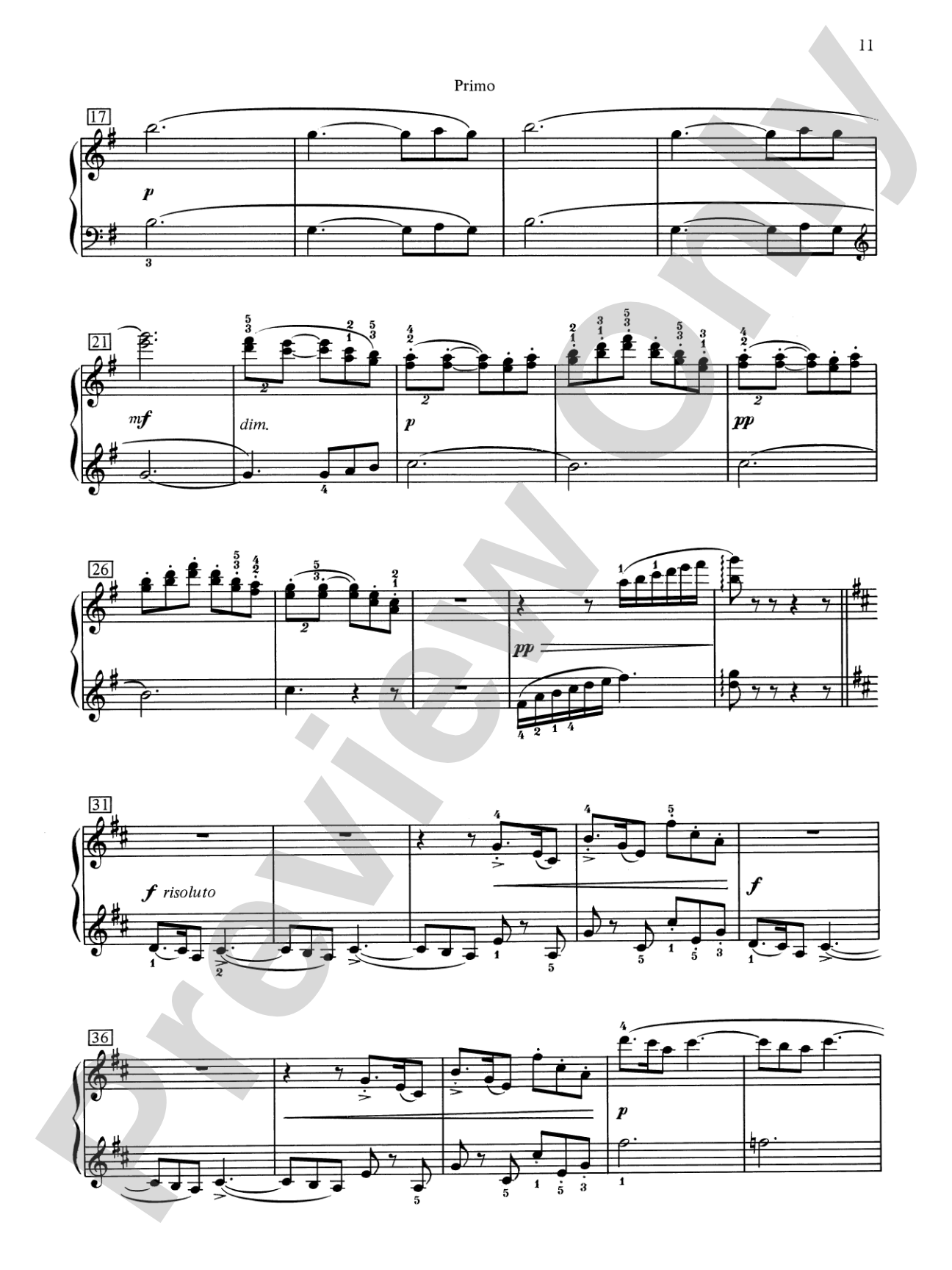

Debussy: Petite Suite - Piano Duet (1 Piano, 4 Hands): Piano Duets & Four Hands
By Claude Debussy / ed. Maurice Hinson
Level: Intermediate / Late Intermediate
Item: 00-PB-0000615
$8.95
Pickup currently not available
Related Items
Debussy: Petite Suite: Piano Duet (1 Piano, 4 Hands) Book |
$8.95
|
View |
Description
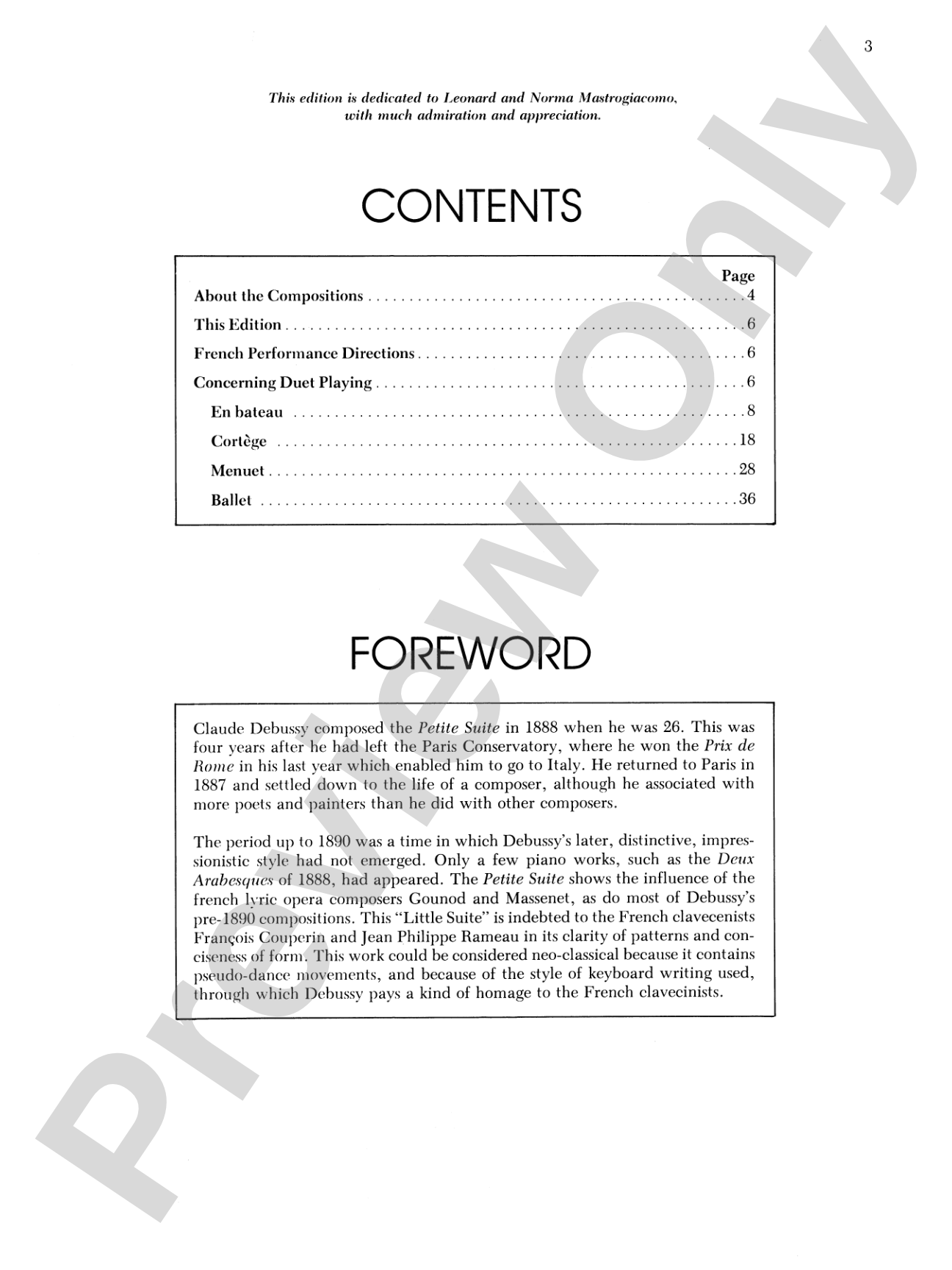
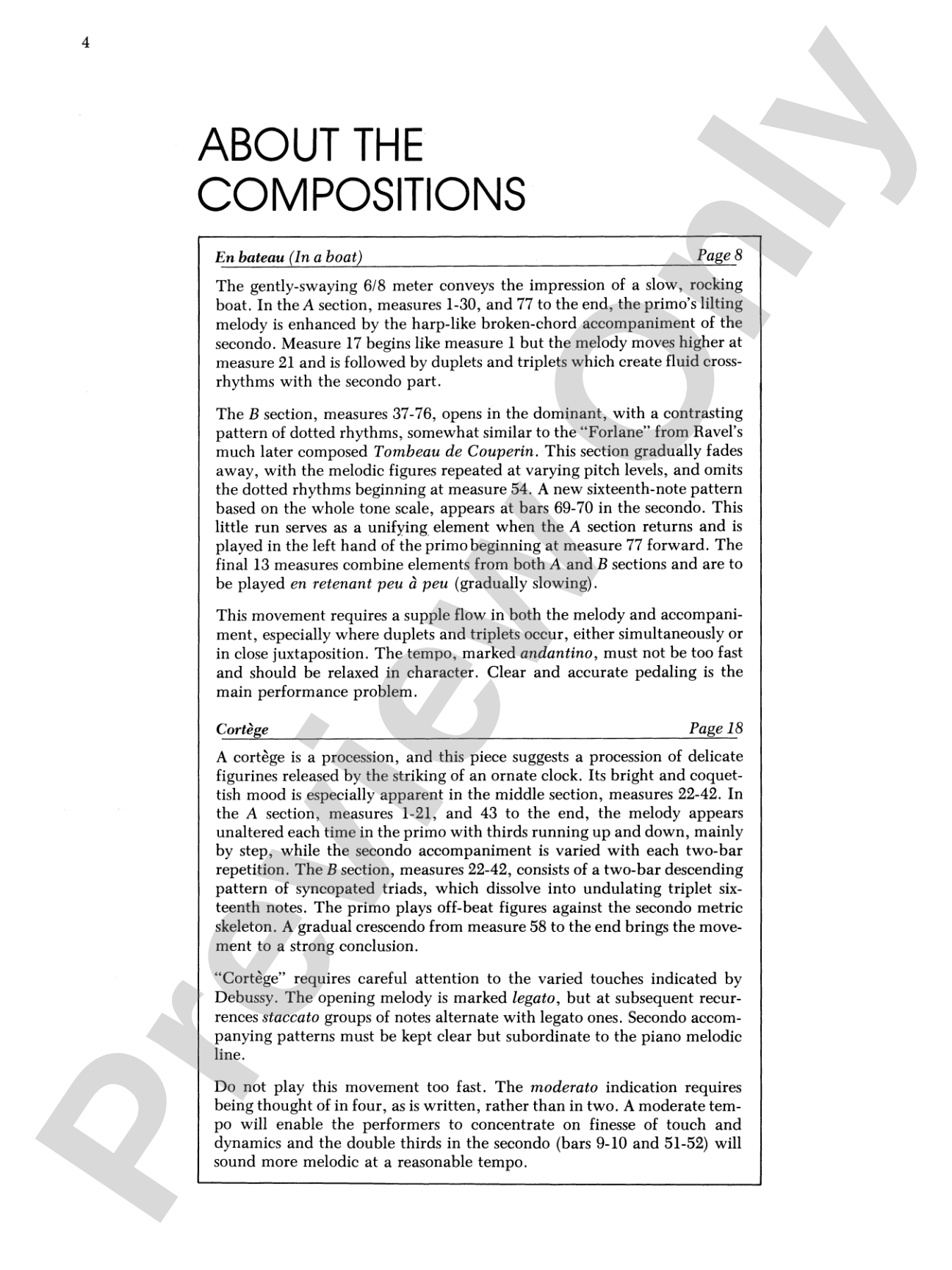
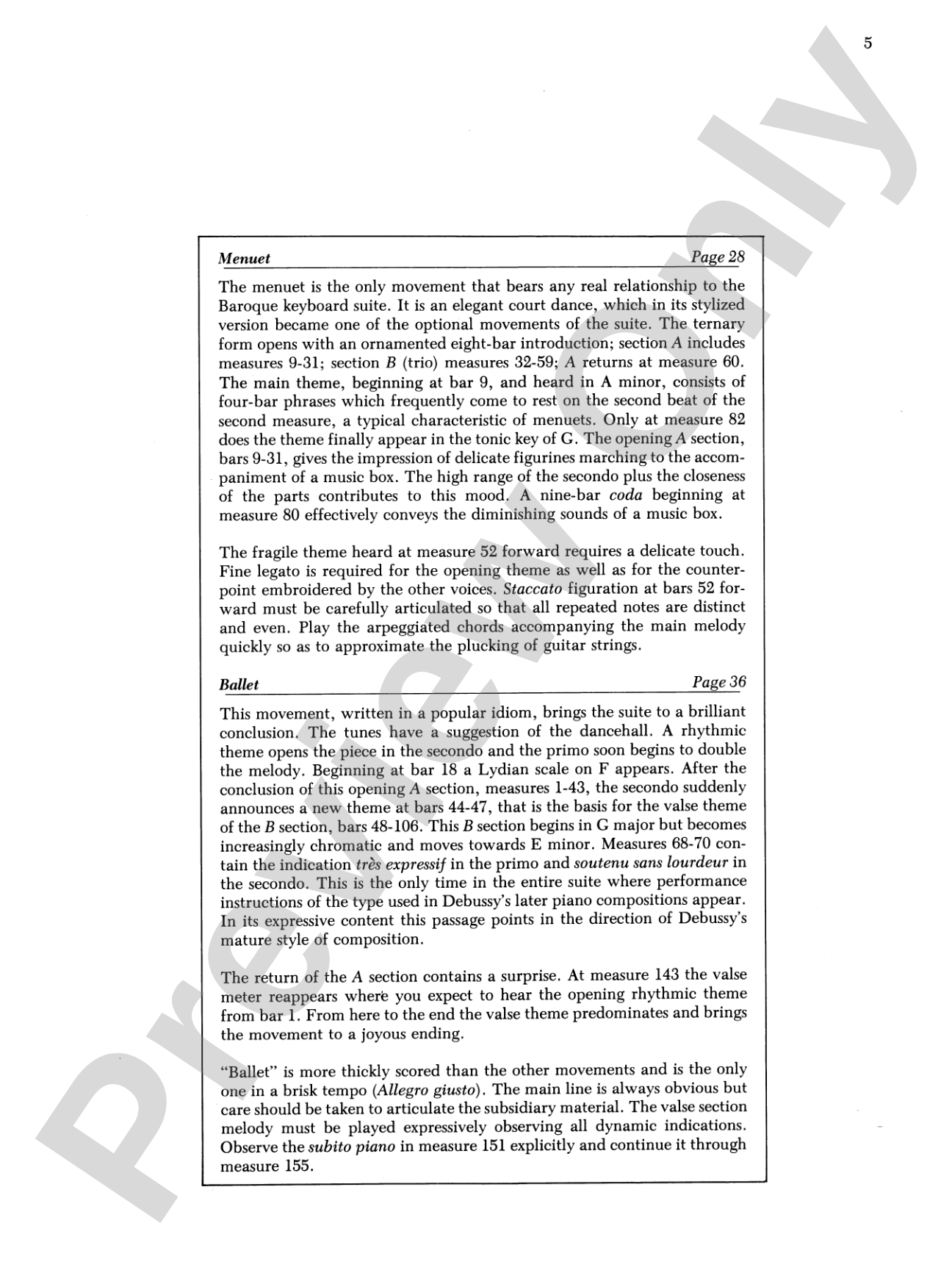
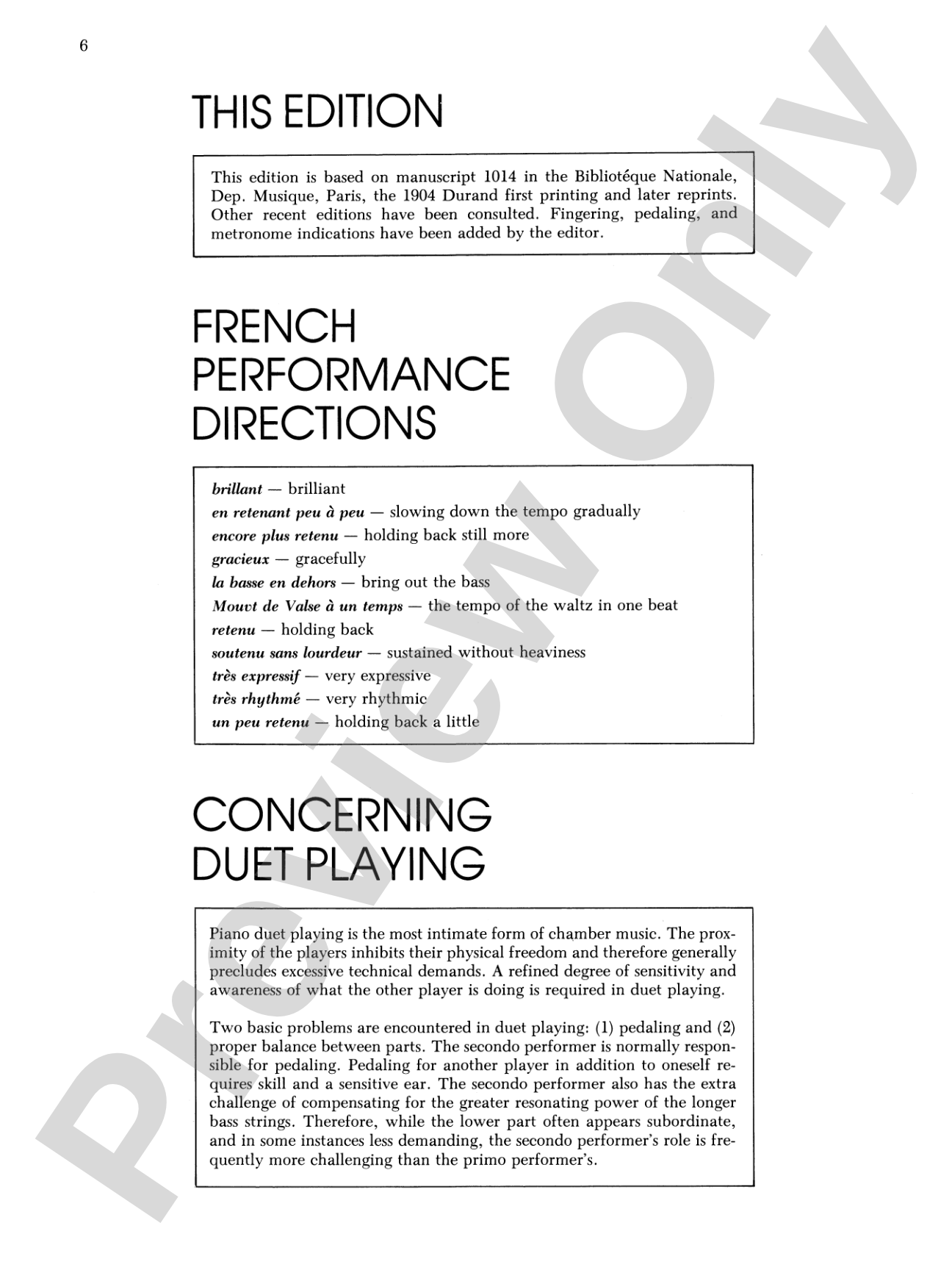
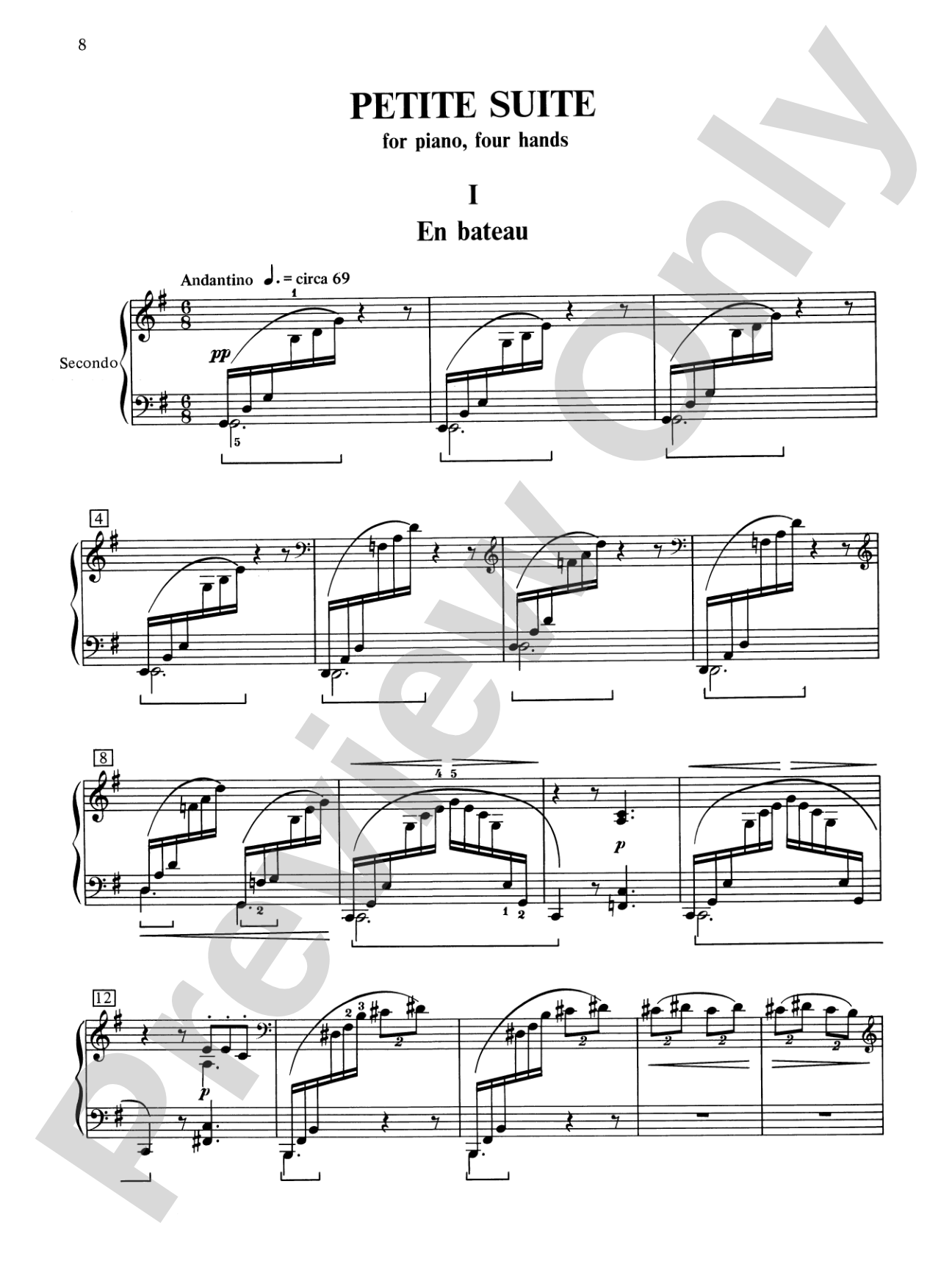
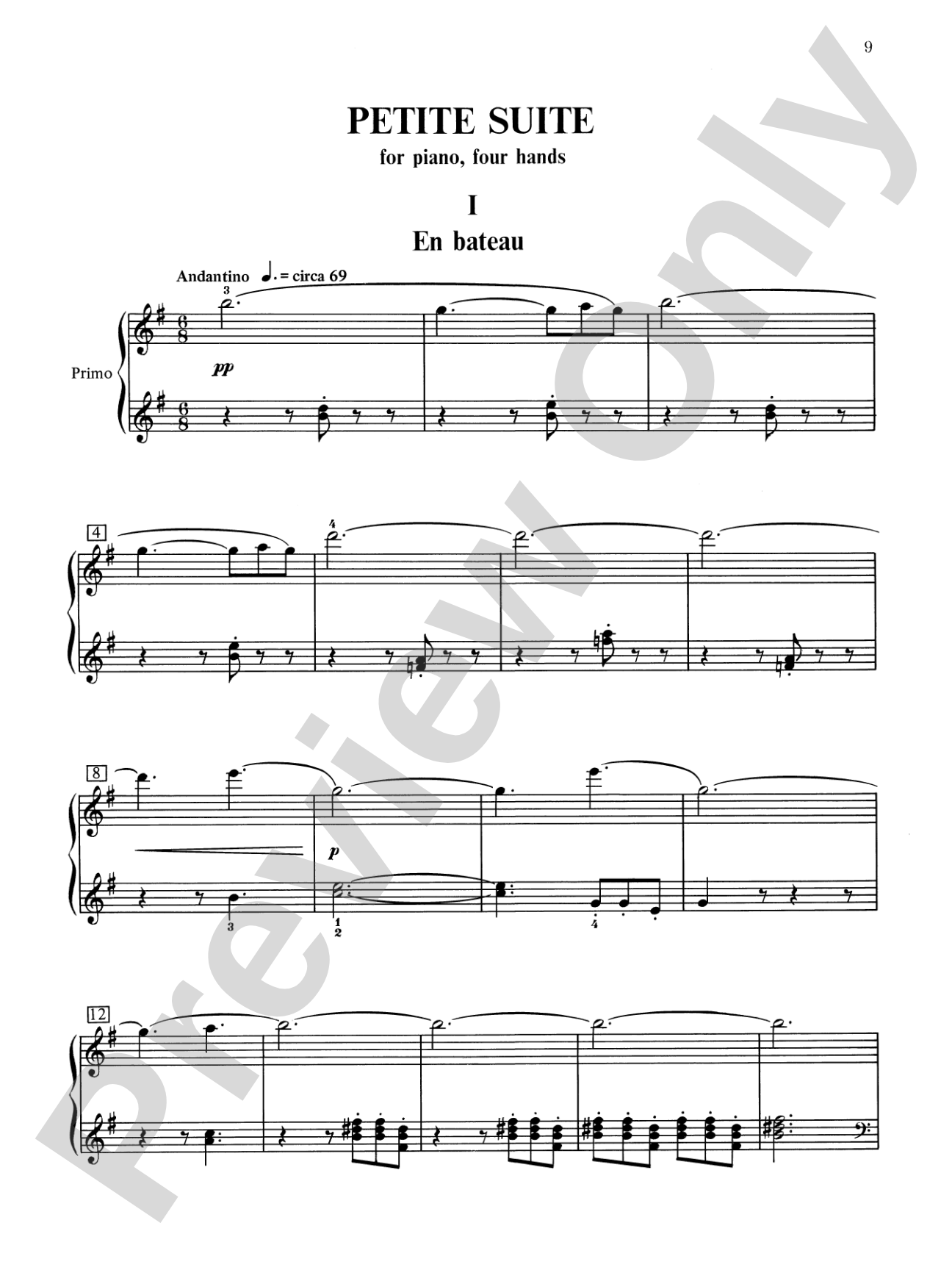
Consisting of four movements, this work for one piano/four hands shows the influence of the French lyric opera composers Gounod and Massenet. Debussy composed this work before he had fully developed his Impressionistic style, and with its clarity of patterns and conciseness of form, Debussy pays a kind of homage to the French clavecinists. Dr. Hinson has included translations of French terms, notes on performance and a discussion of the duet performance. A Federation Festivals 2024-2028 selection.


Debussy: Petite Suite - Piano Duet (1 Piano, 4 Hands): Piano Duets & Four Hands isn't in MakeMusic Cloud just yet...but it could be. Let us know you'd like to see it, and you'll help shape what comes next. In the meantime, start a free trial and dive into thousands of interactive titles your students can play along with today.
Request This Title
Tell us you want it.
Start Your Free Trial
Explore everything that's ready to play right now.
Sample Audio
No sample audio found.
Sample Video
No sample videos found.
Additional Details
Series:
Alfred Masterwork Edition
Publisher:
Alfred Music
Page Count:
48
SKU:
00-PB-0000615
More about this title
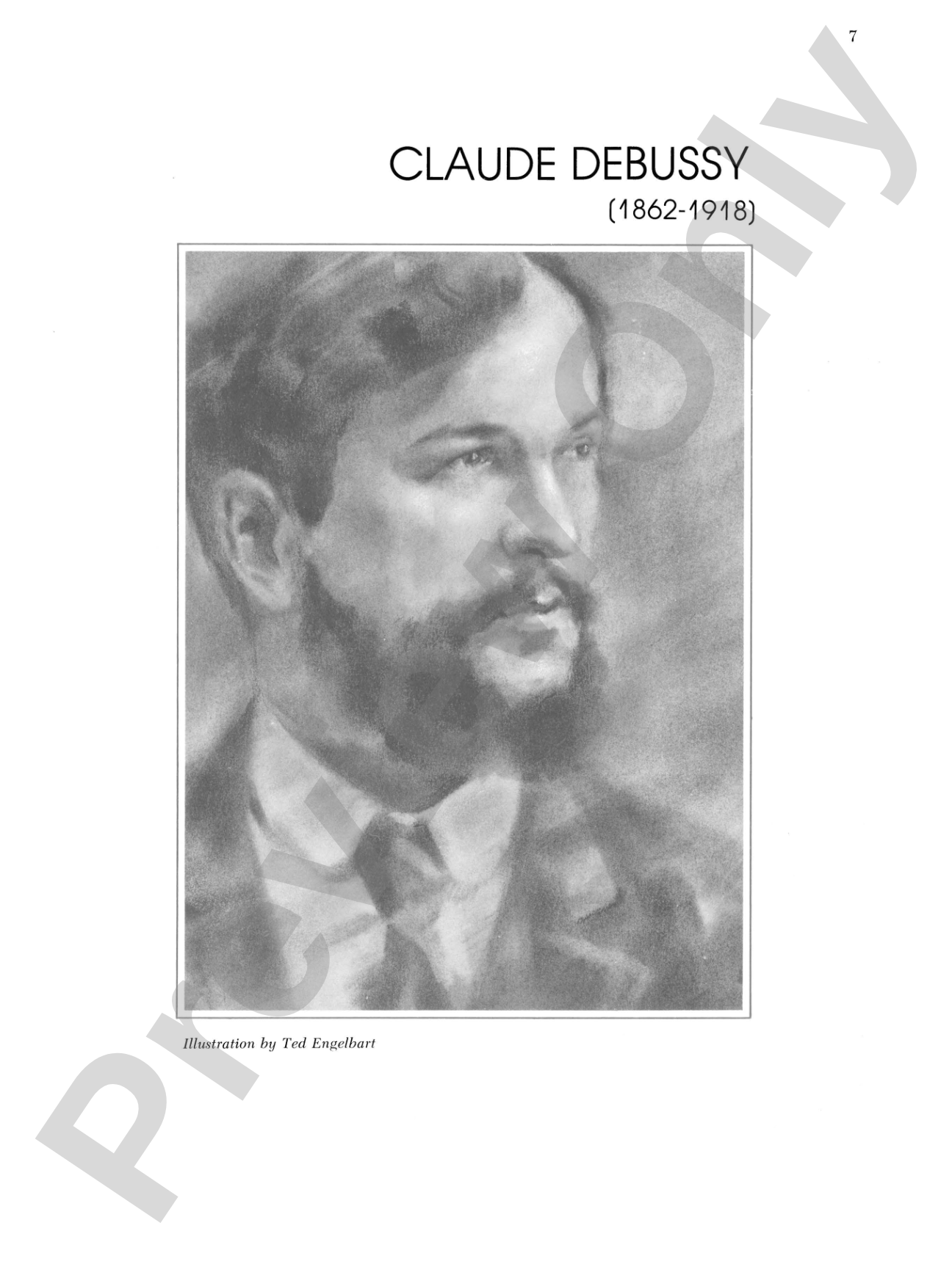
About the Composer: Claude Debussy
Claude Debussy (1862, 1918) revolutionized how composers thought about harmony, texture, and orchestral color. His early training at the Paris Conservatoire grounded him in classical forms, but he spent much of his career pushing against those boundaries, drawing inspiration from non-Western music, visual art, and the natural world.
Why we love this
Petite Suite occupies a fascinating moment in Debussy's output: it has the formal clarity and melodic directness of the Romantic tradition he inherited, yet the harmonic language and delicate orchestral thinking that would define his mature style. For intermediate pianists, this means a work that rewards careful listening to color and balance without demanding the technical fireworks of his later piano works.
What to expect
Graceful and gently wistful, with moments of subtle sparkle. The work unfolds like a conversation between two pianists who understand each other's musical language; there are no loud proclamations, just carefully placed colors and a flowing sense of line that makes two pairs of hands sound like one voice.
Who it's for
Intermediate to late intermediate pianists ready to tackle four-hand repertoire with real musical substance. This works equally well for young duet partners preparing for festivals or mature adult students seeking French masterworks at a manageable technical level.
How to get the most out of it
- Balance the primo and secondo parts as equal voices rather than treating the secondo as accompaniment; Debussy's writing asks both players to shape phrases and breathe together.
- Pay attention to the French character marks and dynamics Debussy specifies; these small gestures define the work's elegance more than any technical display.
- Lean into the harmonic movement between the two parts; coordinate hand positions so sudden shifts in color land cleanly together.
- Let the four hands create a unified sound rather than two separate lines; this clarity of ensemble will expose any rhythmic unevenness, which is your friend in rehearsal.
How to use it
Program this during a duet-focused concert or festival season, where intermediate four-hand partners can showcase their ability to balance and listen. It also pairs beautifully in a recital exploring French keyboard traditions, sitting comfortably between Bach and the Impressionist giants.
Skills your students will build
- Ensemble balance and voice independence within a duet texture
- Harmonic hearing and awareness of chromatic movement in Impressionist language
- Pedal coordination between two players at the same instrument
- Expressive control through subtle dynamic shaping rather than dramatic contrast
- Collaborative rehearsal skills: cueing, breathing, and unified phrasing across two parts