
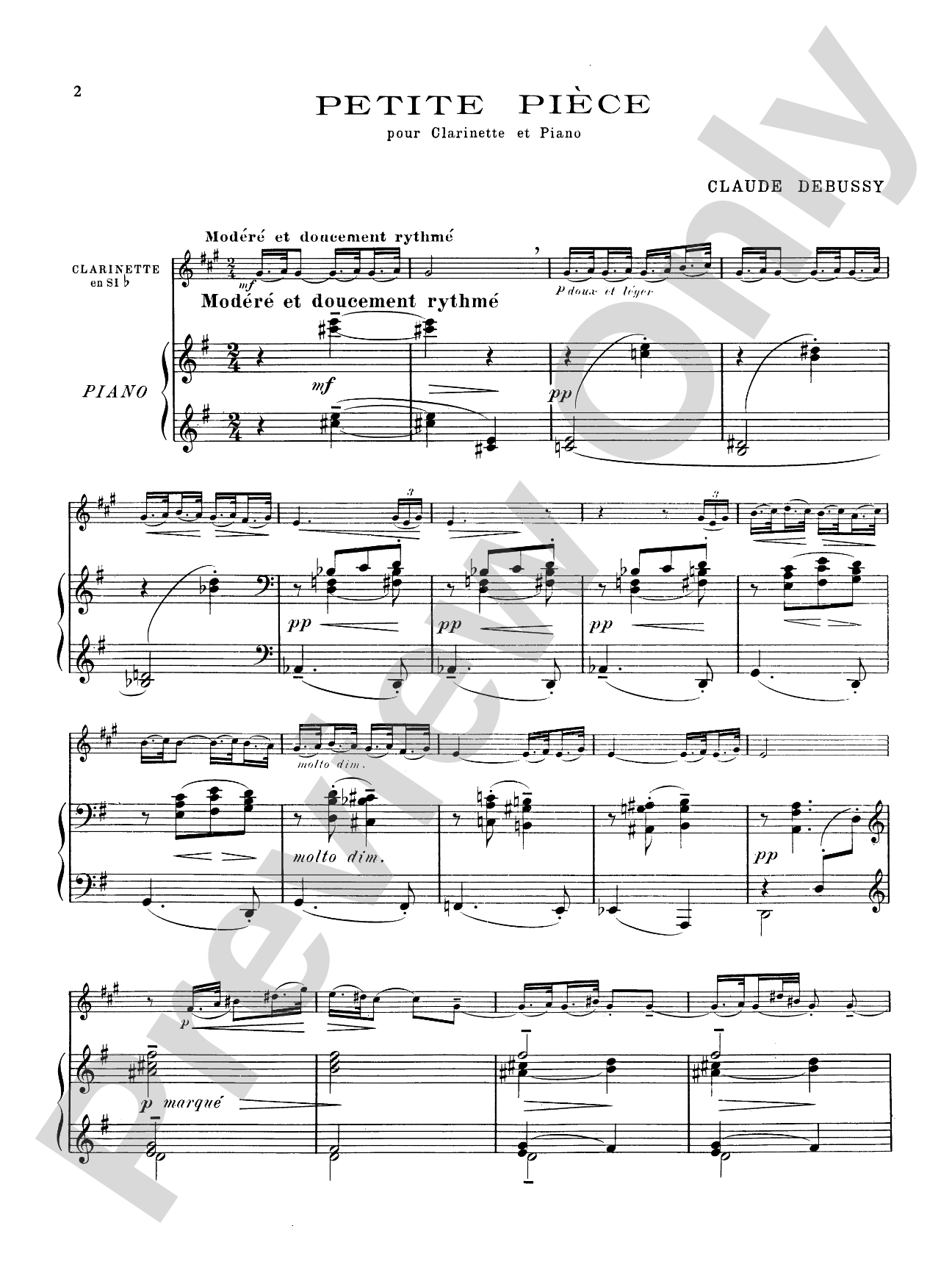
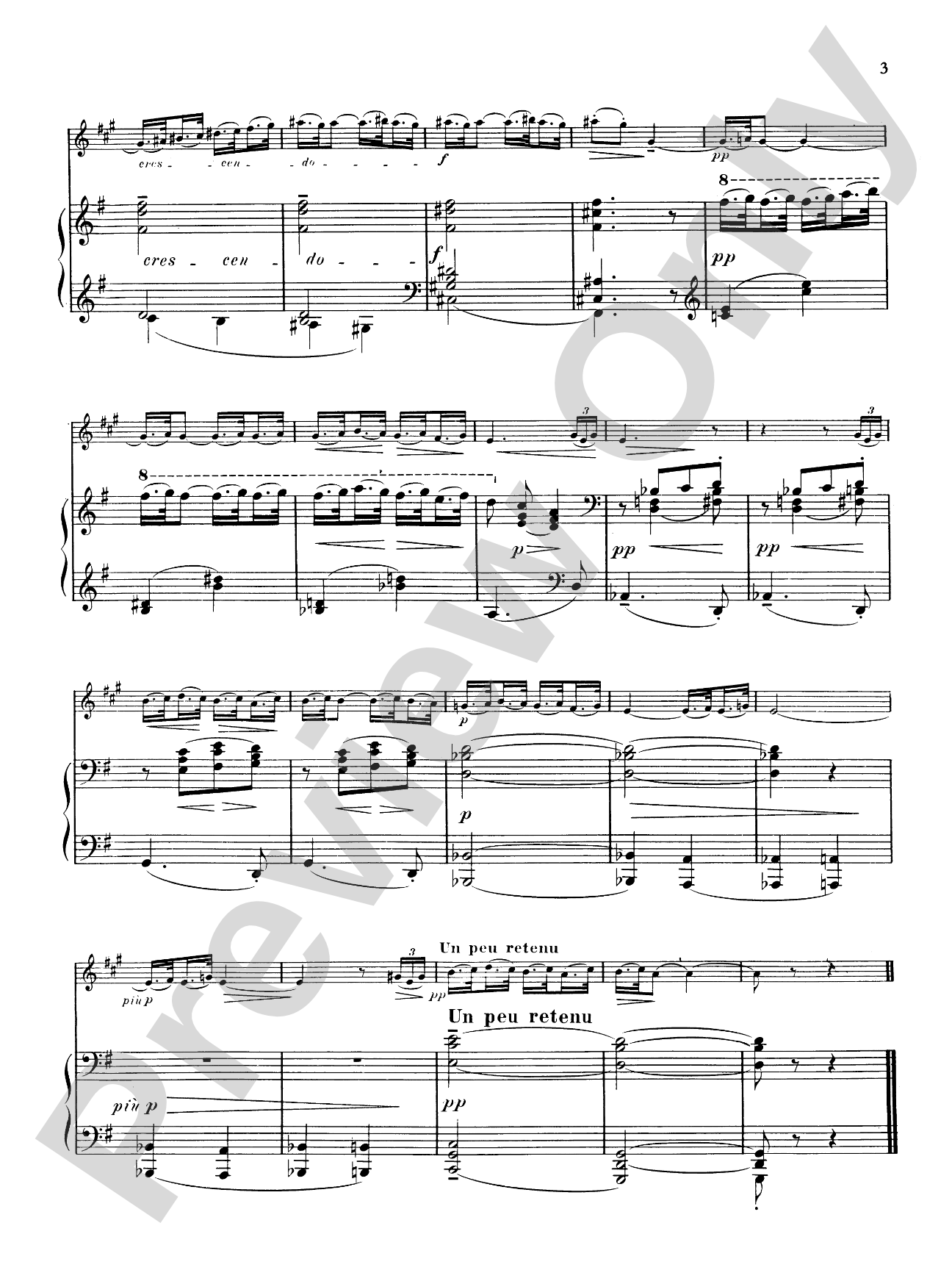

Debussy: Petite Pièce and Prèmiere Rhapsodie: Clarinet Part(s)
By Claude Debussy
Item: 00-PK-0003915

$9.99
Pickup currently not available
Buy Extra Parts (Digital PDF Download)
| Product | Price | Quantity |
|---|---|---|
| Debussy: Petite Pièce and Prèmiere Rhapsodie | $3.99 | |
| Debussy: Petite Pièce and Prèmiere Rhapsodie | $3.99 |
Parts Added to Cart!
Related Items
Petite Piece and Premiere Rhapsodie: Clarinet Part(s) |
$9.99
|
View |
Description
Expertly arranged B-Flat Clarinet Solo by Claude Debussy from the Kalmus Edition series. This is from the Impressionistic era.


Don't just read it, hear it, play along with it, and watch your students grow with it. In MakeMusic Cloud, Debussy: Petite Pièce and Prèmiere Rhapsodie: Clarinet Part(s) comes alive with professional accompaniment, adjustable tempo, and built-in practice tools that turn solo practice into real progress.
Open in the Player
Jump straight in and assign it today.
Start Your Free Trial
Open this title and explore the full library in minutes.
Sample Audio
No sample audio found.
Sample Video
No sample videos found.
Additional Details
Series:
Kalmus Edition
Publisher:
Alfred Music
Page Count:
24
SKU:
00-PK-0003915
More about this title
About the Composer: Claude Debussy
Claude Debussy (1862, 1918) fundamentally changed how composers approached harmony, texture, and form. Rather than following the symphonic traditions of his predecessors, he treated the orchestra and solo instruments as sources of color and atmosphere, often prioritizing sonority over structural convention. His influence on twentieth-century music, and on how we teach harmonic thinking, remains incalculable.
Debussy's works for solo instruments reveal a composer deeply engaged with the technical and expressive possibilities of each voice. His clarinet pieces sit at the intersection of the virtuosic French salon tradition and his own revolutionary approach to phrasing, dynamics, and timbre. They remain essential repertoire for clarinetists seeking to understand how modern musical language emerged.
Why we love this
These two contrasting Debussy works give solists the rare opportunity to perform authentic early modernist chamber music at a manageable technical level. The Petite Pièce and Première Rhapsodie showcase the composer's gift for writing idiomatically for clarinet, and they program beautifully alongside either baroque or contemporary repertoire without feeling out of place in either context.
What to expect
These pieces shimmer with suggestion rather than statement. Debussy's clarinet writing drifts through lyrical passages and moments of restless fluidity, asking you to color individual notes and shape small motifs with painterly precision. The overall effect is intimate and dreamlike, inviting the listener into a private musical world rather than demanding attention.
Who it's for
Advanced intermediate through advanced high school clarinetists and college students preparing contest or festival repertoire. Performers should have solid command of intonation across all registers and the artistic maturity to sustain subtle musical ideas without obvious gestures.
How to get the most out of it
- Shape phrases through subtle dynamic shaping rather than dramatic crescendos; Impressionist music thrives on gradient shifts in color and intensity.
- Pay close attention to the role of silence and space. Debussy often uses rests as compositional material, not as breaks.
- Explore the full palette of your clarinet's registers. These pieces move freely between low, middle, and high ranges to create textural variety.
- Work closely with your accompanist on balance; the piano part is integral to the harmonic atmosphere, not subordinate to the solo line.
How to use it
Either work functions excellently as a semi-finalist or finalist contest piece, depending on your region's expectations. Together they create a thoughtful chamber program that demonstrates both technical control and interpretive sophistication. Consider pairing them with twentieth-century French repertoire or with contrasting baroque sonatas to highlight how Debussy reimagined the solo clarinet tradition.
Skills your students will build
- Tonal coloration and dynamic control within a narrow dynamic range
- Phrasing without relying on obvious accent or vibrato
- Ensemble balance and collaborative listening with piano
- Navigation of Impressionist harmonic language and modal inflections
- Stylistic flexibility in approaching early twentieth-century aesthetics