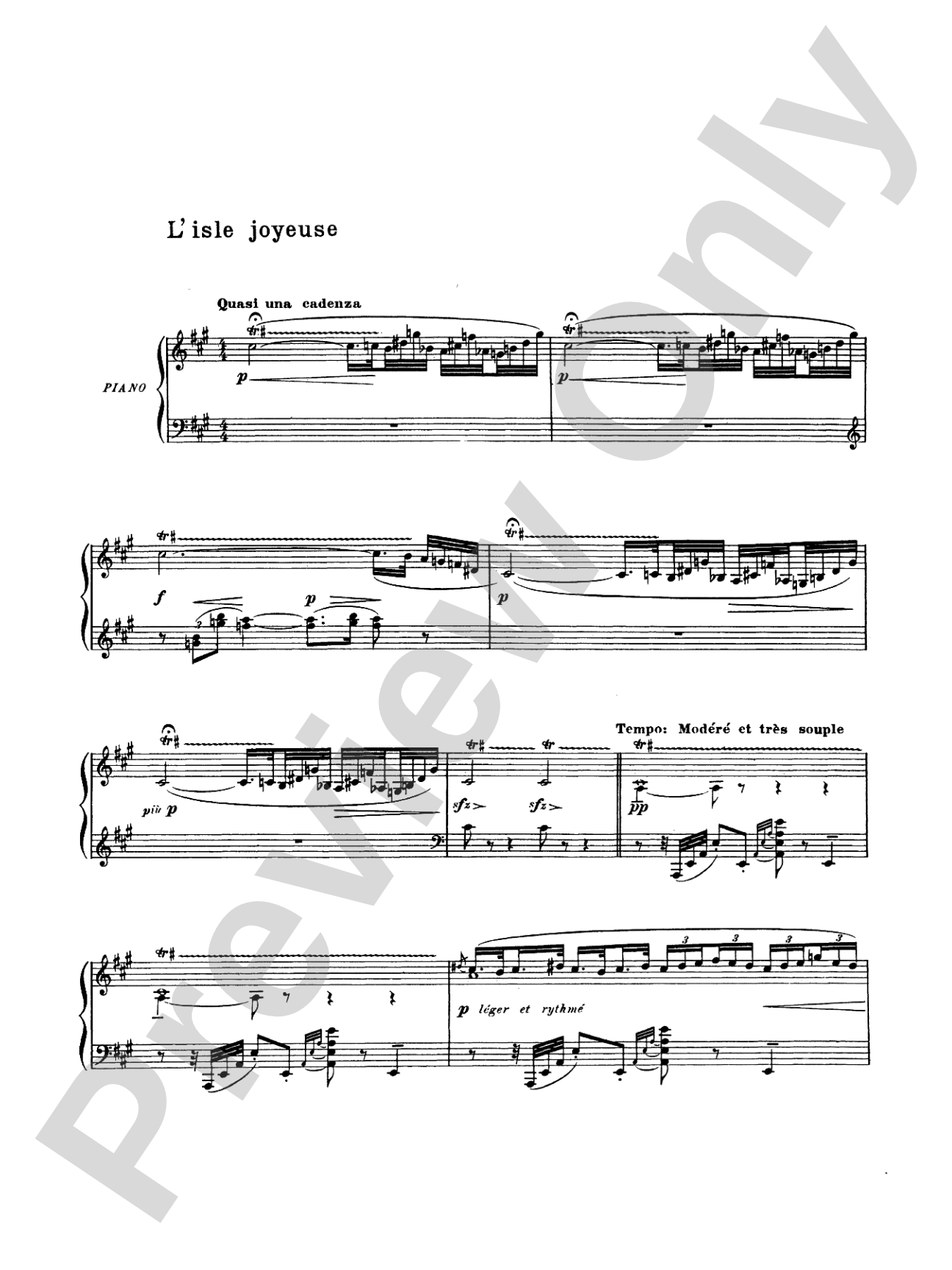
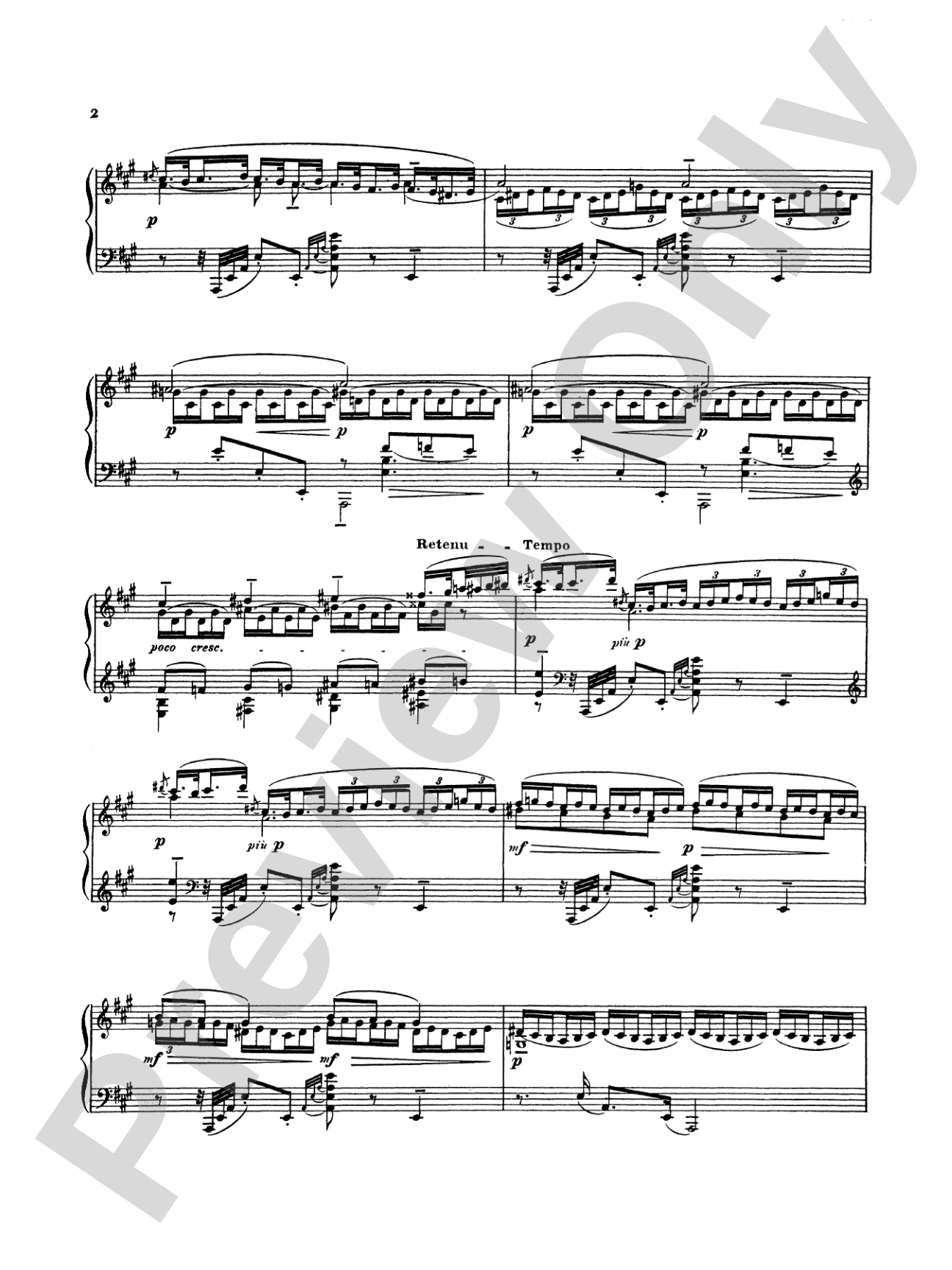
Debussy: L'Isle Joyeuse Sheet Music Preview

Debussy: L'Isle Joyeuse

By Claude Debussy

Level: Intermediate / Advanced

Item: 00-PC-0006907

Digital Download
$6.99
Description
Expertly arranged piano solo from our Kalmus Edition.

Don't just read it, hear it, play along with it, and watch your students grow with it. In MakeMusic Cloud, Debussy: L'Isle Joyeuse comes alive with professional accompaniment, adjustable tempo, and built-in practice tools that turn solo practice into real progress.

Sample Audio
No sample audio found.
Sample Video
Additional Details
Series: Kalmus Edition
Publisher: Alfred Music
Page Count: 16
SKU: 00-PC-0006907

More about this title

About the Composer: Claude Debussy

Claude Debussy (1862-1918) fundamentally changed how composers approached harmony, texture, and form. Working in late 19th and early 20th century Paris, he moved away from the dense chromaticism of Wagner and the strict structures of classical tradition, instead drawing inspiration from gamelan music, visual art, and the natural world. His innovations in whole-tone scales, parallel chords, and impressionistic color made him one of the most influential composers of the modern era.

For piano students and teachers, Debussy represents a crucial bridge between Romantic virtuosity and contemporary technique. His works demand a different kind of control: not just technical precision, but an understanding of tone color, pedal manipulation, and the relationship between silence and sound. Learning Debussy fundamentally expands a pianist's interpretive range and deepens their connection to the instrument's full sonic palette.

Why we love this

L'Isle Joyeuse captures Debussy at his most accessible without sacrificing sophistication. The piece sparkles with brilliant passagework and vivid impressionistic colors, making it rewarding for intermediate-advanced pianists who want to sound impressive while still building essential contemporary technique. It's substantial enough to anchor a recital program but short enough to fit naturally into a mixed repertoire set.

What to expect

L'Isle Joyeuse evokes a shimmering, sun-dappled landscape where rippling water and radiant light create constant motion and color. The piece moves between moments of glistening delicacy and passionate brilliance, all unified by a sense of joy and forward momentum that feels both improvisational and carefully crafted.

Who it's for

Intermediate to advanced pianists seeking substantial solo material that develops their understanding of impressionistic technique and Debussy's harmonic language. This piece suits recital performers, serious students preparing for competitions or exams, and teachers looking to introduce contemporary classical styles to their studio.

How to get the most out of it

  • Allow the opening flourishes to shimmer rather than rush; these decorative passages need space and pedal clarity to capture the impressionistic effect Debussy intended.
  • Shape the lyrical middle section with long-line phrasing despite the flowing accompaniment patterns underneath; let the melody sing over the shimmering texture.
  • Manage the sustain pedal with precision throughout, changing it frequently enough to avoid harmonic muddiness while still creating the atmospheric wash that defines the piece.
  • Build the brilliant climactic passages gradually, treating them as a natural flowering of the material rather than a sudden change in character or tempo.

How to use it

Feature this as a centerpiece recital work that demonstrates command of a major 20th-century composer. It pairs naturally with other French repertoire (Ravel, Satie) or creates compelling contrast with Romantic-era pieces. The 16-page length makes it substantial enough for a full recital slot without overwhelming shorter concert contexts.

Skills your students will build

  • Debussy's impressionistic harmonic language and whole-tone scale usage
  • Pedal control and tonal color differentiation
  • Balancing rapid figuration with underlying melodic shape
  • Interpreting dynamic markings and tempo nuance in non-traditional notation
  • Handling extended passagework with clarity and musical purpose

You May Also Like