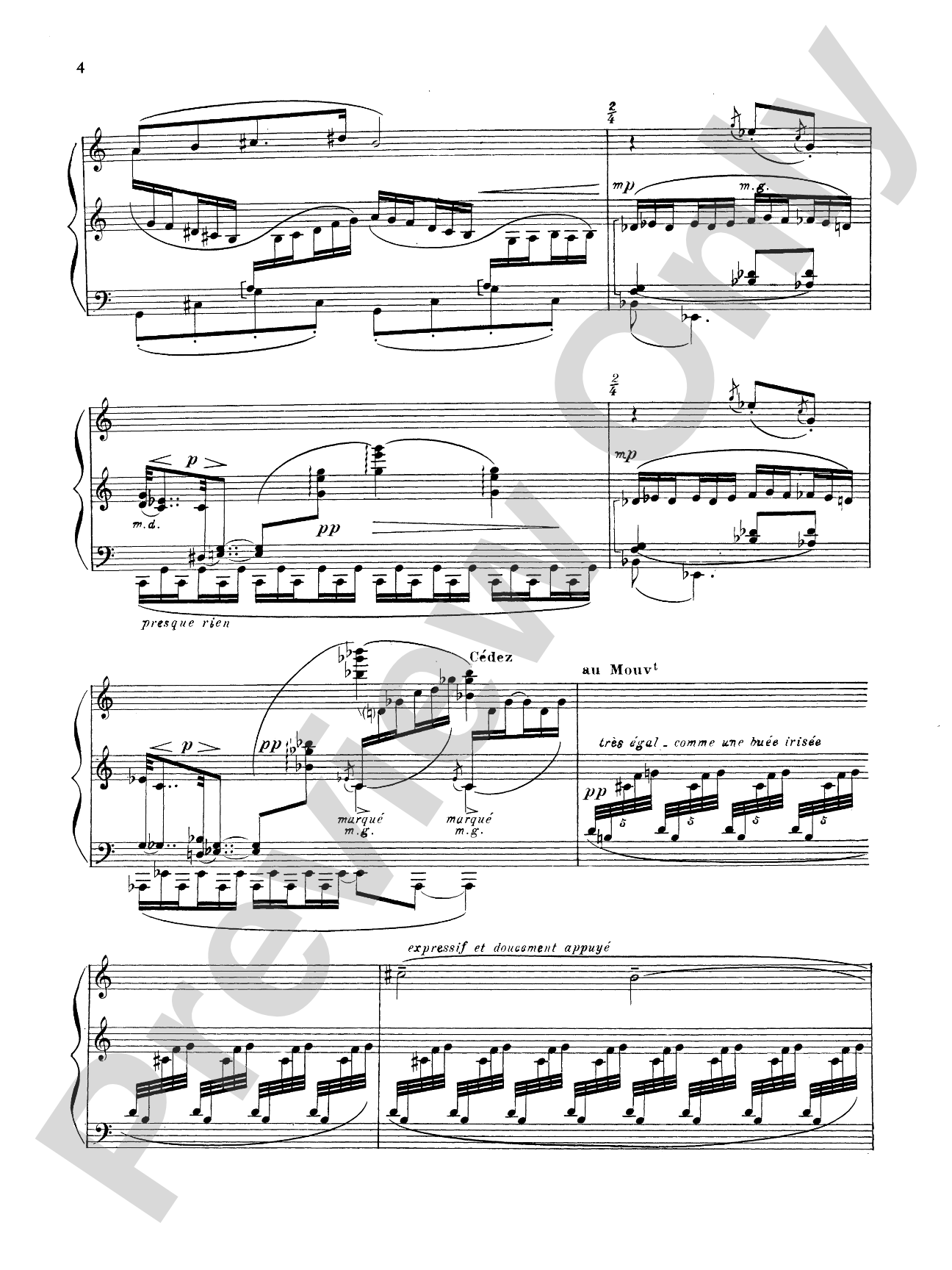
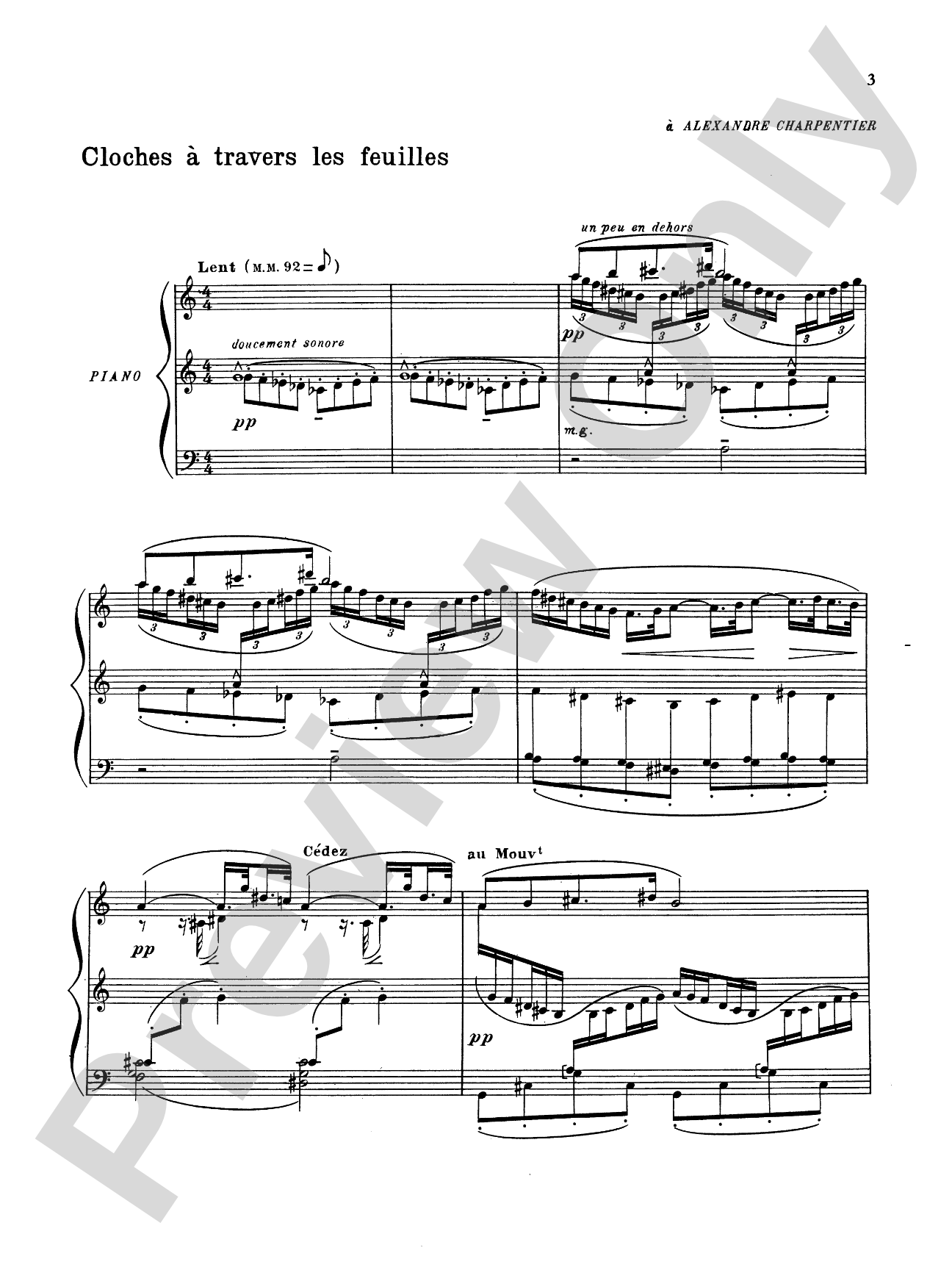
Debussy: Images (Volume II) Sheet Music Preview

Debussy: Images (Volume II)

By Claude Debussy

Level: Advanced

Item: 00-PC-0014132

Digital Download
$1.99
Description
Claude Debussy wrote two sets of virtuosic pieces called "Images." This set, from 1907, includes: Cloches á Travers Les Feuilles * Et La Lune Descend Sur Le Temple Qui Fut * Poissons D'Or.

Don't just read it, hear it, play along with it, and watch your students grow with it. In MakeMusic Cloud, Debussy: Images (Volume II) comes alive with professional accompaniment, adjustable tempo, and built-in practice tools that turn solo practice into real progress.

Sample Audio
No sample audio found.
Sample Video
Additional Details
Series: Kalmus Edition
Publisher: Alfred Music
Page Count: 28
SKU: 00-PC-0014132

More about this title

About the Composer: Claude Debussy

Claude Debussy (1862–1918) fundamentally reshaped how composers approached harmony, orchestration, and the expressive possibilities of the piano. Working through the late 19th and early 20th centuries, he moved beyond the harmonic language of his predecessors to create music that prizes color, atmosphere, and subtle gesture over traditional structural drama. His piano works remain central to the advanced repertoire, demanding technical mastery alongside interpretive sensitivity.

Debussy's Images represent his maturity as a composer. Written across two sets (1901–1902 and 1907), they showcase his ability to evoke impressions of nature, light, and memory through sound alone. These pieces have become touchstones for pianists exploring the modern concert repertoire.

Why we love this

Images, Book II stands apart from the standard advanced repertoire because it demands both interpretive depth and orchestral thinking from a single musician. Each movement presents distinct sonic landscapes that reward careful attention to pedal work, voicing, and rubato, making these pieces ideal for students ready to move beyond technical display into genuine musical storytelling.

What to expect

These three movements shimmer with the sensory precision Debussy brought to all his writing. Bells resound through foliage, moonlight descends with hushed inevitability, and golden fish dart through water with liquid grace. The music suspends time itself, replacing forward harmonic momentum with pools of sound that shift and settle, inviting the listener to inhabit momentary impressions rather than follow a narrative arc.

Who it's for

Advanced pianists and serious music students working toward recital repertoire and deeper engagement with 20th-century classical music. Teachers preparing students for college auditions or advanced performance exams will find these pieces offer both artistic depth and the technical challenge required at the highest levels.

How to get the most out of it

  • Treat the sustain pedal as a compositional voice rather than an effect; experiment with half-pedaling and frequent changes to let harmonies bloom without muddying the texture.
  • Listen closely to the upper voices in passages where the right hand carries melody; Debussy often layers independent lines that need separation despite sharing the same hand.
  • Approach tempo with flexibility; the printed tempo markings are suggestions, and these pieces breathe most naturally when you respond to harmonic rhythm and phrase shape rather than strict metronomic time.
  • Pay attention to Debussy's dynamic markings and expressive indications; they often signal subtle shifts in character that become the architecture holding the piece together.

How to use it

These pieces work beautifully as a complete recital set, offering contrast and coherence across roughly 15 minutes of performance time. They pair well with earlier Impressionist works or with 20th-century avant-garde repertoire; their formal freedom and harmonic language bridge traditions effectively.

Skills your students will build

  • Advanced pedal technique, including half-pedaling and rapid changes to control harmonic color
  • Reading and realizing complex harmonic structures built on whole-tone scales, chromatic voice-leading, and unconventional chord progressions
  • Voicing for independence and clarity when multiple melodic lines share the same hand
  • Interpretive flexibility with tempo and rubato while maintaining structural integrity
  • Tonal palette development and microdynmaic control across the full range of the piano

You May Also Like