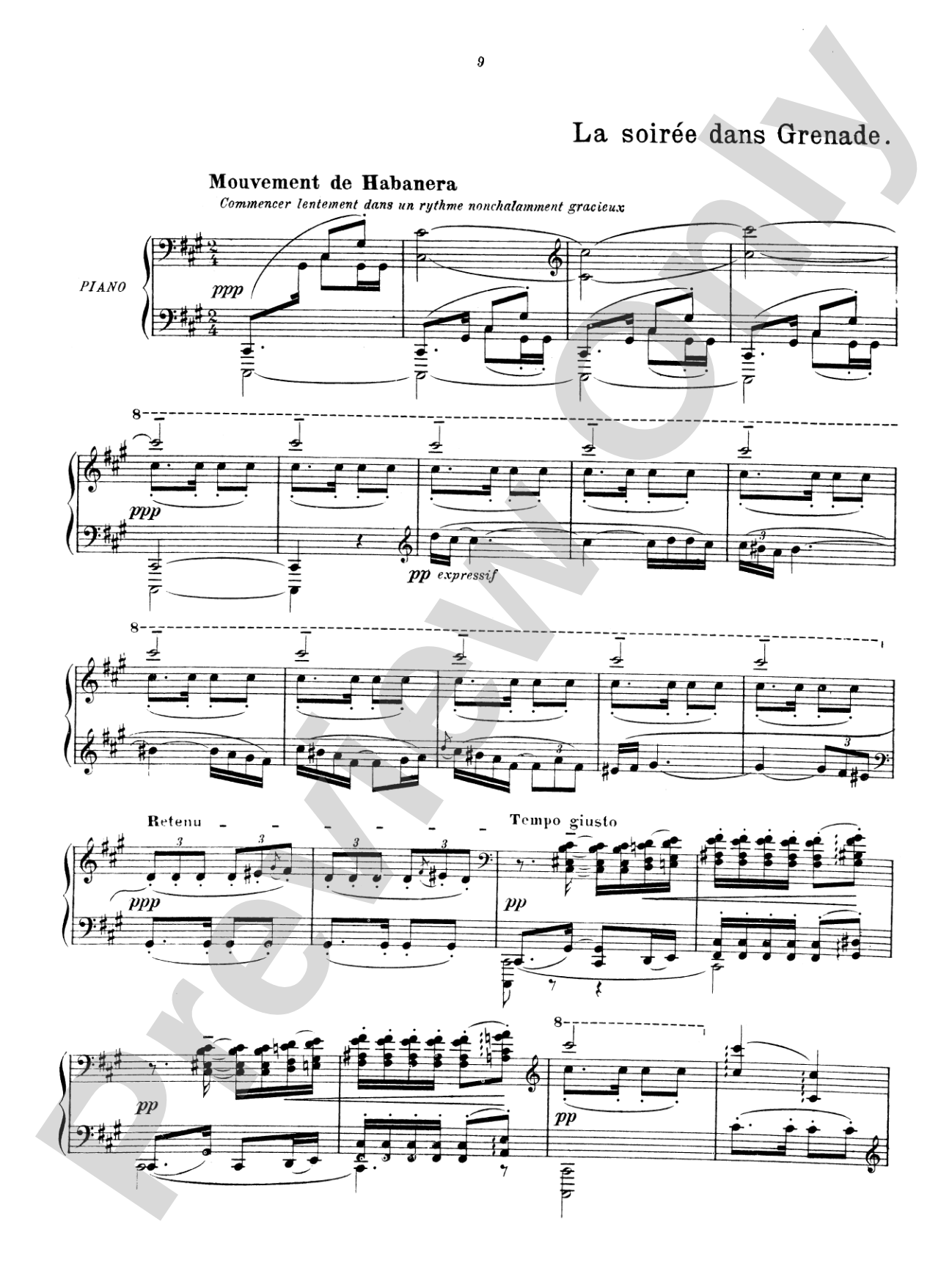
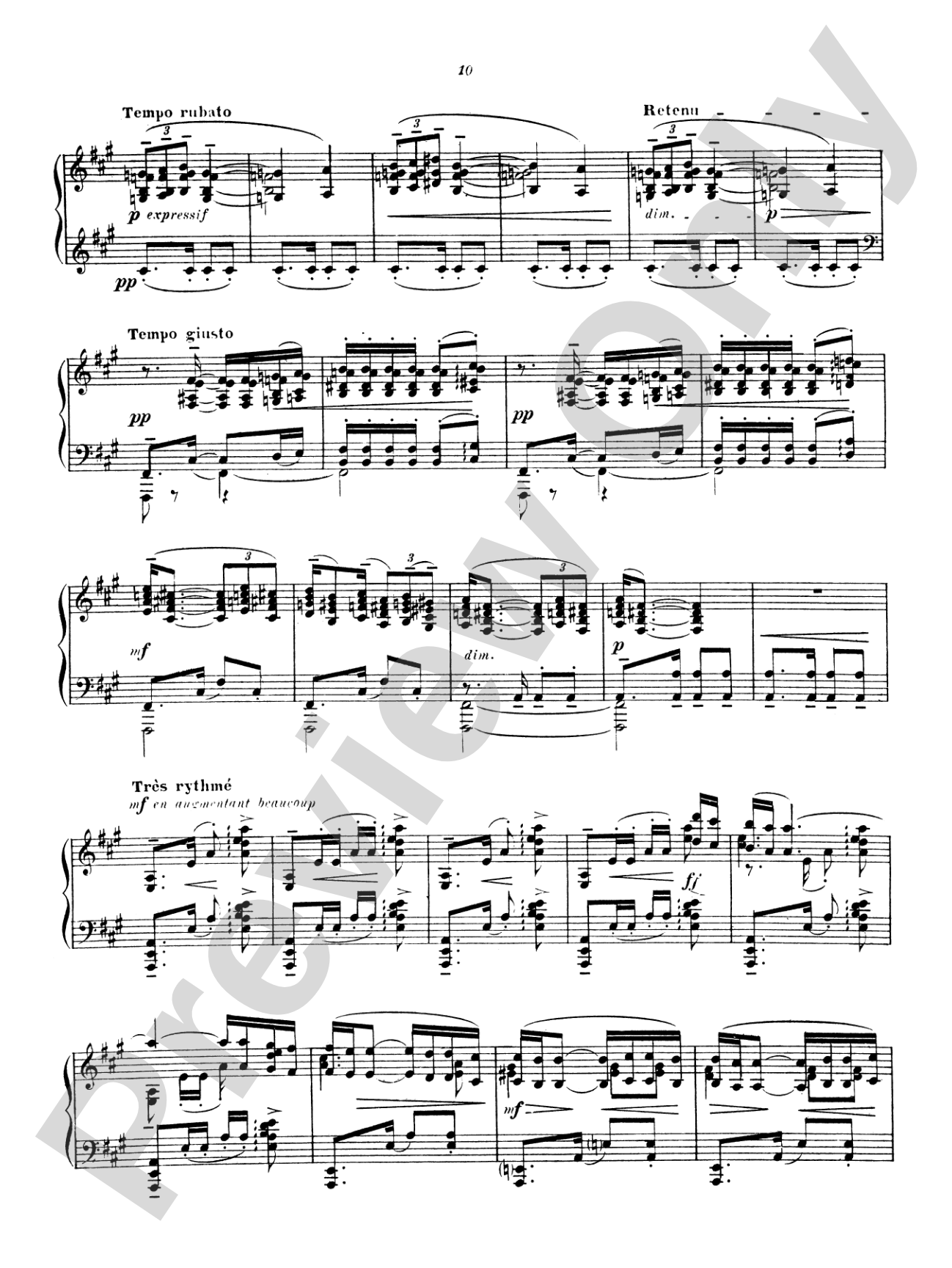
Claude Debussy (1862-1918) fundamentally reshaped how composers approached harmony, texture, and orchestral color in the late 19th century. His work moved beyond the thick chromaticism of Wagner and the rigid forms of academic tradition, instead building pieces from impressions, timbre, and the subtle interactions of sound. Debussy's piano writing in particular treated the instrument as an orchestra itself, exploiting resonance, pedal effects, and register to create shimmering, atmospheric soundscapes that influenced generations of composers and pianists.
Estampes stands as one of his most important early piano collections, completed in 1903. The work demonstrates his mature compositional voice and remains essential to understanding 20th-century keyboard literature. His influence on contemporary classical music, jazz, and film scoring is immeasurable.