
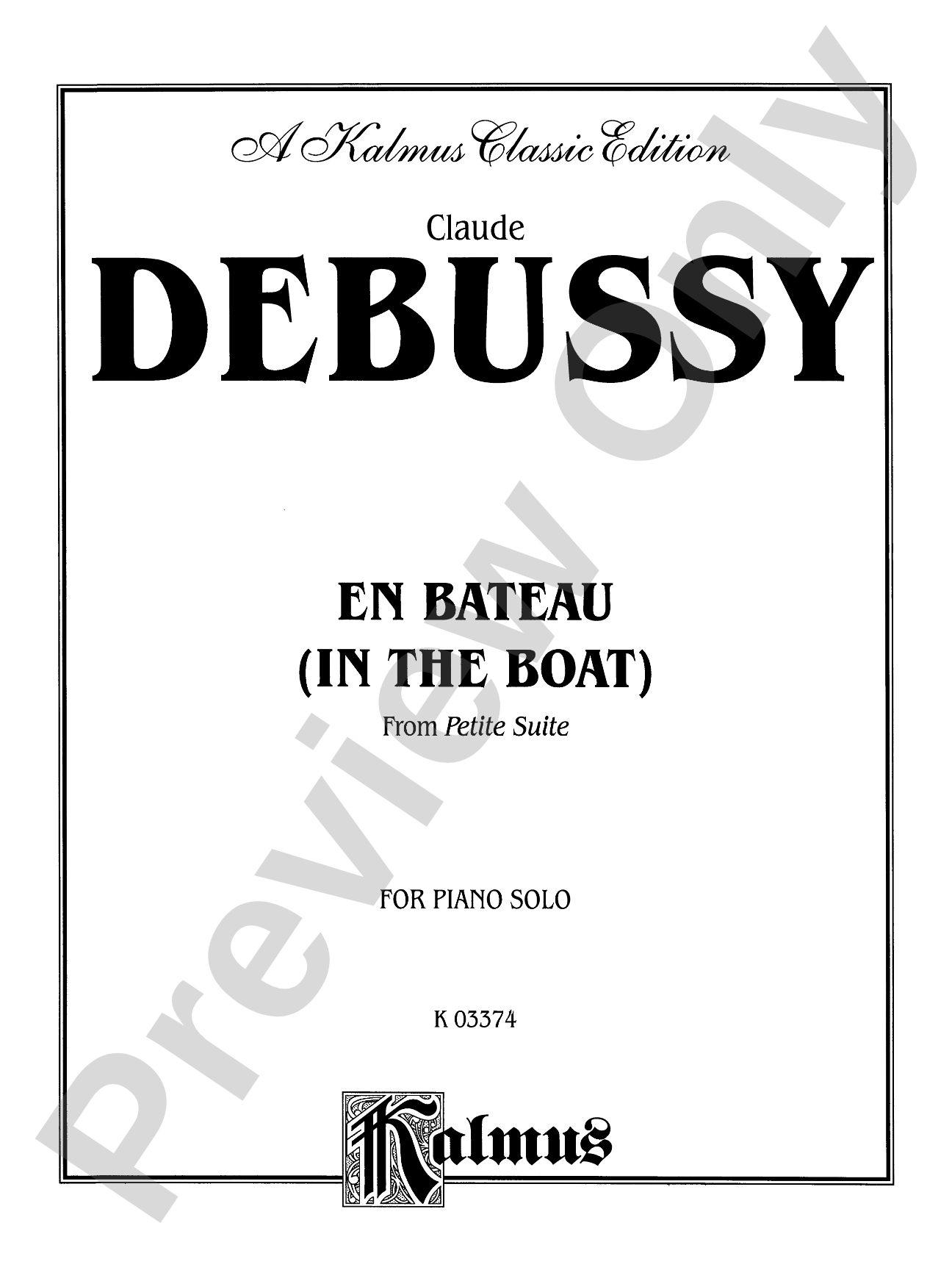
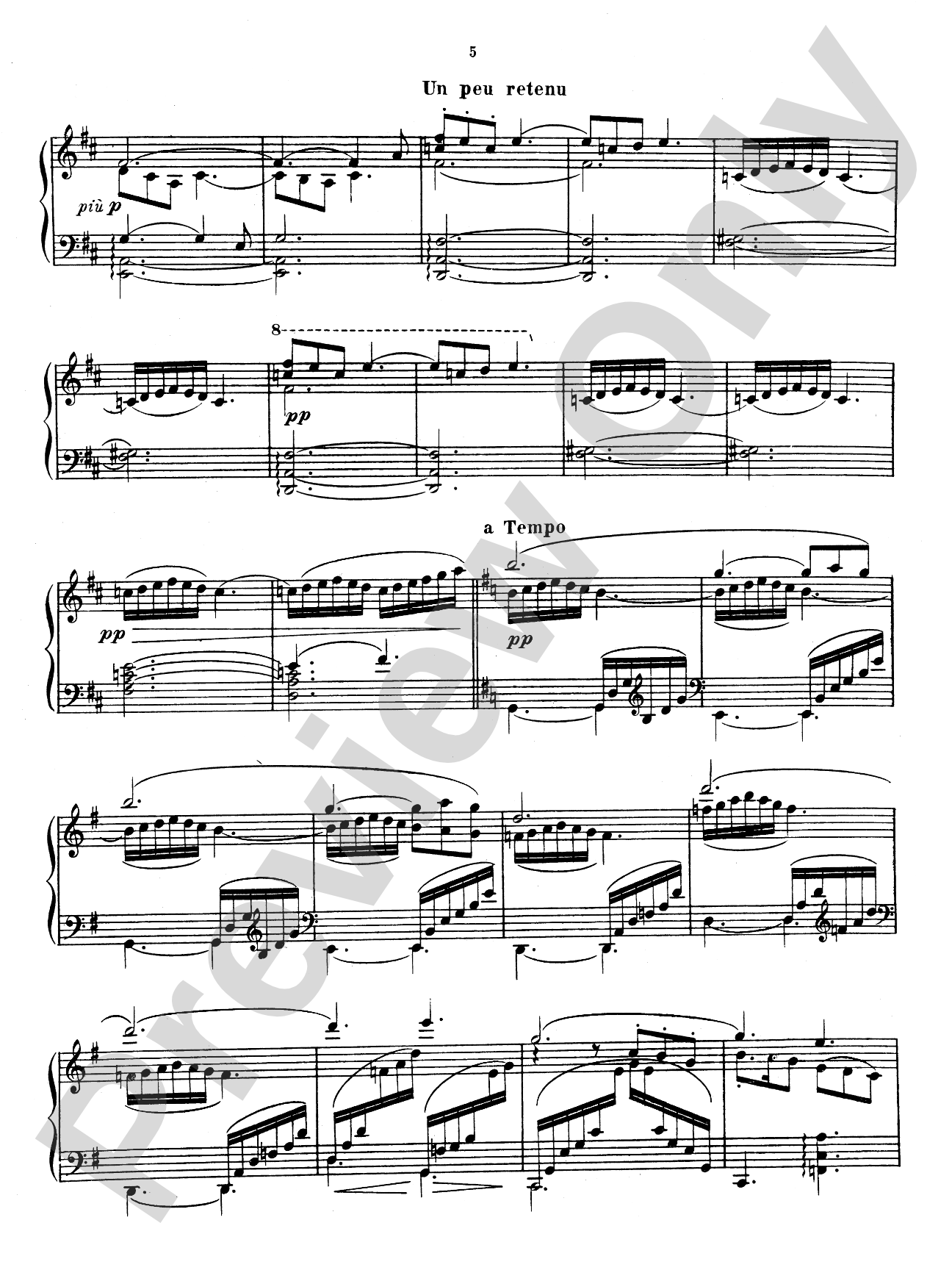
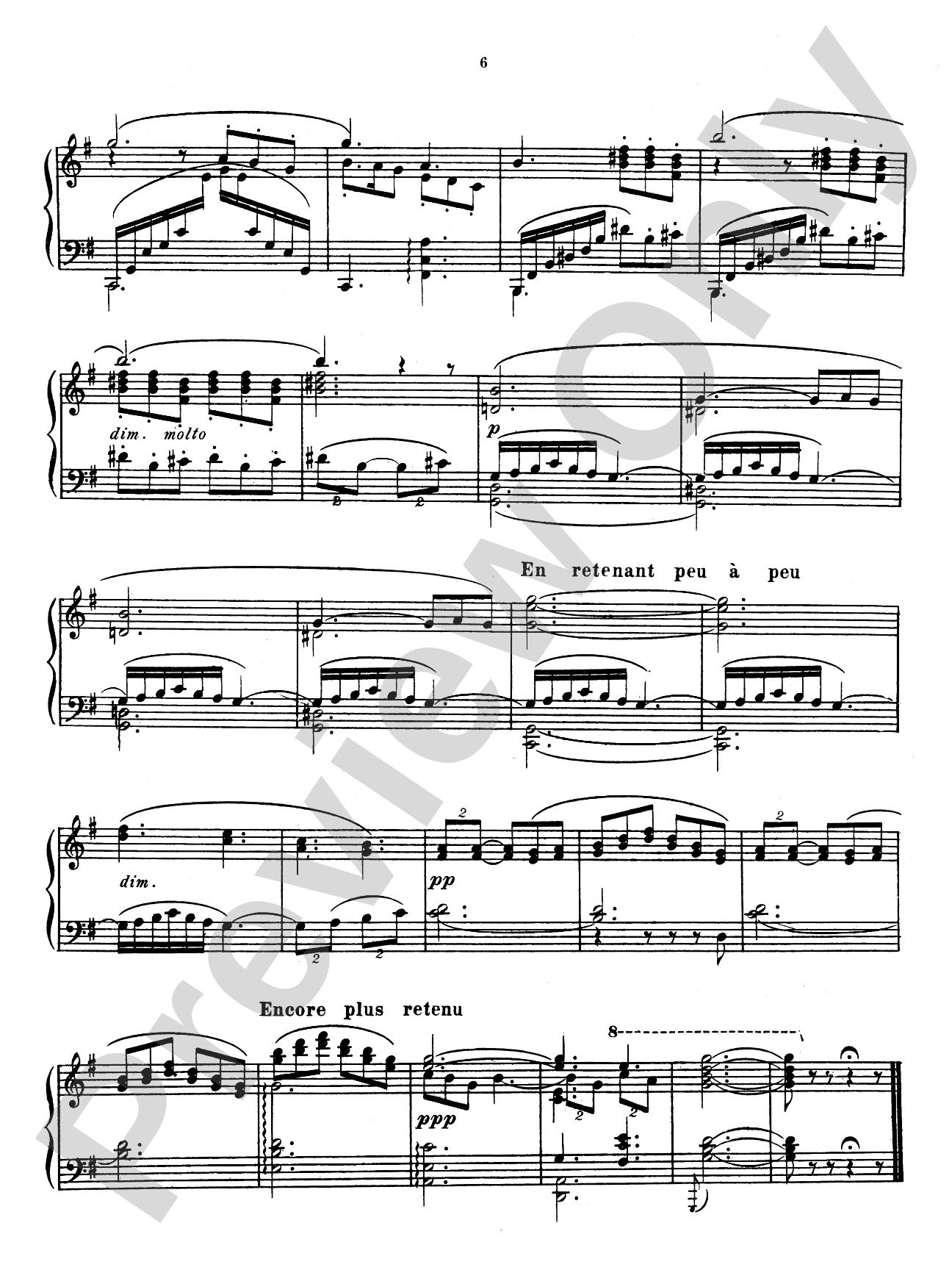



Debussy: En Bateau (from Petite Suite): Piano
By Claude Debussy
Item: 00-PK-0003049

$5.99
Pickup currently not available
Buy Extra Parts (Digital PDF Download)
| Product | Price | Quantity |
|---|---|---|
| Debussy: En Bateau (from Petite Suite) | $4.99 |
Parts Added to Cart!
Related Items
En Bateau (from Petite Suite): Piano |
$5.95
|
View |
Description
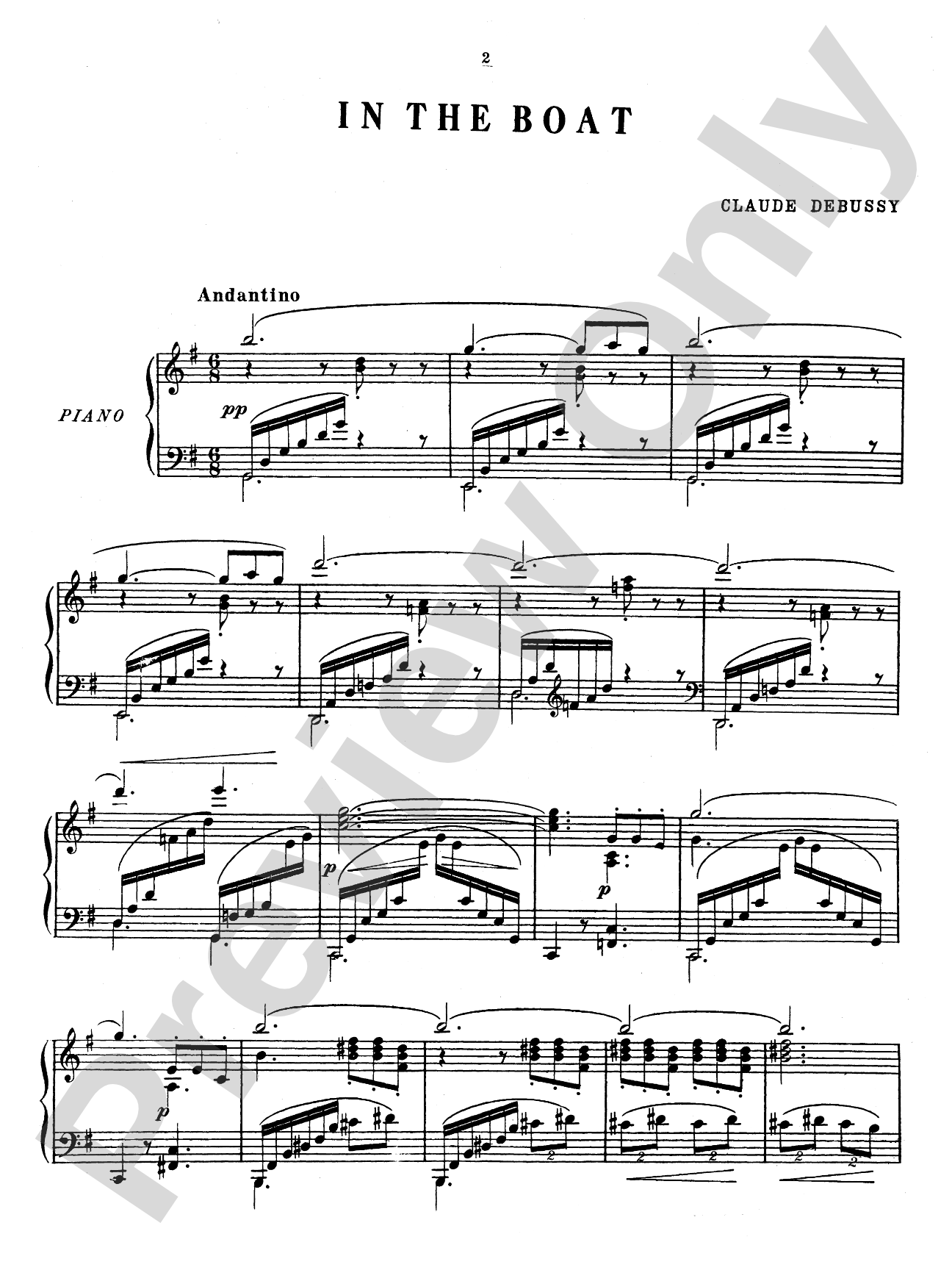
Originally composed for piano duet (1 piano, 4 hands), Debussy's 1889 composition, "In the Boat," from his Petite Suite, has also been orchestrated by Henri Büsser. This is the piano solo version of "En Bateau."


Don't just read it, hear it, play along with it, and watch your students grow with it. In MakeMusic Cloud, Debussy: En Bateau (from Petite Suite): Piano comes alive with professional accompaniment, adjustable tempo, and built-in practice tools that turn solo practice into real progress.
Open in the Player
Jump straight in and assign it today.
Start Your Free Trial
Open this title and explore the full library in minutes.
Sample Audio
No sample audio found.
Sample Video
No sample videos found.
Additional Details
Series:
Kalmus Edition
Publisher:
Alfred Music
Page Count:
8
SKU:
00-PK-0003049
More about this title
About the Composer: Claude Debussy
Claude Debussy (1862, 1918) fundamentally reshaped how composers approached harmony, orchestration, and form in the late nineteenth century. Working primarily in France, he rejected the rigid structures of Germanic Romanticism and instead drew inspiration from visual art, literature, and the natural world, translating impressionistic principles into sound. His influence on twentieth-century music cannot be overstated; nearly every composer who followed grappled with questions he first posed about color, restraint, and the expressive possibilities of ambiguity.
For pianists and teachers, Debussy's body of work offers a masterclass in texture and touch. His pieces demand not virtuosity for its own sake but rather a refined control of sound production and an ear attuned to subtle harmonic shifts. The Petite Suite, written early in his career, remains one of the most accessible entry points into his compositional world.
Why we love this
En Bateau captures Impressionism at its most transparent and pianistically elegant. The piece rewards thoughtful pedaling and rubato without demanding the technical fireworks of Debussy's more demanding works, making it an excellent entry point into his compositional language for intermediate pianists ready to explore color and nuance.
What to expect
A gentle voyage across still water, with rippling accompaniment patterns that suggest gentle lapping at the hull. The piece breathes with the quietude of impressionistic painting, evoking shimmer and reflection rather than narrative drama; listeners float in a dreamy, atmospheric soundscape where each harmonic shift feels like a subtle shift in light.
Who it's for
Pianists in the early-advanced range (roughly ABRSM Grade 7-8 or RCM Level 9-10) who have developed solid technique and are beginning to engage with 20th-century harmonic language and impressionistic sound ideals. Teachers seeking a sophisticated yet accessible entry into Debussy will find this piece rewarding for students ready to move beyond Romantic-era aesthetics.
How to get the most out of it
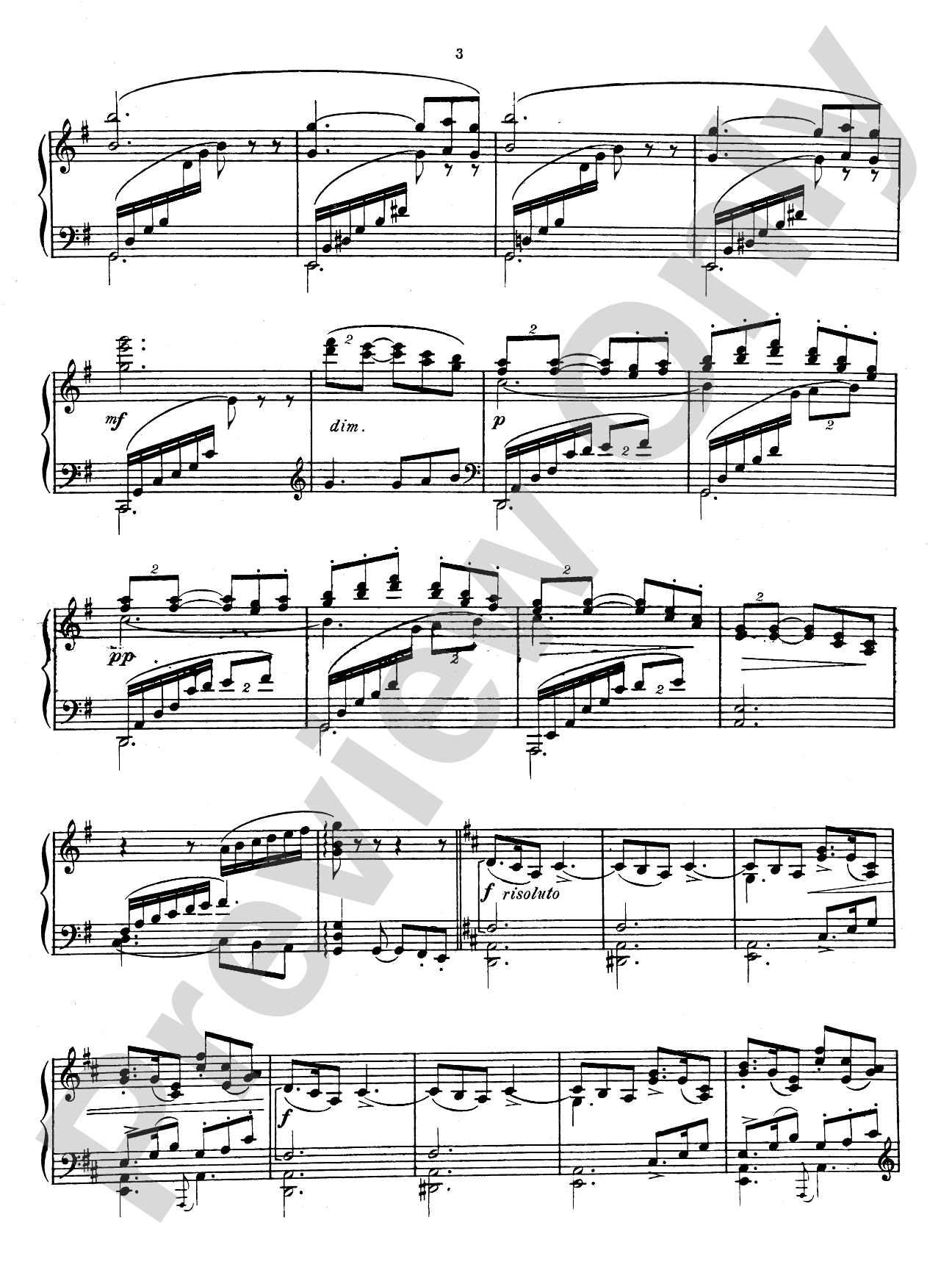
- Shape the undulating accompaniment figures as gentle waves rather than mechanical repetition; let the pedal do much of the work, but change it carefully to maintain harmonic clarity.
- Treat the melodic line as floating above the texture, not anchored to a strict pulse; Debussy's notation often suggests flexibility over metronomic accuracy.
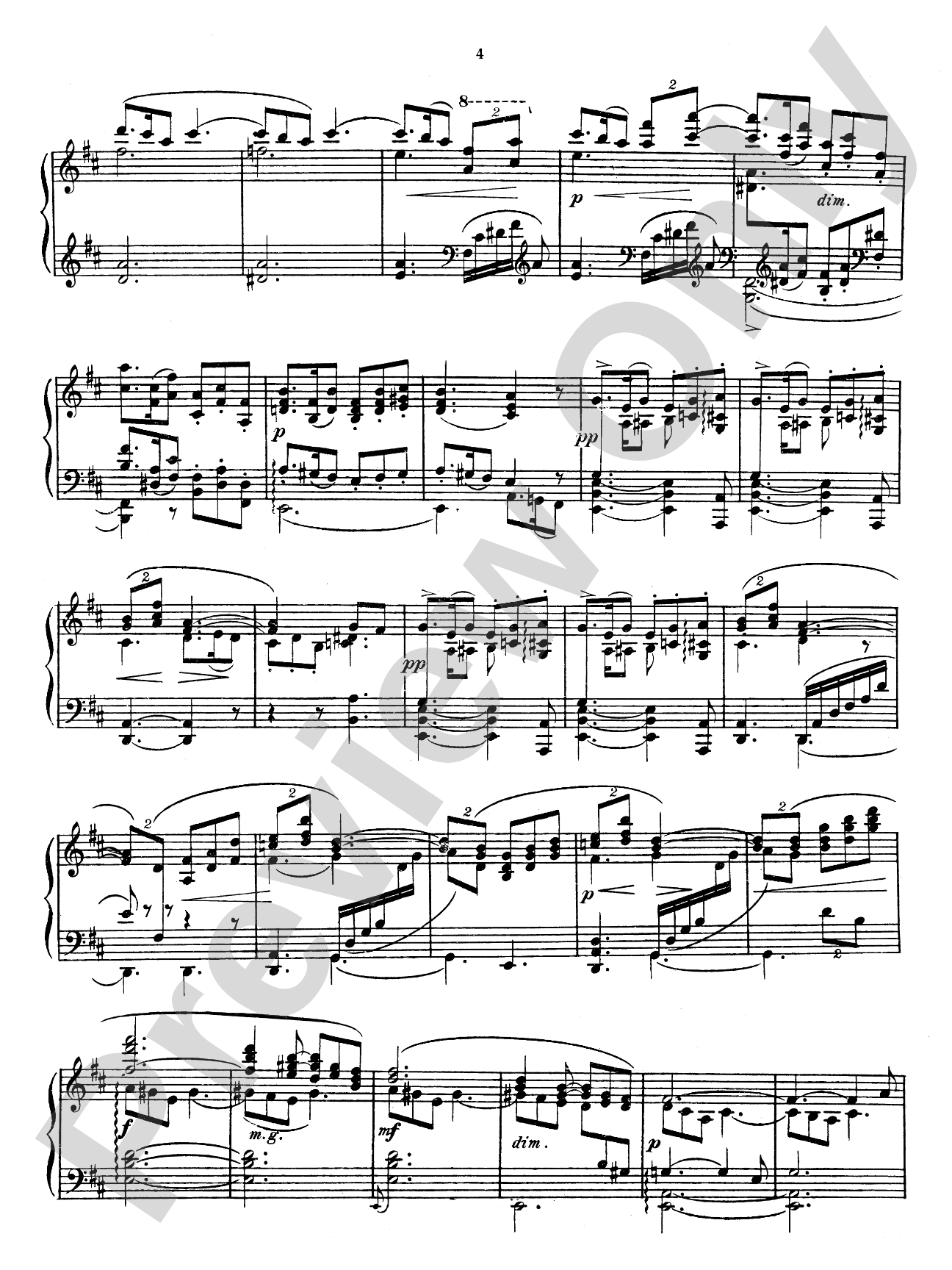
- Explore the full range of the piano's tonal palette by experimenting with touch and pedal combinations across the many registral shifts the piece demands.
- Listen carefully to the harmonic progression and allow subtle voice-leading moments to emerge; the beauty lies in transparent layering, not dramatic contrast.
How to use it
Program this as a standalone recital piece for pianists exploring early-20th-century French repertoire, or pair it with other movements from the Petite Suite for a cohesive thematic program. It also works beautifully on a mixed solo recital as a contrasting centerpiece between more dramatic or virtuosic selections.
Skills your students will build
- Pedal control and harmonic resonance in impressionistic textures
- Rubato and flexible phrasing within a gentle, flowing framework
- Voice-leading awareness across multiple registers
- Interpreting non-traditional harmonic progressions and modal inflections
- Touch differentiation to achieve varied tonal colors on a single instrument