
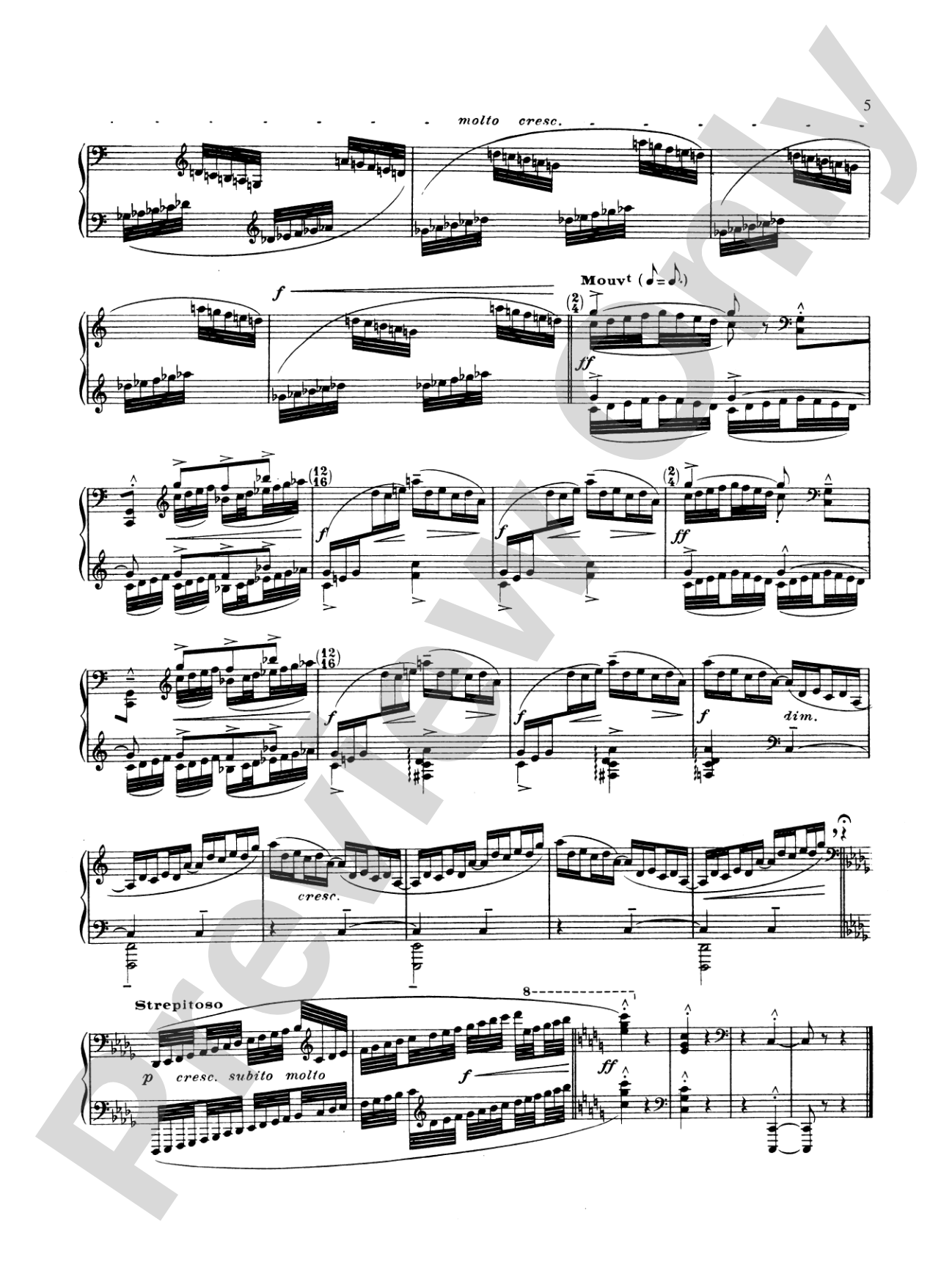

Debussy: Douze Etudes: Piano Book
By Claude Debussy
Level: Advanced
Item: 00-PK-0002819

$12.99
Pickup currently not available
Buy Extra Parts (Digital PDF Download)
| Product | Price | Quantity |
|---|---|---|
| Debussy: Douze Etudes | $0.99 | |
| Debussy: Douze Etudes | $0.99 | |
| Debussy: Douze Etudes | $0.99 | |
| Debussy: Douze Etudes | $0.99 | |
| Debussy: Douze Etudes | $0.99 | |
| Debussy: Douze Etudes | $0.99 | |
| Debussy: Douze Etudes | $0.99 | |
| Debussy: Douze Etudes | $0.99 | |
| Debussy: Douze Etudes | $0.99 | |
| Debussy: Douze Etudes | $0.99 | |
| Debussy: Douze Etudes | $0.99 | |
| Debussy: Douze Etudes | $0.99 |
Parts Added to Cart!
Related Items
Douze Études: Piano Book |
$12.95
|
View |
Description
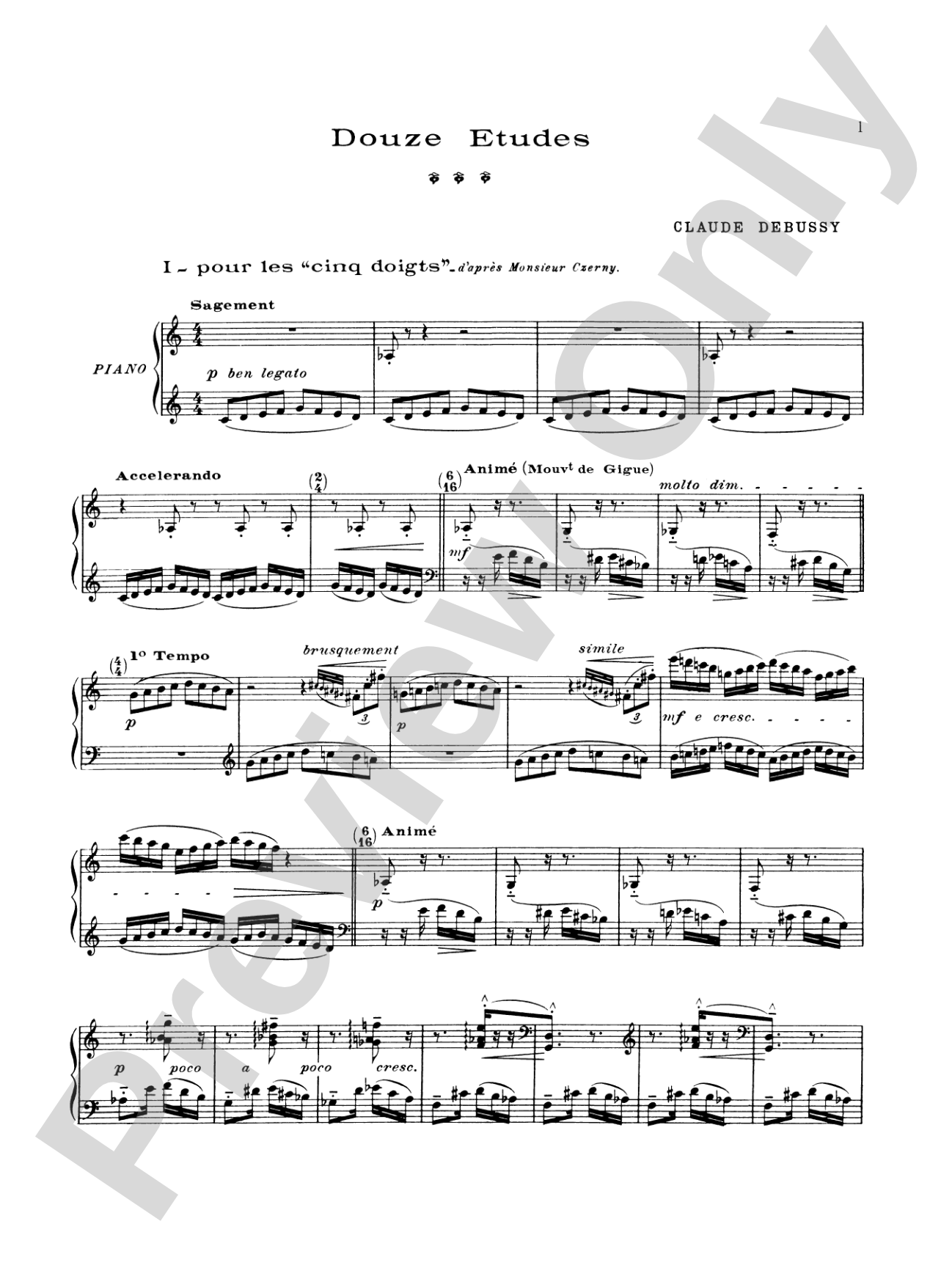
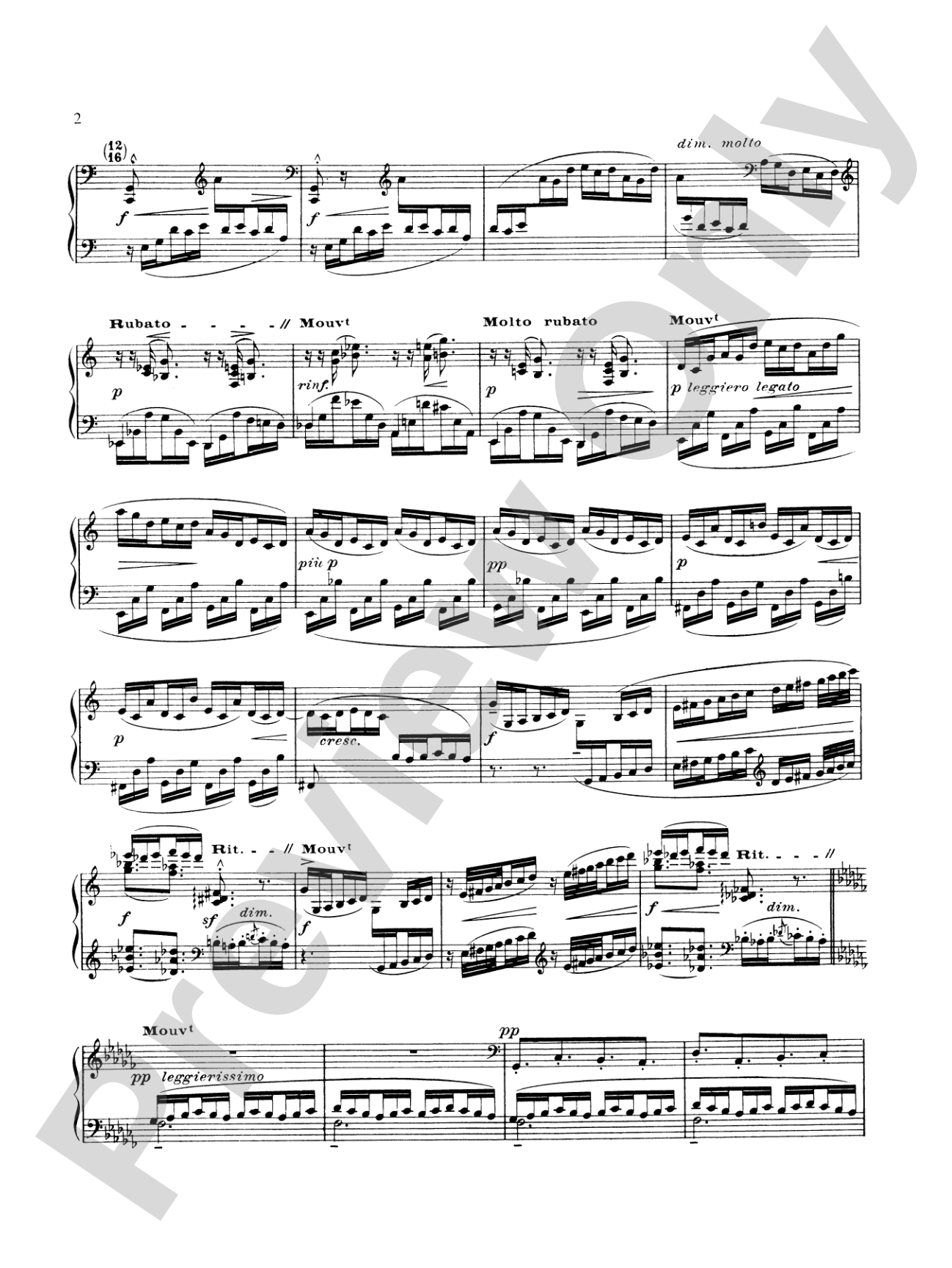
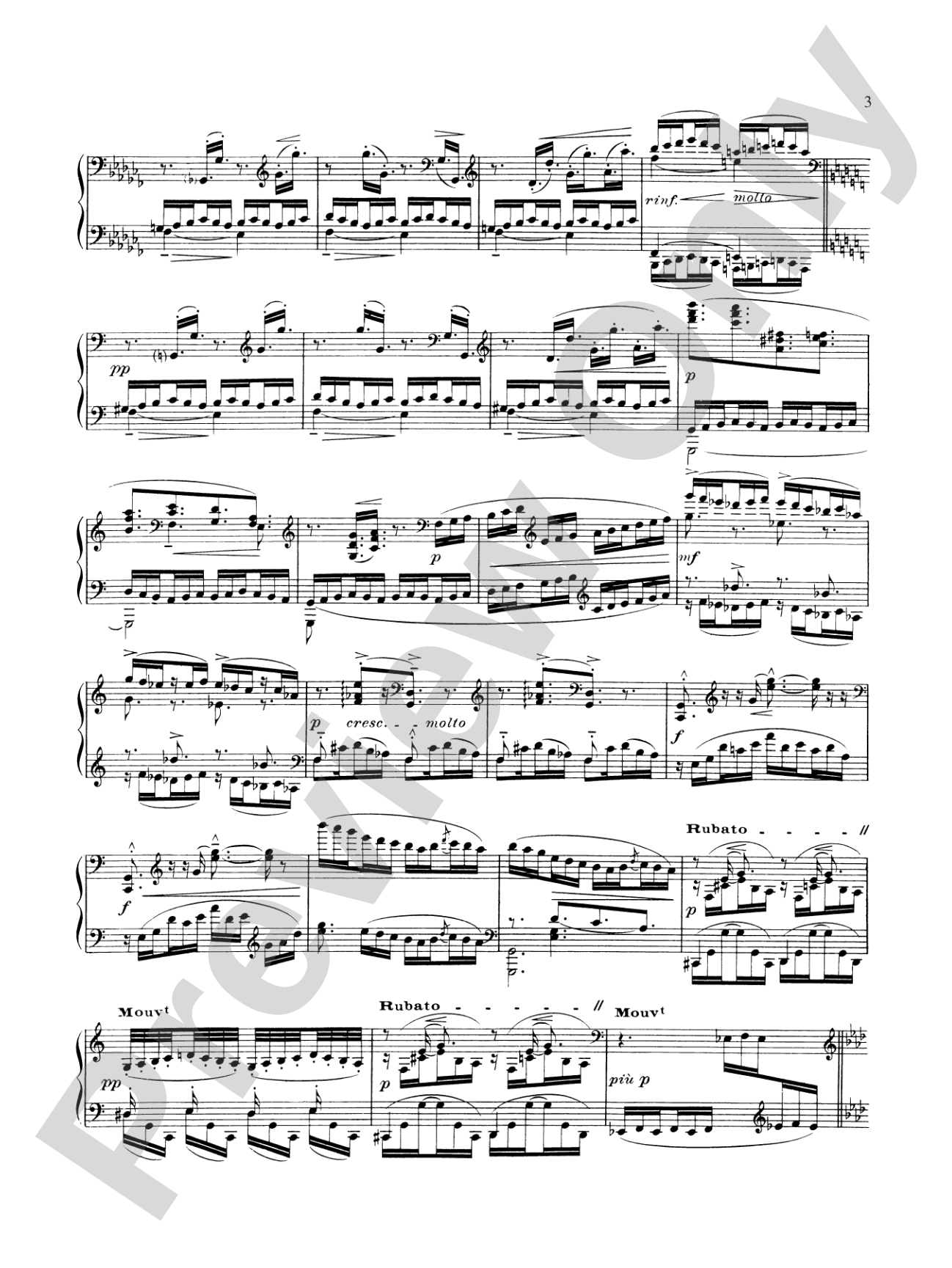
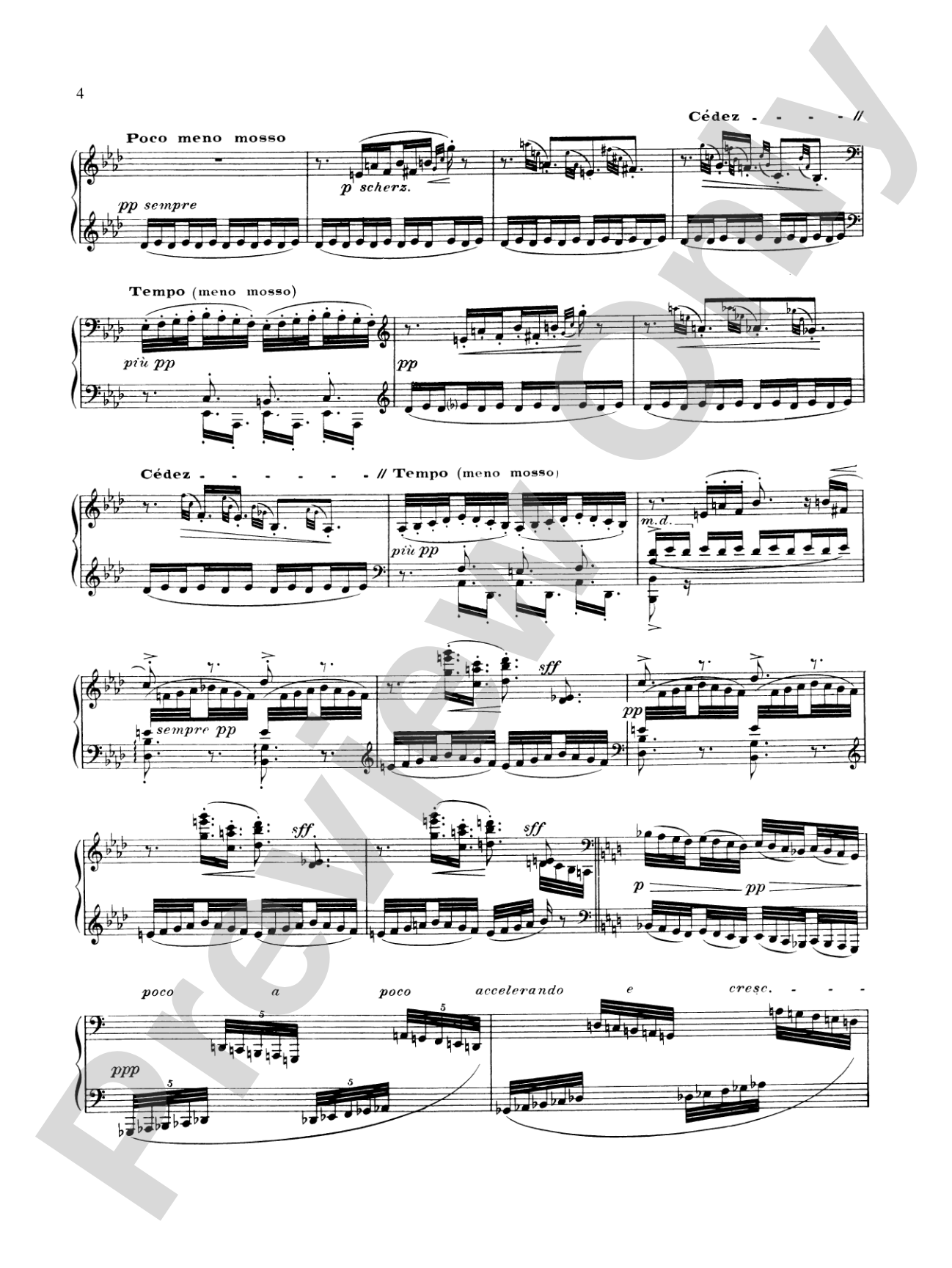
Claude Debussy's 12 Études were composed in 1915, in memory of Frederic Chopin. He admits that these are extremely difficult to play, and describes them as "a warning to pianists not to take up the musical profession unless they have remarkable hands." Includes: Étude 1 (5 fingers, "after Monsieur Czerny") * Étude 2 (thirds) * Étude 3 (fourths) * Étude 4 (sixths) * Étude 5 (octaves) * Étude 6 (eight fingers) * Étude 7 (chromatic degrees) * Étude 8 (ornaments) * Étude 9 (repeated notes) * Étude 10 (opposing sonorities) * Étude 11 (composite arpeggios) * Étude 12 (chords).


Don't just read it, hear it, play along with it, and watch your students grow with it. In MakeMusic Cloud, Debussy: Douze Etudes: Piano Book comes alive with professional accompaniment, adjustable tempo, and built-in practice tools that turn solo practice into real progress.
Open in the Player
Jump straight in and assign it today.
Start Your Free Trial
Open this title and explore the full library in minutes.
Sample Audio
No sample audio found.
Sample Video
No sample videos found.
Additional Details
Series:
Kalmus Edition
Publisher:
Alfred Music
Page Count:
64
SKU:
00-PK-0002819
More about this title
About the Composer: Claude Debussy
Claude Debussy (1862, 1918) fundamentally reshaped how composers approached harmony, orchestration, and the expressive possibilities of the piano. His harmonic language, rooted in color and atmosphere rather than traditional functional tonality, opened entirely new avenues for twentieth-century music. As a pedagogue, Debussy was deeply invested in technical mastery paired with artistic imagination; he believed pianists needed hands of exceptional capability to unlock his compositional vision.
These twelve études represent Debussy's mature synthesis of virtuosic demands and impressionistic refinement. Composed as a homage to Chopin's legacy, they move beyond finger work for its own sake to explore how technical challenges become vehicles for sonic discovery. Each étude targets a specific technical problem while maintaining the poetic sensibility that defines Debussy's output.
Why we love this
These studies stand apart because they marry technical rigor with genuine compositional substance. Unlike etudes that exist solely to drill a single technical problem, Debussy's twelve studies each isolate a distinct pianistic challenge while delivering music that rewards deep artistic engagement. They belong in advanced repertoire not as punishment, but as the gateway to understanding modern piano writing.
What to expect
The collection ranges from crystalline clarity in the early studies to shimmering harmonic complexity and driving rhythmic intensity in the later ones. Throughout, there is a sense of discovery and restraint: Debussy writes sparingly but densely, making every note count. The studies never feel like mere exercises; they feel like compressed musical statements.
Who it's for
Advanced pianists preparing for conservatory-level study, competition, or professional performance. These studies demand not only secure technique but also the maturity to balance mechanical precision with artistic vision. They are essential repertoire for any serious student transitioning from intermediate to advanced levels.
How to get the most out of it
- Treat each study as a self-contained exploration of sonority and texture, not just a fingers-and-mechanics problem. The compositional voice matters as much as the technical demand.
- Pay close attention to Debussy's pedal markings and harmonic spacing. These studies often depend on resonance and the layering of overtones to achieve their full effect.
- Work through the studies in order, as they build progressively in technical and interpretive complexity. The early studies establish foundational approaches that the later ones develop and transform.
- Record yourself frequently. Hearing back your own playing helps you catch rhythmic unevenness and identify where the musical line is getting lost in the technical work.
How to use it
Schedule performances of these studies across the recital season rather than all at once. A single etude or pair of contrasting studies works beautifully on a recital that also includes Debussy's other piano works, or paired with Chopin as a historical dialogue. They also serve as powerful audition repertoire, demonstrating command of modern technique and interpretive sophistication.
Skills your students will build
- Independent finger articulation and strength across all five fingers
- Rapid interval playing in thirds, fourths, sixths, and octaves with evenness and clarity
- Chromatic scale facility and smooth voice leading through chromatic motion
- Ornamental figuration and fast decorative passage work
- Control of repeated notes at various tempos and dynamic levels
- Coordination of opposing hand rhythms and textures
- Arpeggiation technique spanning multiple octaves
- Chord playing with precision and tonal balance across the keyboard
- Pedaling as a compositional tool rather than a corrective device
- Reading and interpreting twentieth-century notational practices