
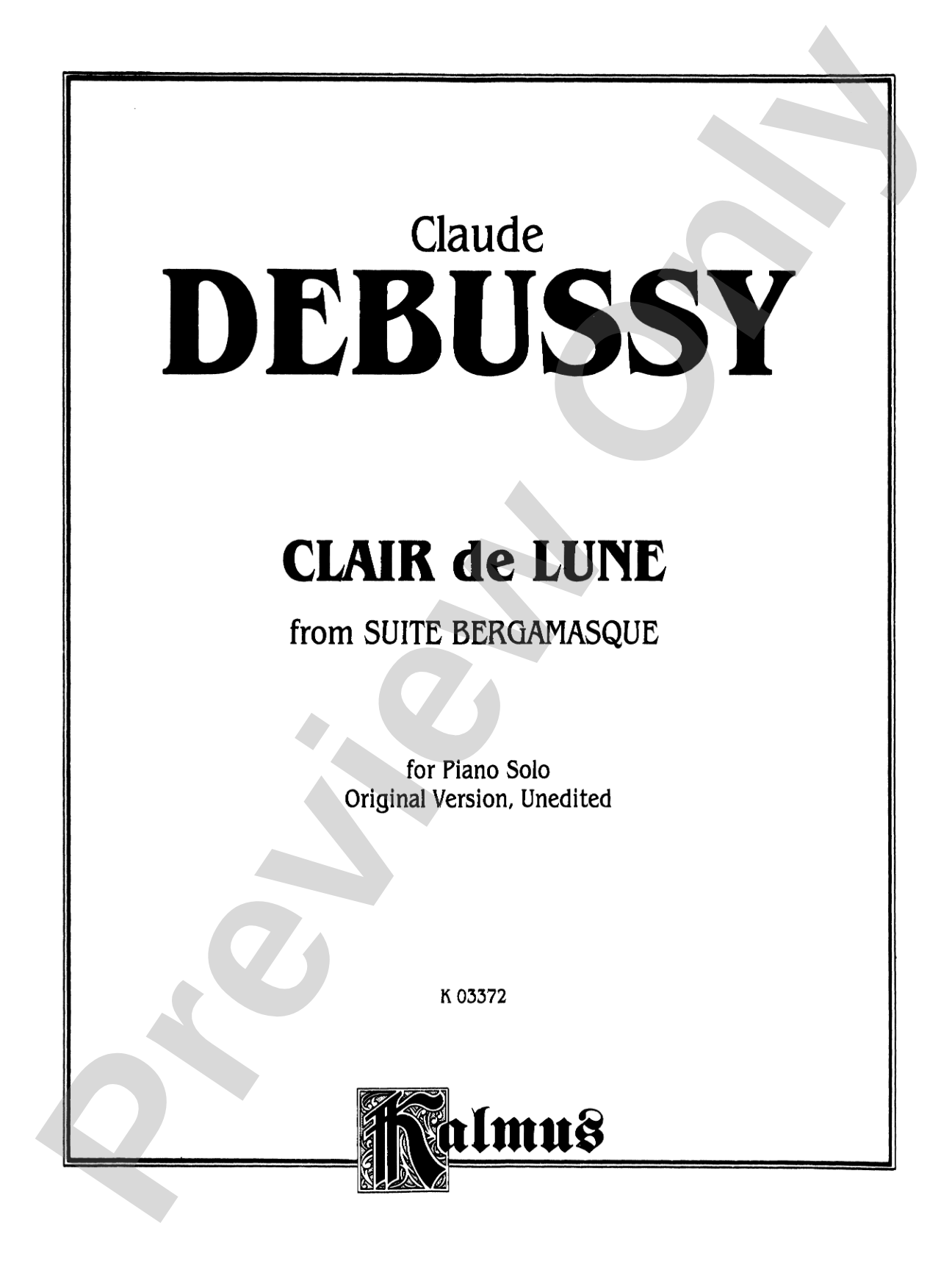


Debussy: Clair de Lune (from Suite Bergamasque): Piano
from Suite Bergamasque (For Piano Solo (Original Version, Unedited))
By Claude Debussy
Level: Late Intermediate
Item: 00-PK-0003047

$6.99
Pickup currently not available
Buy Extra Parts (Digital PDF Download)
| Product | Price | Quantity |
|---|---|---|
| Debussy: Clair de Lune (from Suite Bergamasque) | $4.99 |
Parts Added to Cart!
Related Items
Debussy, Clair de lune: Piano |
$6.99
|
View |
Description
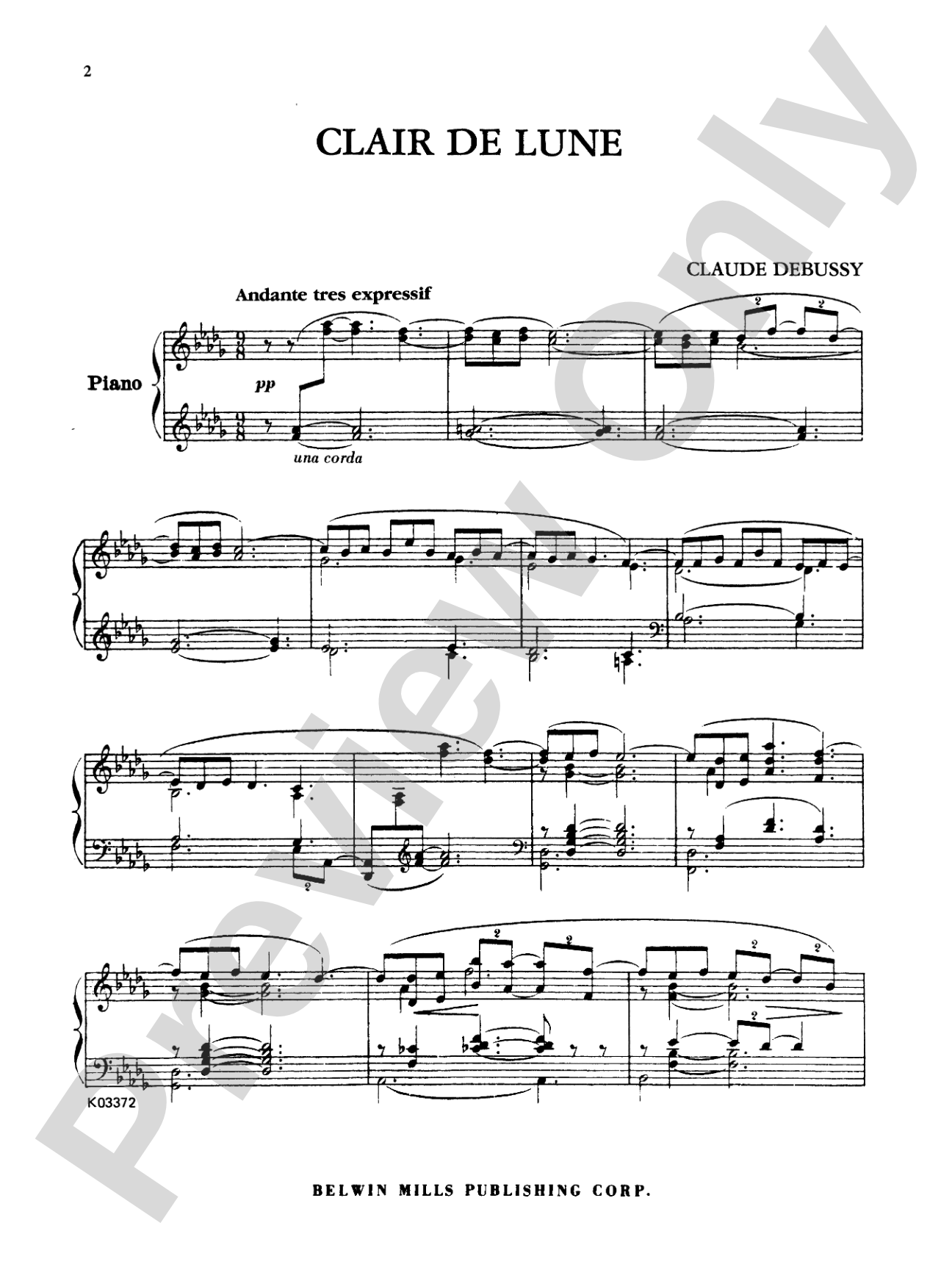
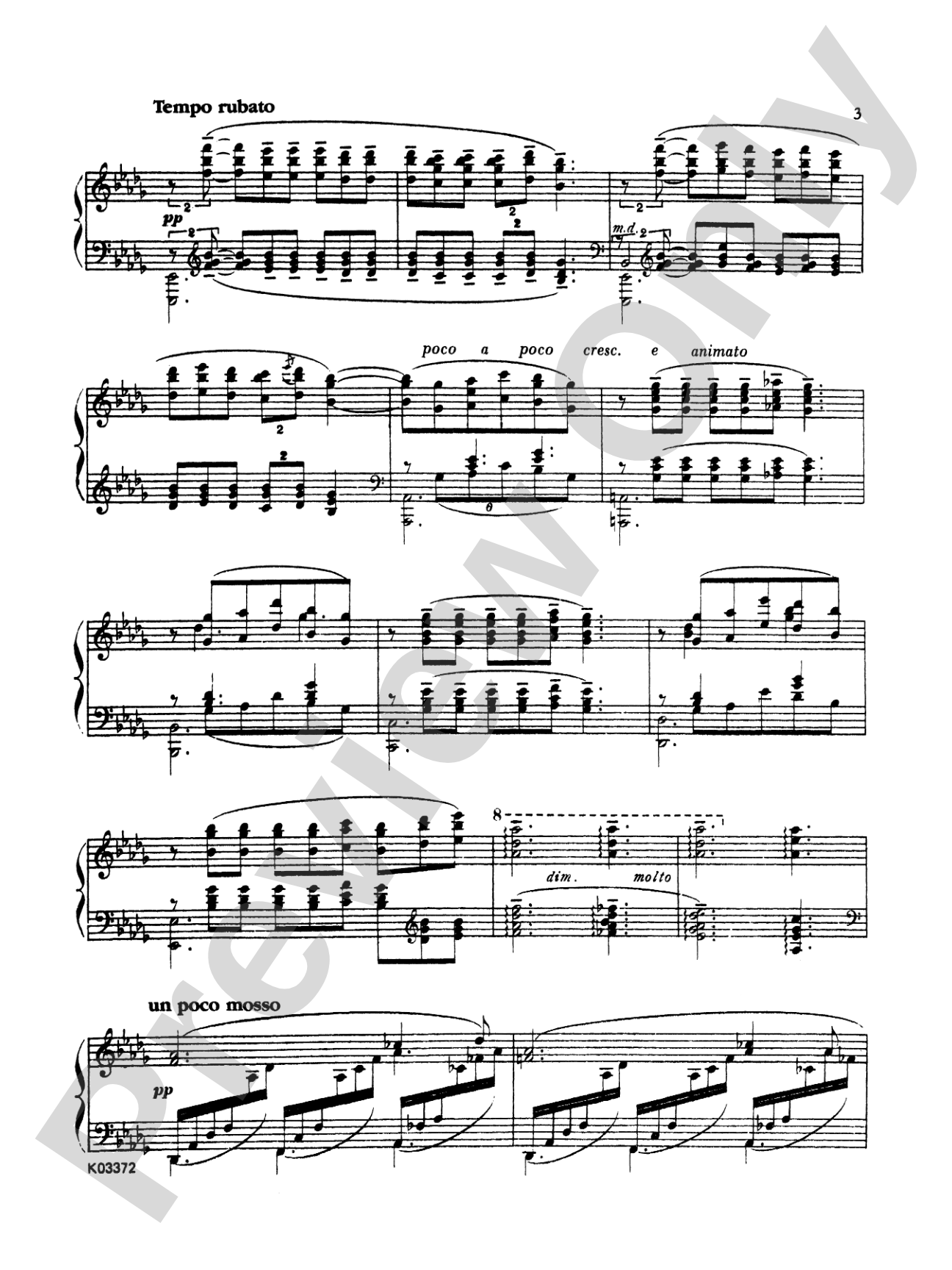
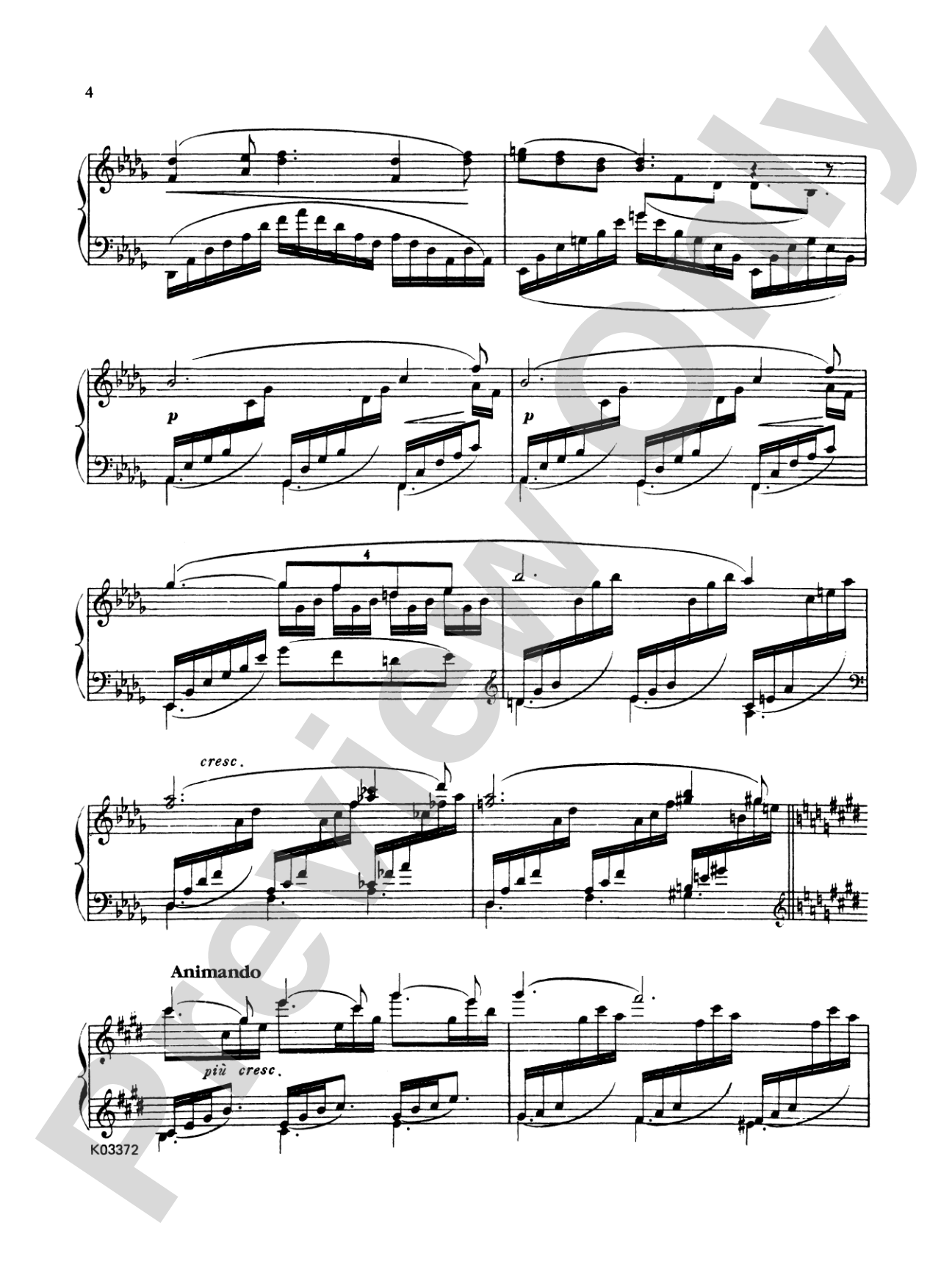
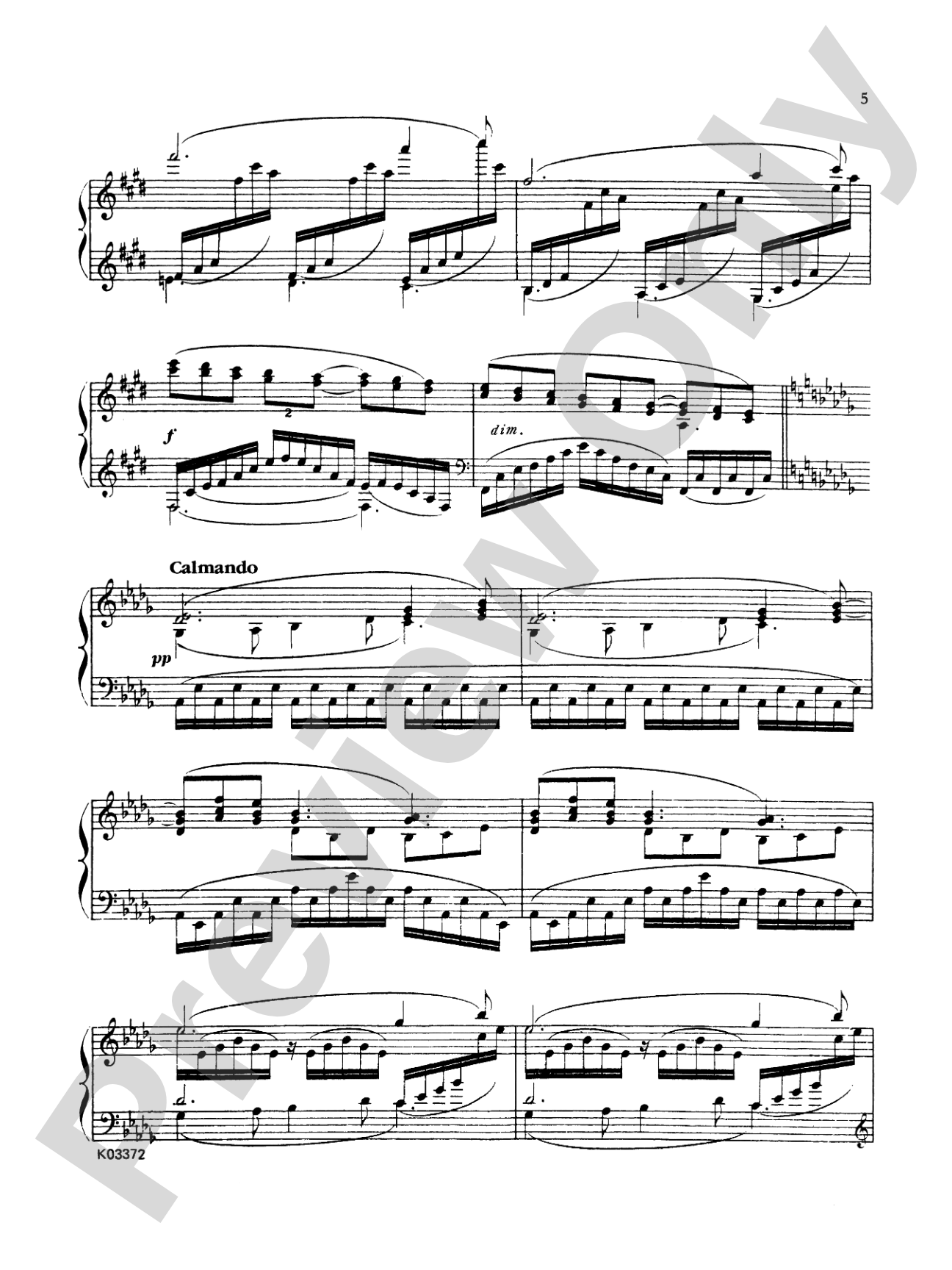
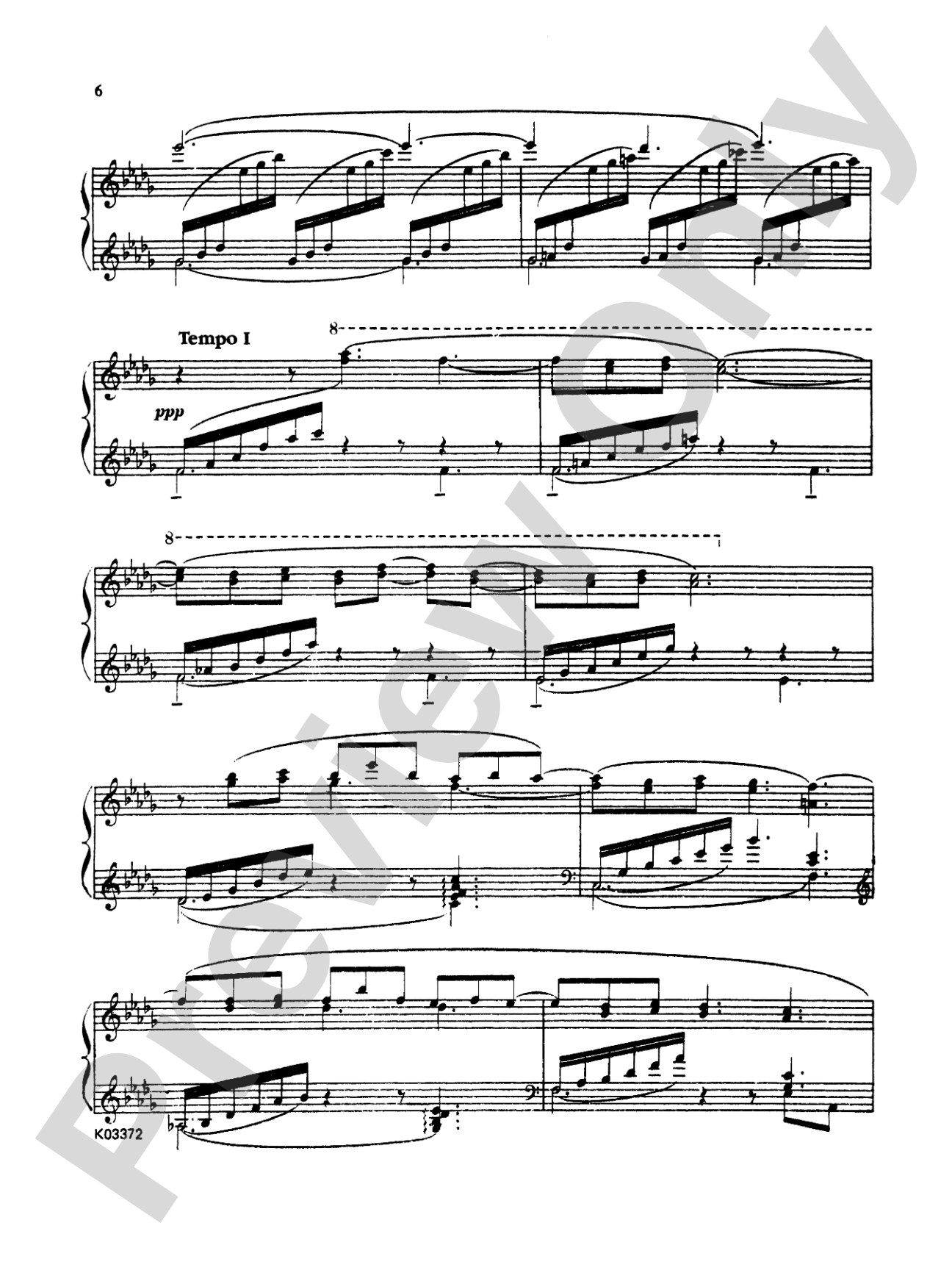
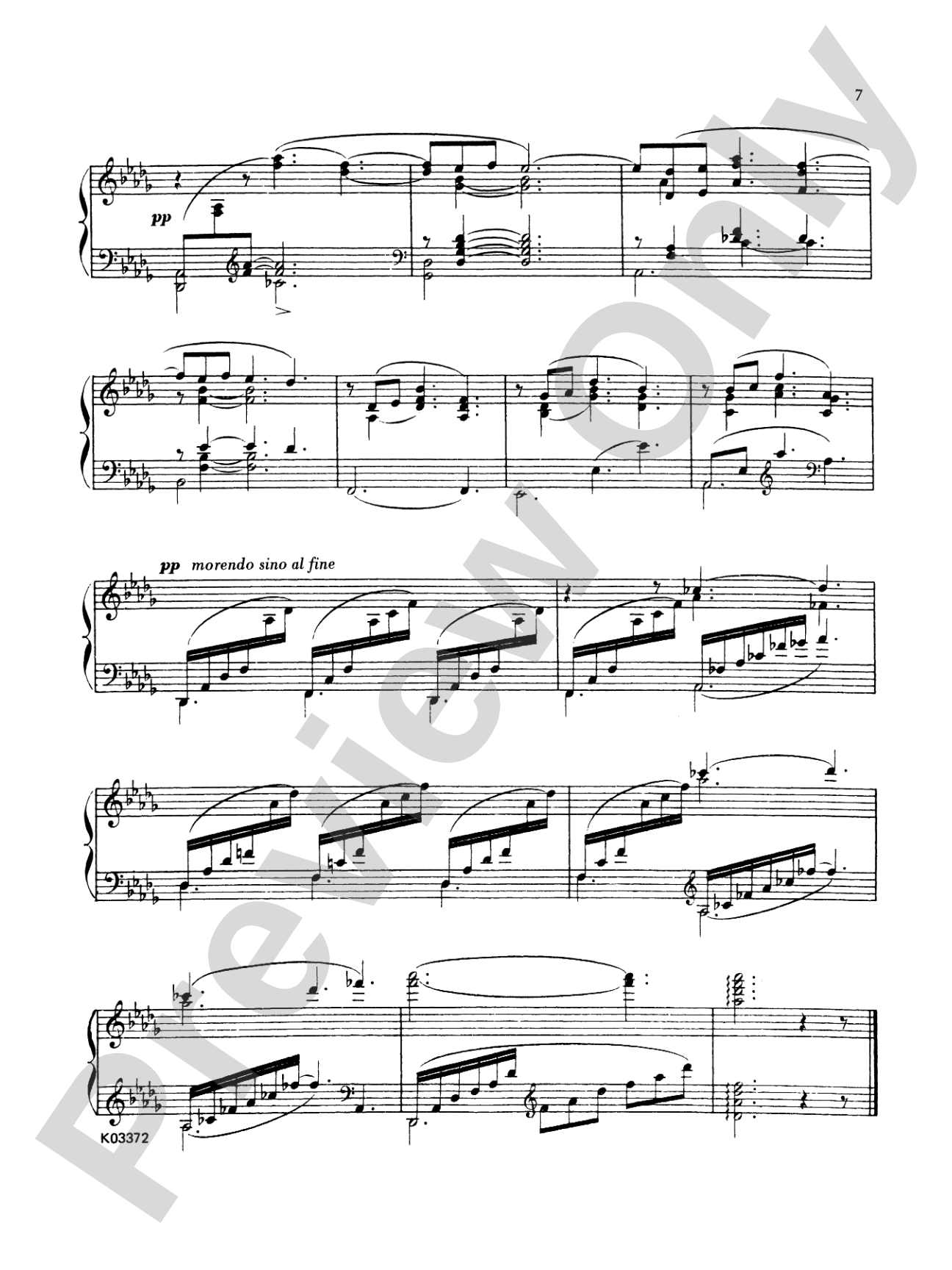
The original, unedited, unsimplified version of one of Debussy's most popular piano works. This ethereal, flowing section of "Suite Bergamasque" is diatonic and displays a conventional harmonic vocabulary in D-flat major. The title, "Clair de lune", suggests a relationship to Paul Verlaine's eponymous poem, describing a vision of long-dead dancers in the moonlight. The music transmits the otherworldly, transparent, and impalpable qualities of the experience while maintaining clarity and definition. Perfect for the burgeoning late intermediate pianist.


Don't just read it, hear it, play along with it, and watch your students grow with it. In MakeMusic Cloud, Debussy: Clair de Lune (from Suite Bergamasque): Piano comes alive with professional accompaniment, adjustable tempo, and built-in practice tools that turn solo practice into real progress.
Open in the Player
Jump straight in and assign it today.
Start Your Free Trial
Open this title and explore the full library in minutes.
Sample Audio
No sample audio found.
Sample Video
No sample videos found.
Additional Details
Series:
Kalmus Edition
Publisher:
Alfred Music
Page Count:
8
SKU:
00-PK-0003047
More about this title
About the Composer: Claude Debussy
Claude Debussy (1862-1918) fundamentally transformed what piano music could express. Moving beyond the Romantic era's emotional excess, he developed a compositional language rooted in color, atmosphere, and impressionistic suggestion rather than narrative drama. His innovations in harmony, texture, and orchestral thinking on the keyboard established him as one of the most influential composers of the twentieth century.
Debussy's approach to the piano emphasizes its capacity for subtle gradations of sound and resonance. He explored how harmonic relationships could evoke mood and place without relying on traditional tonal structures, making his works both accessible to intermediate pianists and endlessly rewarding for deeper study. His influence extends far beyond classical music into jazz, film scoring, and contemporary composition.
Why we love this
This is the piece itself, uncovered and uncompromised. Late intermediate pianists gain direct access to Debussy's original conception rather than an adaptation, allowing them to grapple with the real harmonic subtlety and textural demands that make this work legendary. The diatonic clarity of D-flat major means the technical challenges serve musical expression rather than obscuring it, making this the ideal moment to introduce students to impressionistic piano writing at their level.
What to expect
The music unfolds like a dream half-remembered, suspended between waking and sleep. Transparent harmonies drift across the keyboard, creating an impression of moonlight filtering through water, neither quite substantial nor entirely ethereal. The melodic line floats above shimmering accompaniment that seems to breathe and shift rather than propel, evoking the ghostly vision of long-dead dancers that inspired Verlaine's poem.
Who it's for
Late intermediate pianists ready to encounter modernist compositional thinking through a work that rewards focused listening and refined touch. Students who have developed solid technique but may feel confined by the Romantic repertoire will find in Clair de Lune a portal to a completely different aesthetic and approach to the instrument.
How to get the most out of it
- Treat the pedal as an instrument in its own right. Debussy's texture depends on carefully timed pedal changes to create shimmer without muddiness; experiment with half-pedaling to sustain specific harmonies while keeping clarity.
- Shape the melodic line with gentle inflection rather than broad dynamics. The "otherworldly" quality emerges from transparency and restraint, not dramatic gesture.
- Listen to the resonance of the lower register supporting the melody. The bass notes establish harmonic color; allow them to ring and interact with the treble without rushing forward.
- Balance the accompaniment figuration so it recedes slightly behind the singing voice. Debussy often doubles melodies across octaves; resist the urge to equalize their volume.
How to use it
Program this as a recital centerpiece for an advanced late intermediate student; its eight pages reward focused, intimate performance and showcase musicianship beyond technical pyrotechnics. Pair it with earlier Romantic-era works to highlight the compositional shift into impressionism, or combine it with twentieth-century pieces that build on Debussy's harmonic innovations.
Skills your students will build
- Pedal control and coordination, including half-pedaling for harmonic color
- Reading and realizing impressionistic harmony in D-flat major
- Balancing melodic prominence with accompaniment texture
- Subtle dynamic shaping and tonal refinement on the keyboard
- Sustaining legato across non-adjacent register changes