
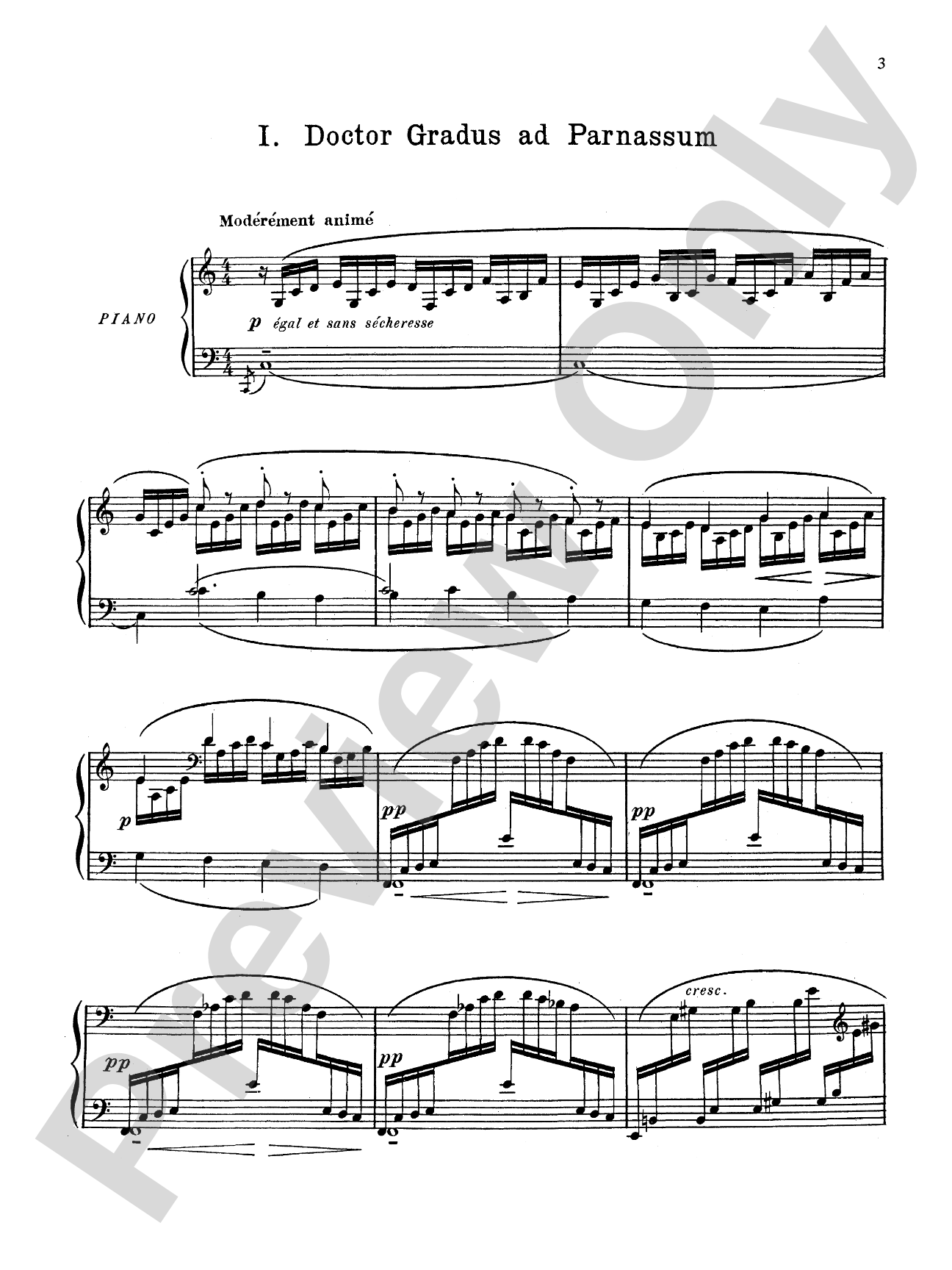
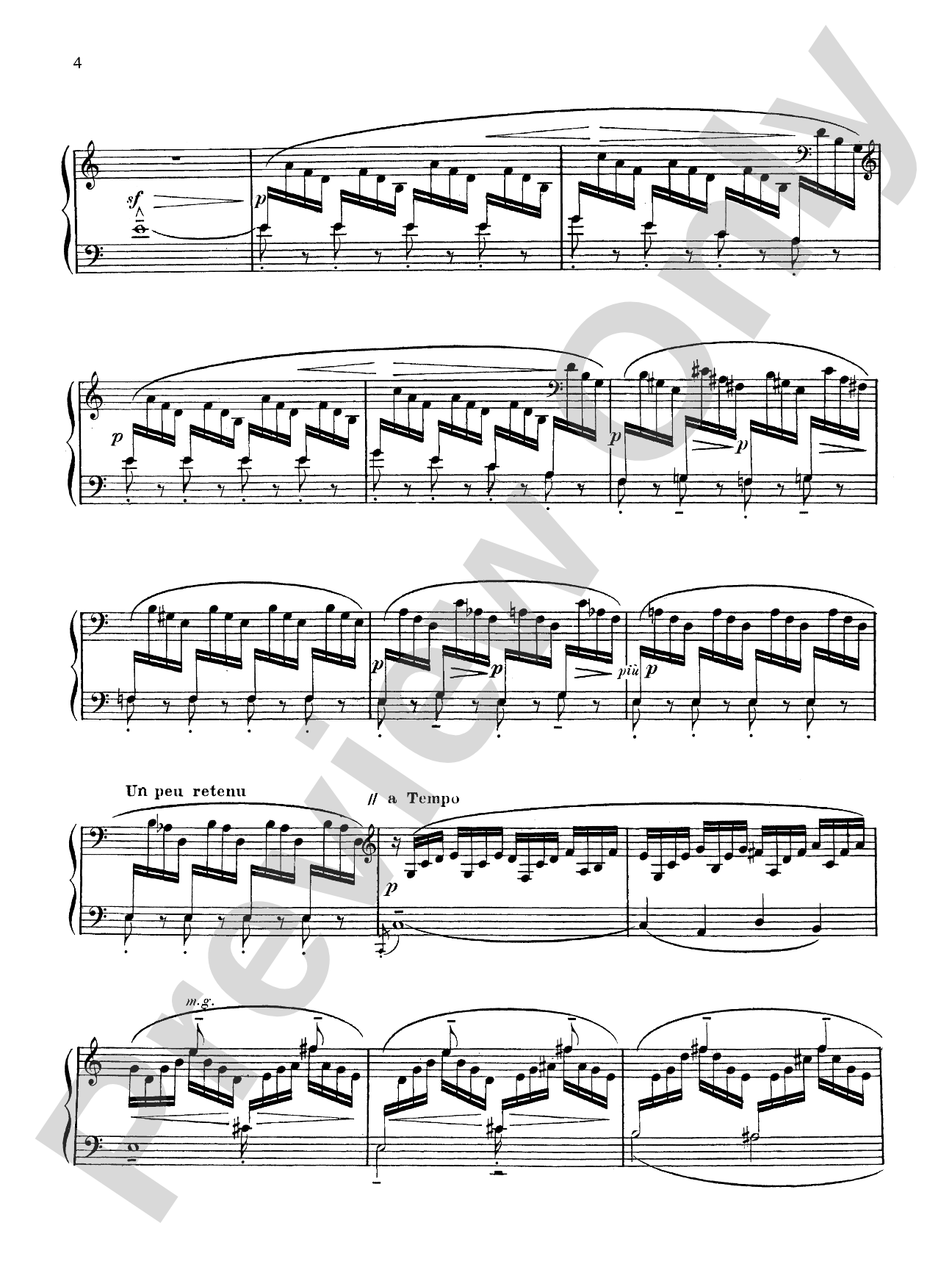
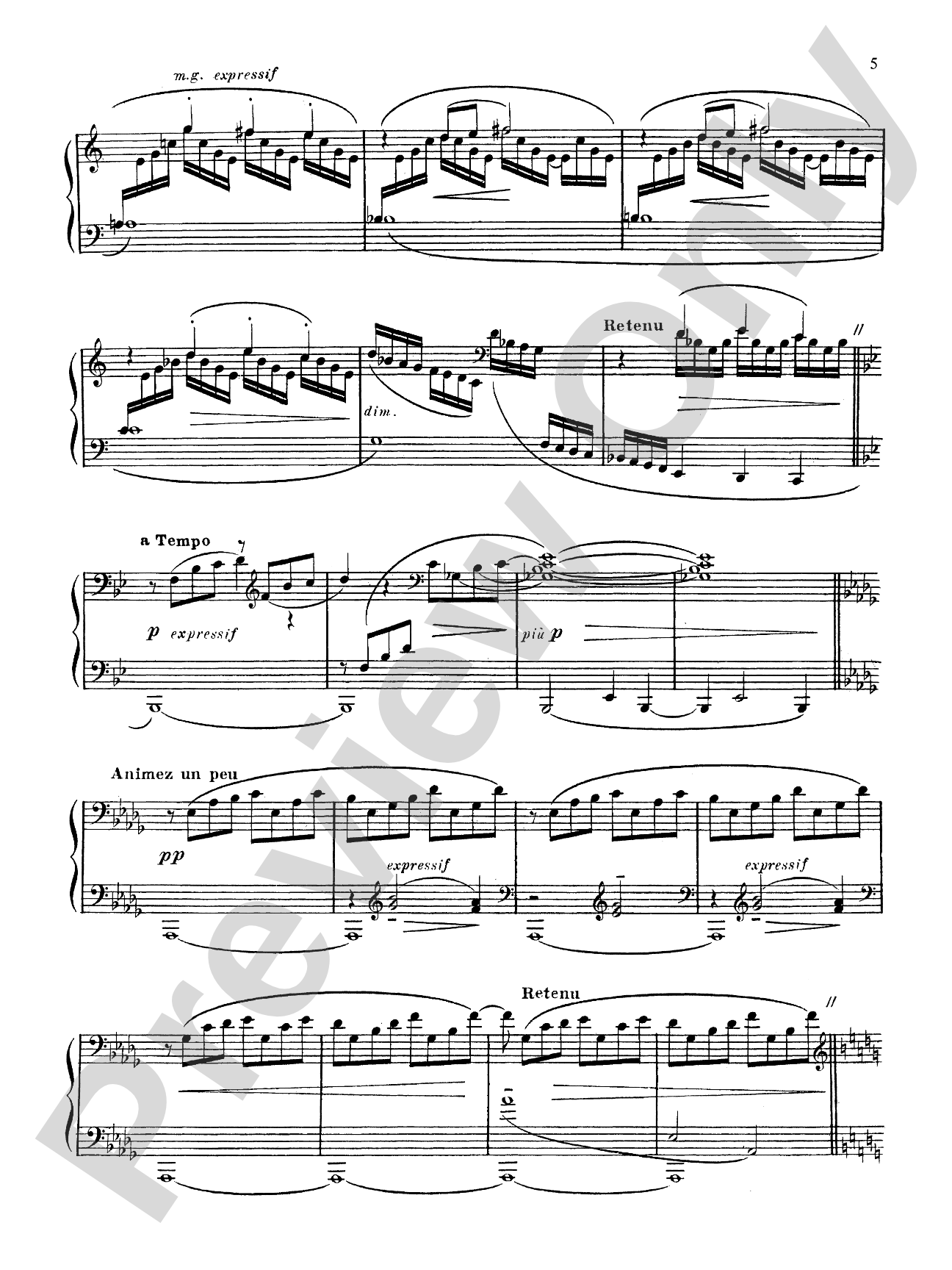
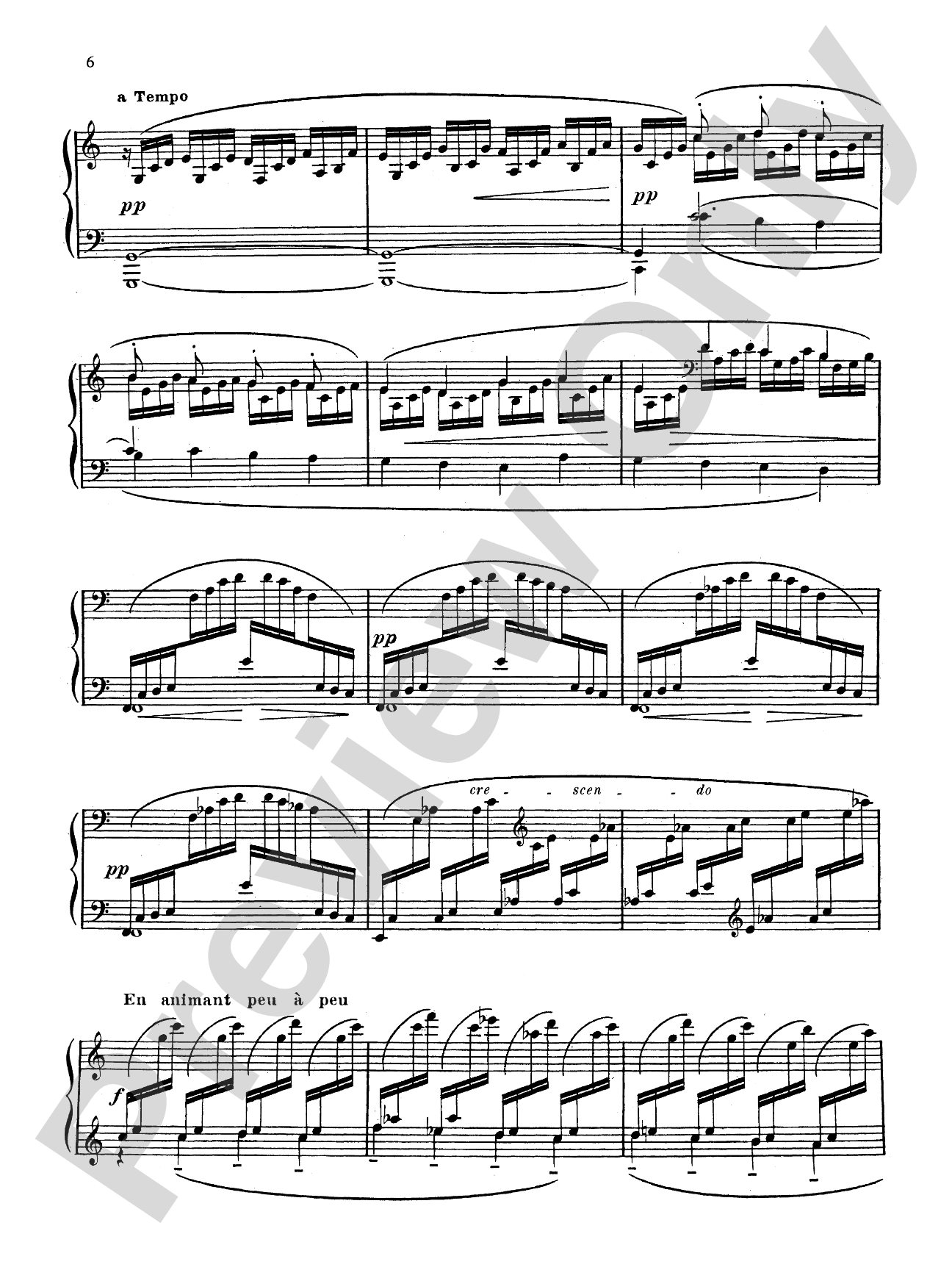

Debussy: Children's Corner: Piano Book
By Claude Debussy
Level: Advanced
Item: 00-PK-0003925

$9.99
Pickup currently not available
Buy Extra Parts (Digital PDF Download)
| Product | Price | Quantity |
|---|---|---|
| Debussy: Children's Corner | $0.99 | |
| Debussy: Children's Corner | $0.99 | |
| Debussy: Children's Corner | $0.99 | |
| Debussy: Children's Corner | $0.99 | |
| Debussy: Children's Corner | $0.99 | |
| Debussy: Children's Corner | $0.99 |
Parts Added to Cart!
Description
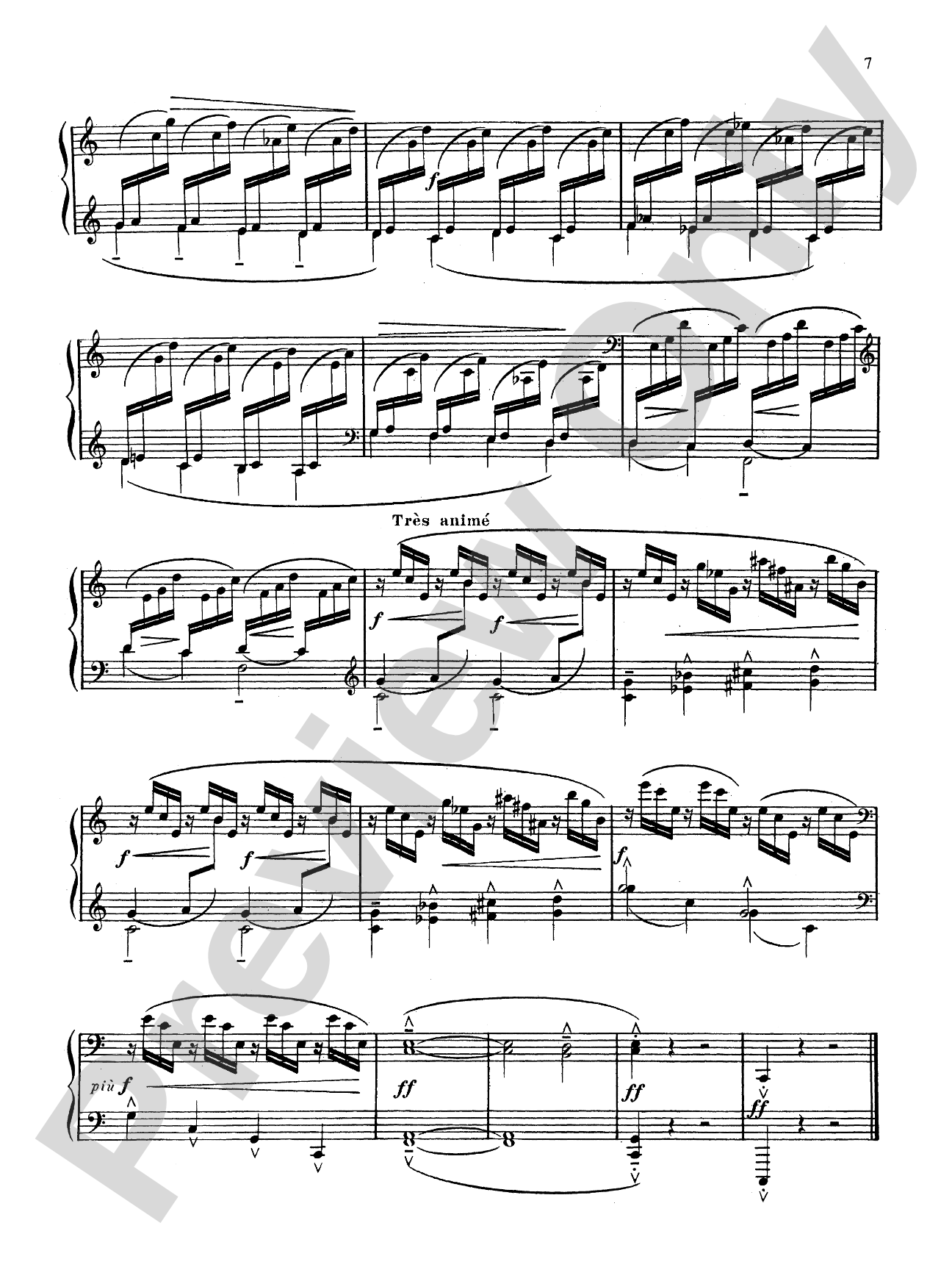
Debussy's six-movement suite for solo piano, "Children's Corner" (L. 113), was published in 1908. It is dedicated to Debussy's daughter, Claude-Emma (known as "Chou-Chou"), who was three years old at the time. The pieces are not intended to be played by children; rather they are meant to be evocative of childhood and some of the toys in Claude-Emma's toy collection. Includes: Doctor Gradus ad Parnassum * Jimbo's Lullaby * Serenade for the Doll * The Snow is Dancing * The Little Shepherd * Golliwogg's Cake Walk.


Don't just read it, hear it, play along with it, and watch your students grow with it. In MakeMusic Cloud, Debussy: Children's Corner: Piano Book comes alive with professional accompaniment, adjustable tempo, and built-in practice tools that turn solo practice into real progress.
Open in the Player
Jump straight in and assign it today.
Start Your Free Trial
Open this title and explore the full library in minutes.
Sample Audio
No sample audio found.
Sample Video
No sample videos found.
Additional Details
Series:
Kalmus Edition
Publisher:
Alfred Music
Page Count:
32
SKU:
00-PK-0003925
More about this title
About the Composer: Claude Debussy
Claude Debussy (1862, 1918) fundamentally reshaped how composers thought about harmony, color, and form. Rather than building music from traditional harmonic progressions and clear structural landmarks, he treated the piano as an instrument capable of creating atmosphere and impression. His influence on twentieth-century music cannot be overstated: he showed that you could break rules of voice-leading and functional harmony and still create something musically coherent and deeply expressive.
Debussy's piano works are essential repertoire for any advanced student. They demand not just technical facility but also a refined ear for sonority, an understanding of pedaling as a compositional tool, and the ability to shape phrases with subtlety rather than drama. Children's Corner stands among his most accessible masterworks, yet its demands on the performer are genuine and uncompromising.
Why we love this
These pieces demand serious musical maturity despite their whimsical titles and childhood inspiration. The technical challenges lie not in flashy passagework but in shaping color, sustaining long phrases across registers, and balancing crystalline clarity with impressionistic haze, making this suite a masterclass in refined pianistic control.
What to expect
Childhood filtered through an adult's memory and imagination, rendered in shimmering textures and subtle shifts of color. Each movement opens a small window onto a particular moment or object, from the steady rhythm of a young child's piano lesson to the shuffling, rocking gait of a wind-up doll, all rendered in Debussy's distinctive harmonic language that hovers between major and minor, between tonality and suggestion.
Who it's for
Advanced pianists seeking to deepen their understanding of 20th-century piano writing and impressionistic color. This suite rewards the kind of mature listener who recognizes that Debussy's apparent simplicity masks considerable technical and interpretive sophistication.
How to get the most out of it
- Approach the pedal as an instrument unto itself; Debussy's pedal markings create harmonic blur and resonance that are essential to the music's character, not optional effects.
- Shape each movement's opening gesture with particular care; these introductions establish the emotional world and often set the tone for everything that follows.
- Listen closely to the interplay between registers; many passages gain their magic from the dialogue between treble and bass, so clarity of separation matters as much as blend.
- Practice the rhythmic freedom of passages marked with flexible tempos in short bursts, then gradually expand until the flexibility feels natural rather than labored.
How to use it
Program this suite as a complete work to showcase the range of a pianist's interpretive and technical abilities across a single recital. Its length and self-contained narrative also make it an excellent vehicle for a lecture-recital exploring how Debussy reshaped piano sound and structure in the early 20th century.
Skills your students will build
- Controlling harmonic color through selective use of the sustain pedal
- Balancing multiple melodic lines across different registers without muddying the texture
- Interpreting impressionistic harmony and whole-tone passages
- Shaping phrases with rhythmic freedom and rubato in a modern context
- Executing quick hand position shifts and cross-hand figurations with clarity
- Reading and executing Debussy's unconventional notational conventions