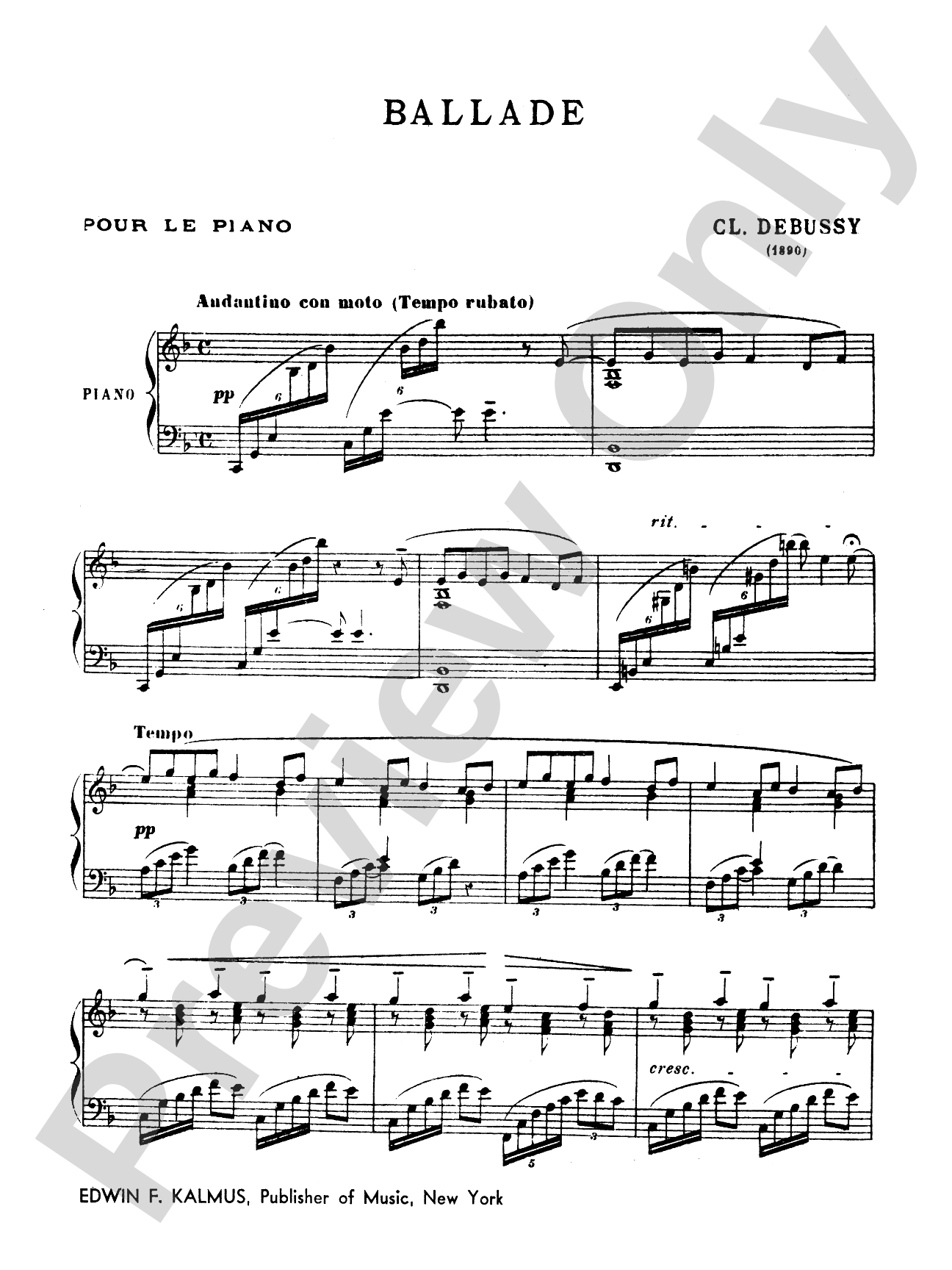
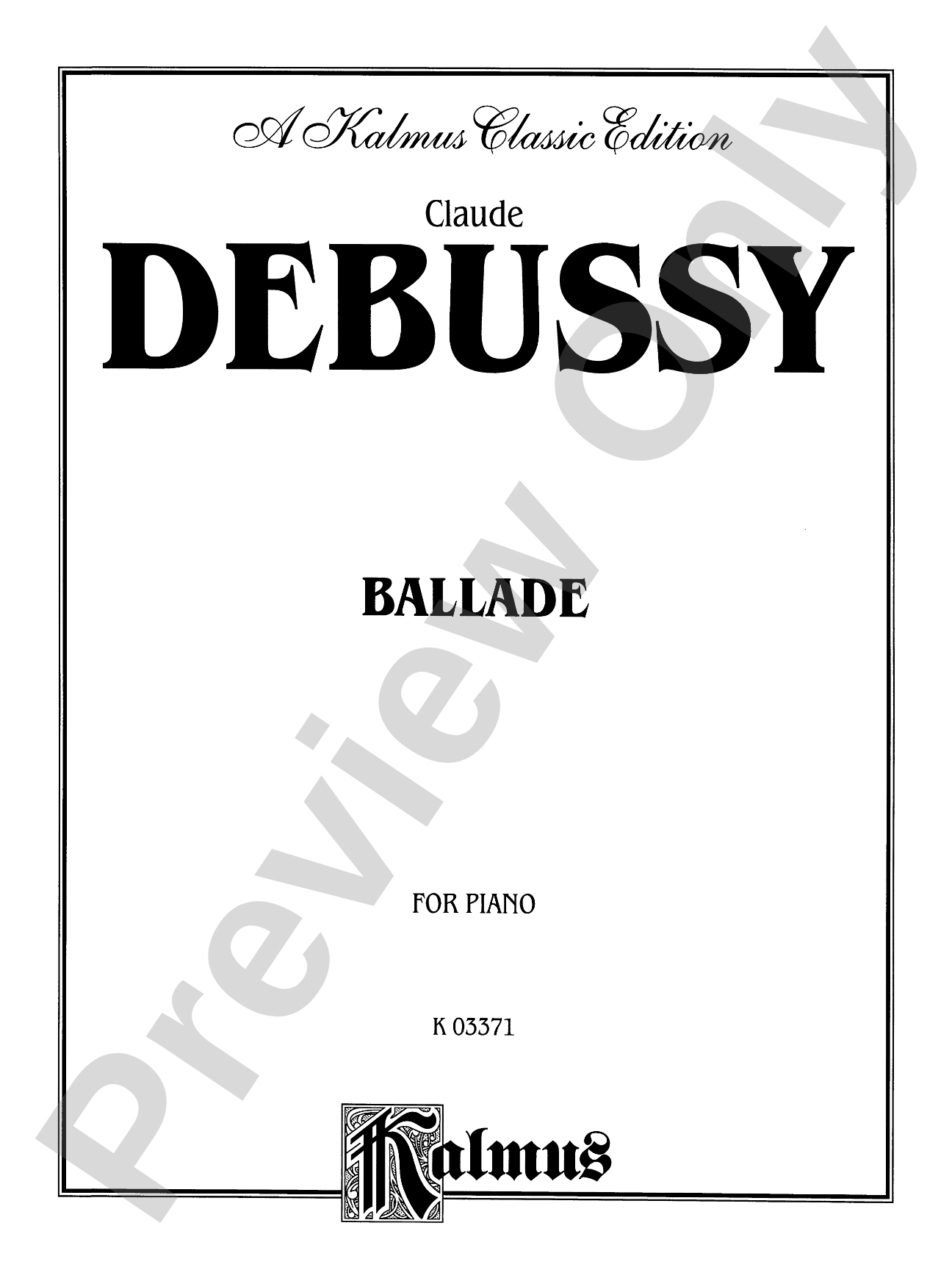
Debussy: Ballade Sheet Music Preview

Debussy: Ballade

By Claude Debussy

Item: 00-PC-0006896

Digital Download
$5.99
Description
Debussy composed his "Ballade Slave" in 1890, but when the piece was published some years later, it was known simply as "Ballade."

Don't just read it, hear it, play along with it, and watch your students grow with it. In MakeMusic Cloud, Debussy: Ballade comes alive with professional accompaniment, adjustable tempo, and built-in practice tools that turn solo practice into real progress.

Sample Audio
No sample audio found.
Sample Video
Additional Details
Series: Kalmus Edition
Publisher: Alfred Music
Page Count: 12
SKU: 00-PC-0006896

More about this title

About the Composer: Claude Debussy

Claude Debussy (1862-1918) fundamentally reshaped how composers approached harmony, orchestration, and form. His investigations into sound as a primary expressive tool, rather than a vehicle for traditional harmonic progression, opened pathways that influenced generations of composers across all genres. Debussy's piano works in particular reveal his mastery of the instrument's coloristic possibilities; each piece asks pianists to think beyond note accuracy toward the creation of atmosphere and mood.

Why we love this

Ballade sits at an intriguing crossroads in Debussy's output: it predates many of his most famous piano works yet shows his harmonic language already in transition. The piece rewards interpretive maturity and offers students a genuine encounter with Impressionistic pianism without the extreme technical demands of later masterworks like L'isle joyeuse.

What to expect

Ballade unfolds with a sense of wistful contemplation, its harmonies shimmering between major and minor, expected and unexpected. The piece draws the listener inward, creating intimate moments of vulnerability that sit comfortably within Debussy's world of suggestion and impressionistic color rather than dramatic gesture.

Who it's for

This piece suits intermediate-advanced pianists who have developed control over pedal technique and musical maturity beyond mechanical note-reading. It is ideal for students ready to engage with harmonic ambiguity and understand how composers use timbre and resonance as structural tools.

How to get the most out of it

  • Attend closely to Debussy's pedal markings. He uses the sustain pedal structurally to blur and blend sonorities; lifting it cleanly at his indicated points will feel dramatic and intentional rather than heavy.
  • Shape the melodic line with subtle dynamic shaping rather than aggressive phrasing. The rubato should feel inevitable, born from harmonic momentum, not superimposed.
  • Experiment with voicing the accompanimental figures across octaves to create depth and resonance without muddying the texture with excessive pedal.
  • Balance clarity in the left-hand figurations against the singing quality of the upper voice. Both layers matter equally to the overall color.

How to use it

Ballade works beautifully in recitals focused on late 19th-century piano literature or as a bridge between Romantic and modern aesthetics. Its 12-page length makes it suitable for mid-program placement, where it can offer contrast to heavier virtuosic works while maintaining sophisticated musical content.

Skills your students will build

  • Pedal control and sonority shaping in Impressionistic idiom
  • Reading and interpreting chromatic and extended harmonies
  • Balancing sustained resonance with textural clarity
  • Flexible rubato grounded in harmonic structure
  • Understanding tonal ambiguity as an expressive choice

You May Also Like