Dear Lord And Father Of Mankind Sheet Music Preview

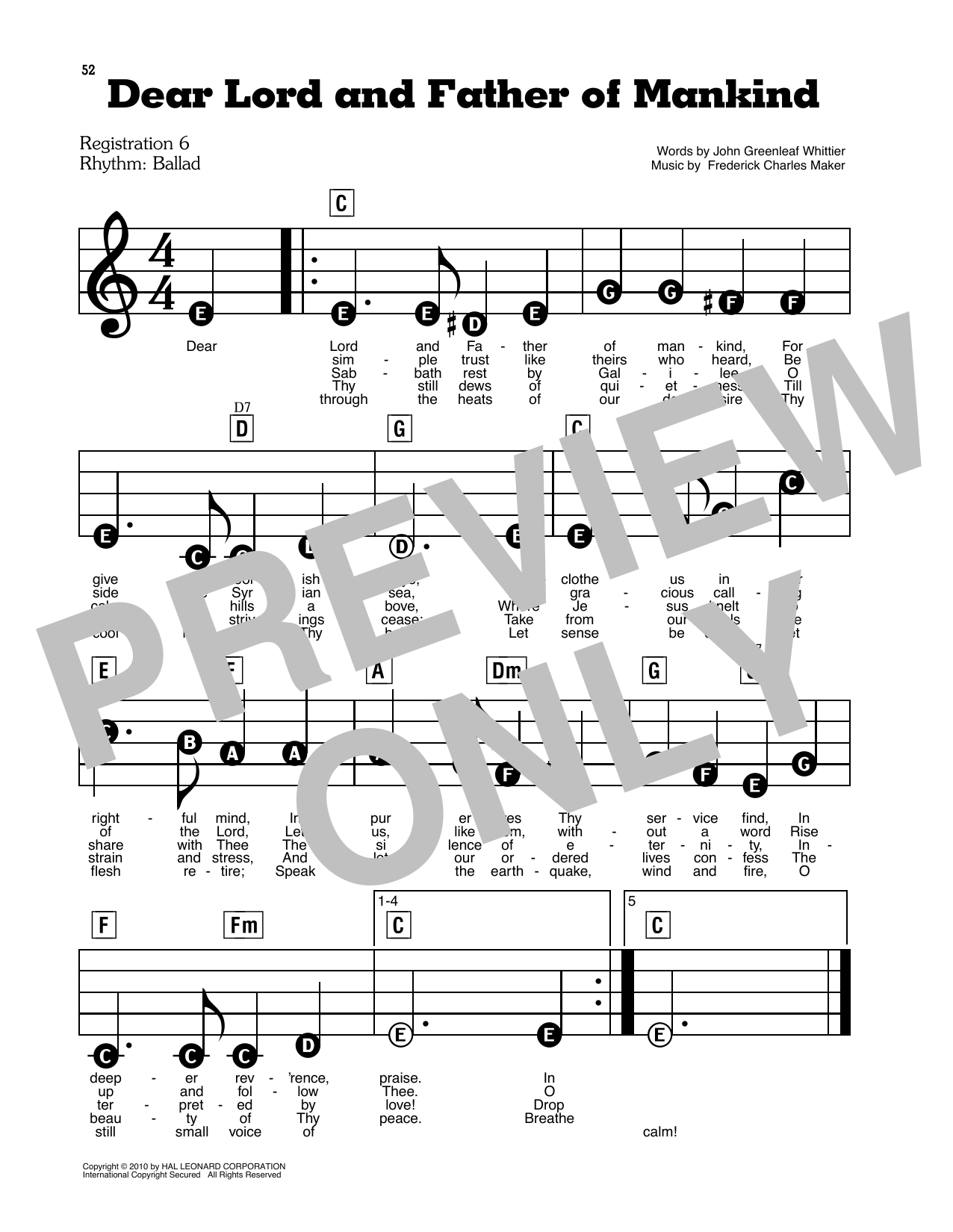
Dear Lord And Father Of Mankind: E-Z Play Today

Item: 35-DS00459452

Digital Download
$4.99
Description

Dear Lord And Father Of Mankind: E-Z Play Today isn't in MakeMusic Cloud just yet...but it could be. Let us know you'd like to see it, and you'll help shape what comes next. In the meantime, start a free trial and dive into thousands of interactive titles your students can play along with today.

Sample Audio
No sample audio found.
Sample Video
Additional Details
Publisher: Hal Leonard
Page Count: 1
SKU: 35-DS00459452

More about this title

About the Creator: John Greenleaf Whittier

John Greenleaf Whittier (1807-1892) was an American Quaker poet and abolitionist whose written words shaped both social movements and the broader landscape of American hymnody. His 1872 poem "Dear Lord and Father of Mankind" emerged from his deep spiritual convictions and has become one of the most beloved hymn texts in English-speaking churches. The poem's meditation on inner peace and divine presence resonates across denominations, making it a cornerstone of congregational singing and a frequent choice for arrangements and adaptations across multiple formats.

Why we love this

This single-page arrangement captures the hymn's essential dignity without overwhelming students or accompanists. The E-Z Play approach makes it immediately accessible, whether you're preparing for a school assembly, accompanying a youth choir, or offering beginning pianists their first experience with sacred literature that carries real historical and spiritual weight.

What to expect

The hymn unfolds with quiet contemplation, inviting introspection rather than grand proclamation. Its gentle contours and unhurried harmonic language create space for both musician and listener to sit with the spiritual inquiry at the poem's heart.

Who it's for

This arrangement serves pianists building foundational skills with hymn accompaniment, school music programs looking for sacred repertoire that feels substantive without excessive technical demands, and accompanists seeking a practical single-page version for rehearsals, services, or informal settings.

How to get the most out of it

  • Let the melody breathe. Hymns benefit from slightly expanded phrasing at phrase endings, so resist the urge to rush through cadences.
  • Balance the hymn tune with its harmonic support. The accompaniment should cushion the melody rather than compete with it.
  • Consider tempo in relation to your setting. A slower pulse often honors the reflective quality of this particular text; avoid rushing from reverence into sentimentality.

How to use it

Pair this with your choral warm-ups or use it as a closing piece for services, assemblies, and community events where a moment of collective reflection feels appropriate. It also works well as a supplementary resource when teaching basic hymn leadership or when your ensemble needs a confidence-building piece with genuine musical substance.

Skills your students will build

  • Reading and interpreting hymn texts musically
  • Balance between melody and accompaniment
  • Shaping phrases with breath and pacing
  • Understanding functional harmony within sacred contexts
  • Accompaniment flexibility for congregational or choral settings

You May Also Like