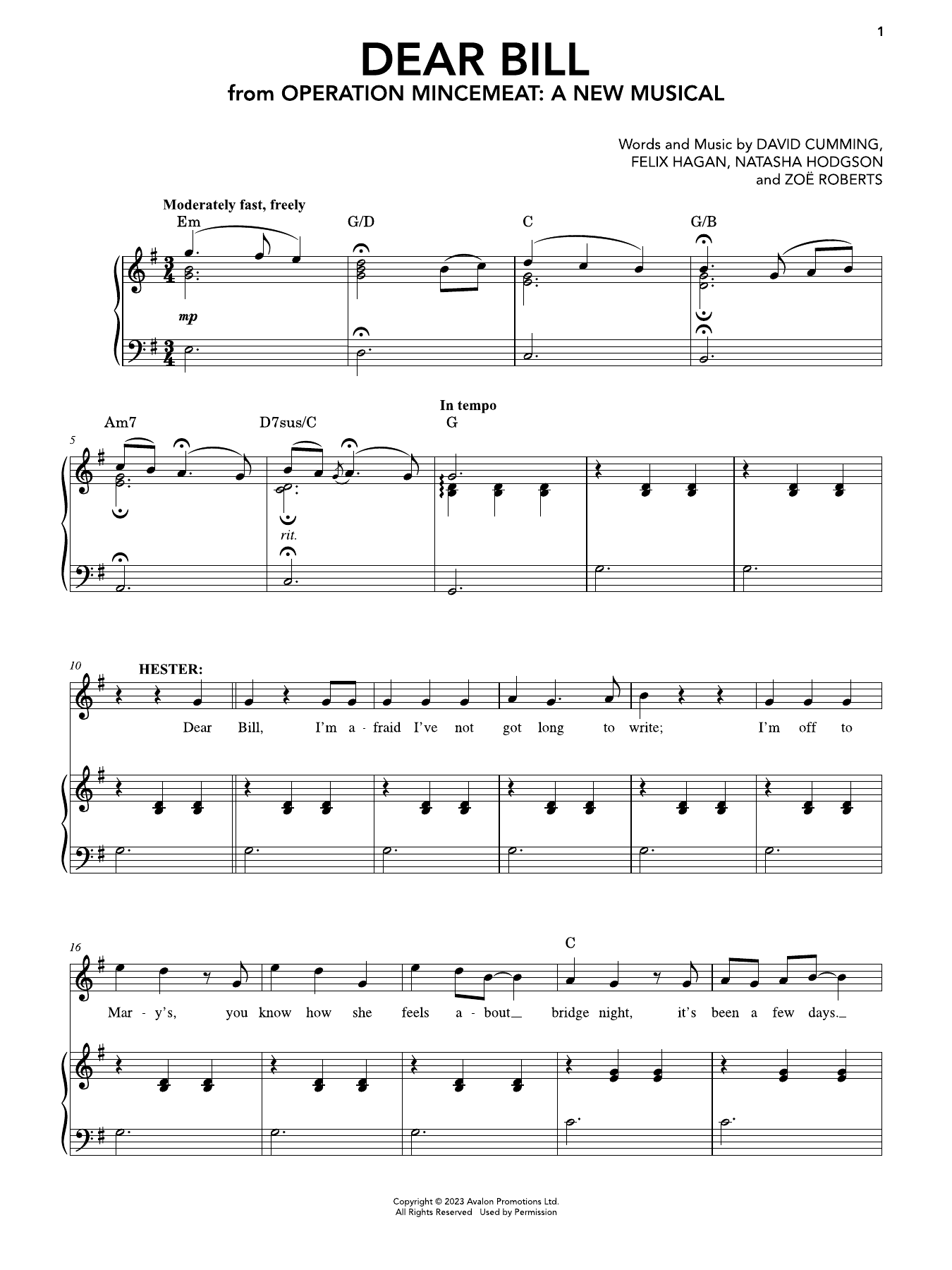
David Cumming is a composer and lyricist working across musical theatre, film, and concert music. His collaborative approach to songwriting brings narrative clarity and emotional directness to theatrical projects, making his work accessible to performers and audiences alike.
Why we love this
This song sits at the intersection of spy thriller and intimate character moment, giving singers material that demands both theatrical flair and genuine vulnerability. The collaborative composition credits suggest a piece built on strong melodic bones and clever lyrical craftsmanship, qualities that make it engaging for both classroom singers and recital performers.
What to expect
Playful yet purposeful, with the kind of clever lyricism that keeps you listening closely. The song carries the tension of its theatrical context (a wartime deception operation) while maintaining an intimate, almost confessional quality between singer and pianist.
Who it's for
Singers with solid musicianship who want contemporary musical theatre material with wit and substance. This works for soloists in recital, ensemble showcases, or audition preparation, particularly those drawn to character-driven songs with narrative edge.
How to get the most out of it
Track the emotional arc beneath the narrative surface. The song's theatrical origins mean every phrase carries dramatic weight; avoid letting it become merely clever or arch.
Balance sung storytelling with musical spontaneity. Find moments where the accompaniment can breathe, rather than treating the piano part as metronomic support.
Pay attention to the relationship between lyrics and melodic shape. Notice where the melody reinforces emotional content and where it might work against expectations for dramatic effect.
How to use it
Position this in a concert featuring modern musical theatre alongside standards or art songs to show the contemporary evolution of the genre. The piece works equally well as a teaching example of how theatrical songwriting marries character development with singable, memorable melody.
Skills your students will build
Narrative clarity in sung text
Coordination between lyrical phrasing and harmonic support
Character interpretation within contemporary musical theatre idiom
Breath management across extended dramatic lines
You May Also Like
Scan to Complete Your Purchase
Use your phone's camera to scan the code below
You'll log in on your phone and the order will be added to your account