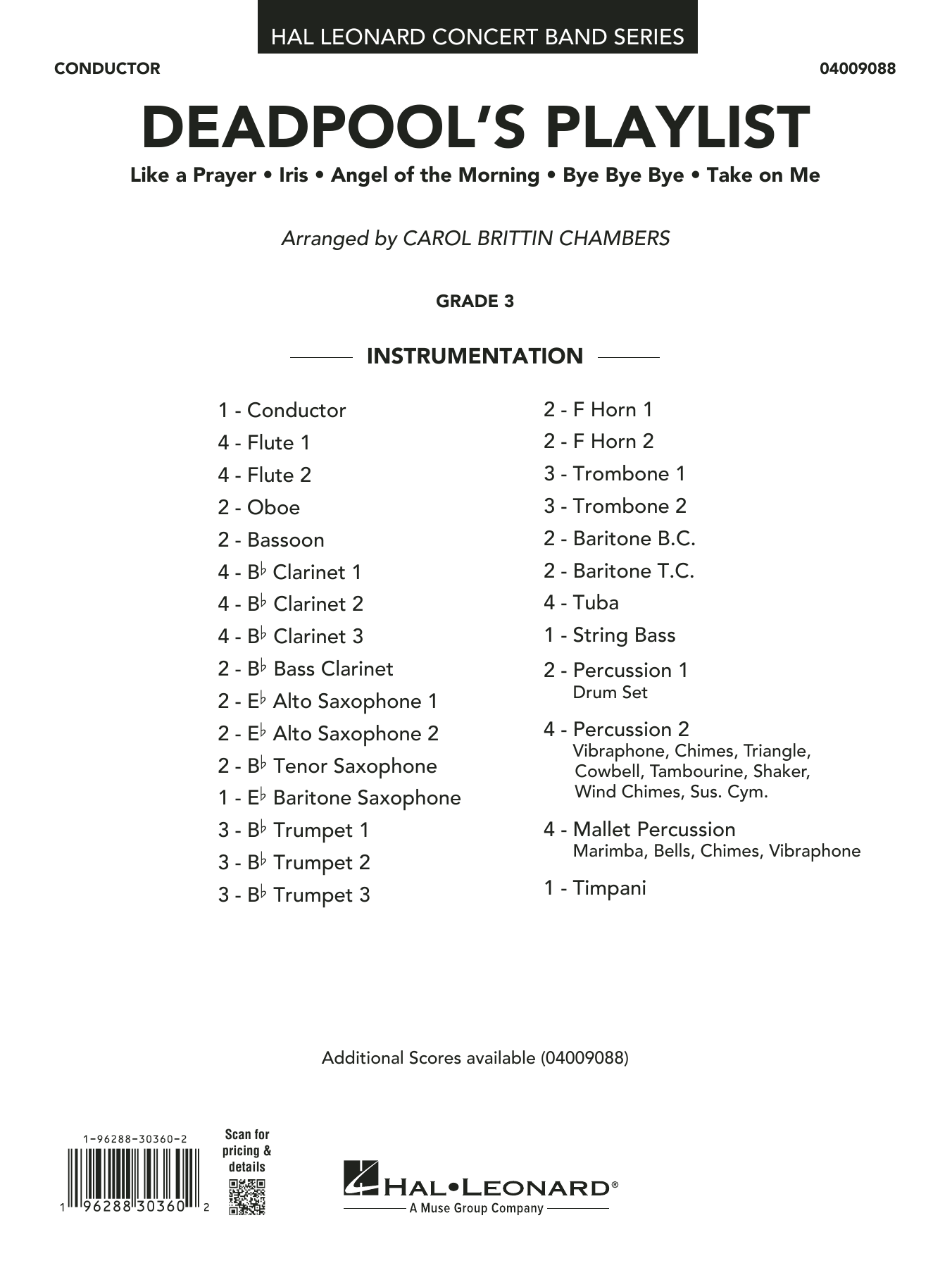
Deadpool's Playlist: Concert Band Conductor Score & Parts
Arranged by Carol Brittin Chambers
Grade: 3
Item: 35-PK01580786
Digital Download
$80.00
One moment…
Description
A perfectly arranged medley of chart topping hits from the hit movie series. Skillfully scored with variety in textures and carefully paced transitions. Includes: Like a Prayer, Iris, Angel of the Morning, Bye Bye Bye, and Take On Me.
Discover MakeMusic Cloud: thousands of interactive titles your students can play along with today.
Carol Brittin Chambers founded Aspenwood Music, LLC and maintains an active presence as both composer and arranger while teaching trumpet at Texas Lutheran University in San Antonio. Her concert band works have earned recognition on the J.W. Pepper Editor's Choice List and Bandworld Top 100, with performances at major conferences including the Midwest Clinic. She won the 2019 WBDI Composition Competition and has arranged marching shows for high school, college, and drum corps ensembles across the country.
Chambers brings deep pedagogical experience from her years teaching band at the secondary level in the North East Independent School District. She holds a Master of Music in Trumpet Performance from Northwestern University and a Bachelor of Music Education from Texas Tech University, studying with renowned pedagogues including Arnold Jacobs and John Paynter.
Why we love this
Chambers has crafted an arrangement that respects the melodic integrity of five iconic songs while building genuine variety into the orchestration. The medley structure avoids the trap of feeling rushed or disjointed; instead, the pacing and textural shifts create natural breathing room that keeps both performers and audience engaged throughout.
What to expect
Fresh and intentional. Rather than feeling like a greatest-hits jukebox, this medley moves with purpose through five distinct musical personalities, each one recognizable but reimagined for concert band color. The shifting orchestrations and carefully sculpted transitions give the whole thing a polished, deliberate quality.
Who it's for
Grade 3 bands looking for programming that energizes audiences without talking down to student musicians. The arrangement balances accessibility with real textural interest, making it especially effective for spring or end-of-year concerts where you want strong audience connection and solid student engagement.
How to get the most out of it
Balance the opening statements of each song so the familiar melody cuts through clearly. With five different tunes, your audience needs that immediate recognition to settle in.
Pay attention to Chambers' transition passages. They're written to be efficient, which means they require clean ensemble attacks and releases to land the pivot to the next tune.
Adjust your tempo relationships between sections. Each song has its own character; avoid rushing the slower material or dragging the uptempo moments.
Check which sections get the melody at any given moment. In a medley, students often assume they're accompanying when they actually carry primary material.
How to use it
Position this as a centerpiece closer on a concert or as a standalone feature that celebrates contemporary music alongside your classical repertoire. The recognizable songs create natural audience enthusiasm while the professional arrangement demonstrates your musicians' capability to handle modern idioms with musicality. It works especially well when you want to bookend a program of standard wind band fare with something that connects to students' own musical world.
Skills your students will build
Reading and executing varied articulation patterns across different stylistic contexts
Maintaining ensemble precision through sectional transitions and tempo changes
Balancing melody and accompaniment roles within a single arrangement
Interpreting stylistic nuance in pop and contemporary music adapted for concert band
Responding to textural shifts in orchestration
You May Also Like
Scan to Complete Your Purchase
Use your phone's camera to scan the code below
You'll log in on your phone and the order will be added to your account