De Virgine Maria (SATB and harp version) - Score Sheet Music Preview

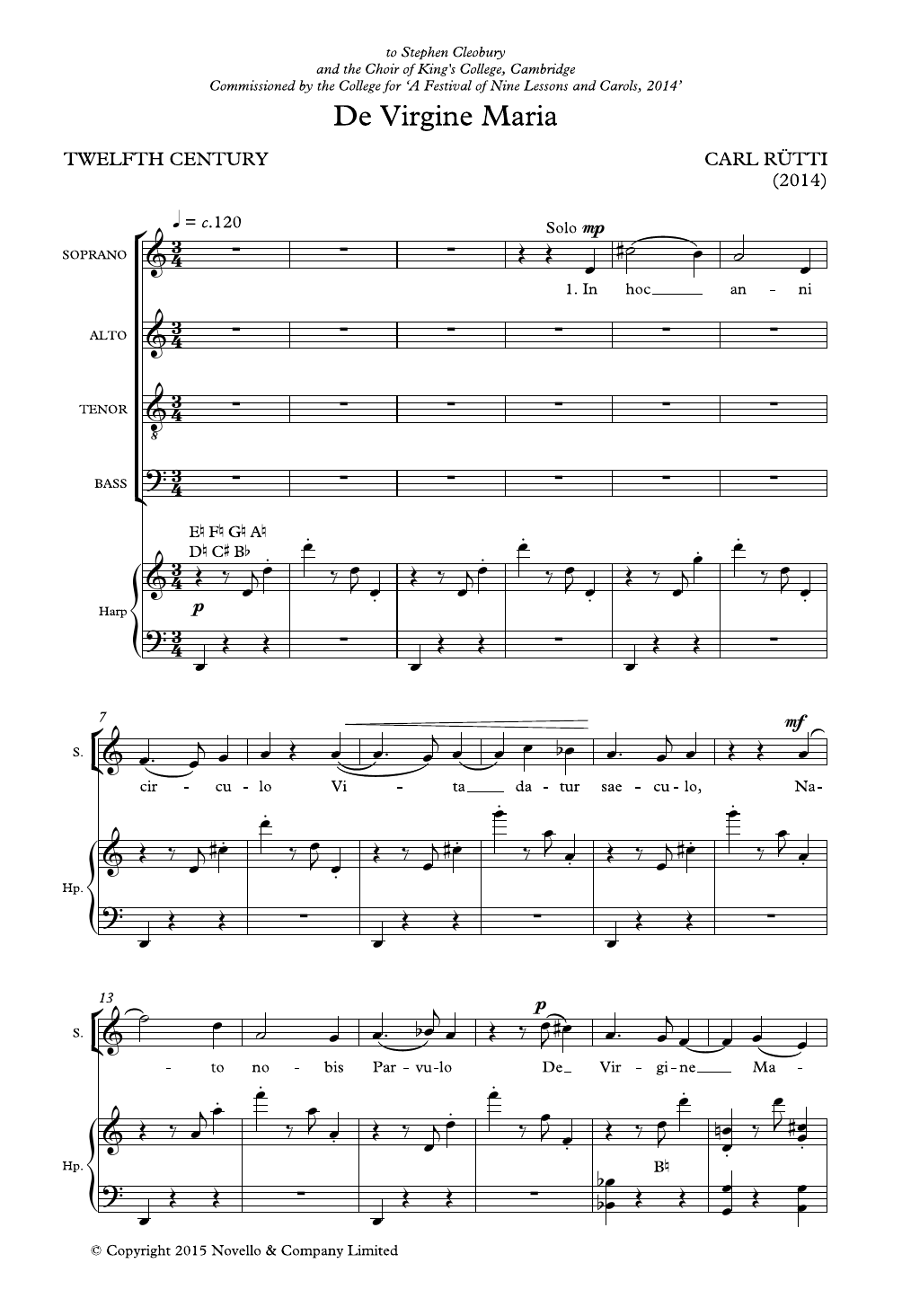
De Virgine Maria (SATB and harp version) - Score: SATB Choral Octavo

By Carl Rütti

Item: 35-DS01662347

Digital Download
$4.95
Description

De Virgine Maria (SATB and harp version) - Score: SATB Choral Octavo isn't in MakeMusic Cloud just yet...but it could be. Let us know you'd like to see it, and you'll help shape what comes next. In the meantime, start a free trial and dive into thousands of interactive titles your students can play along with today.

Sample Audio
No sample audio found.
Sample Video
Additional Details
Publisher: Hal Leonard
Page Count: 15
SKU: 35-DS01662347

More about this title

About the Composer: Carl Rütti

Carl Rütti (1878-1955) was a Swiss composer and conductor whose works span choral, orchestral, and chamber music. He spent much of his career in Swiss musical institutions, where he developed a keen understanding of vocal writing and the demands of both professional and amateur choirs. His compositional style draws on the rich choral traditions of Central Europe while maintaining clarity of texture and accessibility.

Why we love this

Rütti's setting of this Marian text brings liturgical weight without the complexity that can overshadow smaller choirs. The harp accompaniment adds textural warmth and translucence that feels contemporary to his era while remaining deeply reverent. This is the kind of piece that sounds more elaborate than it is to prepare, giving you impressive results without months of rehearsal time.

What to expect

Serene and reverential, with the gentle shimmer of the harp creating an almost ethereal backdrop for the vocal lines. The harmonic language is warm and tonal, never harsh, allowing listeners to sink into a meditative state while the choir maintains elegant clarity.

Who it's for

Choirs with access to harp accompaniment and the ability to handle moderate ranges comfortably across all four parts. The piece suits both liturgical programs and secular concert settings, working well for choirs seeking repertoire that bridges classical tradition with intimate spirituality.

How to get the most out of it

  • Balance the harp against the choir carefully in rehearsal; mark dynamic relationships early so singers aren't fighting the accompaniment for presence
  • Shape the harmonic progressions with gentle crescendos rather than abrupt changes; Rütti's voice leading rewards smooth, connected phrasing
  • Attend to the independence of each voice part during homophonic sections; clarity of line matters even when voices move together

How to use it

Position this as a centerpiece in a concert devoted to European sacred or devotional repertoire from the late Romantic period. It also serves well as a quieting moment between more energetic works, offering your audience a chance to exhale. Consider pairing it with other works requiring harp to maximize your accompanist's involvement on the program.

Skills your students will build

  • Blending within four-part texture across varied tessituras
  • Sustaining legato singing over harp accompaniment
  • Interpreting harmonic movement through dynamic shape and phrasing
  • Maintaining rhythmic independence when harp patterns diverge from vocal lines

You May Also Like