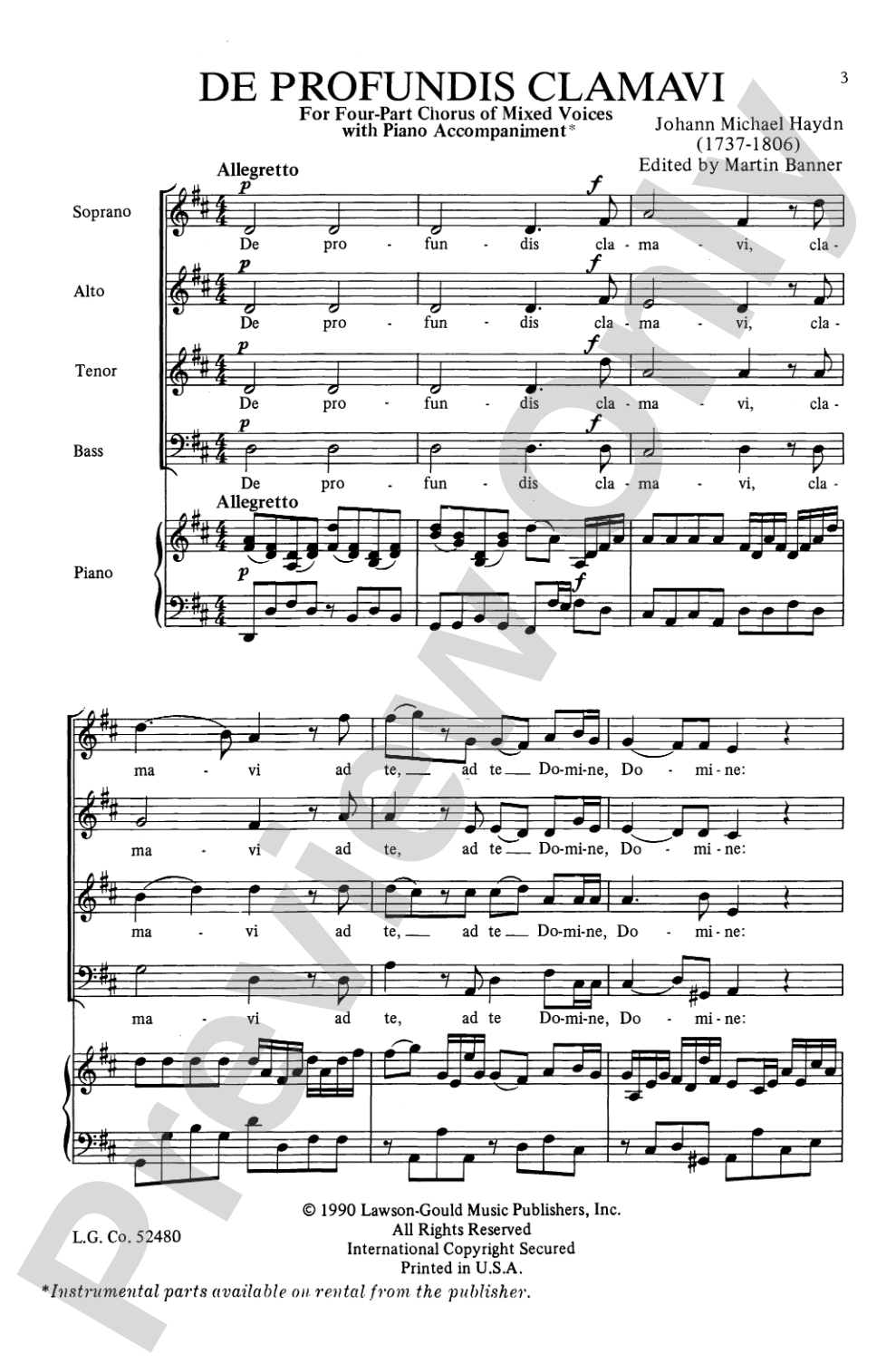
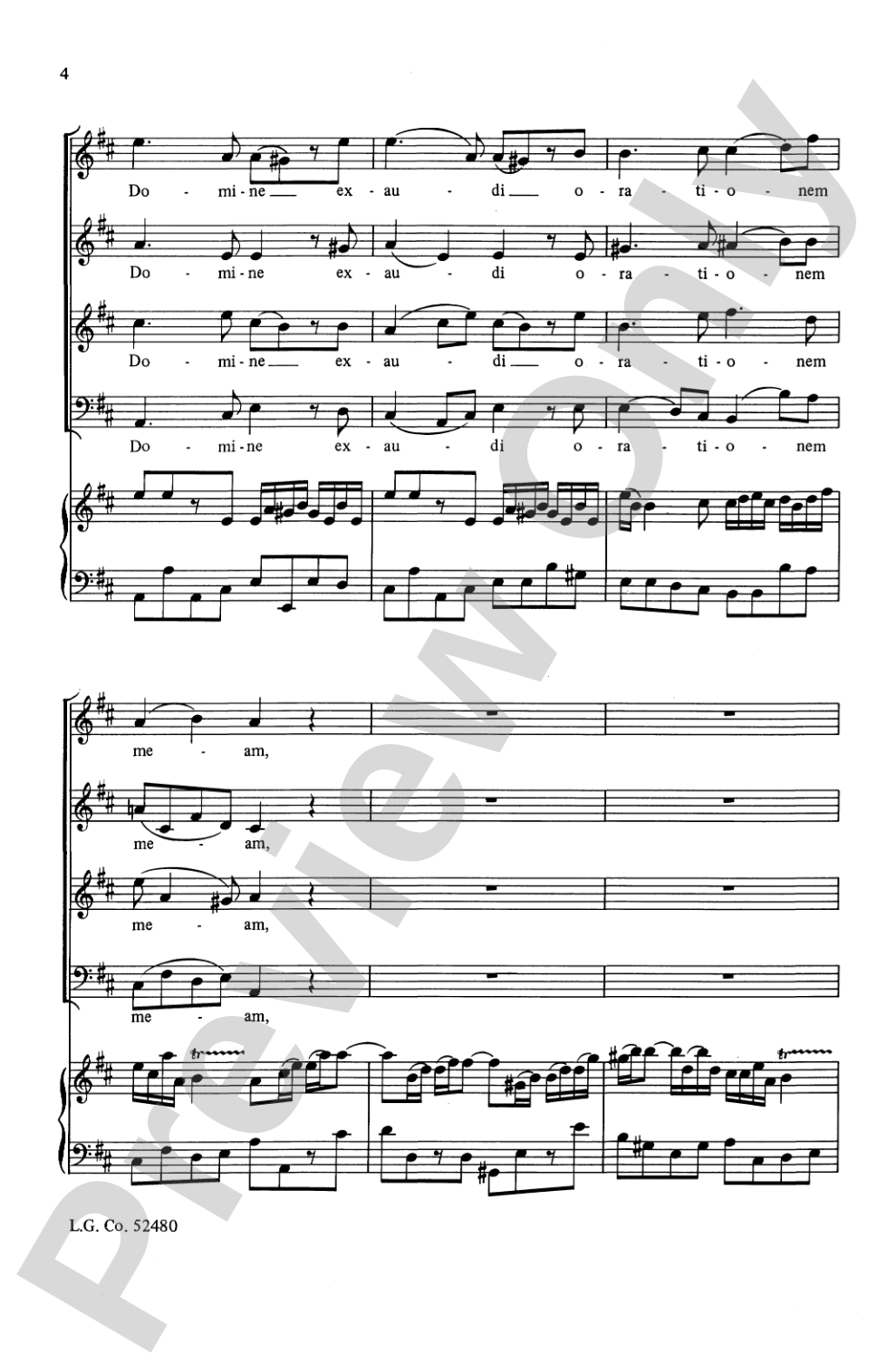
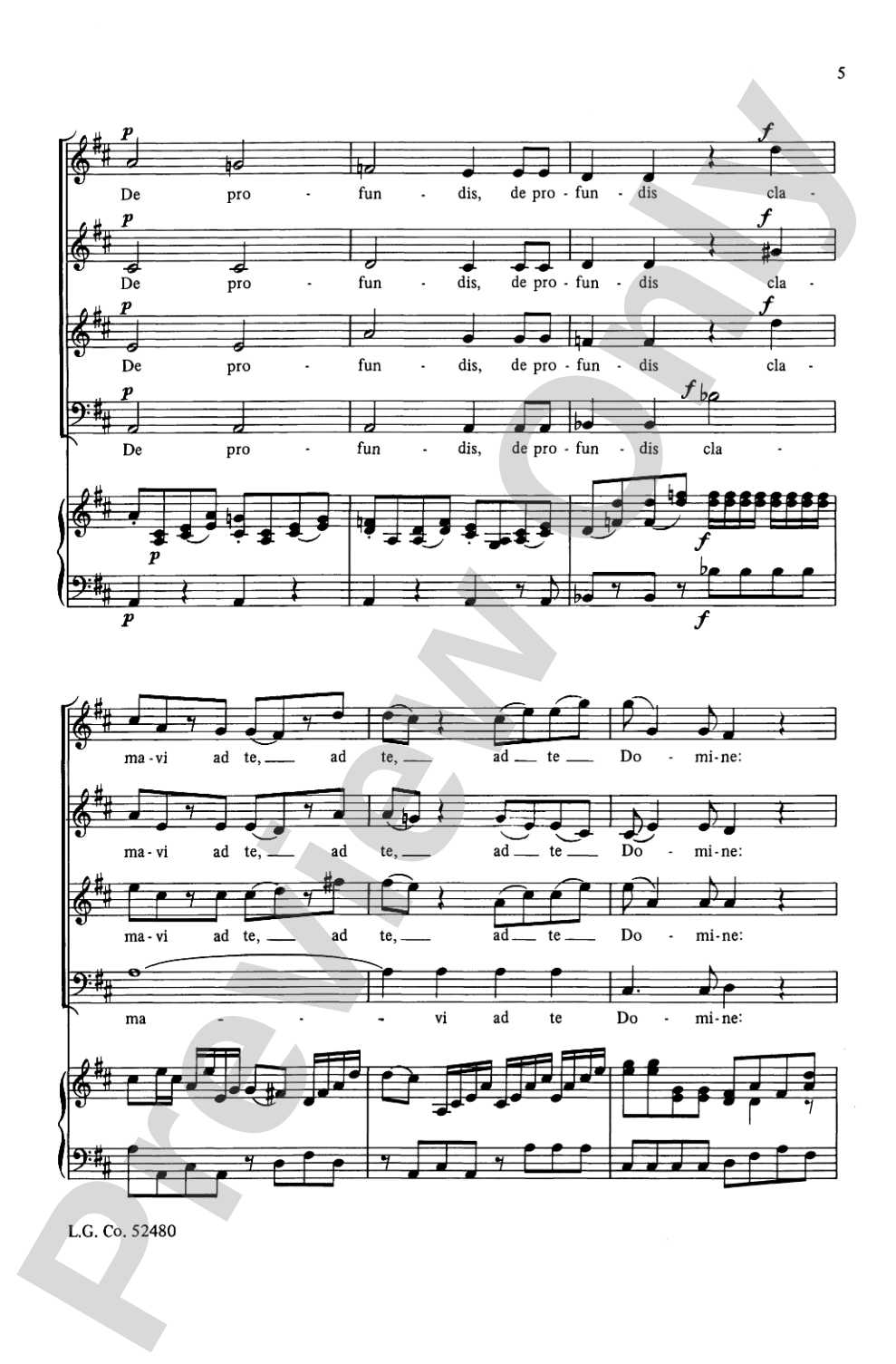
De Profundis Clamavi Sheet Music Preview

De Profundis Clamavi: SATB Choral Octavo

By Johann Michael Haydn / ed. Martin Banner

Item: 00-PO-0005063

Digital Download
$2.25

Minimum order quantity: 20 copies

Description

De Profundis Clamavi: SATB Choral Octavo isn't in MakeMusic Cloud just yet...but it could be. Let us know you'd like to see it, and you'll help shape what comes next. In the meantime, start a free trial and dive into thousands of interactive titles your students can play along with today.

Sample Audio
No sample audio found.
Sample Video
Additional Details
Series: Alfred Archive Edition: Lawson-Gould Music Publishers
Publisher: Alfred Music
Page Count: 12
SKU: 00-PO-0005063

More about this title

About the Composer: Johann Michael Haydn

Johann Michael Haydn (1737-1806) was Franz Joseph Haydn's younger brother and a significant composer in his own right, though often overshadowed by his sibling's fame. He spent most of his career as Kapellmeister at the Salzburg court, where he composed prolifically across sacred and instrumental genres, earning respect as a master of counterpoint and choral writing.

Why we love this

De Profundis Clamavi showcases the craftsmanship that made Haydn a go-to composer for sacred music during the Classical era. The piece demands genuine musicality from your singers while remaining singable for intermediate choirs, striking that rare balance between artistic substance and practical rehearsal life.

What to expect

The music unfolds with Classical restraint and clarity while conveying genuine emotional depth. Haydn's careful voice leading and harmonic language create a contemplative, dignified character appropriate to the penitential text.

Who it's for

This octavo suits advanced intermediate to advanced choirs comfortable with four-part writing and Latin text. It works well for choirs seeking substantial sacred repertoire that demonstrates musical maturity without requiring virtuosic solo writing.

How to get the most out of it

  • Balance the soprano line carefully; it carries important melodic material that should speak clearly without drowning out the harmonic foundation below.
  • Shape the text-driven moments with attention to natural speech rhythms, allowing the Latin text to drive phrasing rather than forcing symmetrical four-bar units.
  • Ensure clean ensemble cutoffs, particularly on longer held notes, to maintain precision in the Classical style without sacrificing warmth.

How to use it

Program this as a centerpiece in a sacred music concert or as part of a liturgical service exploring Classical-era spiritual music. It pairs effectively with other 18th-century choral works and provides a meaningful contrast to Baroque counterpoint or Romantic lyricism.

Skills your students will build

  • Singing in Latin with proper text projection
  • Four-part harmonic listening and blend
  • Classical-era phrasing without excessive rubato
  • Sustained vocal tone in longer phrases
  • Part independence in polyphonic textures

You May Also Like