

Daydreams: Concert Band Conductor Score & Parts
By Robert Sheldon
Grade: 1 (Very Easy)
Item: 00-PK-0005626

$49.00
Pickup currently not available
Buy Extra Parts (Digital PDF Download)
| Product | Price | Quantity |
|---|---|---|
| Daydreams: Score | $7.00 | |
| Daydreams: Flute | $3.00 | |
| Daydreams: Oboe | $3.00 | |
| Daydreams: 1st B-flat Clarinet | $3.00 | |
| Daydreams: 2nd B-flat Clarinet | $3.00 | |
| Daydreams: B-flat Bass Clarinet | $3.00 | |
| Daydreams: E-flat Alto Saxophone | $3.00 | |
| Daydreams: B-flat Tenor Saxophone | $3.00 | |
| Daydreams: E-flat Baritone Saxophone | $3.00 | |
| Daydreams: 1st B-flat Trumpet | $3.00 | |
| Daydreams: 2nd B-flat Trumpet | $3.00 | |
| Daydreams: 1st F Horn | $3.00 | |
| Daydreams: 1st Trombone | $3.00 | |
| Daydreams: Baritone T.C. | $3.00 | |
| Daydreams: Tuba | $3.00 | |
| Daydreams: Bells | $3.00 | |
| Daydreams: 1st Percussion | $3.00 | |
| Daydreams: Piano Accompaniment | $3.00 | |
| Daydreams: C Educational Pack | $3.00 | |
| Daydreams: Bb Educational Pack | $3.00 | |
| Daydreams: Eb Educational Pack | $3.00 | |
| Daydreams: F Educational Pack | $3.00 | |
| Daydreams: Bass Clef Educational Pack | $3.00 |
Parts Added to Cart!
Related Items
Daydreams: String Orchestra Conductor Score & Parts |
$46.00
|
View | |
Daydreams: Concert Band Conductor Score & Parts |
$49.00
|
View | |
Daydreams: Concert Band Conductor Score |
$7.00
|
View | |
Daydreams: String Orchestra Conductor Score & Parts |
$46.00
|
View | |
Daydreams: String Orchestra Conductor Score |
$6.00
|
View |
Description
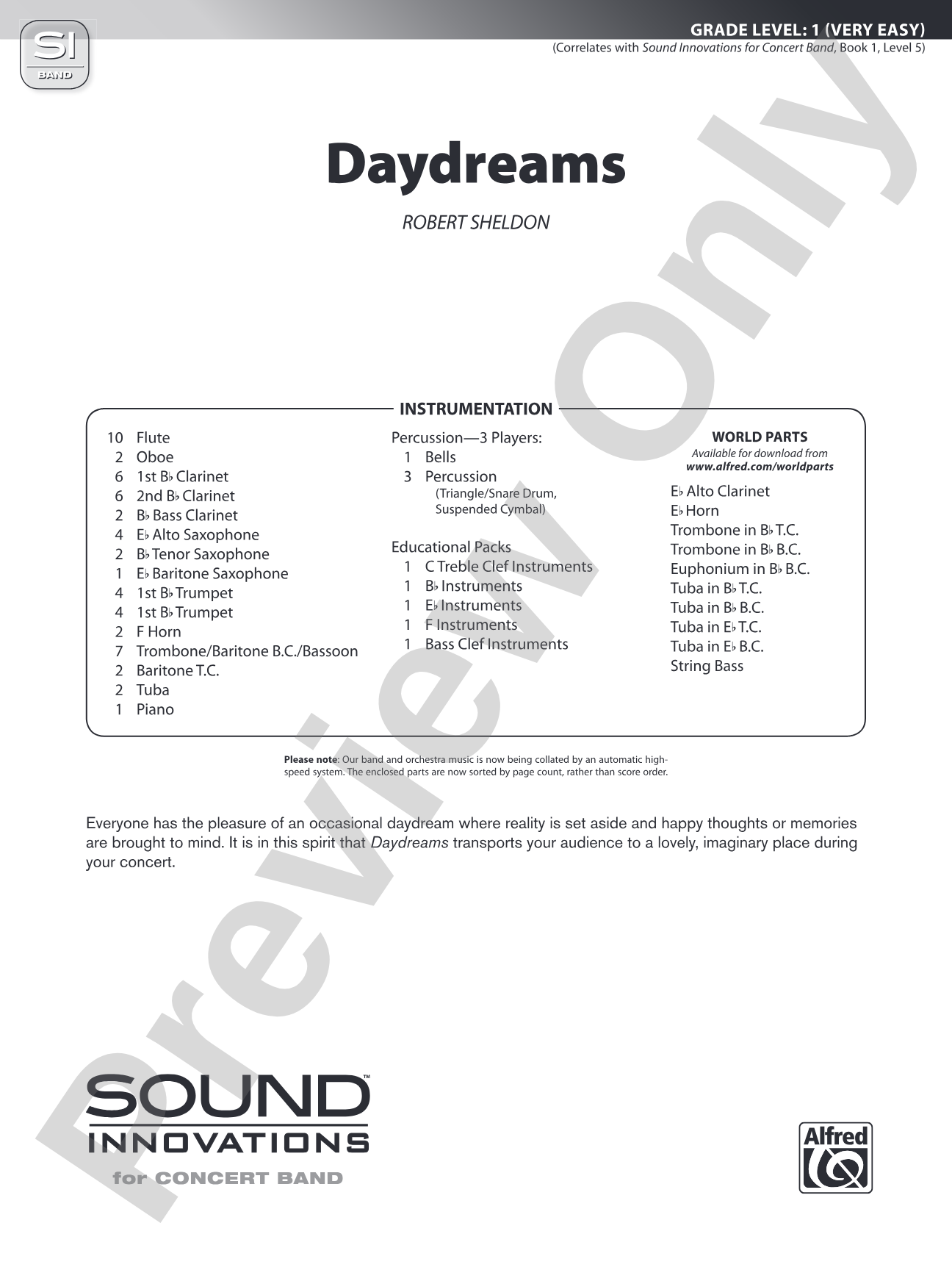
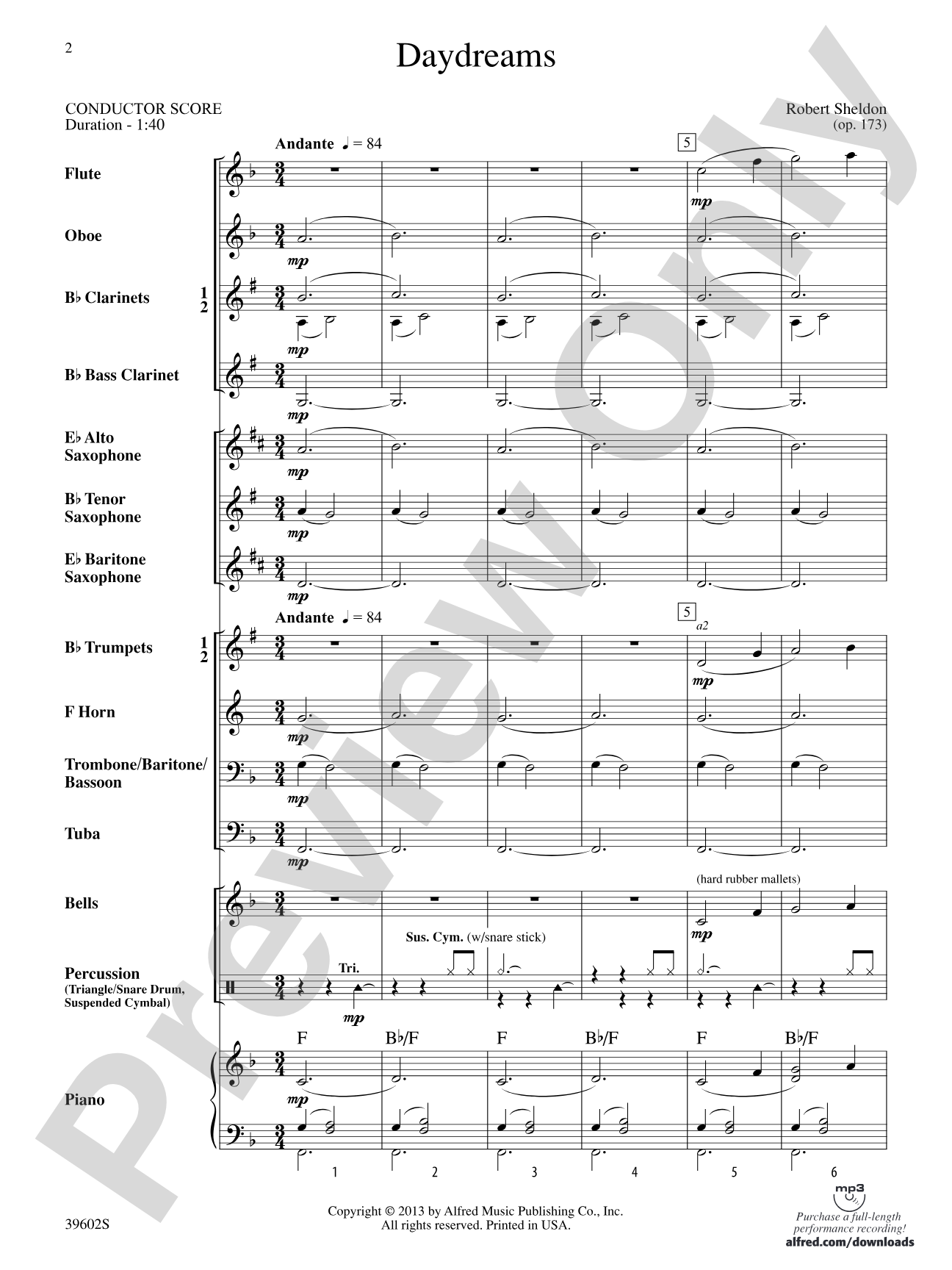
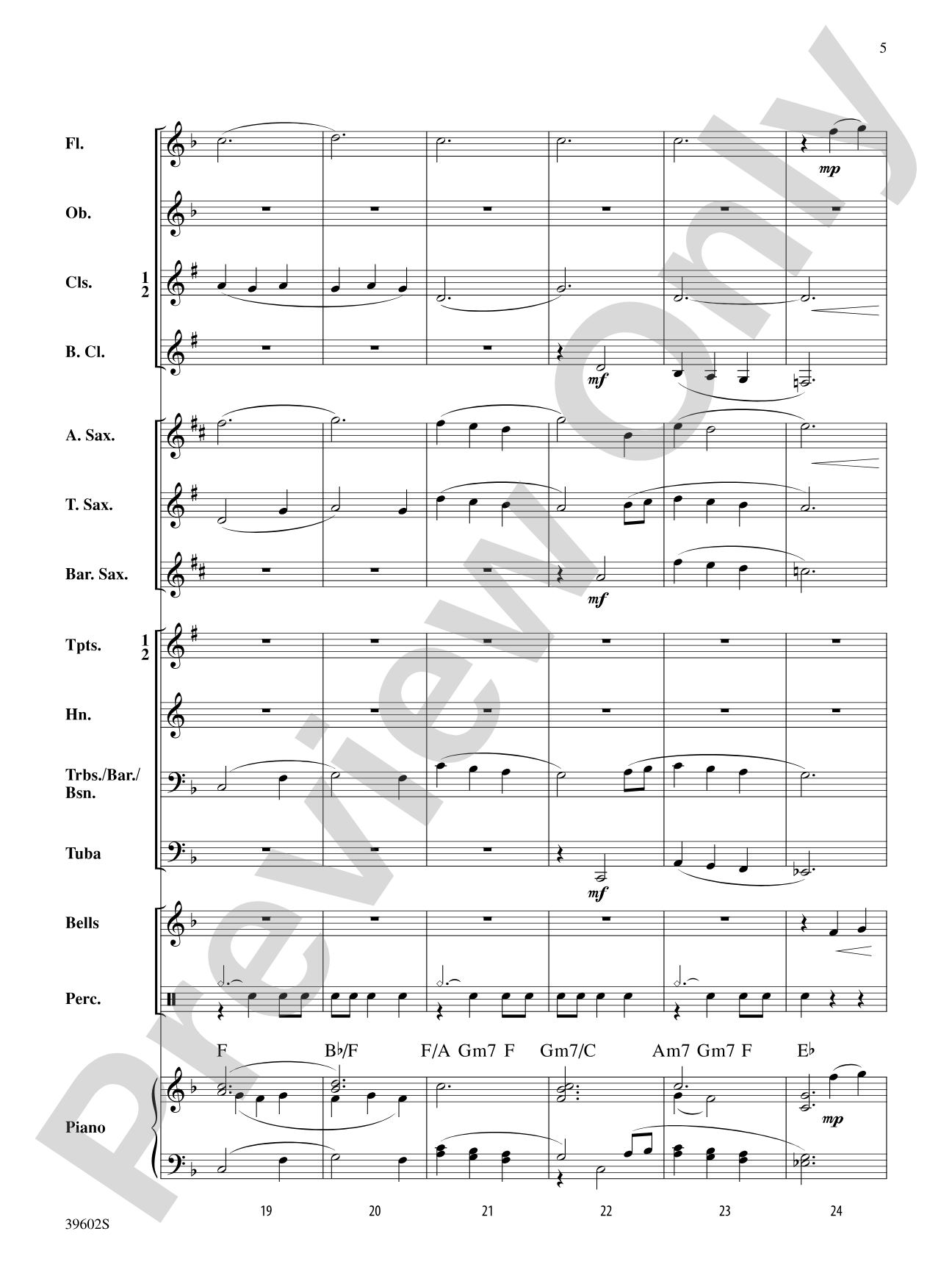
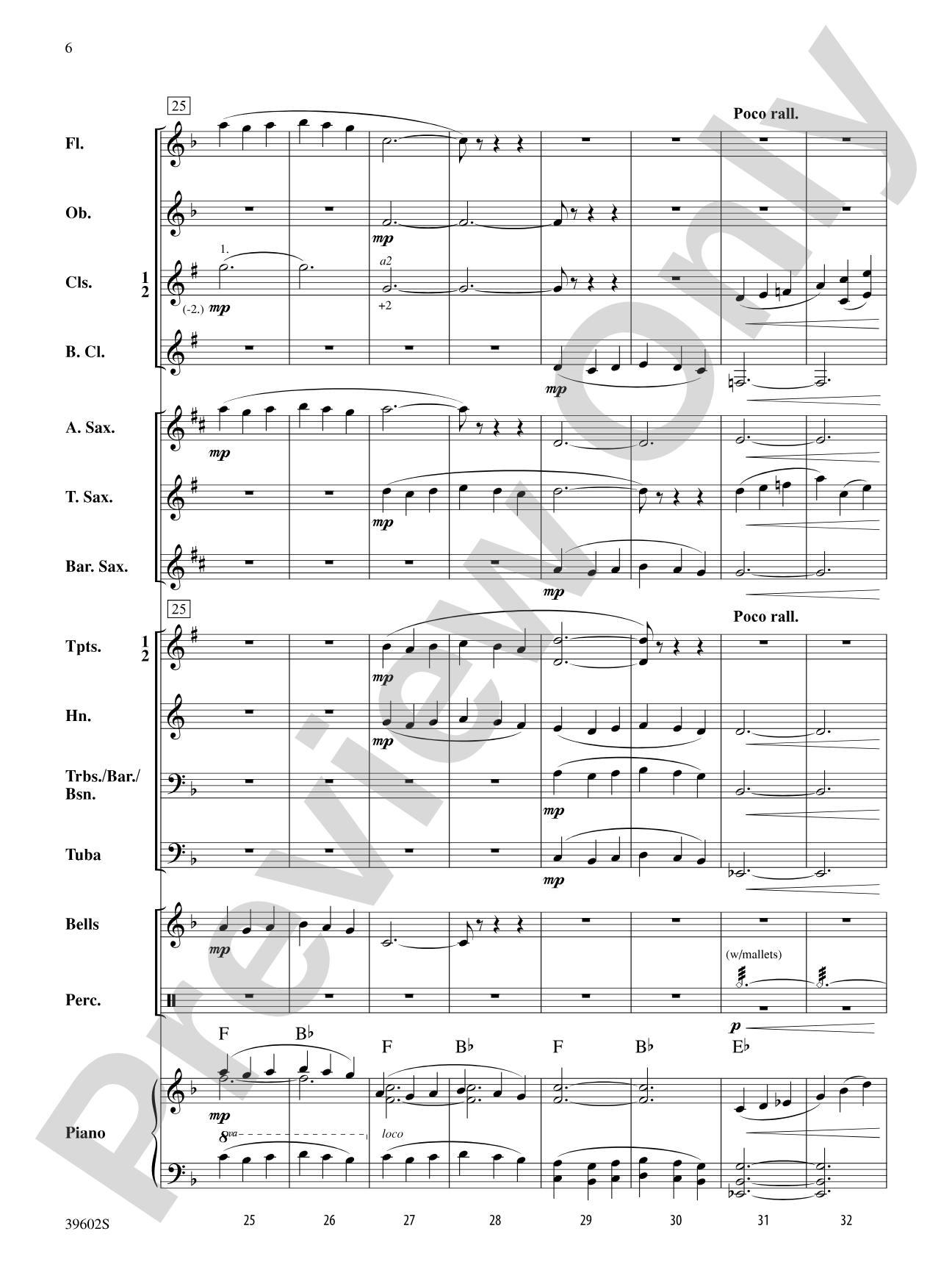
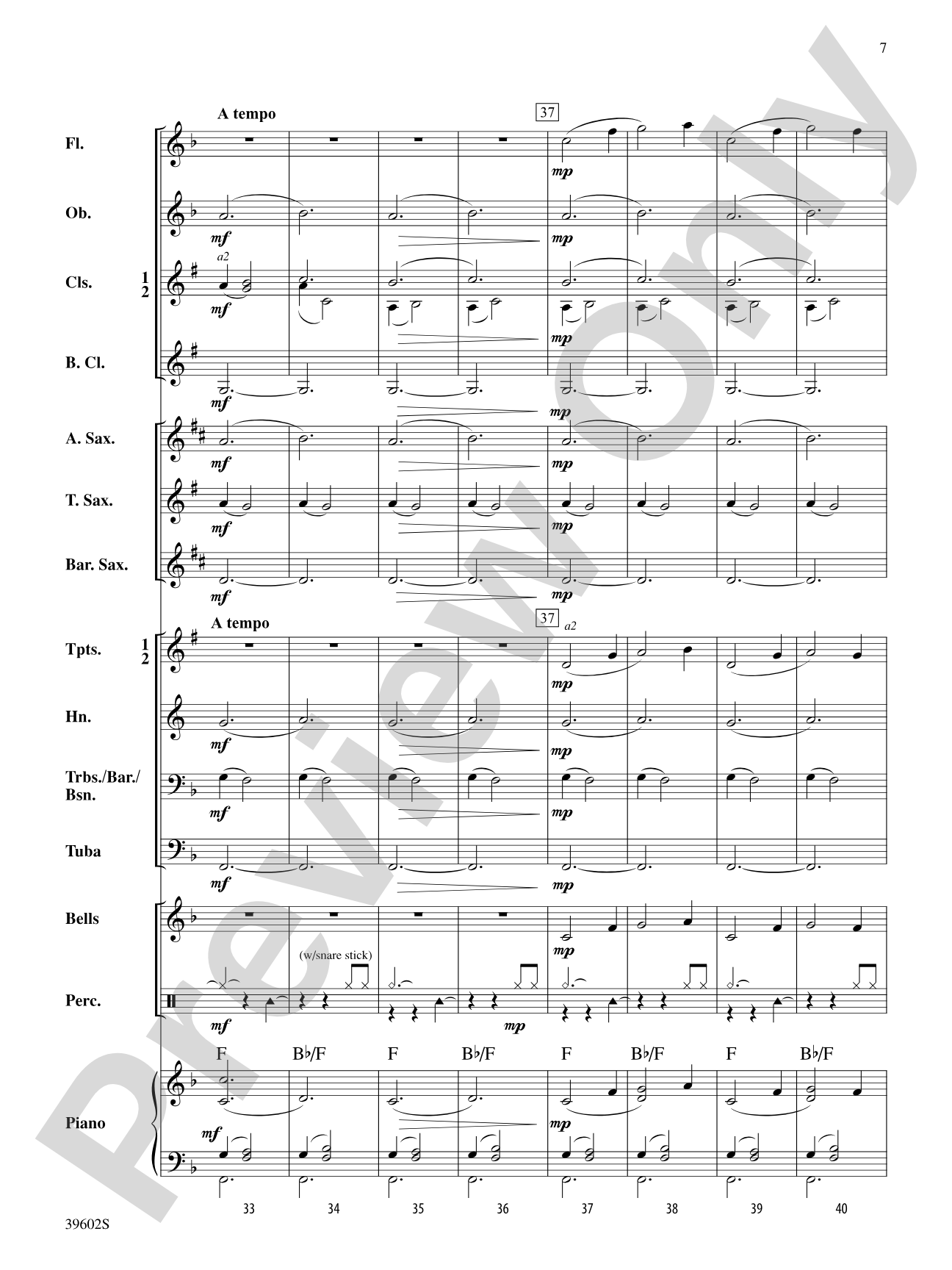
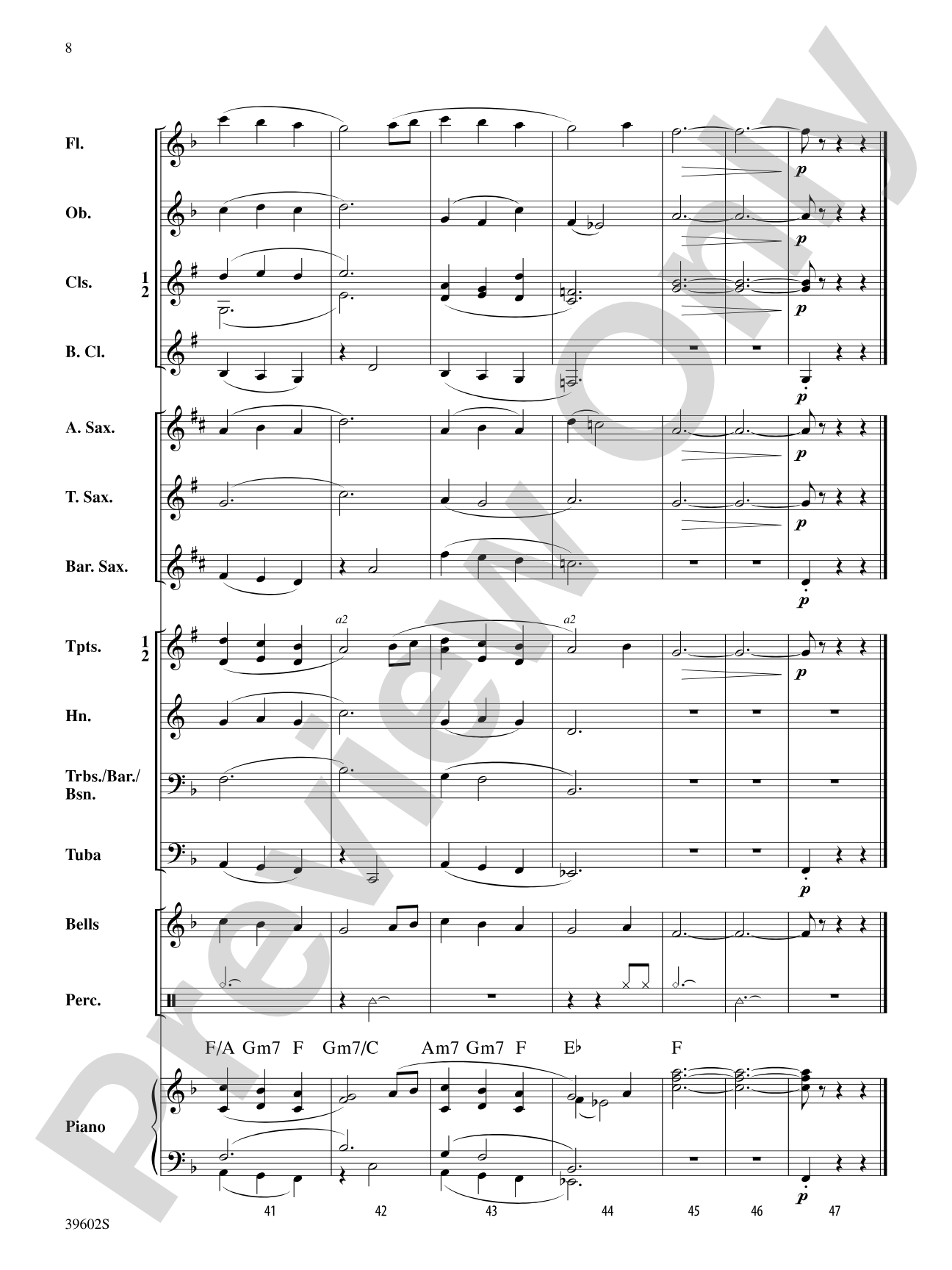
Everyone has the pleasure of an occasional daydream where reality is set aside and happy thoughts or memories are brought to mind. It is in this spirit that this composition transports your audience to a lovely, imaginary place during your concert. (1:40) Correlates to Sound Innovations for Concert Band Book 1, Level 5.
This title is available in MakeMusic Cloud.


This title is available in MakeMusic Cloud.
Don't just read it, hear it, play along with it, and watch your students grow with it. In MakeMusic Cloud, Daydreams: Concert Band Conductor Score & Parts comes alive with professional accompaniment, adjustable tempo, and built-in practice tools that turn solo practice into real progress.
Open in the Player
Jump straight in and assign it today.
Start Your Free Trial
Open this title and explore the full library in minutes.
Sample Audio
1
Audio File
--:--
0:00
0:00
Sample Video
No sample videos found.
Additional Details
Series:
Sound Innovations for Concert Band
Publisher:
Alfred Music
Page Count:
130
SKU:
00-PK-0005626
More about this title
About the Composer: Robert Sheldon

Robert Sheldon's wind band compositions are performed more frequently in schools and concert halls than those of nearly any of his contemporaries. Beyond his prolific output as a composer, Sheldon authored the Sound Innovations curriculum, which has shaped how countless students learn band fundamentals. His work has earned him recognition from the American School Band Directors Association, Phi Beta Mu, and ASCAP, and his pieces regularly appear on state and national contest lists.
As a guest conductor, clinician, and educator, Sheldon maintains an active presence in music education across North America, Europe, Asia, and Australia. He has conducted his own works at Carnegie Hall, Orchestra Hall, Boston Symphony Hall, the Sydney Opera House, and the Kennedy Center. In 2020, VanderCook College of Music awarded him an honorary doctorate in recognition of his contributions to the field.
Why we love this
At Grade 1, Daydreams proves that accessible writing doesn't mean simplistic writing. Sheldon crafts a piece that sounds genuinely expressive and concert-ready while staying well within the technical reach of a developing ensemble. The narrative arc, transporting listeners into an imaginary space, gives students a tangible musical goal beyond note accuracy.
What to expect
Sheldon creates a gentle, introspective landscape here. The music invites listeners (and players) into a quiet space where memory and imagination overlap. It's accessible but never condescending, a piece that feels real and emotionally grounded despite its simplicity.
Who it's for
Young concert bands in their first year of playing together. The straightforward voicing and modest range demands align with early ensemble development while the melodic appeal keeps students engaged. Directors seeking repertoire that sounds polished and complete at an accessible level will find this ideal for concerts and festival play.
How to get the most out of it
- Shape the opening melody with gentle dynamic swells to establish the dreamy quality; overstaying a flat dynamic will flatten the musical arc.
- Let the accompaniment figures breathe alongside the melody rather than playing them metronomically; slight rhythmic flexibility supports the lyrical character.
- Balance upper woodwind voices so the tune emerges clearly without requiring soloists to force tone; younger players often compensate by playing louder when they lose confidence in intonation.
How to use it
Program this as a palate cleanser between more energetic selections or as the emotional centerpiece of a concert devoted to lyrical writing. At just over 90 seconds, it fits efficiently into festival time slots and works equally well on an all-fall or spring concert. Pairing it with Sheldon's other Sound Innovations selections reinforces the curriculum while showcasing the range of his writing.
Skills your students will build
- Sustaining tone with consistent air support across phrase lengths
- Balancing a melody line with harmonic accompaniment in an ensemble setting
- Reading and executing basic dynamic marking and articulation changes
- Maintaining intonation in slow, exposed harmonic progressions
- Recognizing and playing simple binary or ternary form