
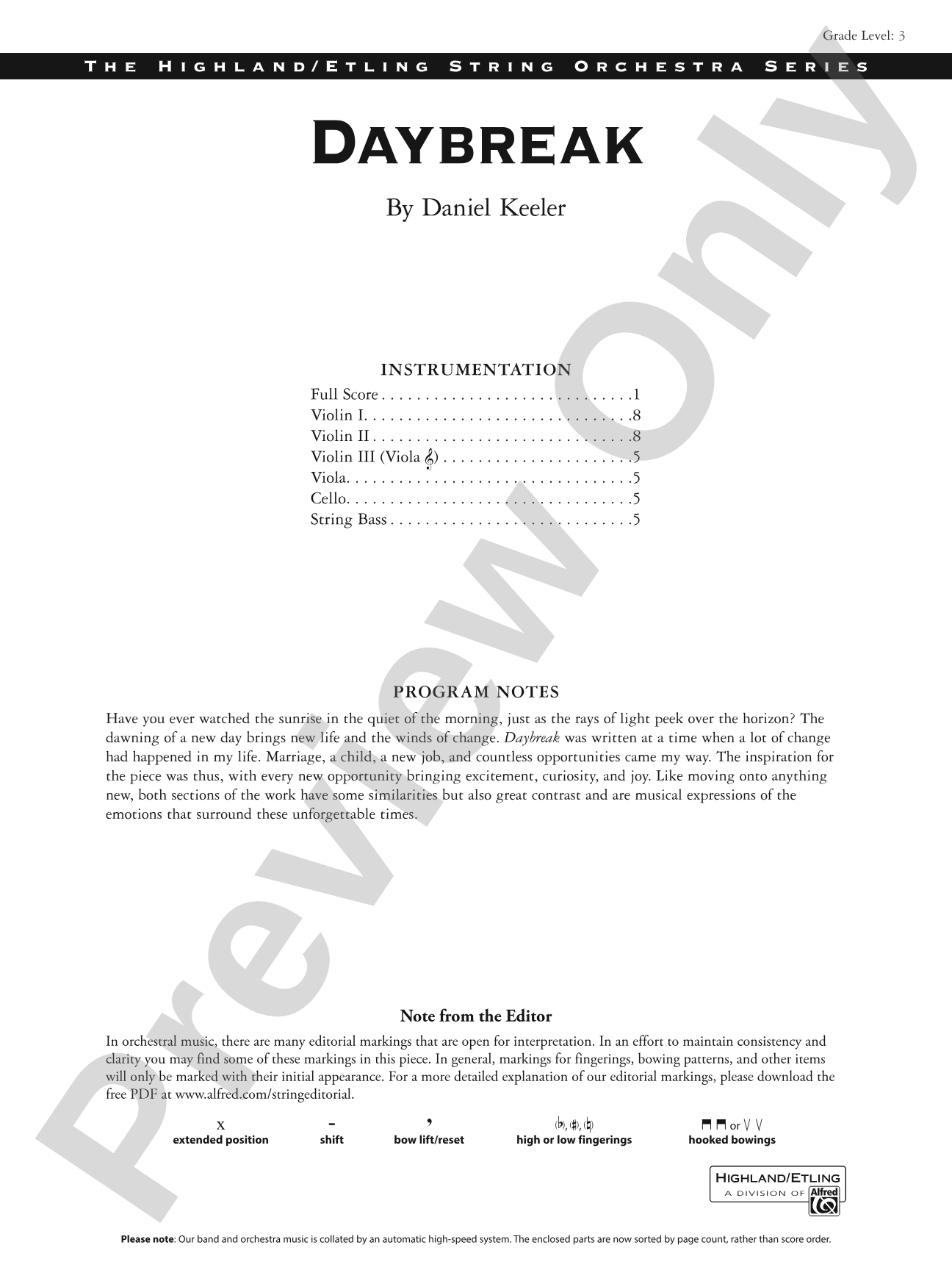

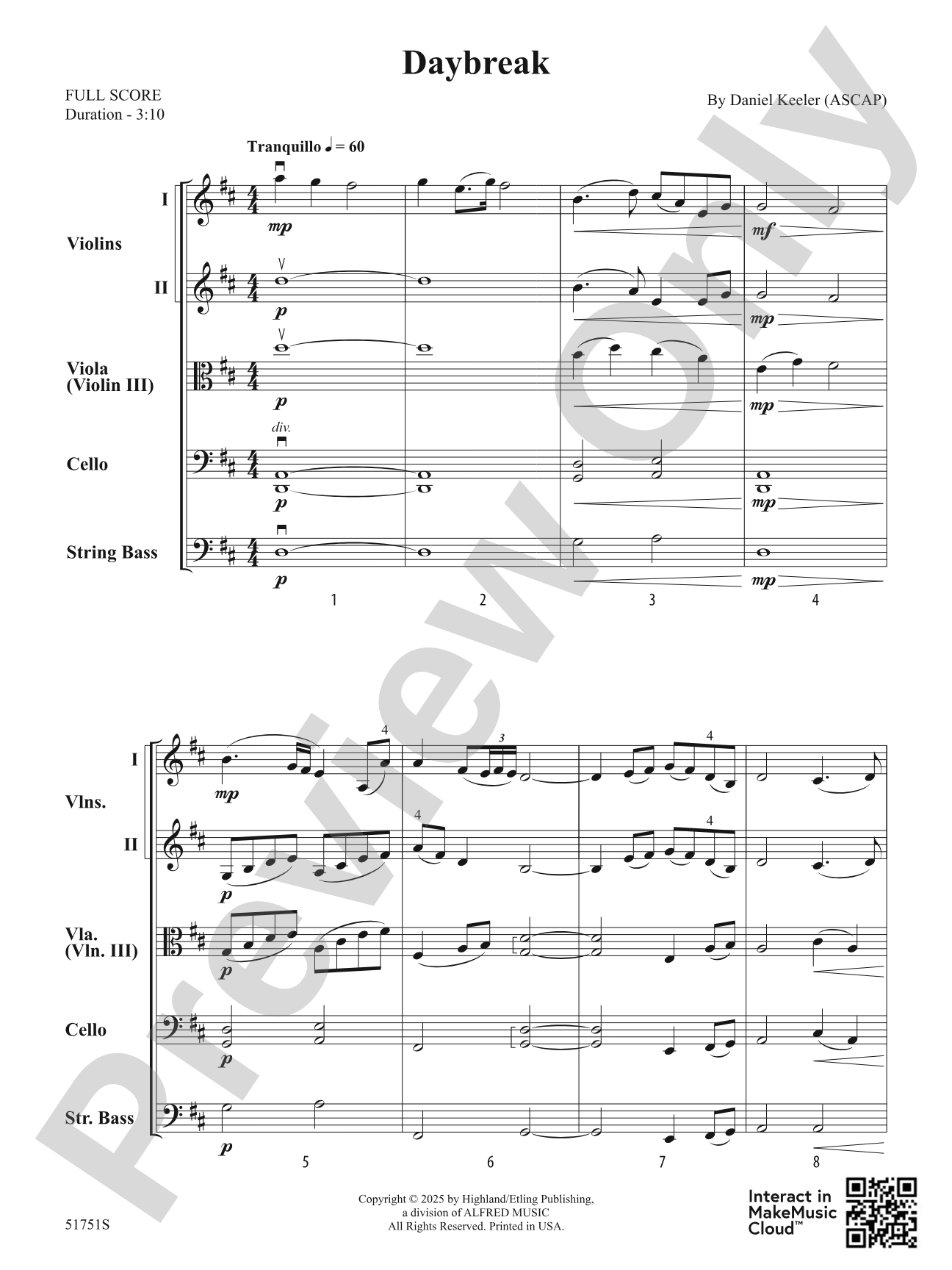
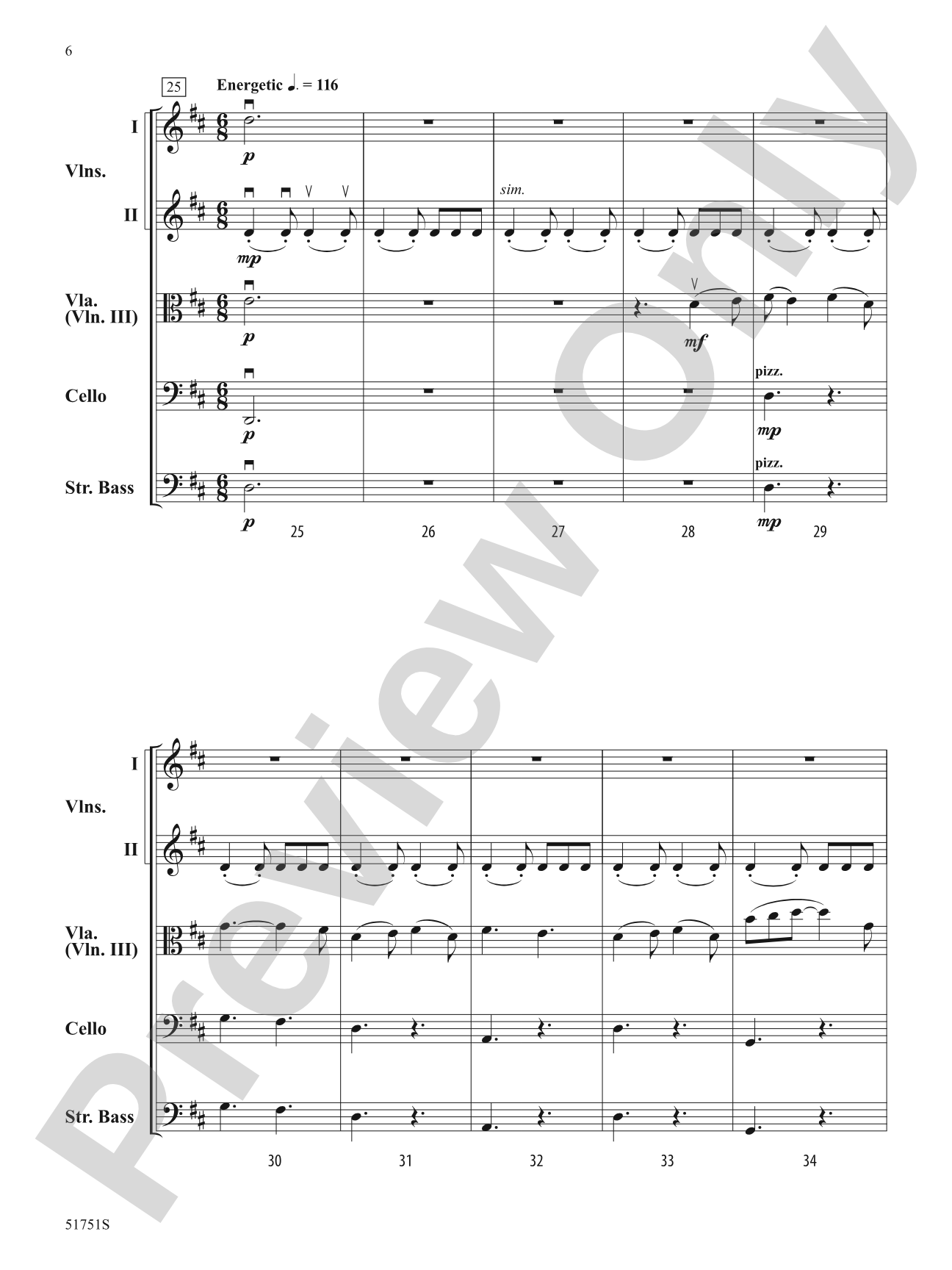
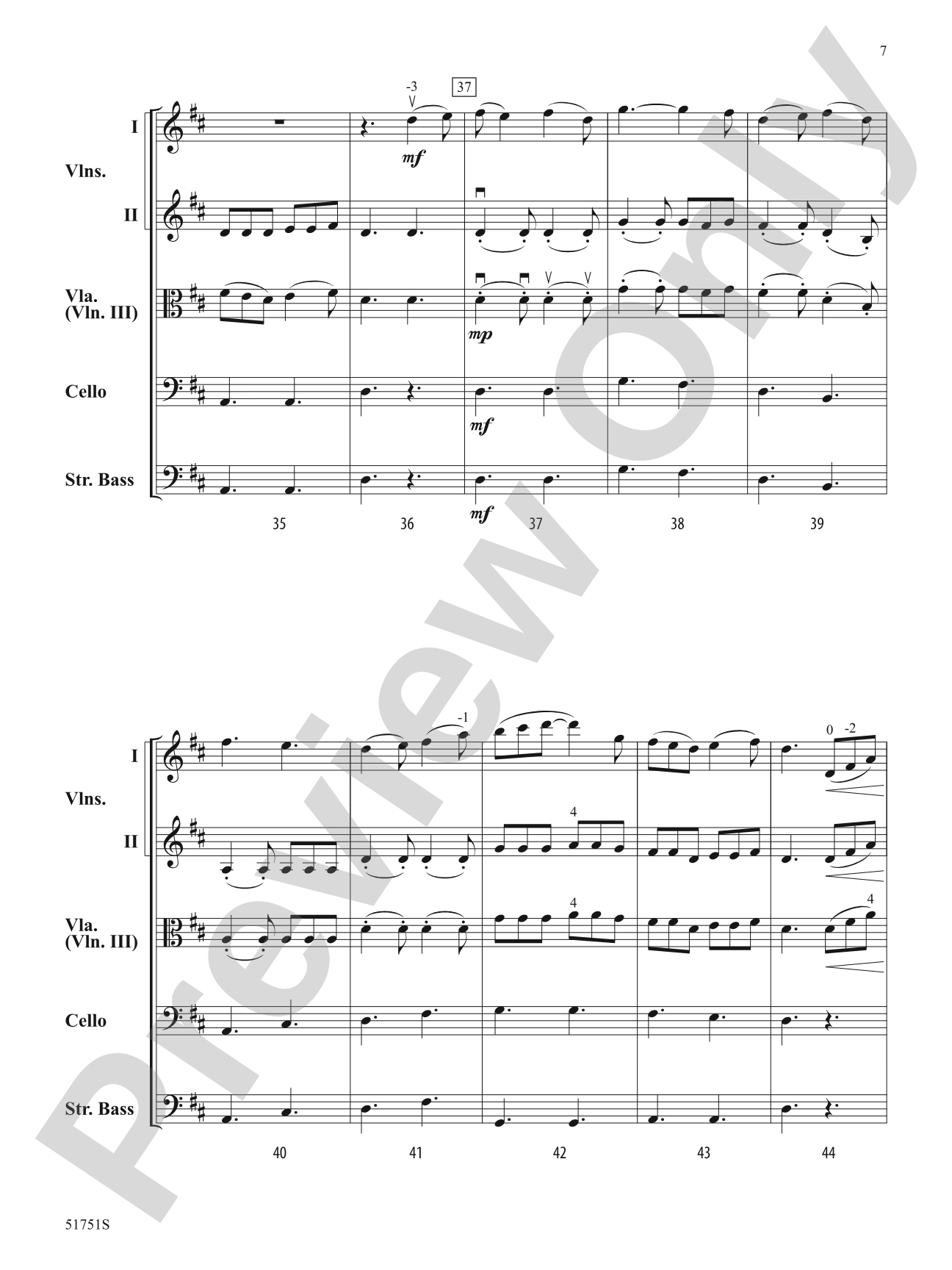
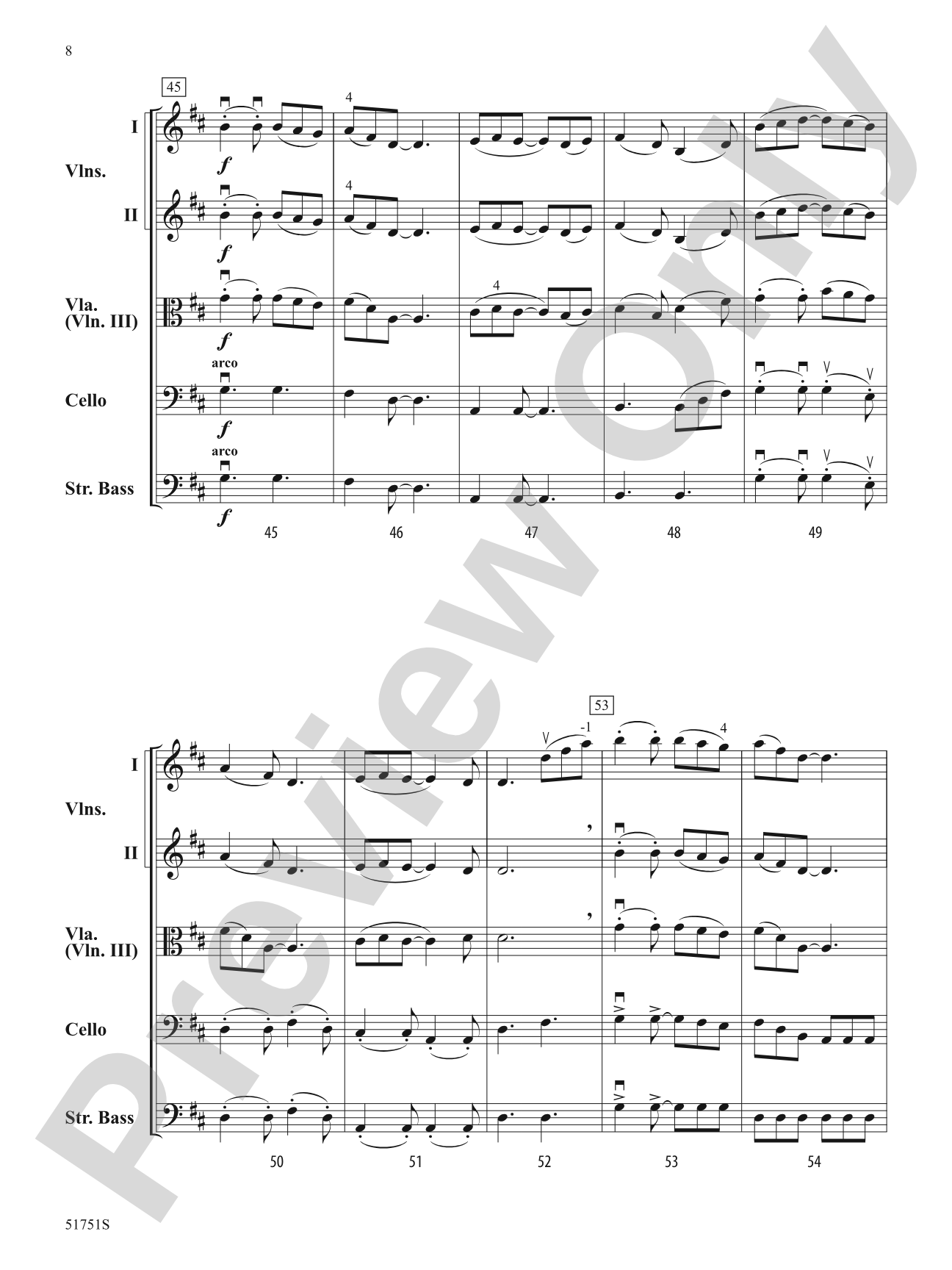
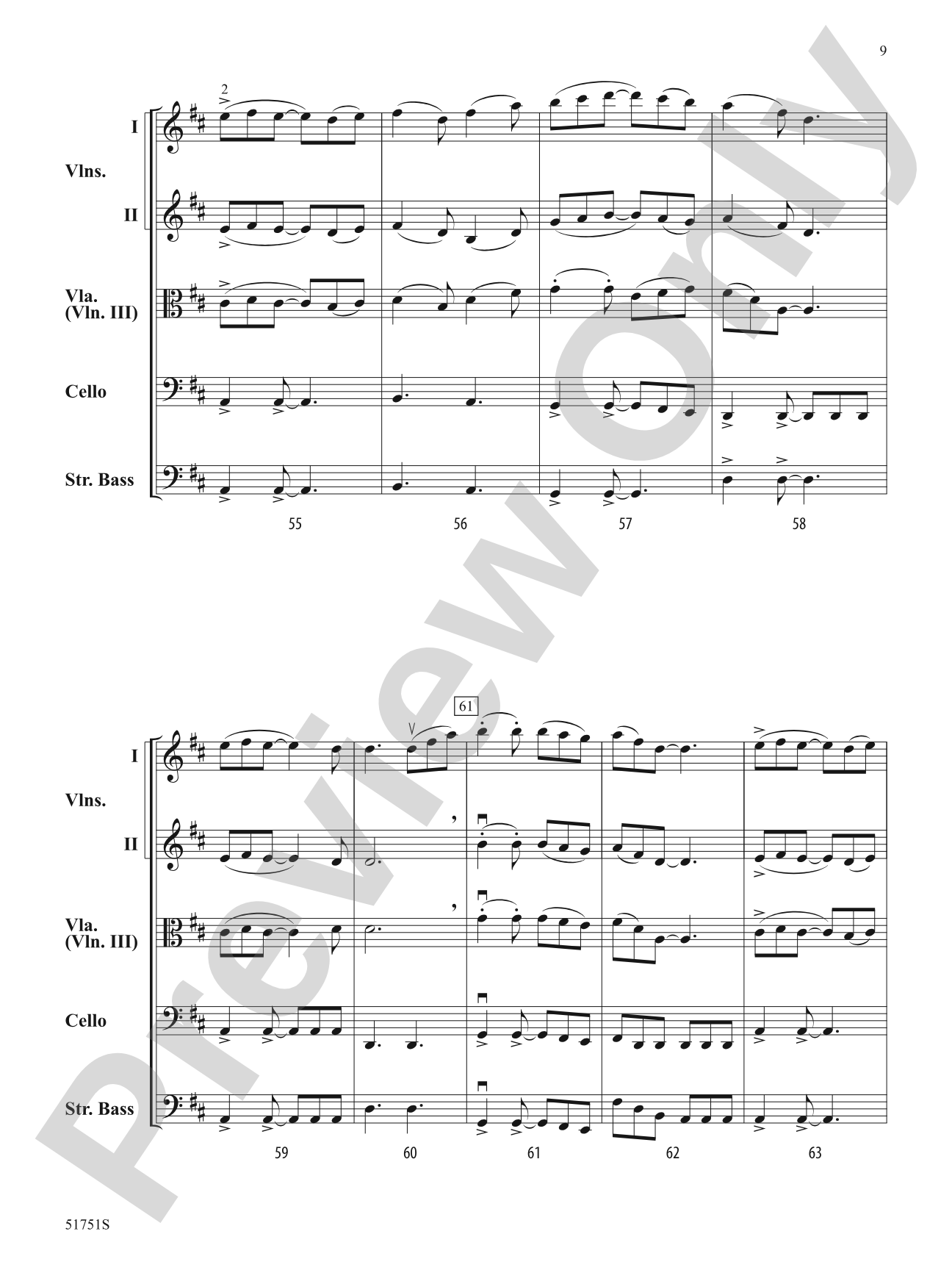
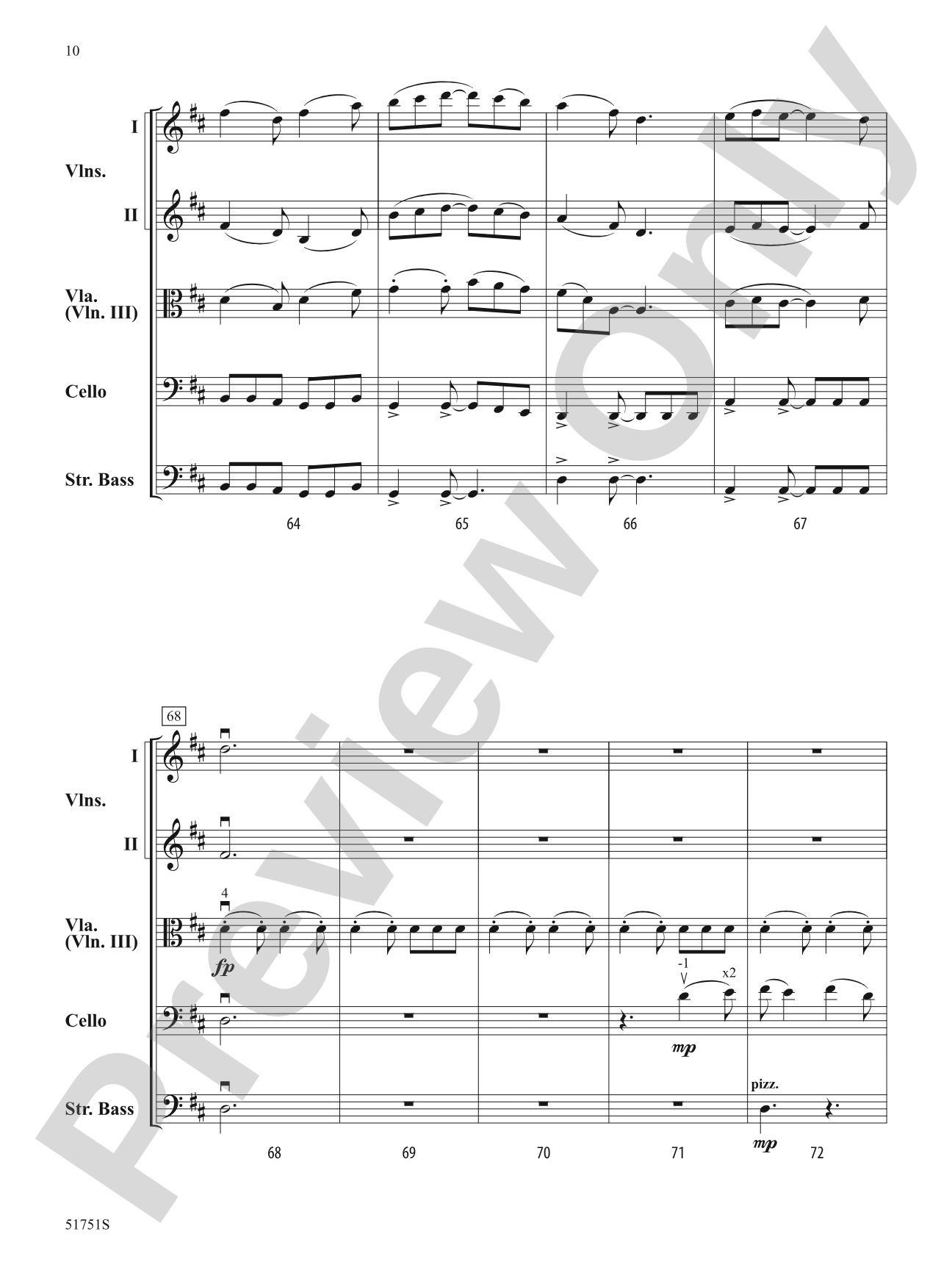
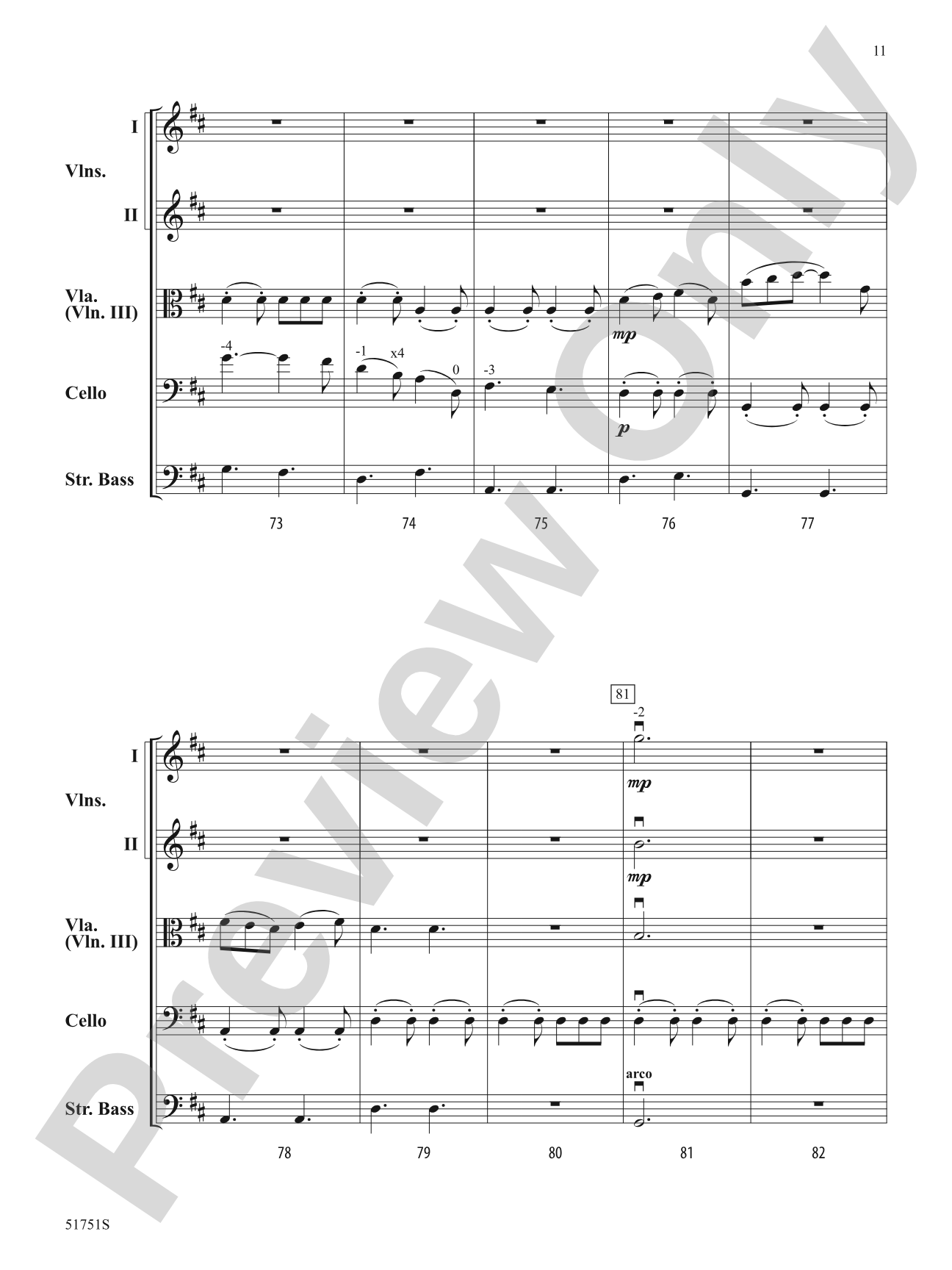
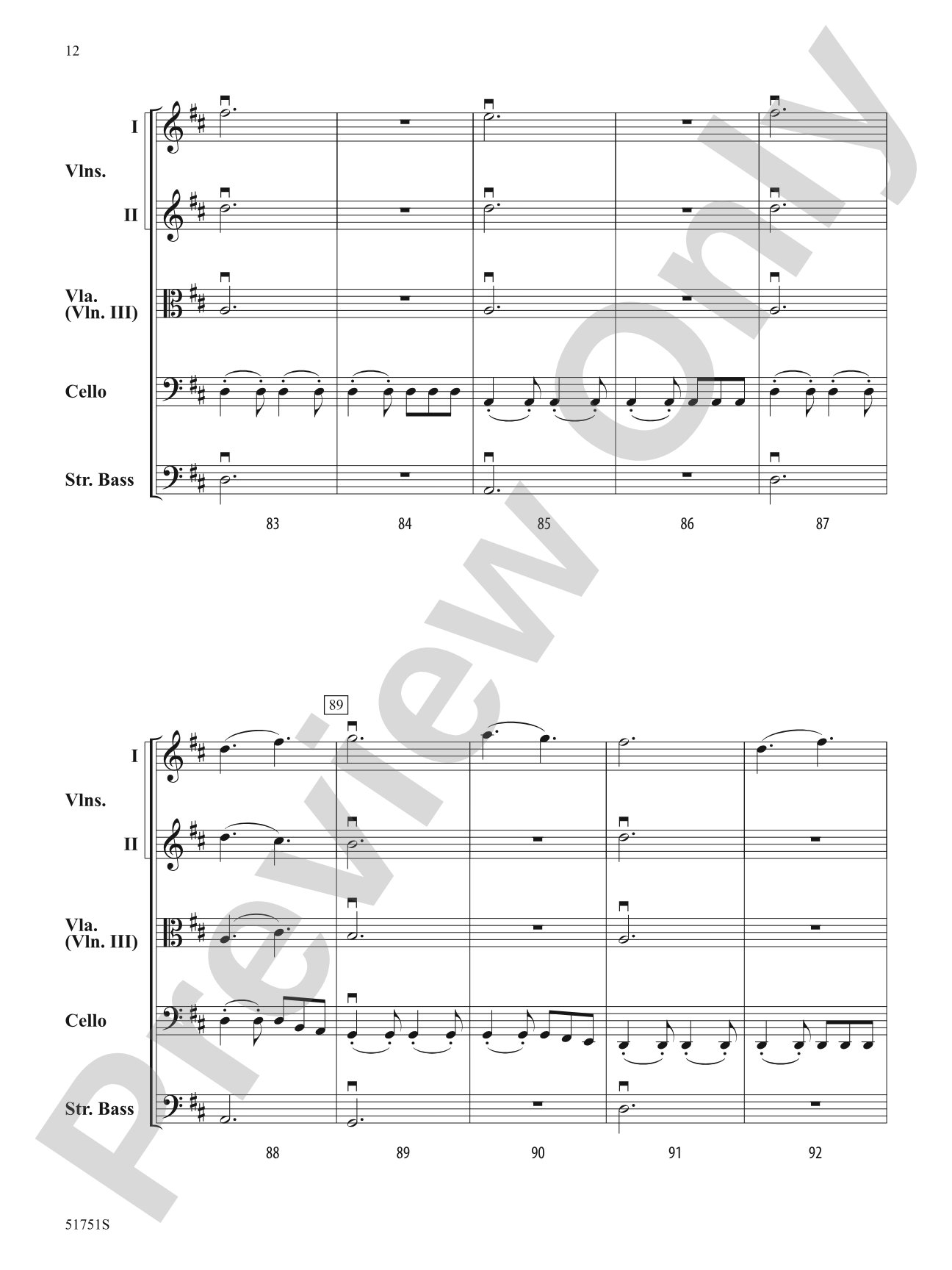
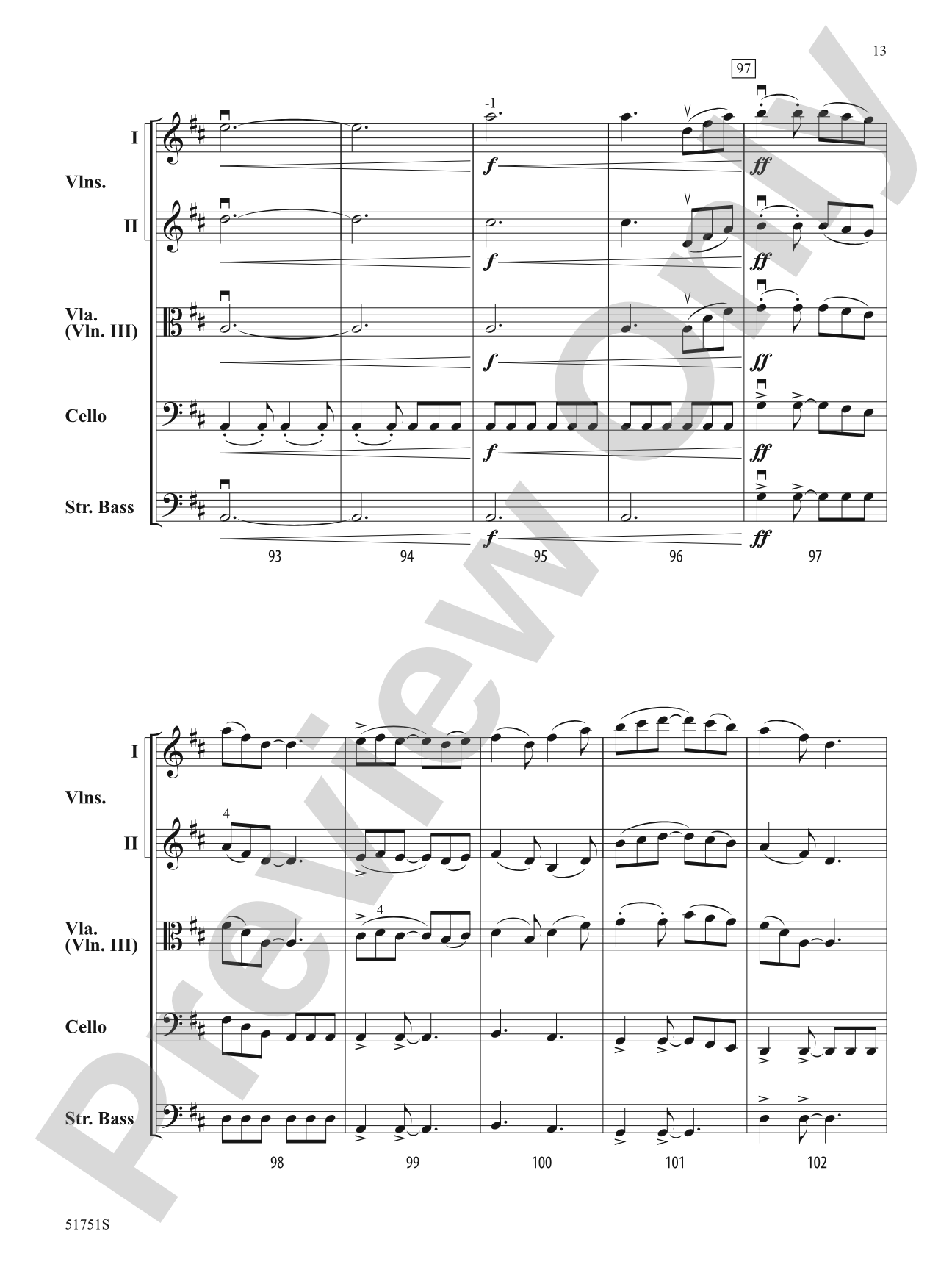
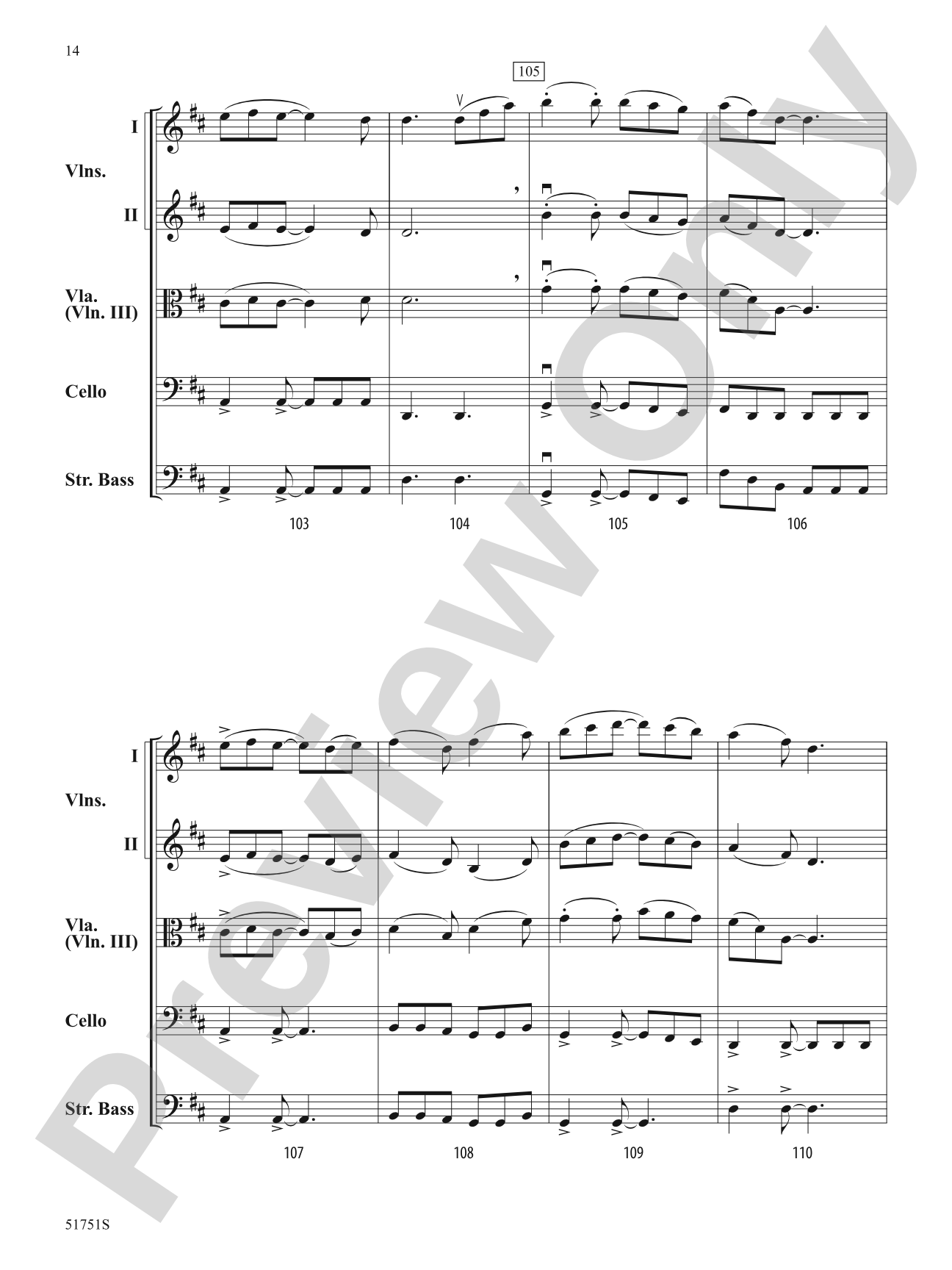
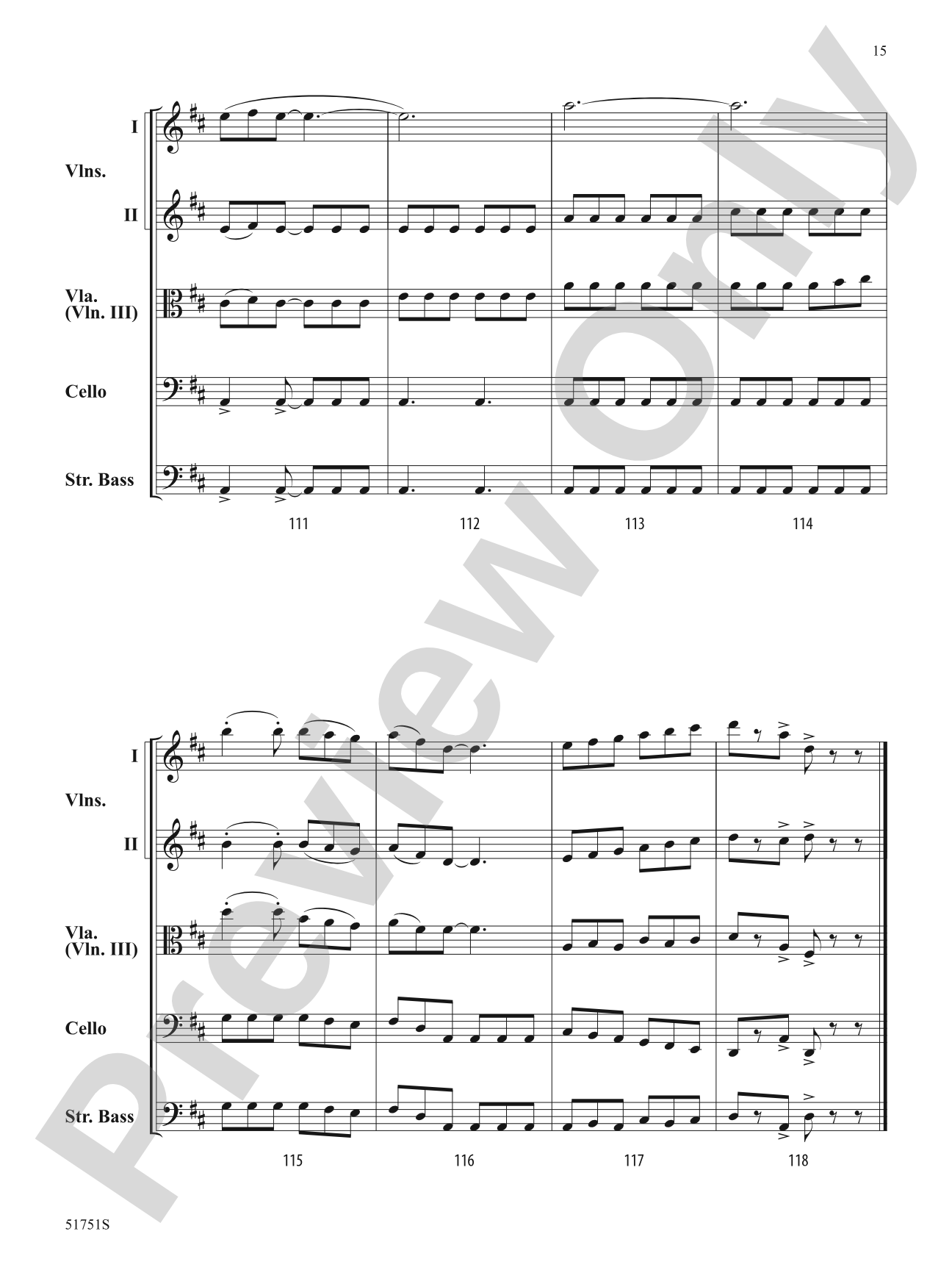

Daybreak: Score
By Daniel Keeler
Grade: 3
Item: 00-PR-0007729
$10.00
Pickup currently not available
Description
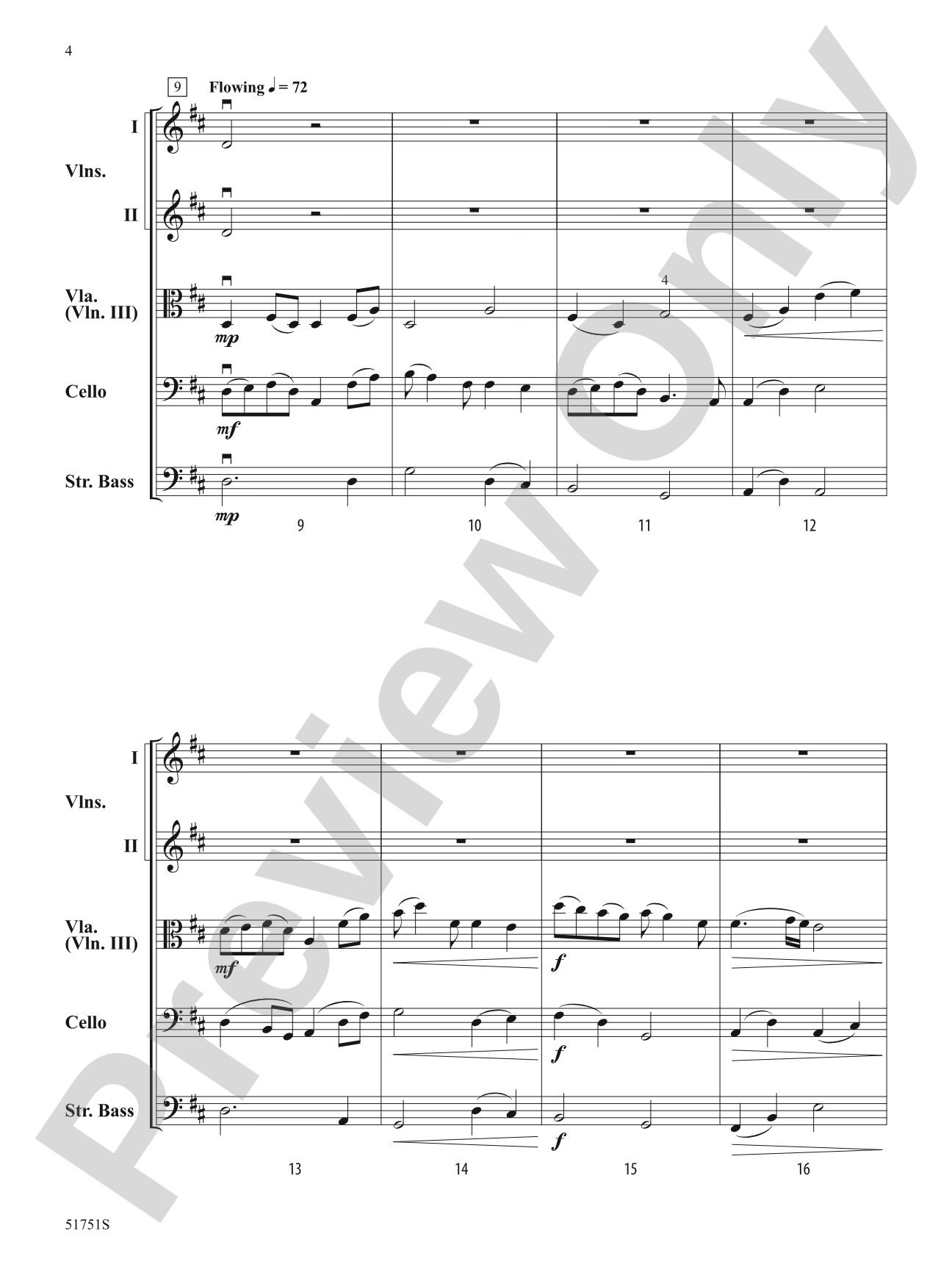
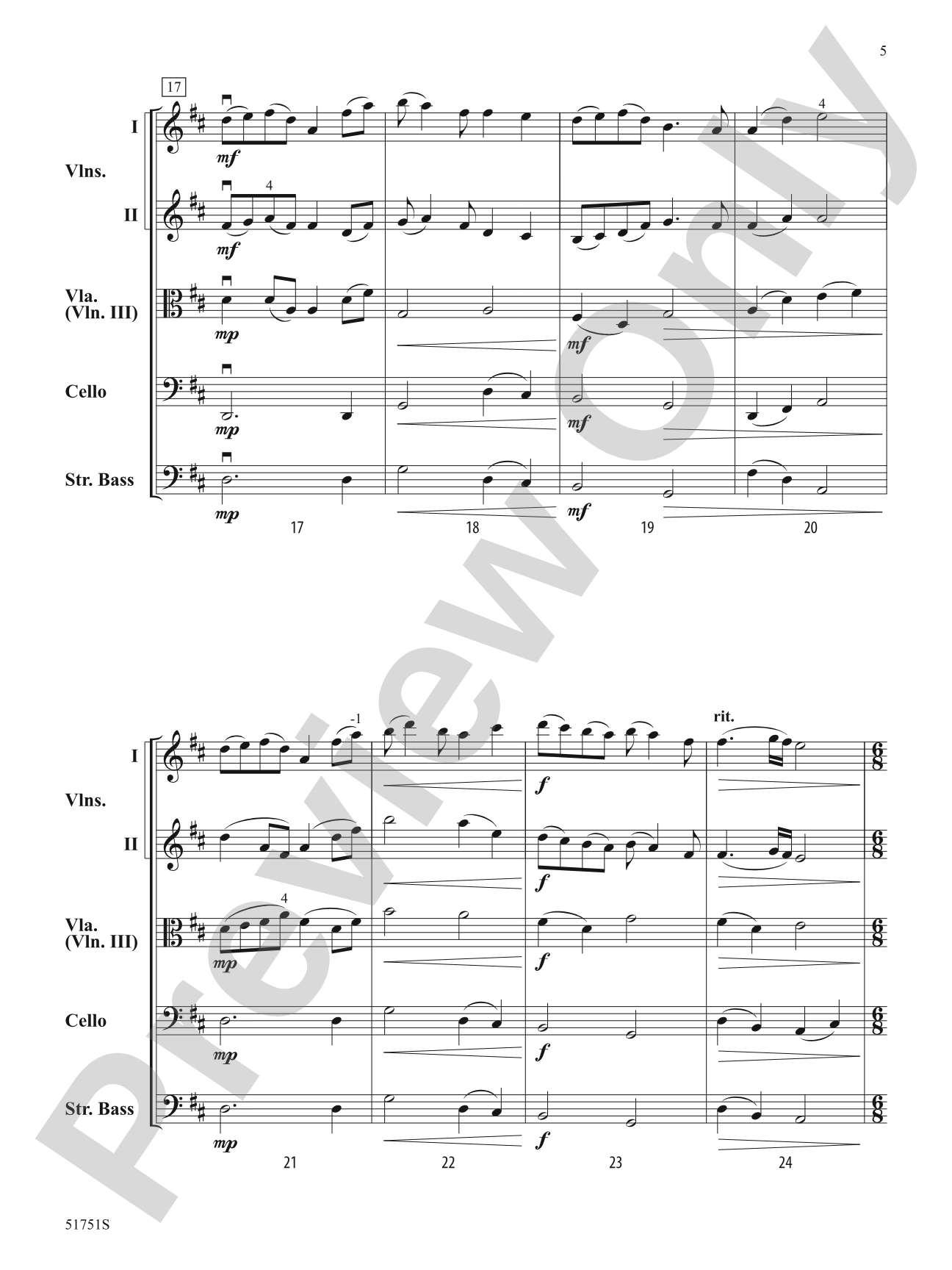
Written in a friendly D major, Daybreak, by Daniel Keeler, begins lyrical and tranquil, like the dawning of a new day. Throughout the opening, the focus can be on larger group phrasing and dynamic contrast. Moving on to an upbeat, articulate, and jovial section, focus moves to hooked bowings and rhythmic triplets that span all strings and give cellos and violas more time on the C string. Sections throughout provide moments of part independence. This is a great piece to practice multiple musical styles, bowings, dynamic contrast, and overall ensemble. (3:10)


Don't just read it, hear it, play along with it, and watch your students grow with it. In MakeMusic Cloud, Daybreak: Score comes alive with professional accompaniment, adjustable tempo, and built-in practice tools that turn solo practice into real progress.
Open in the Player
Jump straight in and assign it today.
Start Your Free Trial
Open this title and explore the full library in minutes.
Sample Audio
1
Audio File
--:--
0:00
0:00
Sample Video
Additional Details
Series:
Highland String Orchestra
Publisher:
Alfred Music
SKU:
00-PR-0007729
More about this title
Why we love this
Daybreak gives your ensemble a chance to work on genuinely contrasting musical ideas within a single piece. The shift from introspective opening to energetic midsection demands real interpretive choice, and the varied bowing requirements keep every section of the orchestra engaged and challenged.
What to expect
The piece opens with a sense of calm awakening, as if strings are painting the first light of morning across the sky. Energy gradually builds into something bright and propulsive, with rhythmic drive and articulate character that feels optimistic and alive.
Who it's for
Grade 3 orchestras ready to tackle more sophisticated musical storytelling and technical variety. This works well for ensembles that have solid fundamentals in place and can handle multiple bowings and dynamic layers without losing ensemble cohesion.
How to get the most out of it
- Shape the opening phrases with attention to the arch of each line; let the dynamic contrast breathe rather than rushing through soft passages.
- Lock the rhythmic triplets in the faster section by having the ensemble mark the subdivision together in sectionals before adding the hooked bowings.
- Balance the C string passages in cellos and violas carefully so they sit solidly under the upper strings without muddying the texture.
- Use the moments of part independence as opportunities for each section to own its line; don't let anyone hide in the ensemble sound.
How to use it
Daybreak works beautifully as the opening concert piece, setting a contemplative tone that shifts into something more celebratory. Its moderate length (3 minutes 10 seconds) makes it ideal for festival competitions or as a bridge between a classical-era overture and a more contemporary work on the same program.
Skills your students will build
- Reading and executing hooked bowings across the string section
- Playing rhythmic triplets with precision and ensemble unity
- Controlling dynamic contrast in both soft and energetic passages
- Balancing multiple bowing styles and string positions simultaneously
- Managing part independence while maintaining ensemble blend
- Phrasing longer melodic lines with musicality and direction