
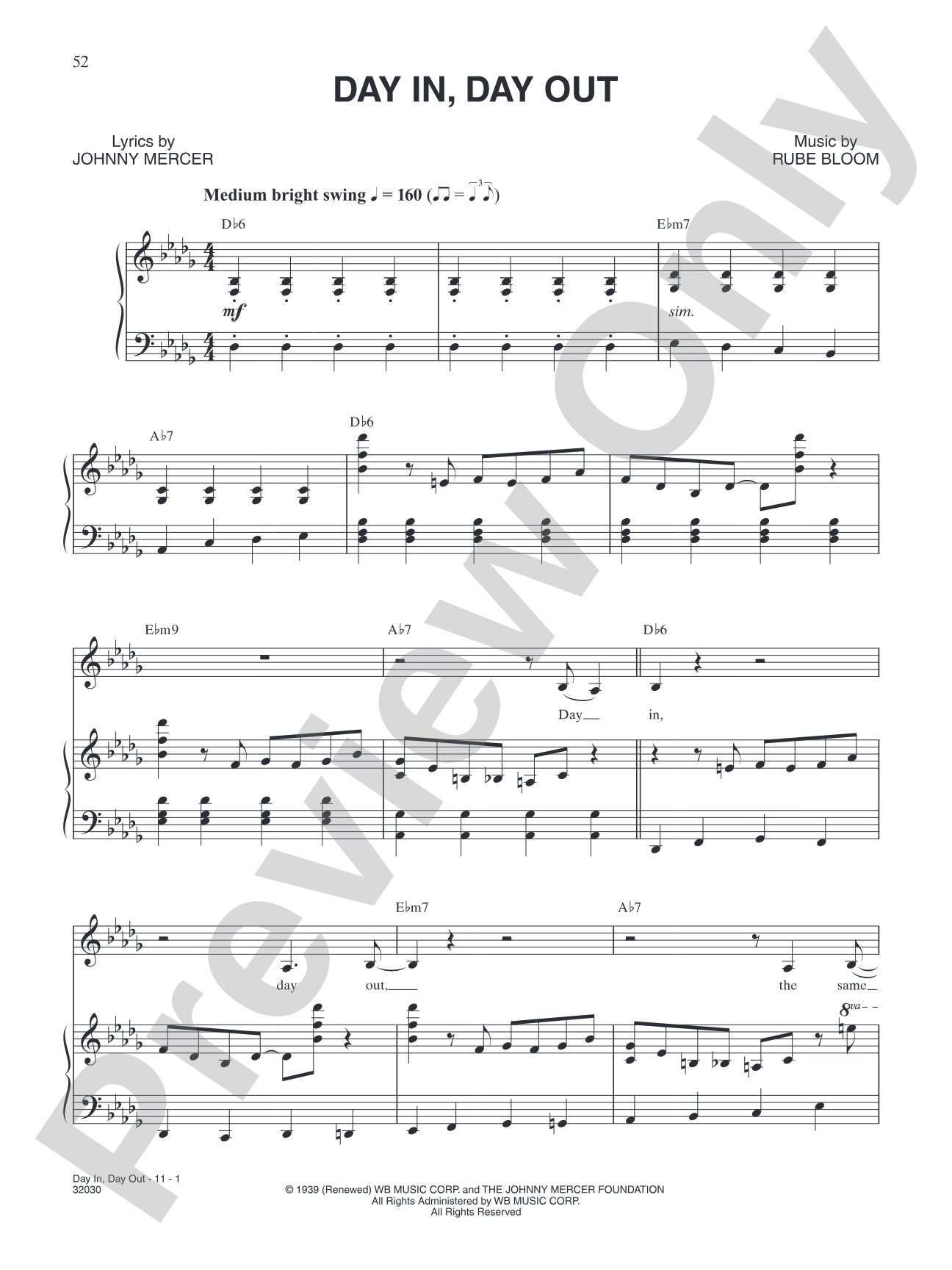
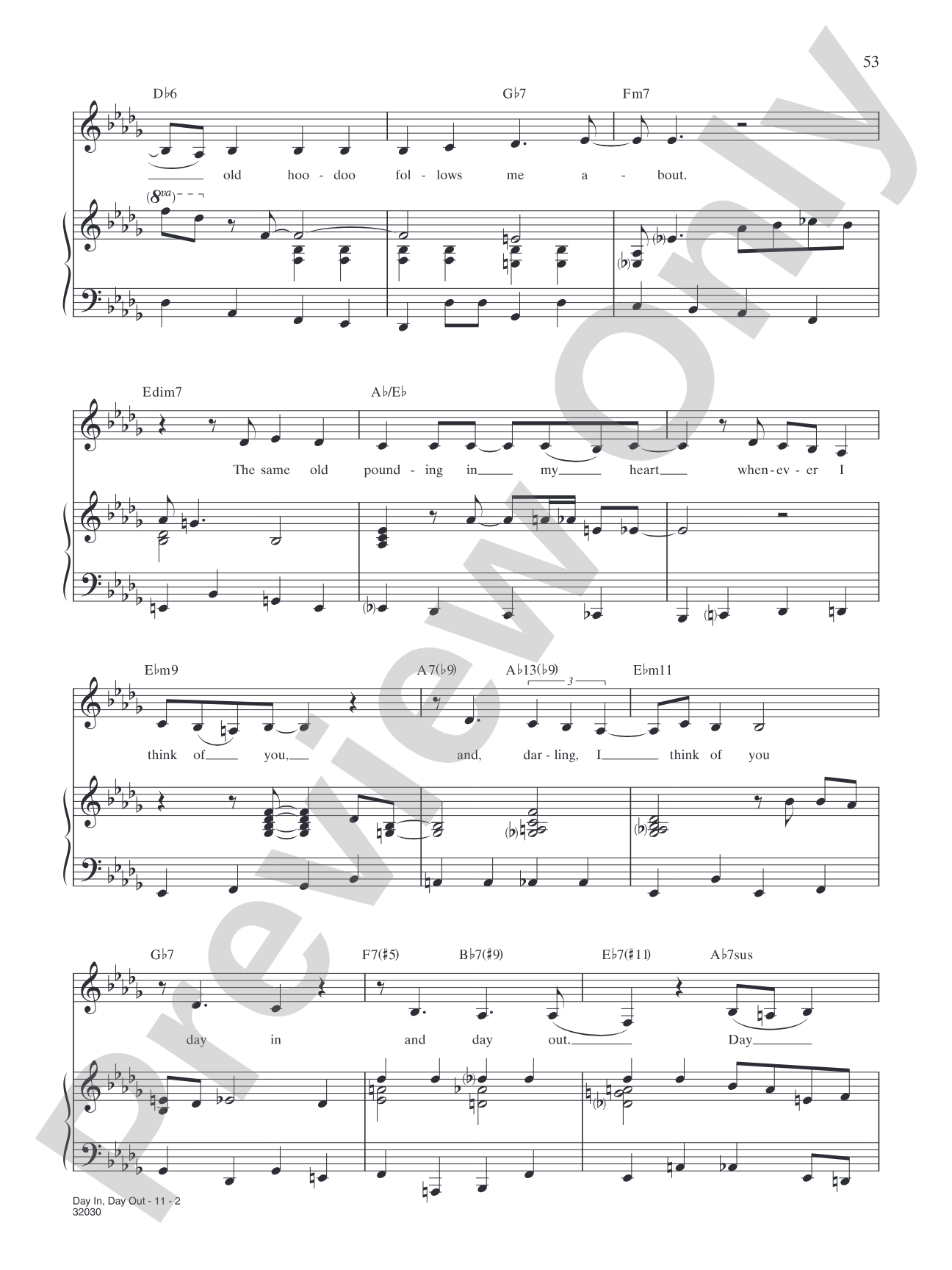
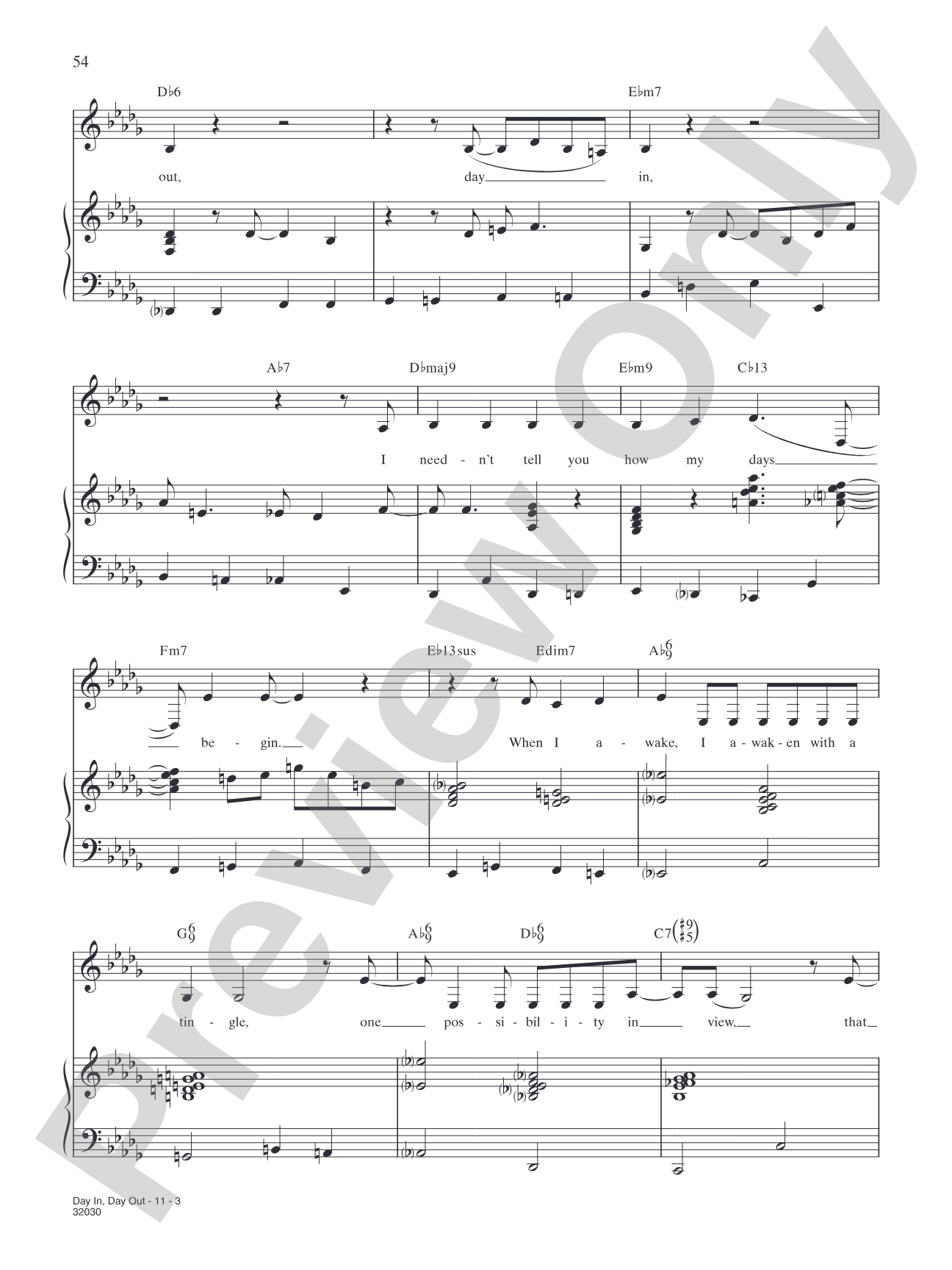

Day In Day Out: Piano/Vocal/Chords
Diana Krall
Item: 00-XS-0000058
$9.99
One moment…
Description
Canadian jazz pianist and vocalist, Diana Krall released her tenth album From This Moment On to chart-topping success in 2006. Now you can enjoy playing this album in your own home. This album-matching folio is professionally arranged for Piano/Vocal/Chords. Titles: Come Dance with Me * Day In, Day Out * Exactly Like You * From This Moment On * How Insensitive * I Was Doing Alright * Isn't This a Lovely Day * It Could Happen to You * It Was a Beautiful Day in August / You Can Depend on Me * Little Girl Blue * Willow Weep for Me.


Day In Day Out: Piano/Vocal/Chords isn't in MakeMusic Cloud just yet...but it could be. Let us know you'd like to see it, and you'll help shape what comes next. In the meantime, start a free trial and dive into thousands of interactive titles your students can play along with today.
Request This Title
Tell us you want it.
Start Your Free Trial
Explore everything that's ready to play right now.
Sample Audio
No sample audio found.
Sample Video
No sample videos found.
Additional Details
Publisher:
Alfred Music
Page Count:
88
SKU:
00-XS-0000058
More about this title
About the Composer: Johnny Mercer
Johnny Mercer (1909-1976) shaped American popular song across seven decades as a lyricist of extraordinary wit and emotional directness. He wrote for Broadway, Hollywood, and the jazz world with equal mastery, crafting lyrics that elevated melodies and gave singers unforgettable phrases. His partnership with composers like Rube Bloom produced standards that have become the backbone of the vocal jazz repertoire, performed by artists from Billie Holiday to Diana Krall.
Why we love this
This folio captures one of the finest vocal jazz albums of the 21st century in an arrangement that honors both the intimacy of the original and the pianist's need for solid harmonic structure. Diana Krall's interpretations of these standards demonstrate how a masterful vocalist approaches phrasing, dynamics, and time feel, making this an invaluable resource for singers and pianists studying contemporary jazz vocal performance. The selections span the full range of the standard repertoire, from introspective ballads to swinging uptempo numbers.
What to expect
The album unfolds with the elegance and restraint of late-night listening, where each song breathes. Krall's piano work frames her vocals with quiet intelligence, the harmonies rich without overshadowing the lyric, the tempos unhurried. These are songs about reflection and romance rendered without sentimentality, where a turn of phrase matters more than a display of technique.
Who it's for
This folio is essential for jazz vocalists seeking quality arrangements of standards, pianists who accompany singers or perform jazz recitals, and teachers preparing students to understand how contemporary artists interpret the Great American Songbook. It also serves classical pianists and singers expanding into jazz, as the original compositions provide harmonic and melodic sophistication alongside modern performance context.
How to get the most out of it
- Study the recorded album alongside the folio to hear how Krall handles rubato and phrasing; her restraint and lyrical approach offer lessons in understatement that many singers miss.
- Balance vocal melody and piano accompaniment by treating the piano voicings as conversational partners rather than mere support, especially in the ballads where the arrangement breathes between phrases.
- Attend closely to the harmonic extensions and substitutions notated in the chord symbols; these choices shape the modern jazz sensibility that distinguishes this album from earlier recordings of the same standards.
- Work with a pianist who understands jazz comping vocabulary so the chord symbols translate into genuine jazz accompaniment rather than literal realizations of every voicing.
How to use it
Program excerpts from this folio in recitals where jazz standards sit alongside art songs or contemporary work, as the sophistication of both arrangement and interpretation will lift the entire program. Use it as the foundation for a jazz vocal unit that requires performers to study how a master vocalist approaches interpretation, phrasing, and the relationship between words and melody. Individual selections work well in mixed-genre solo recitals where you need pieces that demonstrate technical control and musical maturity.
Skills your students will build
- Reading jazz chord symbols and understanding harmonic extensions (9ths, 13ths, alterations)
- Interpreting rubato and phrasing in standards while maintaining harmonic clarity
- Balancing vocal line with sophisticated piano accompaniment
- Understanding how lyrical content informs melodic phrasing and emotional timing
- Accompanying jazz singers with appropriate comping and voicing choices (for pianists)
- Recognizing and performing the differences between swing and rubato-based vocal delivery