
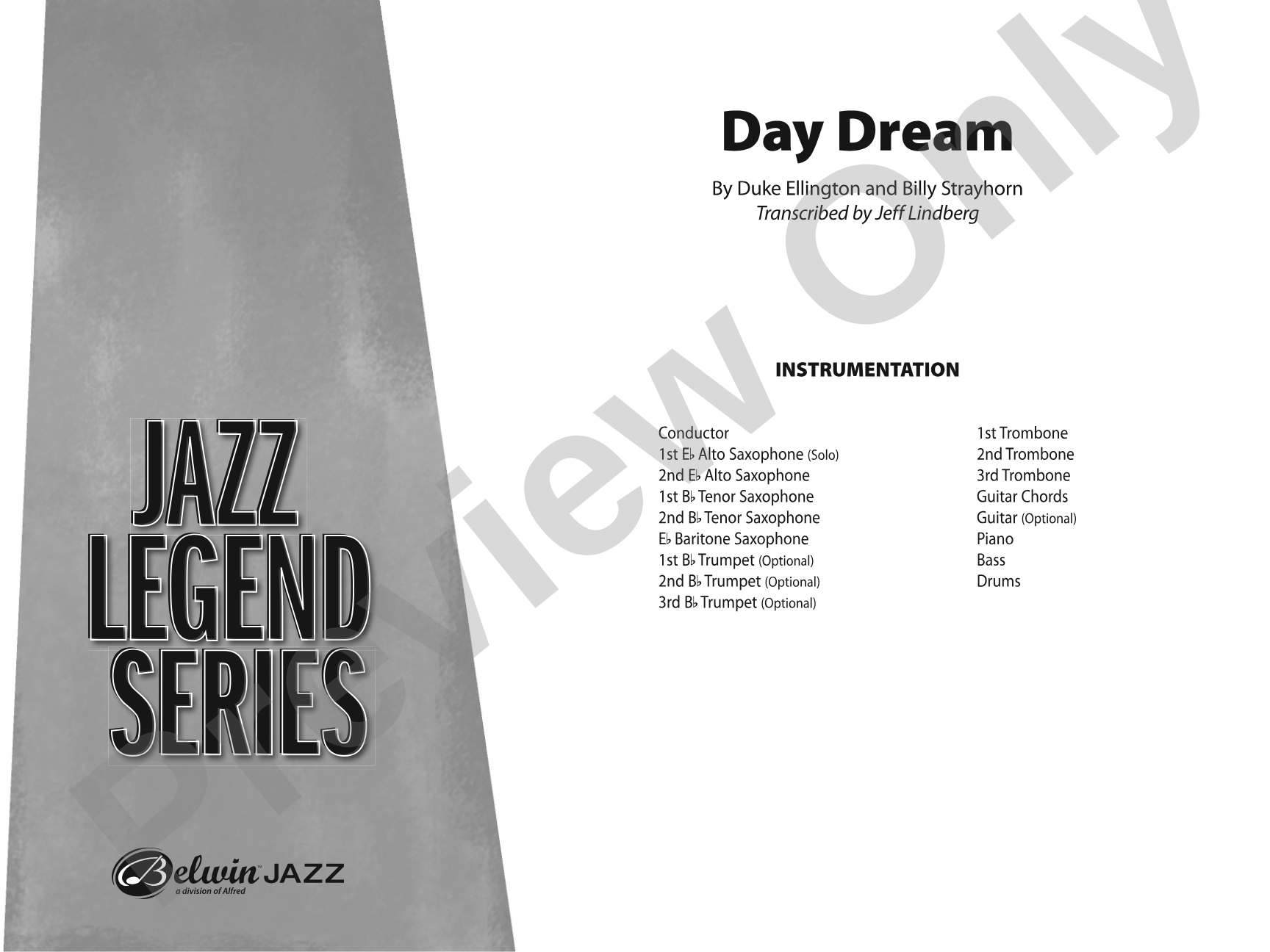
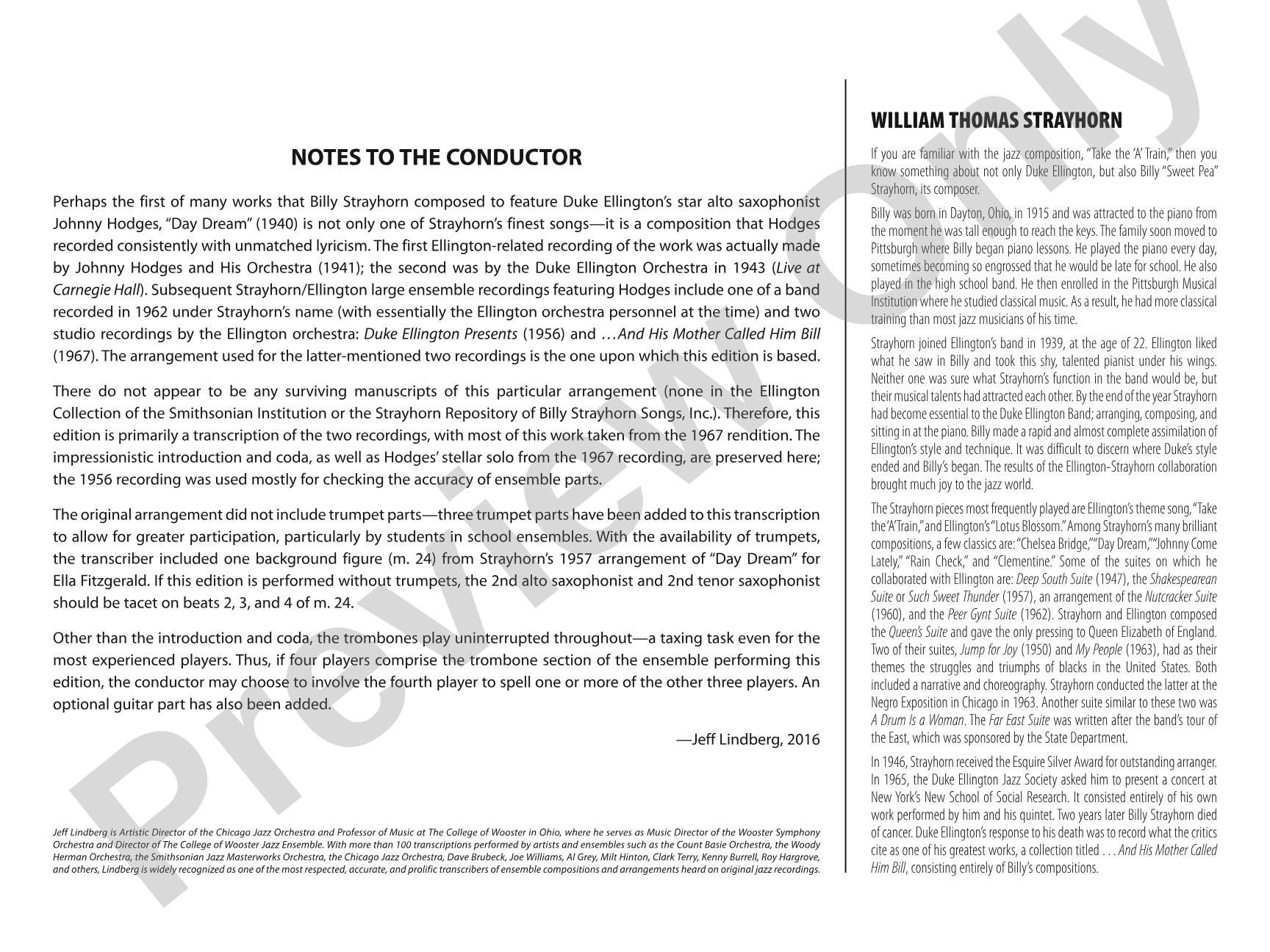
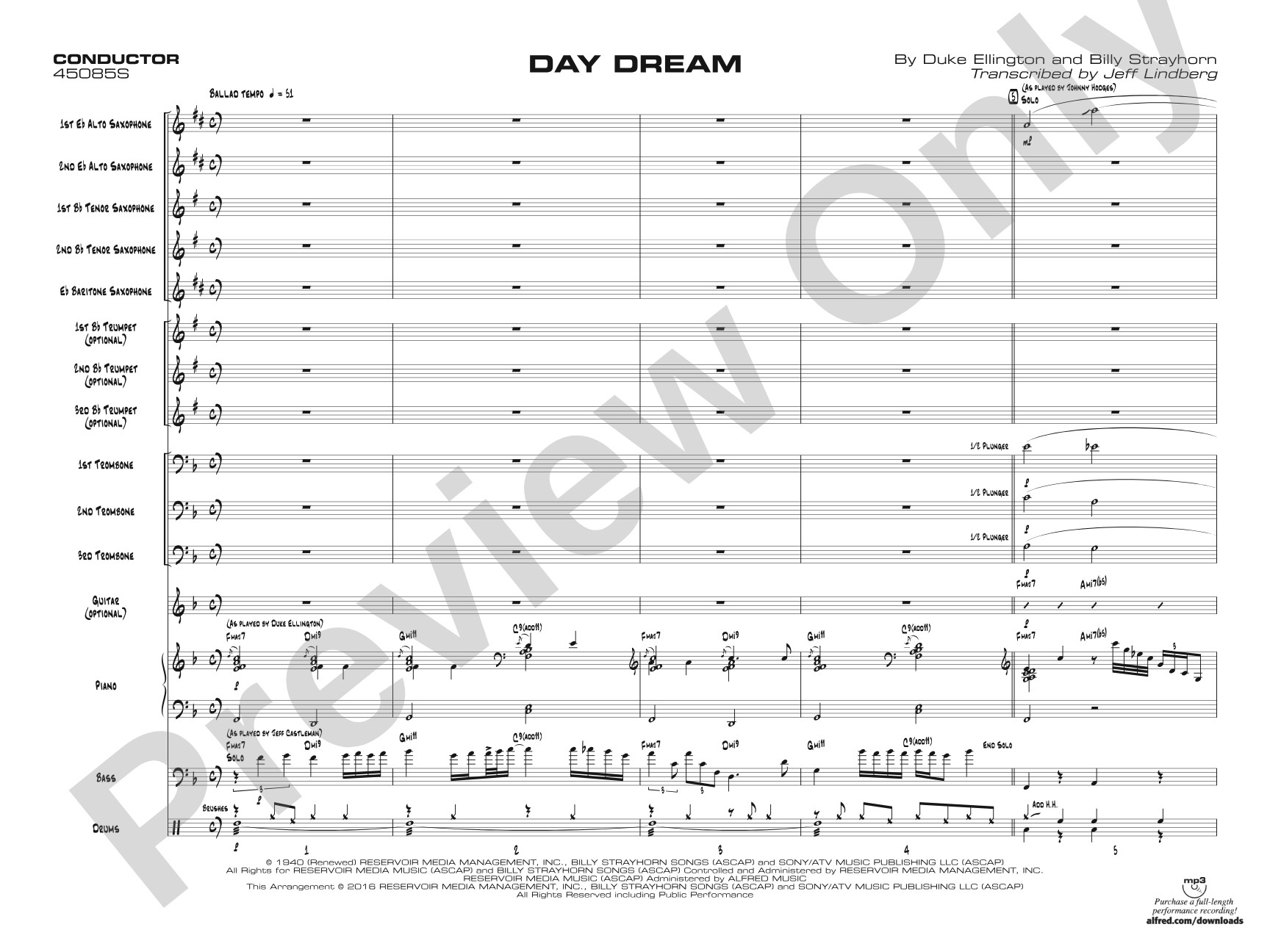
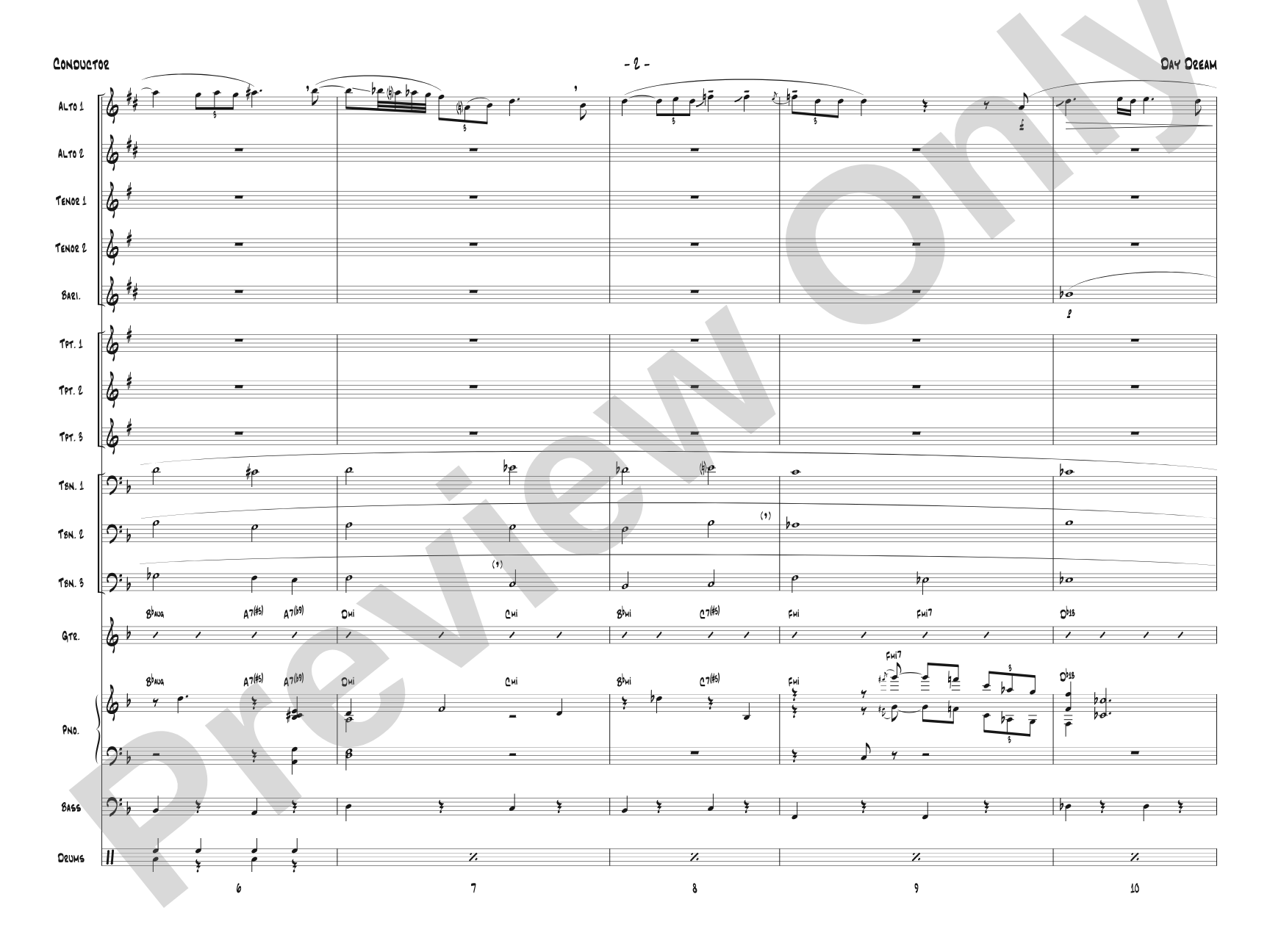
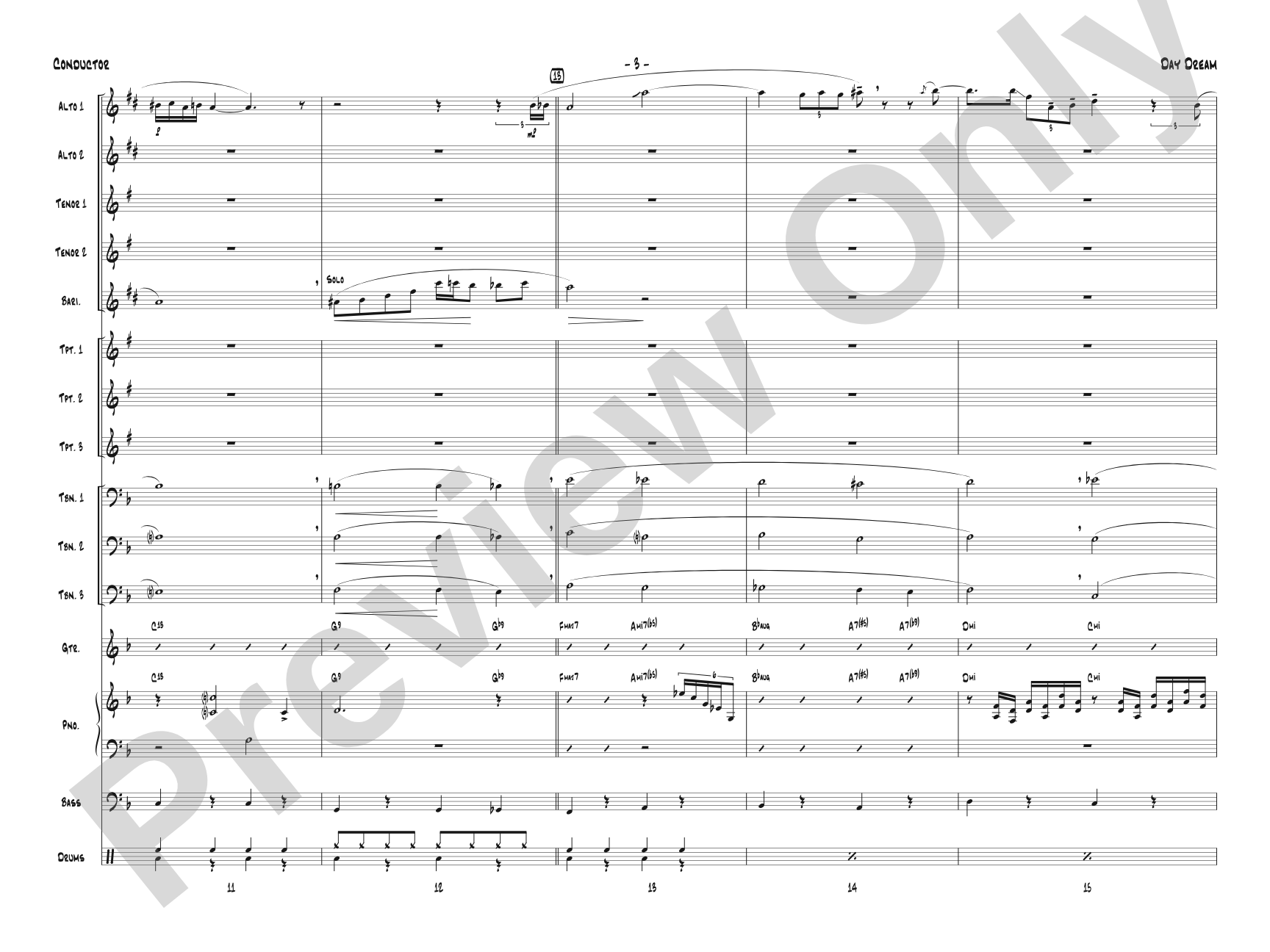
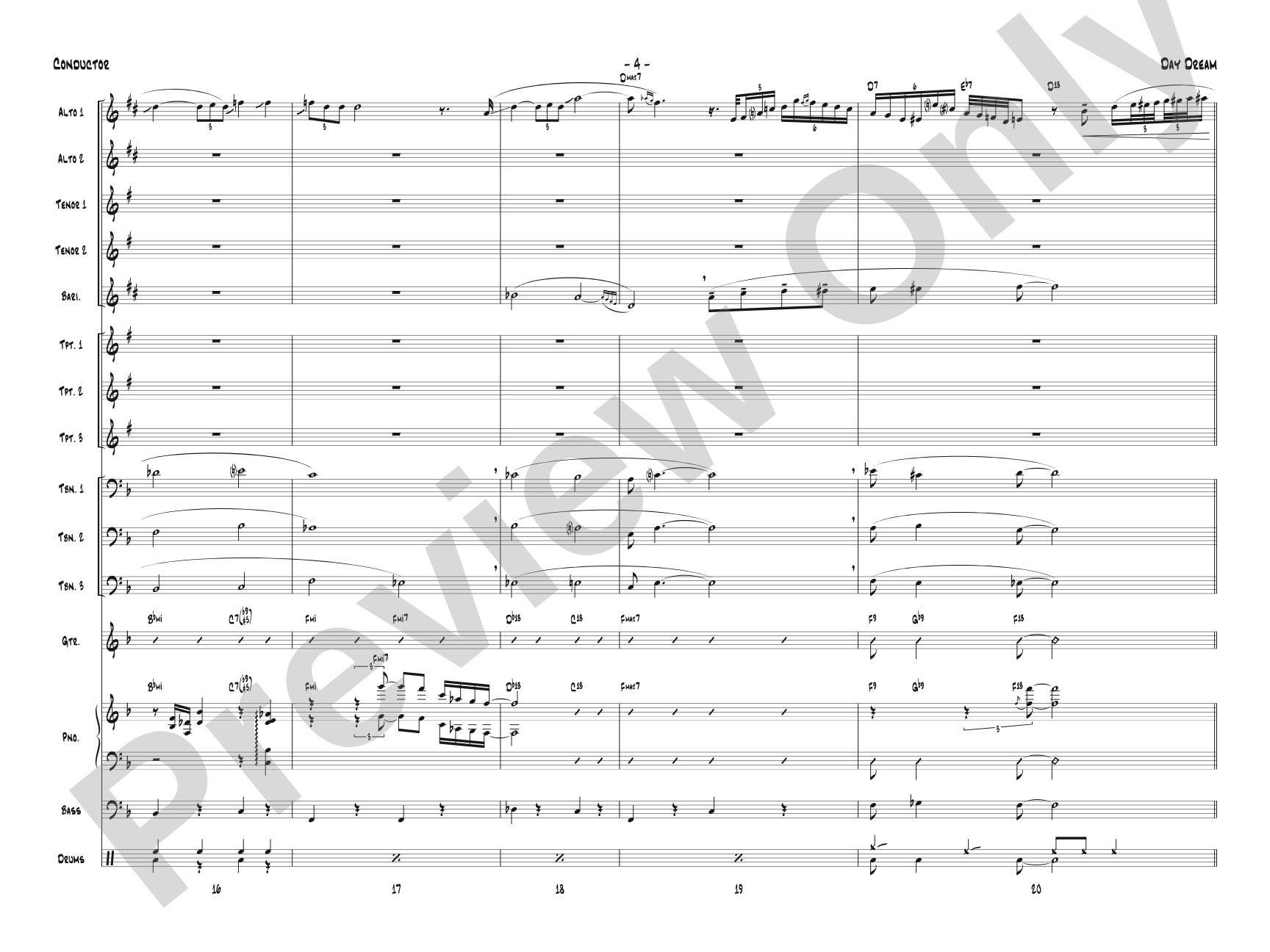
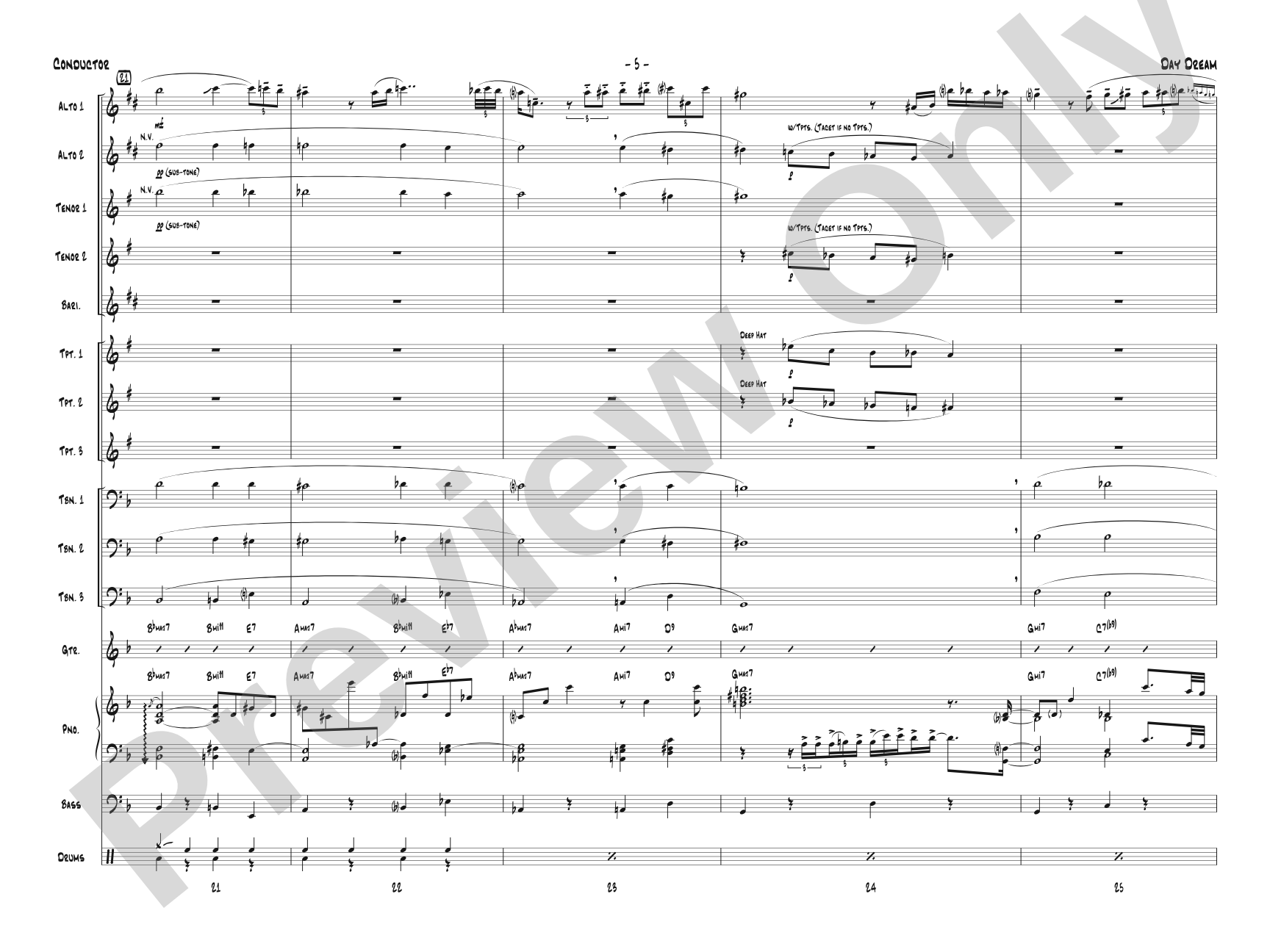
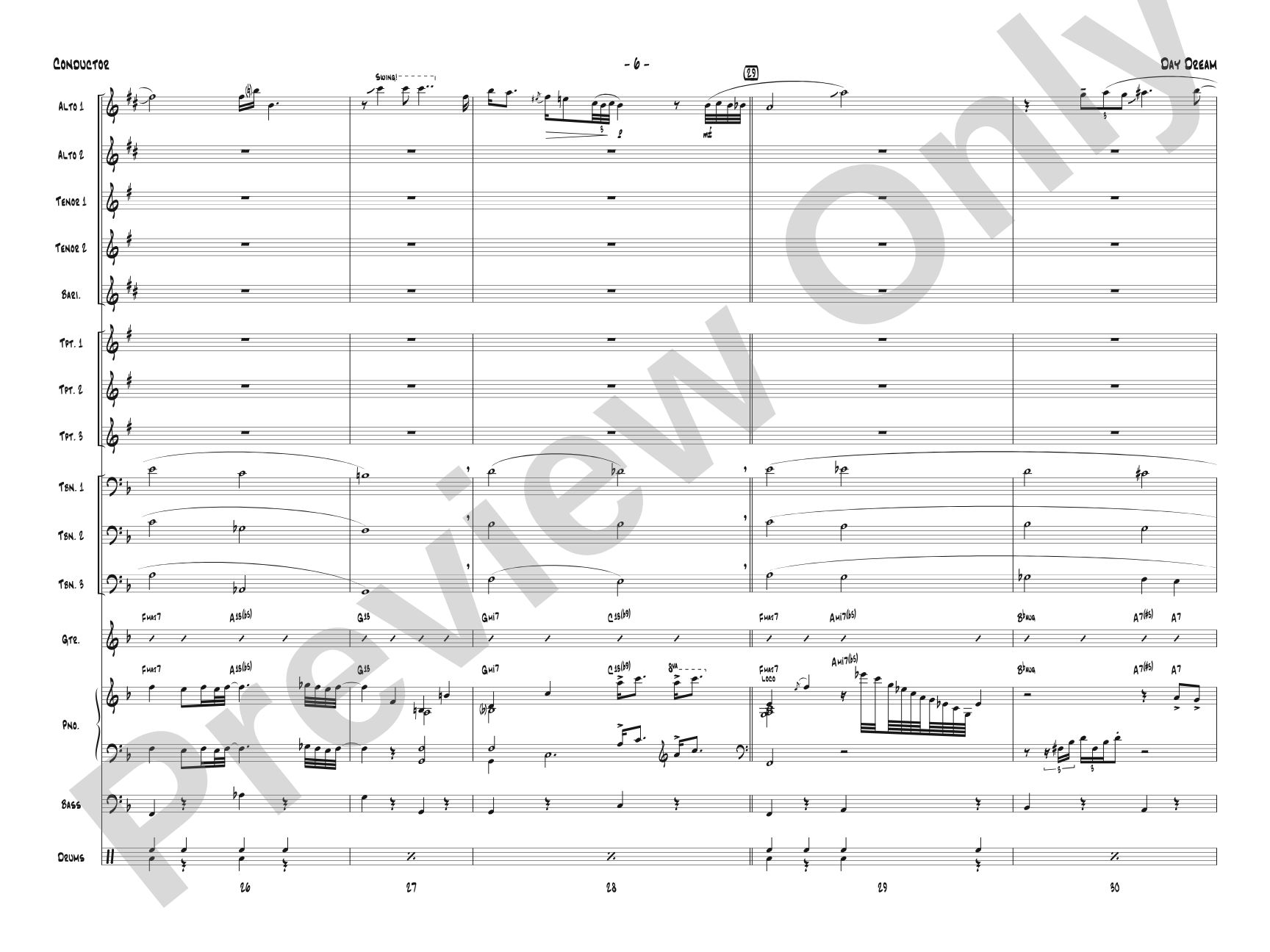
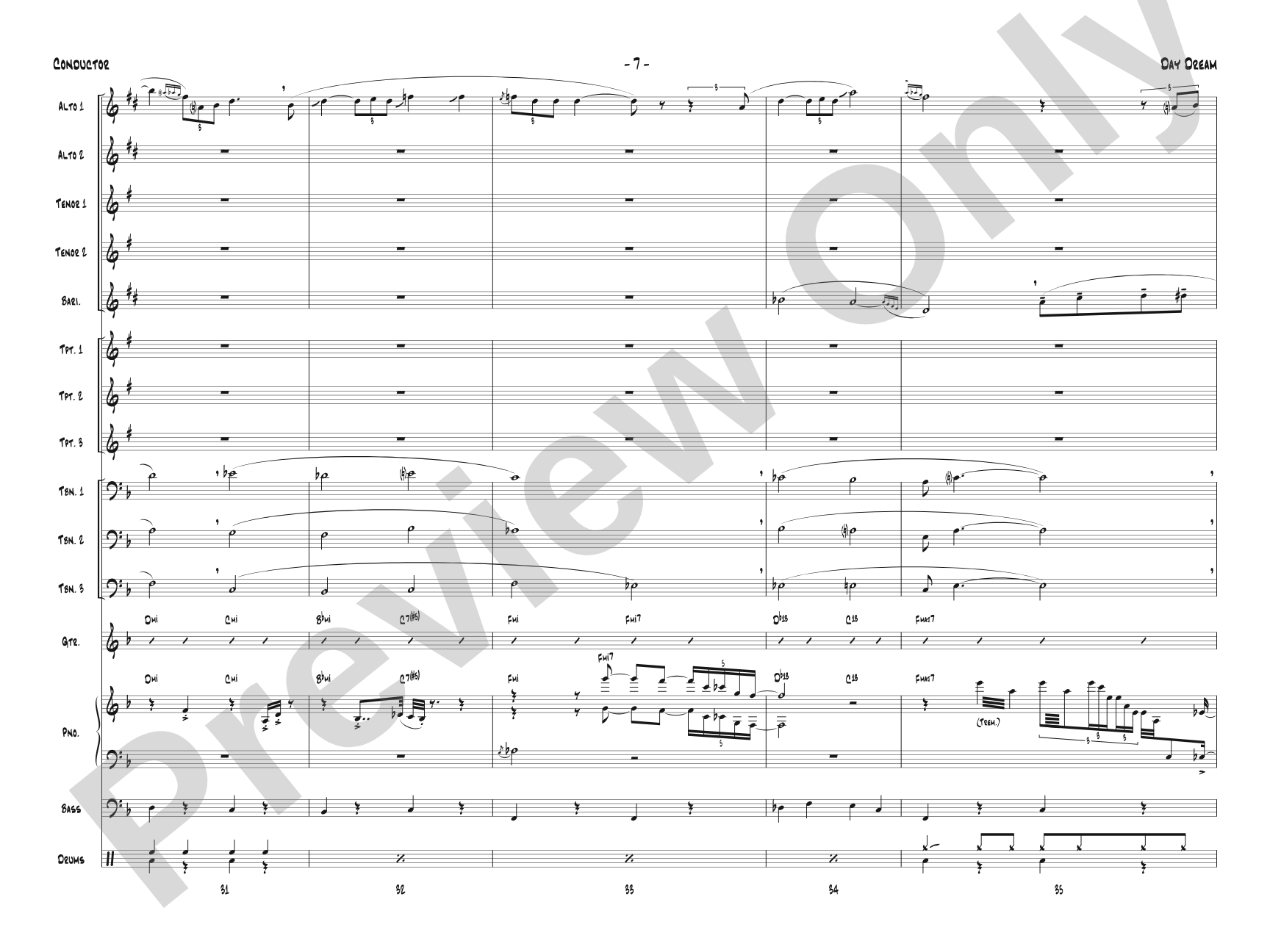
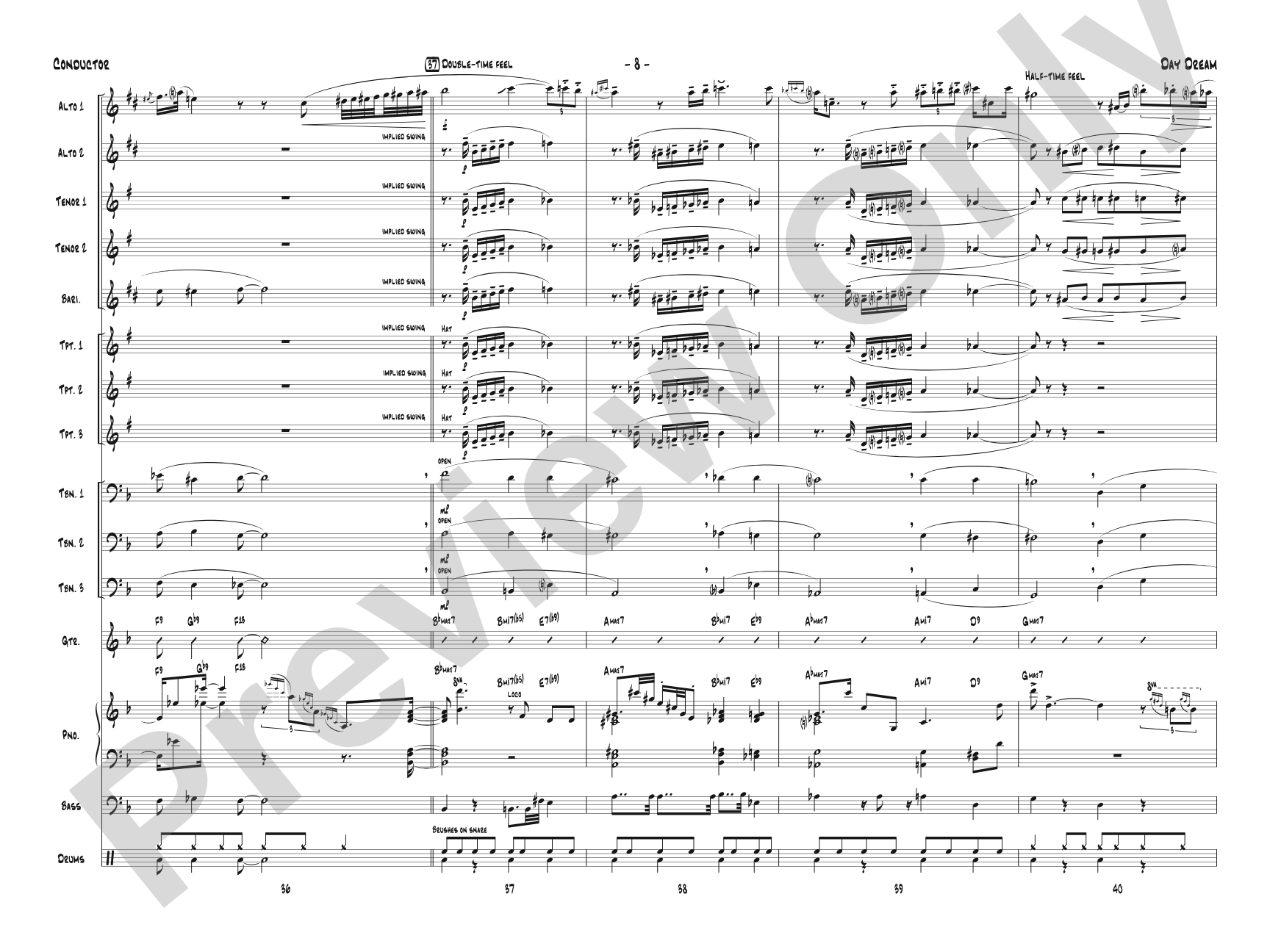
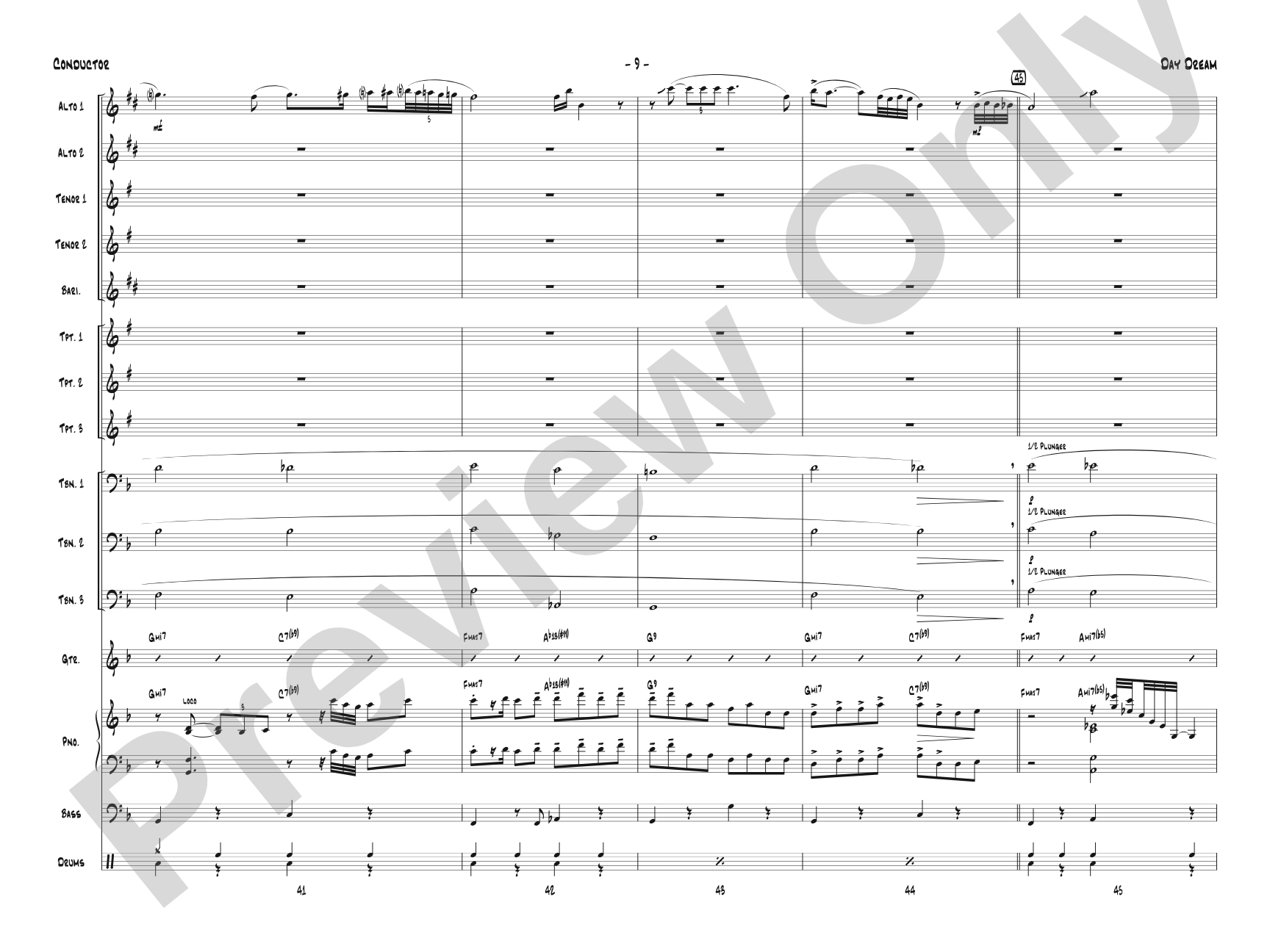
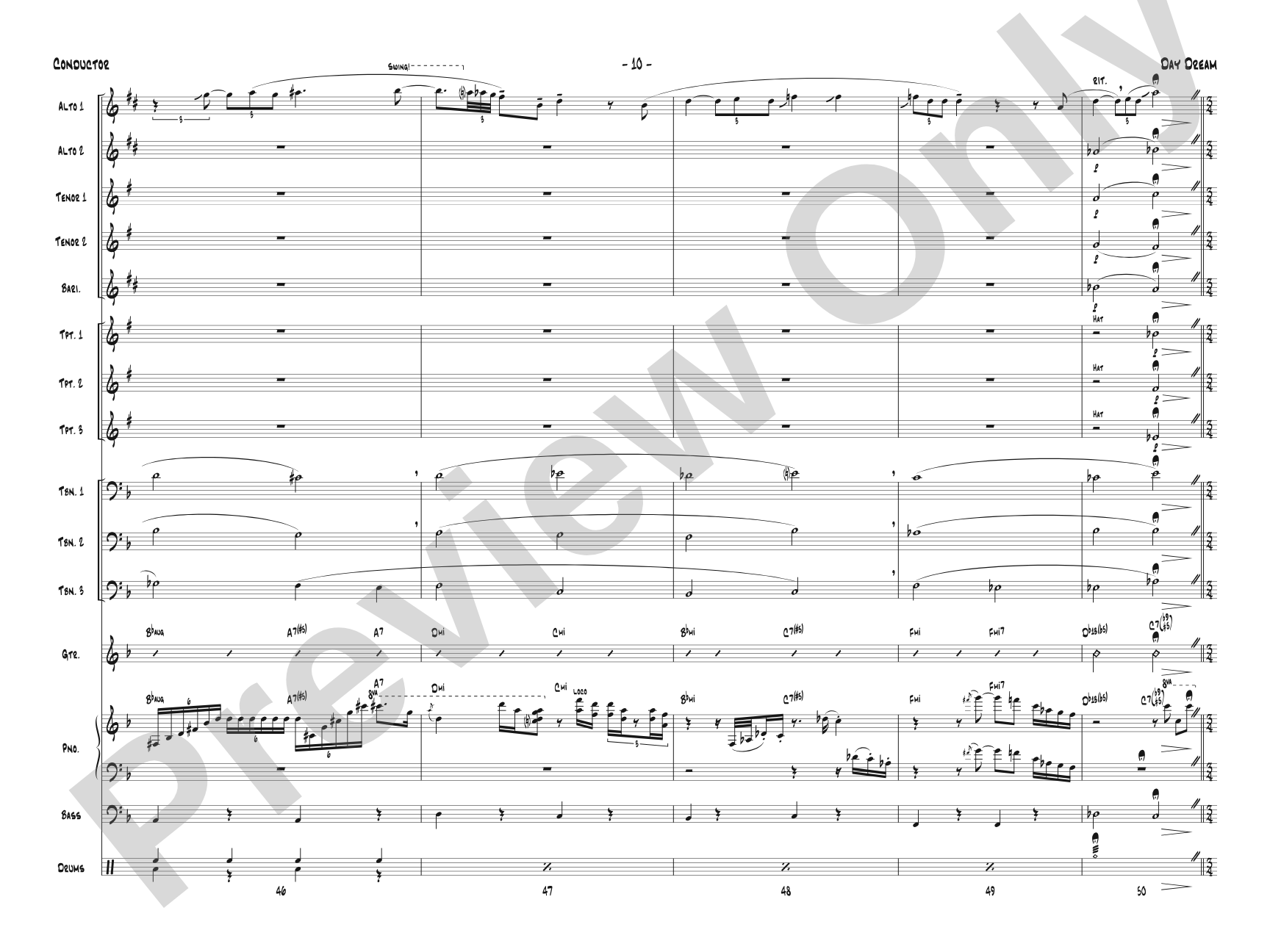
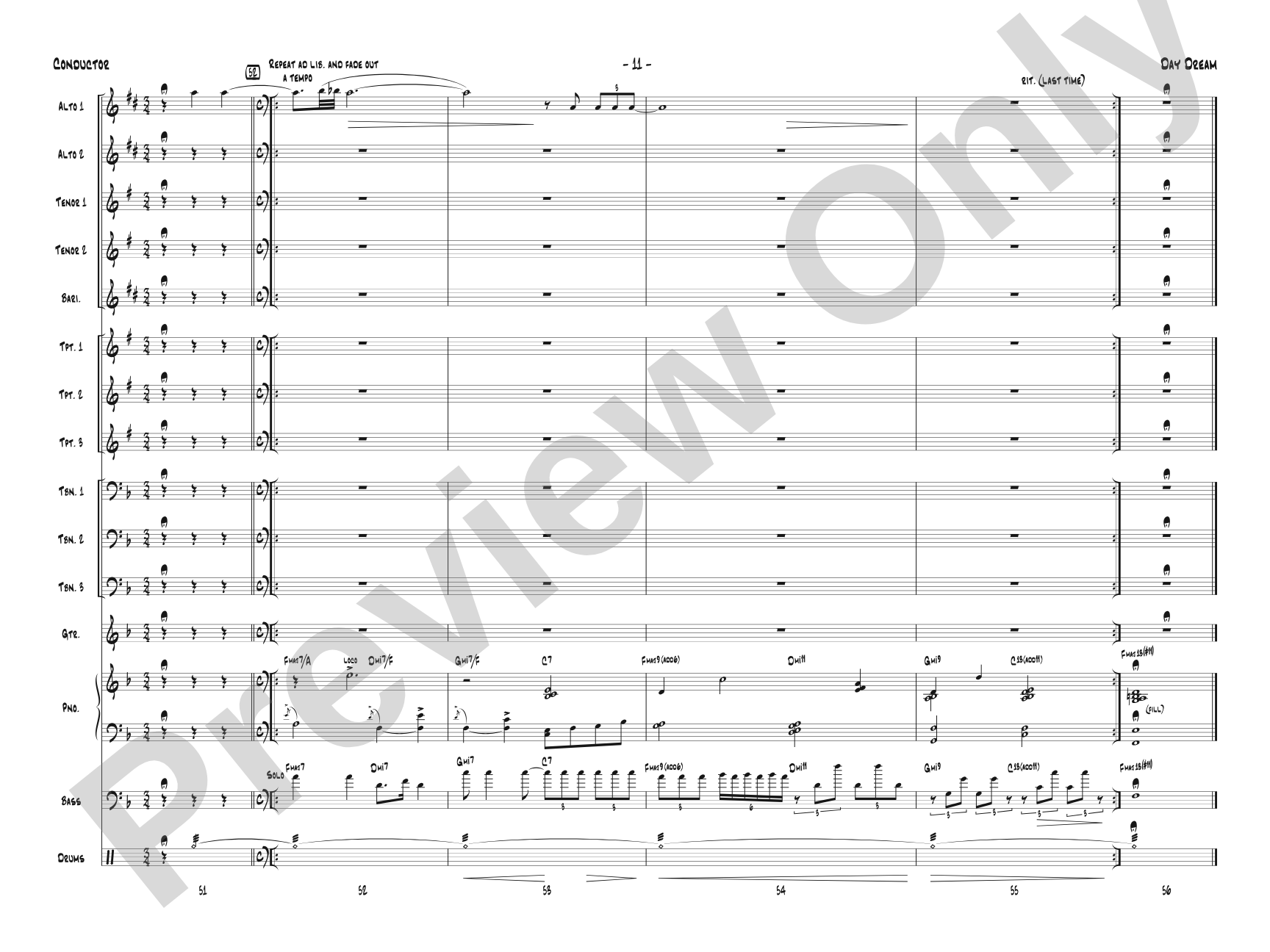

Day Dream: Score
By Duke Ellington and Billy Strayhorn / ed. and transcr. Jeff Lindberg
Grade: 5 (Advanced / Difficult)
Item: 00-PR-0005798
$14.00
Pickup currently not available
Description
A beautiful alto saxophone ballad, the tempo is around 72 BPM and the instrumentation is 5 saxes, 1 trumpet, 3 trombones, piano, bass, drums. Edited and adapted in exacting detail.


Day Dream: Score isn't in MakeMusic Cloud just yet...but it could be. Let us know you'd like to see it, and you'll help shape what comes next. In the meantime, start a free trial and dive into thousands of interactive titles your students can play along with today.
Request This Title
Tell us you want it.
Start Your Free Trial
Explore everything that's ready to play right now.
Sample Audio
No sample audio found.
Sample Video
No sample videos found.
Additional Details
Series:
Belwin Jazz Legend Series
Publisher:
Alfred Music
Page Count:
48
SKU:
00-PR-0005798
More about this title
About the Composer: Duke Ellington
Duke Ellington (1899-1974) stands as one of the most consequential composers in American music history. His innovations in orchestration, harmonic language, and extended compositional forms transformed jazz from a popular entertainment into a serious art music. Over five decades, he composed thousands of works ranging from three-minute popular songs to multi-movement suites, many of which have become standards of the jazz repertoire and concert hall alike.
Ellington's influence on music education extends far beyond his own era. His compositions demand musicianship, ensemble discipline, and interpretive maturity from players; they reward close listening and detailed study of how individual voices weave together into sophisticated harmonies. For student ensembles, his music offers a masterclass in what jazz can be when composed with orchestral ambition and lyrical depth.
Why we love this
This is a Strayhorn composition that carries the unmistakable Ellington orchestra DNA, and Lindberg's arrangement respects both the song's intimacy and its harmonic sophistication. At Grade 5, it asks your ensemble to play with maturity and restraint rather than flashiness, making it ideal for groups ready to tackle ballad playing with real musicianship. The contest and festival designation signals that adjudicators recognize this as serious repertoire, not a novelty choice.
What to expect
A quiet conversation in a dimly lit room, unhurried and deeply felt. The piano and bass create a gentle harmonic foundation while the saxophones weave close harmonies around the alto's winding melodic line; the trumpet and trombones enter sparingly, adding warmth without overwhelming. This is jazz that asks you to listen closely and play with restraint.
Who it's for
Advanced jazz ensembles with solid fundamentals and a lead alto saxophonist capable of sustained, lyrical playing. This is for groups that have moved beyond learning changes and are ready to explore tone production, phrasing, and ensemble balance as active interpretive choices.
How to get the most out of it
- Treat the alto saxophone solo not as a showy feature but as a sung melody; the 72 BPM ballad tempo demands that every phrase breathe naturally and that silence between phrases matters as much as the notes themselves.
- Balance the saxophone section as a unified voice behind the soloist rather than five independent parts; blend and vowel consistency will make the harmonic colors speak clearly.
- Anchor the rhythm section early in rehearsal so that piano, bass, and drums establish an unwavering pocket; a ballad at this tempo exposes any rhythmic slippage immediately.
- Let the trombone section color the lower harmonies with care; these voices aren't padding but essential to the piece's warmth and forward momentum.
How to use it
Program this as a showcase for your ensemble's maturity and musicianship rather than as an opener or closer; it deserves a place where the audience can settle into its contemplative mood. It pairs beautifully on a concert with uptempo Ellington pieces or works by other composers who value harmonic sophistication alongside groove.
Skills your students will build
- Ballad playing and phrasing at a slow tempo without rushing or dragging
- Blending and balancing within a saxophone section while supporting a featured soloist
- Reading and executing Ellington/Strayhorn-style harmonies and voice-leading
- Rhythm section comping and pocket-playing in a Grade 5 jazz context
- Listening and responding to an ensemble partner's emotional interpretation