Dave Brubeck: Selections from <I>Seriously Brubeck</I> Cover Image

Dave Brubeck: Selections from <I>Seriously Brubeck</I>: Piano Book

$9.95 USD
Sale price  $9.95 USD Regular price 
Skip to product information
Dave Brubeck: Selections from <I>Seriously Brubeck</I> Cover Image

Dave Brubeck: Selections from Seriously Brubeck: Piano Book

Original Music by Dave Brubeck

Dave Brubeck / ed. Gail Lew and John Salmon

Level: Late Intermediate / Early Advanced

Item: 00-ELM02031

$9.95
Shipped

One moment…

Description
The seven pieces in this volume are excerpted from two ballet suites composed by Dave Brubeck. "Struttin'" and "Doing the Charleston" are from the four-movement set Glances. Also included are five selections from Points on Jazz: Prelude * Scherzo * Rag * Waltz * A la Turk. Brubeck himself describes Glances as "my most Milhaud-inspired work," a tribute to the French composer with whom Dave studied composition. Points on Jazz was commissioned by the American Ballet Theatre and the cover of this incredible collection features Dave at the piano surrounded by the dancers. See also Seriously Brubeck (ELM02027).

Dave Brubeck: Selections from Seriously Brubeck: Piano Book isn't in MakeMusic Cloud just yet...but it could be. Let us know you'd like to see it, and you'll help shape what comes next. In the meantime, start a free trial and dive into thousands of interactive titles your students can play along with today.

Sample Pages

Sample Audio
No sample audio found.
Sample Video
Additional Details
Publisher: Alfred Music
Page Count: 52
ISBN10: 0-7579-0964-7
ISBN13: 978-0-7579-0964-1
UPC: 654979052647
SKU: 00-ELM02031

More about this title

About the Composer: Dave Brubeck
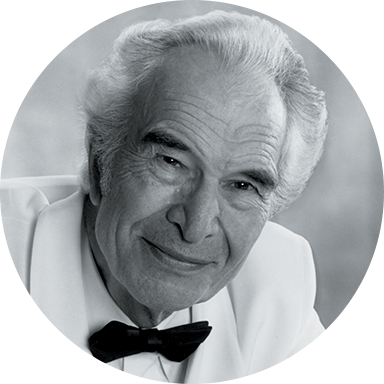
Dave Brubeck

Dave Brubeck built a career spanning composition and performance, creating works across jazz, classical, and sacred genres. Beyond his role as a pioneering jazz pianist, he composed choral pieces, hymns, orchestral works, chamber music, ballet suites, and large-scale choral orchestral works. His 1959 album "Time Out" became the first jazz record to sell over a million copies, and "Take Five" remains an enduring standard. Brubeck studied composition with Darius Milhaud at Mills College after World War II, absorbing the French composer's influence into his own hybrid musical language.

Throughout his lifetime, Brubeck received recognition including a Grammy Lifetime Achievement Award, the Presidential Medal of the Arts, and election to the American Classical Music Hall of Fame in 2003. His sacred works, including the mass "To Hope!" and oratorios "The Voice of the Holy Spirit" and "Beloved Son," have been recorded by major ensembles and performed worldwide. Beyond his musical contributions, Brubeck played a significant role in advancing racial integration in American music during the mid-20th century.

Why we love this

Brubeck's ballet suites translate beautifully to solo piano, offering pianists access to music that's both intellectually engaging and viscerally fun to play. The selection here balances rhythmic sophistication with clear harmonic language, making these pieces rewarding for students ready to explore jazz language without requiring advanced improvisational skills. Programming work by a composer who bridged classical and jazz worlds opens conversations about genre boundaries that extend far beyond the keyboard.

What to expect

These pieces shimmer with the elegance of French impressionism filtered through an unmistakably American jazz sensibility. Moments of playful stride and swing rub shoulders with lyrical passages and surprising harmonic turns, creating music that feels both sophisticated and deeply groovable. The ballet origins are evident in the music's narrative arc and color; even at the piano, you sense movement, gesture, and dramatic intention.

Who it's for

Late intermediate and early advanced pianists ready to engage with jazz vocabulary through notated composition rather than improvisation or lead sheets. Students studying 20th-century music, composers who bridged genres, or the relationship between classical and jazz traditions will find substantial material here. This book is equally valuable for pianists building recital repertoire and those exploring Brubeck's compositional voice beyond his legendary jazz recordings.

How to get the most out of it

  • Observe Brubeck's harmonic language carefully; his Milhaud-influenced passages often move through unexpected tonal centers that reward clear voicing and deliberate tempo control.
  • The rhythm section pieces ("Struttin'" and "Doing the Charleston") demand a relaxed swing feel rather than strict metronomic precision; listen to Brubeck's own recordings to internalize the rhythmic lift.
  • Pay attention to the interplay between jazz and classical idioms within single pieces; shifting comfortably between these languages requires thoughtful pedal work and dynamic clarity.
  • These excerpts from larger ballet works benefit from dramatic shaping across phrases; treat each selection as a complete statement rather than a study or exercise.

How to use it

Feature one or two selections in a recital exploring jazz composers and classical forms, pairing them with works by other composer-pianists who bridged genres. The collection works beautifully in a concert celebrating American compositional voices or highlighting ballet music adapted for solo piano. Consider programming a complete suite (either Glances or Points on Jazz) as a thematic arc within a longer recital.

Skills your students will build

  • Voicing jazz harmonies with classical clarity and color
  • Playing swing rhythm with written notation
  • Navigating harmonic movement through unexpected tonal centers
  • Balancing melodic line, harmonic accompaniment, and rhythmic drive in keyboard writing
  • Understanding ballet music structure and dramatic pacing in concert context

You May Also Like