Dave Brubeck: It's About Time: 2nd Flute Sheet Music Preview

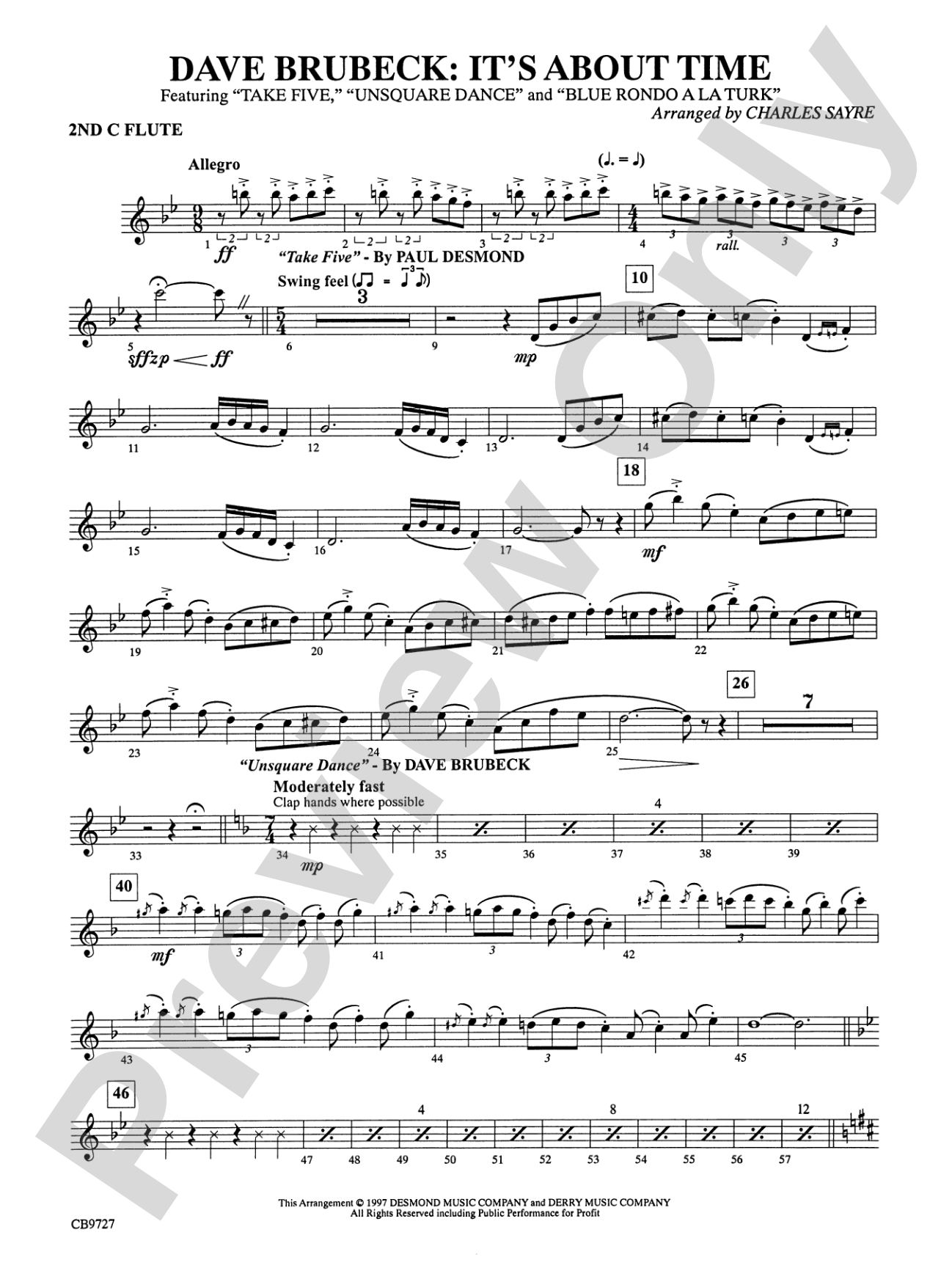
Dave Brubeck: It's About Time: 2nd Flute

Featuring: Take Five / Unsquare Dance / Blue Rondo a la Turk

The music of Dave Brubeck / arr. Charles Sayre

Grade: 4 (Medium)

Item: 00-PC-0017087_F2

Digital Download
$3.00
Description
The Dave Brubeck Quartet literally broke the ice regarding odd time signatures with their recordings Time Out and Time Further Out. Today, the ability to play in all time signatures is in every musician's repertoire. Charles Sayre skillfully combines "Take Five," "Unsquare Dance," and "Blue Rondo a la Turk" to take us back to when it all began. This is a magnificent medley! (4:40)

Don't just read it, hear it, play along with it, and watch your students grow with it. In MakeMusic Cloud, Dave Brubeck: It's About Time: 2nd Flute comes alive with professional accompaniment, adjustable tempo, and built-in practice tools that turn solo practice into real progress.

Sample Audio
No sample audio found.
Sample Video
Additional Details
Series: Pop Symphonic Band
Publisher: Alfred Music
Page Count: 308
SKU: 00-PC-0017087_F2

More about this title

About the Arranger: Charles Sayre

Charles Sayre has built a reputation as an arranger who understands what concert bands need: music that challenges without overwhelming, that respects the source material while reimagining it for the ensemble. His work in the Pop Symphonic Band series demonstrates a particular gift for translating iconic jazz recordings into settings where young musicians can experience genuine musical sophistication.

Why we love this

Sayre's arrangement captures the historical significance of the Brubeck Quartet's innovations while making three iconic compositions feel like a unified narrative arc. The medley structure allows bands to perform these touchstones without programming three separate pieces, and the Grade 4 scoring ensures technical accessibility without sacrificing the rhythmic sophistication that made the originals groundbreaking.

What to expect

Cool, analytical, and rhythmically alive. The writing captures the cerebral confidence of the Brubeck Quartet's approach to odd meters while maintaining the swinging, conversational quality that made these recordings accessible to audiences far beyond jazz insiders. Each section carries its own personality, from the crisp geometry of "Unsquare Dance" to the breezy sophistication of "Take Five."

Who it's for

Concert bands looking to program recognizable jazz standards with substantial musical content and students who need exposure to meters beyond 2/4, 3/4, and 4/4. This medley works equally well for bands building jazz literacy and those seeking an engaging, historically informed concert piece that bridges classical and vernacular traditions.

How to get the most out of it

  • Lock the meter shifts between sections before rehearsing at tempo. The transitions between 5/4, 11/8, and 4/4 demand precision from your ensemble; rehearse them as isolated passages first.
  • Balance the soloists against the ensemble carefully. These melodies thrive when front voices cut through, so check your dynamic markings and adjust section volumes if the primary line gets buried.
  • Let the rhythm section breathe. The piano and drums carry the rhythmic identity in the original recordings; your percussion and piano parts need independence and flexibility, not mechanical metronomic playing.
  • Spend time on the "Take Five" section with careful articulation work. The straightforward 5/4 groove is deceptively tricky; if it feels stiff, your articulation and swing feel need adjustment rather than a tempo change.

How to use it

Position this as a concert centerpiece that demonstrates your ensemble's rhythmic maturity and stylistic versatility. It pairs naturally with contemporary classical works that explore unusual meters or other jazz-informed arrangements, and it provides a cultural bridge between traditional concert band fare and modern compositional practice. The 4:40 duration makes it ideal for a featured spot without consuming an entire half of your program.

Skills your students will build

  • Reading and executing 5/4 and 11/8 meters
  • Jazz articulation and swing feel
  • Listening to and balancing solo voices within ensemble texture
  • Rhythmic independence between sections

You May Also Like