
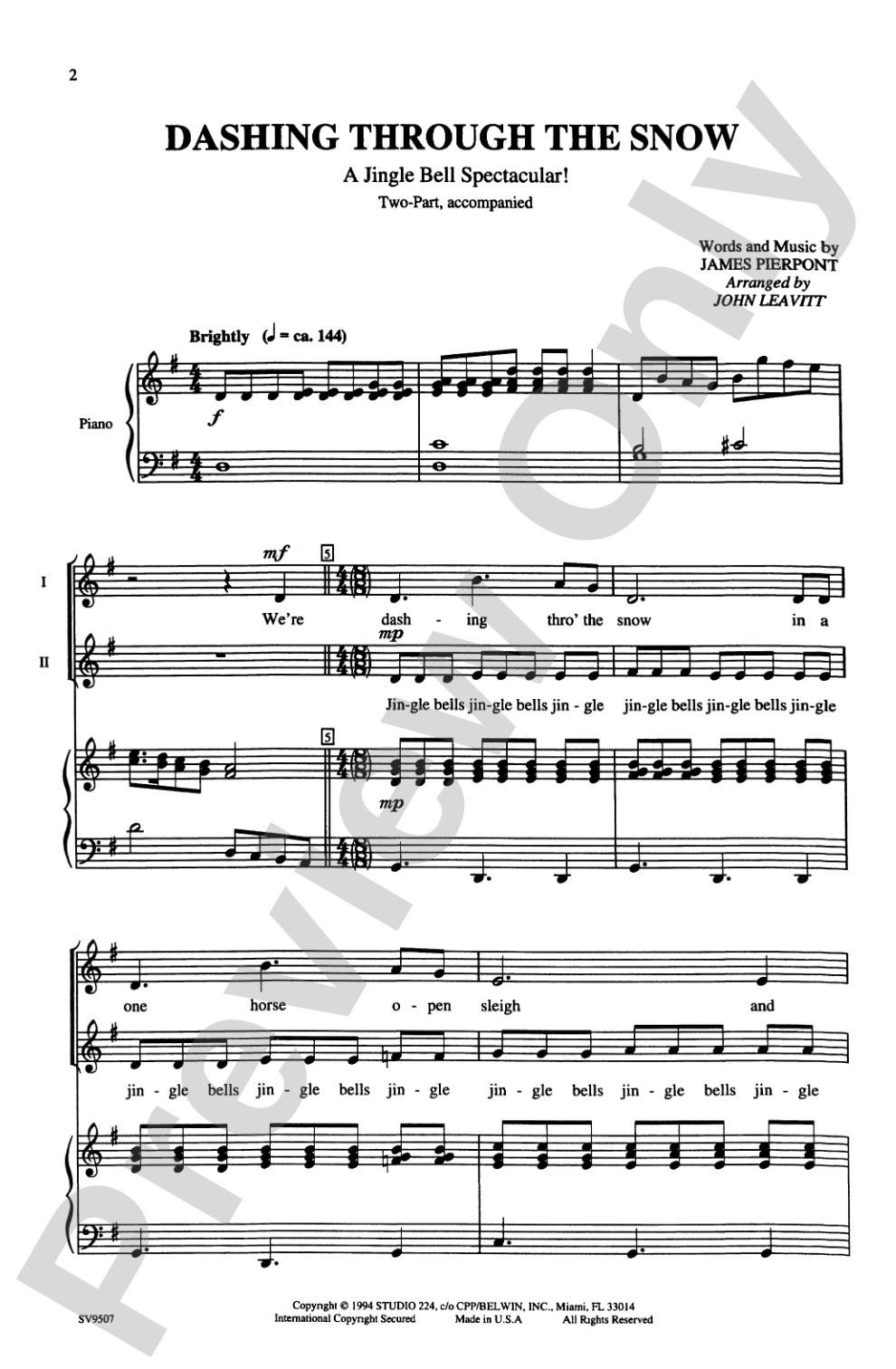
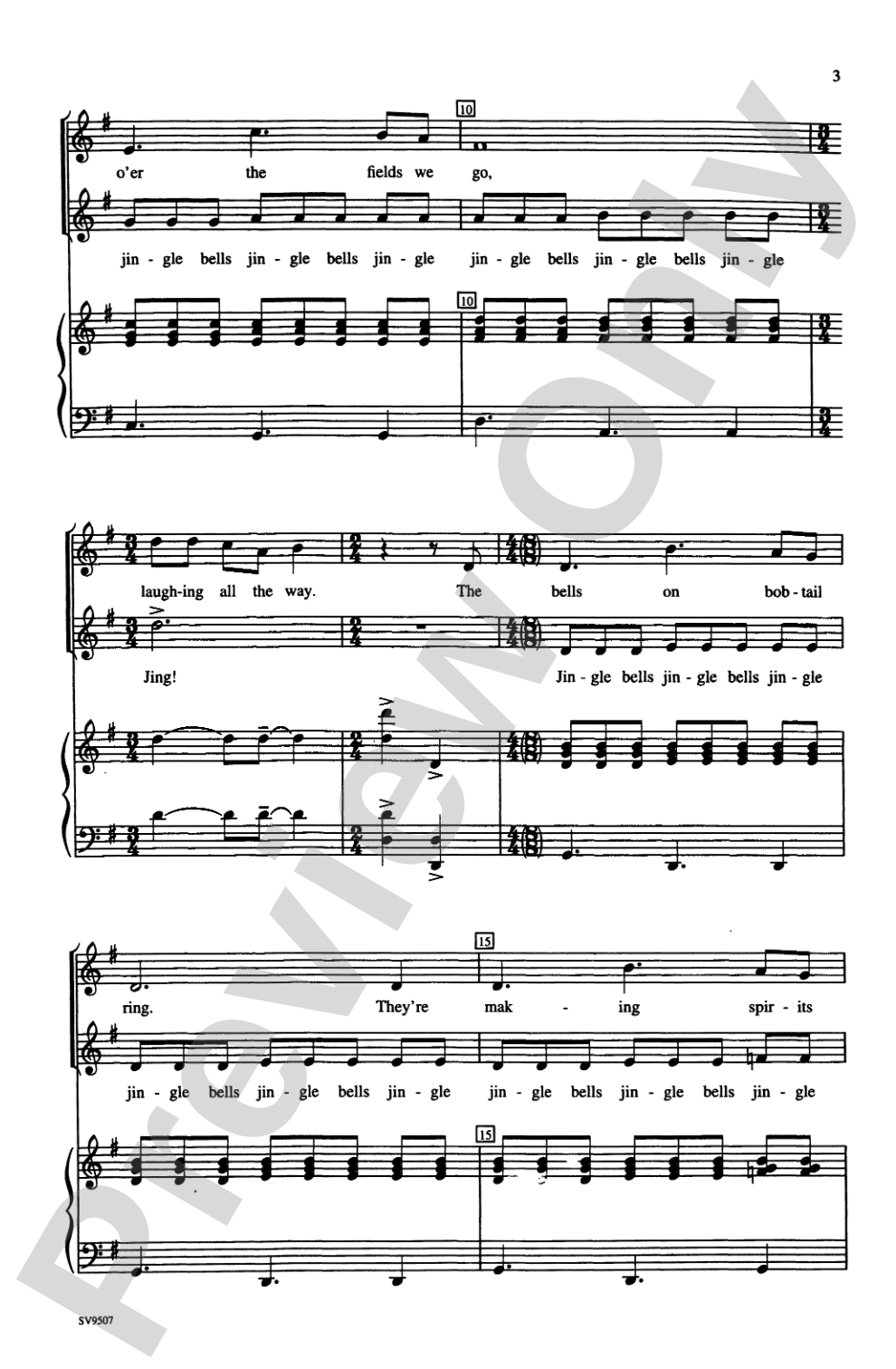

Dashing Through the Snow (A Jingle Bell Spectacular!): 2-Part Choral Octavo
Words and music by James Pierpont / arr. John Leavitt
Item: 00-PO-0003544
$2.05
Minimum order quantity: 20 copies
Pickup currently not available
Related Items
Dashing Through the Snow (A Jingle Bell Spectacular!): SATB Choral Octavo |
$2.05
|
View | |
Dashing Through the Snow (A Jingle Bell Spectacular!): SAB Choral Octavo |
$2.25
|
View | |
Dashing Through the Snow (A Jingle Bell Spectacular!): SATB Choral Octavo |
$2.05
|
View | |
Dashing Through the Snow (A Jingle Bell Spectacular!): SAB Choral Octavo |
$2.25
|
View | |
Dashing Through the Snow (A Jingle Bell Spectacular!): 2-Part Choral Octavo |
$2.05
|
View |
Description
Previously available only in a two-part edition, John Leavitt now brings his holiday spectacular to more ensembles by adding SATB and SAB editions. Choirs and audiences will love it!


Dashing Through the Snow (A Jingle Bell Spectacular!): 2-Part Choral Octavo isn't in MakeMusic Cloud just yet...but it could be. Let us know you'd like to see it, and you'll help shape what comes next. In the meantime, start a free trial and dive into thousands of interactive titles your students can play along with today.
Request This Title
Tell us you want it.
Start Your Free Trial
Explore everything that's ready to play right now.
Sample Audio
No sample audio found.
Sample Video
No sample videos found.
Additional Details
Publisher:
Alfred Music
Page Count:
8
SKU:
00-PO-0003544
More about this title
About the Composer: James Pierpont
James Pierpont (1822–1893) composed what may be the most recognizable holiday melody in American music. Originally titled "One Horse Open Sleigh" when published in 1850, the song became "Jingle Bells" and has since transcended its era to become a cultural touchstone performed by ensembles worldwide.
Pierpont's gift for memorable melody and straightforward harmonic language made his work ideal for community singing and amateur performance. His compositions remain central to holiday programming precisely because they invite participation rather than demand virtuosity.
Why we love this
John Leavitt's arrangement captures the infectious energy of this beloved melody while respecting what makes it work: clear voicing, accessible ranges, and honest orchestration that never overshadows the tune. Arrangers who understand holiday repertoire know that this piece will engage singers and audiences alike, and Leavitt's version proves that a familiar classic benefits from thoughtful reharmonization rather than unnecessary elaboration.
What to expect
Crisp winter energy meets nostalgic warmth. The arrangement honors the melody's straightforward joy while Leavitt's harmonies add gentle sophistication that keeps performers engaged and listeners delighted. It feels both timeless and freshly arranged.
Who it's for
This arrangement opens the door for younger or developing choirs that may not yet be ready for four-part voicing but want to perform this standard with musicality and sophistication. Directors seeking a holiday piece that engages both singers and audiences while building foundational two-part blend will find this accessible and immediately rewarding.
How to get the most out of it
- Keep the tempo brisk and energetic without sacrificing clarity in the two-part writing; ensemble balance matters more than speed in ensuring the harmony locks together.
- Shape the melodic line with gentle dynamic contours rather than singing it straight; the familiar tune invites performers to play with phrasing and lift.
- Pay attention to text articulation in fast passages to maintain diction clarity; rushing the words creates muddy ensemble sound.
- Consider the arrangement's harmonic moments as moments to listen inward; these are the details that distinguish a well-prepared performance from a casual one.
How to use it
This works beautifully as an opener or closer in a holiday concert, where its familiarity immediately establishes good rapport with the audience. Pair it with a contrasting holiday selection in a different style or key to create programming variety while maintaining the festive spirit.
Skills your students will build
- Two-part blend and balance in major key harmony
- Maintaining steady tempo through rhythmic passages with text underlay
- Shaping a familiar melody to avoid monotony
- Reading and executing Leavitt's harmonic arrangement with attention to voice independence