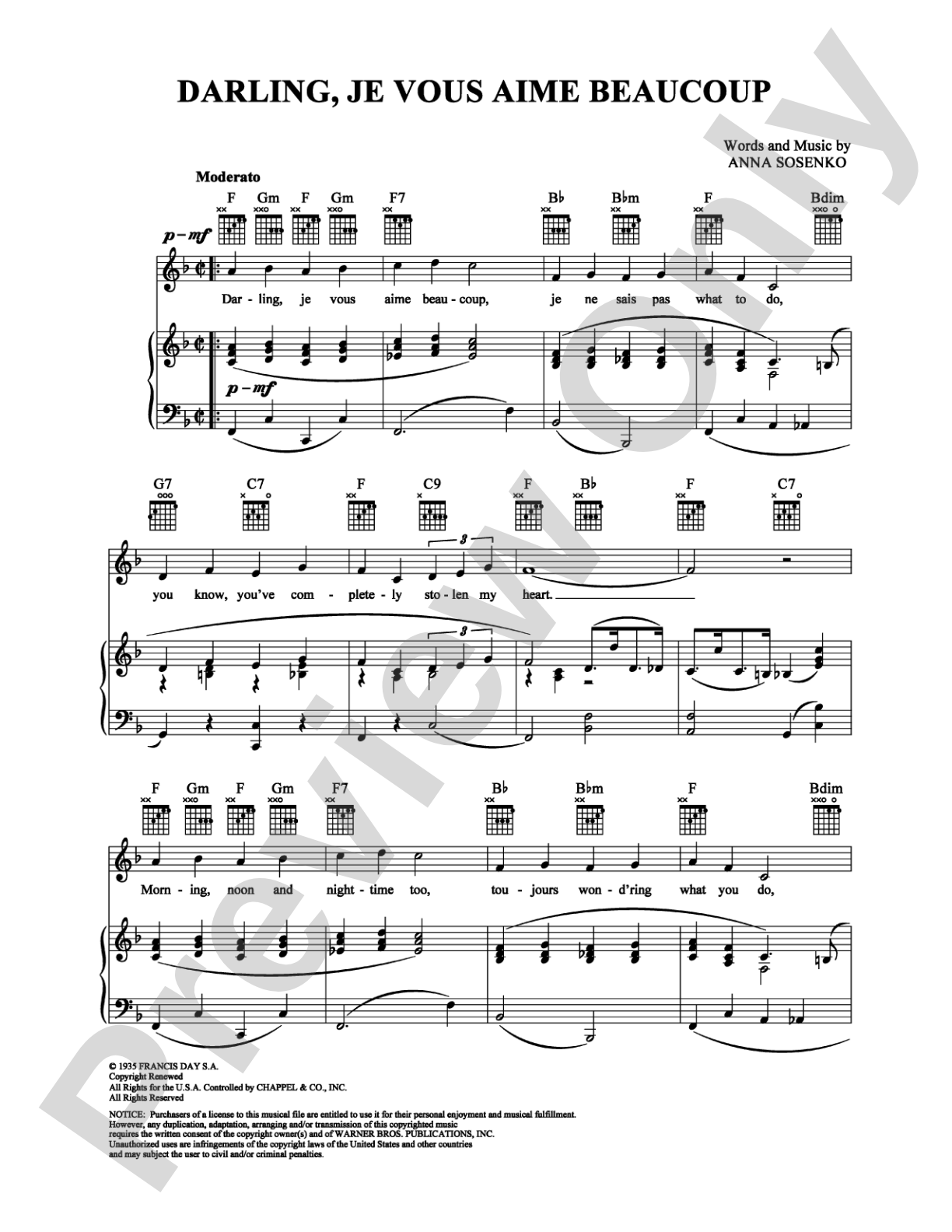
Darling, Je Vous Aime Beaucoup: Piano/Vocal/Chords Digital Sheet Music

Darling, Je Vous Aime Beaucoup: Piano/Vocal/Chords Digital Sheet Music

Hildegarde, Anna Sosenko

Item: 00-PS-0001085

Digital Download
$3.99
Description

Darling, Je Vous Aime Beaucoup: Piano/Vocal/Chords Digital Sheet Music isn't in MakeMusic Cloud just yet...but it could be. Let us know you'd like to see it, and you'll help shape what comes next. In the meantime, start a free trial and dive into thousands of interactive titles your students can play along with today.

Sample Audio
No sample audio found.
Sample Video
Additional Details
SKU: 00-PS-0001085

More about this title

About the Artist: Hildegarde

Hildegarde (1906–1989) was a Belgian-American entertainer and cabaret singer who became one of the most successful recording artists of the 1940s and 1950s. Her signature charm, impeccable diction, and sophisticated interpretive style made her a favorite on radio, in nightclubs, and on the concert stage. She recorded prolifically for Decca Records and became known for her ability to deliver both comic and romantic standards with equal warmth and musicality.

For music educators, Hildegarde's recordings serve as exemplary models of jazz-inflected vocal phrasing and intimate communication with an accompanist. Her interpretations demonstrate how a vocalist can shape a melody with taste and restraint, making her work valuable for students studying stylistic singing, vocal standards, and the art of accompaniment in jazz and popular music.

Why we love this

This is a charming, romantic standard that sits perfectly in the cabaret and vocal jazz repertoire. The melody is singable and memorable without being saccharine, and the French title adds sophistication to any program that includes American standards and vintage pop songs. Directors often struggle to find tasteful material that bridges classical technique and popular style; this piece does exactly that.

What to expect

Intimate and nostalgic, with the warmth of a late-night supper club performance. The melody unfolds gently, supported by harmonies that suggest both European sophistication and American swing sensibility. There's genuine affection in the melodic line without slipping into sentimentality; the overall effect is charming and slightly wistful.

Who it's for

Vocalists exploring jazz standards, cabaret repertoire, or the Great American Songbook will find this a rewarding addition to their program. Piano students accompanying singers benefit from the clear chord symbols and relatively straightforward accompaniment pattern. Music theater students and jazz vocalists building interpretive maturity find value in learning from Hildegarde's recorded example of restrained, elegant delivery.

How to get the most out of it

  • Shape the melody with gentle rubato in the verse, pulling back slightly on the longer phrases to emphasize the romantic text.
  • Balance the vocal line so it sits naturally above the piano accompaniment rather than fighting against it; the piano part is written to support, not compete.
  • Pay attention to the word stress in French (even if sung in English) to avoid making the melody sound overly accented or bouncy.
  • Use the chord symbols to inform your harmonic interpretation; jazz standards often reward subtle reharmonization or gentle comping adjustments from the pianist.

How to use it

Include this in a jazz standards or cabaret-themed concert alongside other vocal repertoire from the 1940s and 1950s. It works well as a vocal solo feature that showcases a student's ability to interpret with style and restraint. Alternatively, program it as an intermission or encore piece to create an intimate moment that contrasts with larger ensemble work.

Skills your students will build

  • Interpreting jazz and popular song melody with stylistically appropriate phrasing
  • Reading and using chord symbols for accompaniment and harmonic awareness
  • French language pronunciation and text clarity in English-language performance
  • Collaborative listening and balance between vocalist and pianist
  • Understanding of rubato and metric flexibility in vocal standards

You May Also Like