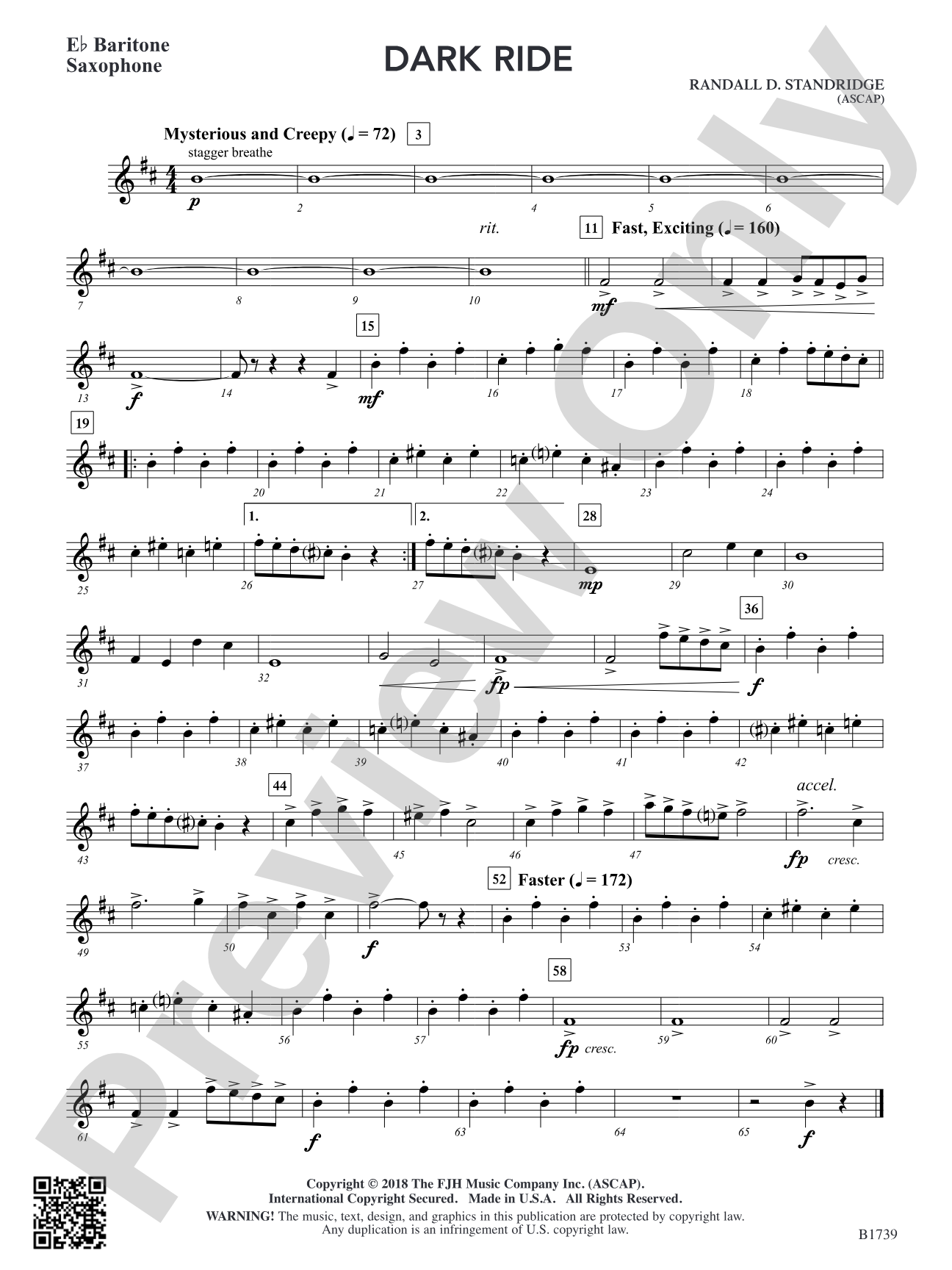
Dark Ride: E-flat Baritone Saxophone Sheet Music Preview

Dark Ride: E-flat Baritone Saxophone

By Randall D. Standridge

Grade: 1.5

Item: 98-PC-DB1739_BTX

Digital Download
$7.00
Description
A moonlit chase through a darkened forest... A haunted galop-esque character that adds to the thrill... This exciting work features dissonant harmonies, driving percussion, and optional synthesizer to create everything from an organ to voices and an eerie harpsichord. A frighteningly good choice to offer a little something different on your next concert! (2:15)

Don't just read it, hear it, play along with it, and watch your students grow with it. In MakeMusic Cloud, Dark Ride: E-flat Baritone Saxophone comes alive with professional accompaniment, adjustable tempo, and built-in practice tools that turn solo practice into real progress.

Sample Audio
0:00
0:00
Sample Video
Additional Details
Series: FJH Developing Band
Publisher: The FJH Music Company, Inc.
SKU: 98-PC-DB1739_BTX

More about this title

About the Composer: Randall D Standridge

Randall D Standridge is a prolific composer and arranger whose catalog spans concert band, jazz ensemble, orchestra, and choral literature. His works are performed regularly in schools and festivals across North America, and he has established himself as a trusted voice in music for developing ensembles, balancing musical substance with pedagogical accessibility.

Standridge understands what young musicians need to grow: repertoire that challenges them without overwhelming them, writing that respects their abilities while introducing new techniques and expressive tools. His programmatic works in particular engage students' imaginations while teaching genuine musicianship.

Why we love this

This piece delivers genuine theatrical impact at an accessible grade level. Standridge uses unconventional colors—especially the optional synthesizer, which lets you dial in organ drones, otherworldly voices, or harpsichord textures without leaving the band—to create atmosphere that grade 1.5 ensembles rarely attempt. The dissonant harmonies and propulsive percussion give you a piece that stands apart from typical concert band fare while remaining very playable.

What to expect

A moonlit panic through twisting trees. The dissonant harmonies create genuine unease while the racing percussion maintains forward momentum; the optional synthesizer layers add otherworldly textures that shift between organ depths, ethereal vocals, and harpsichord clicks. Exhilaration and slight menace run throughout.

Who it's for

Grade 1.5 concert bands seeking a programmatic work with real personality and modern orchestration tools. This piece works for bands ready to tackle dissonance and synth colors but not yet advanced enough for complex formal structures or stratospheric range demands.

How to get the most out of it

  • Balance the driving percussion layer carefully; these rhythms propel the piece forward, but they should support rather than bury the melodic material. A light touch from the mallets and timpani keeps the pace energetic without sounding frantic.
  • If using the optional synthesizer, rehearse it separately from the full band first so you can dial in exactly the sound you want before layering it into the texture. Record a rough version and listen back to find the right volume balance.
  • Shape the dissonant moments with clear articulation and phrasing in the winds; even unsettling harmonies need direction and shape to feel intentional rather than accidental.
  • Keep the overall tempo steady and committed. A galop that wavers loses its momentum and the sense of chase that makes this piece thrilling.

How to use it

Program this as a statement piece on a Halloween or October concert, or use it mid-concert to provide contrast and excitement when you want to shift the energy. At just over two minutes, it pairs well with longer works and serves as an excellent festival or contest selection for bands wanting to showcase developing musicianship with sophisticated orchestration.

Skills your students will build

  • Playing with dissonant harmonies while maintaining intonation and balance
  • Sustaining rhythmic precision in driving percussion-dominated textures
  • Responding to programmatic direction and theatrical storytelling in instrumental music
  • Working with optional digital accompaniment and layered textures

You May Also Like