
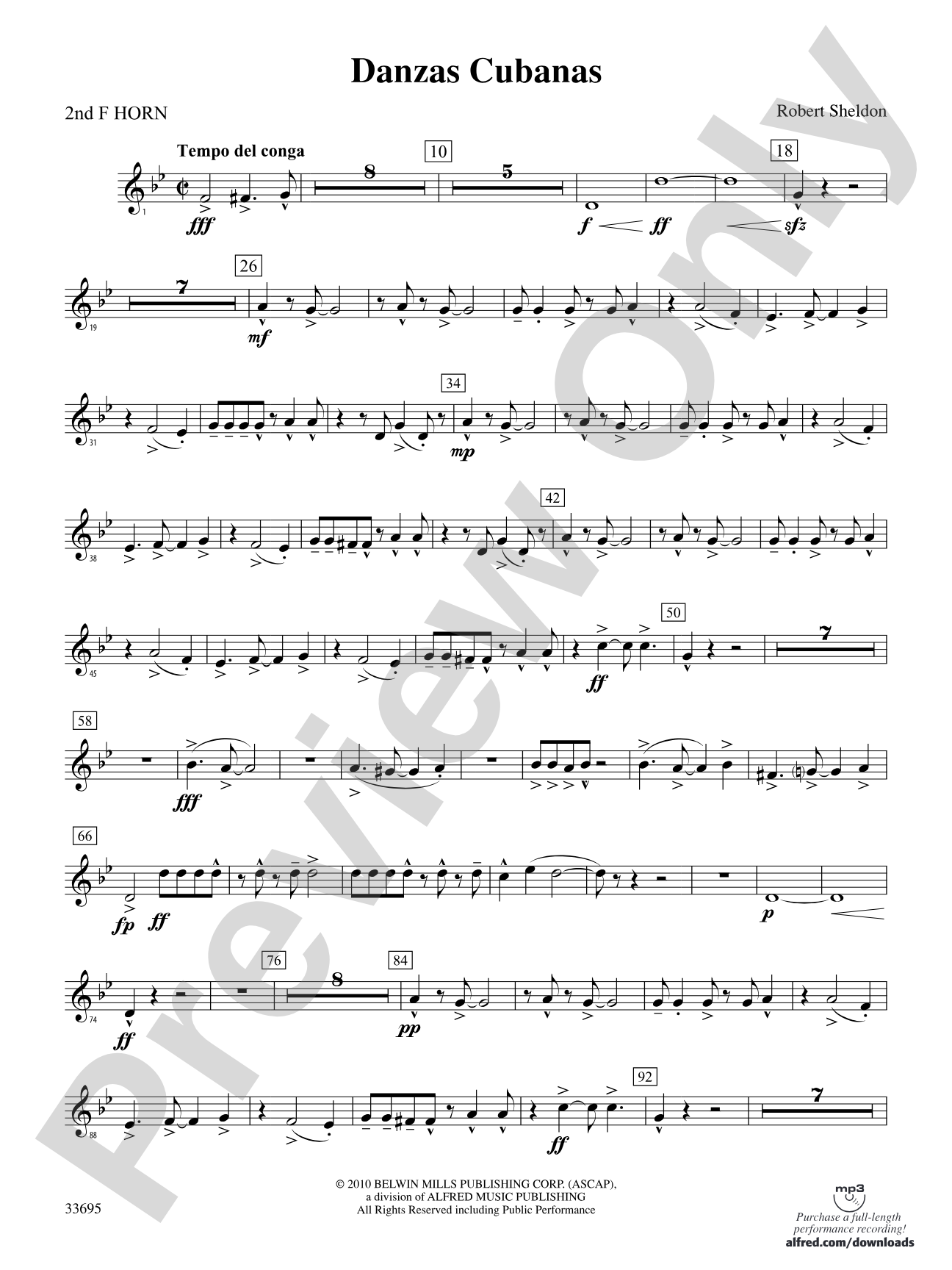

Danzas Cubanas: 2nd F Horn
By Robert Sheldon
Grade: 4.5
Item: 00-PC-0014484_H2
$3.00
Pickup currently not available
Description
Celebrate the joy and energy of Afro-Cuban music! Feel the beat, beginning with the opening conga, followed by a gentle and alluring son-salsa, and closing with a fast-paced mambo. An intense experience for players and audience featuring solos for piano, trombone, flute, and trumpet! (5:20)


Don't just read it, hear it, play along with it, and watch your students grow with it. In MakeMusic Cloud, Danzas Cubanas: 2nd F Horn comes alive with professional accompaniment, adjustable tempo, and built-in practice tools that turn solo practice into real progress.
Open in the Player
Jump straight in and assign it today.
Start Your Free Trial
Open this title and explore the full library in minutes.
Sample Audio
1
Audio File
--:--
0:00
0:00
Sample Video
Additional Details
Series:
Belwin Concert Full Orchestra
Publisher:
Alfred Music
Page Count:
232
SKU:
00-PC-0014484_H2
More about this title
About the Composer: Robert Sheldon

Robert Sheldon has become a defining voice in contemporary concert music, with his works performed by orchestras and bands on stages worldwide. His output spans decades of commissions, publications, and guest conducting appearances at honor ensembles across North America, Europe, Asia, and Australia. His credentials include recognition from the American School Band Director's Association, Phi Beta Mu, and ASCAP, along with a 2020 honorary doctorate from VanderCook College of Music.
Beyond composition, Sheldon shaped music education through co-authoring Sound Innovations for Concert Band and serving as clinician and conductor at universities, state conferences, and regional festivals. His works have graced major concert halls including Carnegie Hall, Orchestra Hall in Chicago, Boston Symphony Hall, the Sydney Opera House, and the Kennedy Center. His music endures on contest lists and in concert programs because it balances accessibility with genuine artistic depth.
Why we love this
Sheldon demonstrates complete mastery of orchestral color and rhythmic energy here. The solo writing is generous without overshadowing the ensemble, and the pacing of the three movements ensures that players stay engaged from the opening conga through the exuberant mambo finale.
What to expect
From the moment the conga strikes, you're transported to a warm, rhythmically alive space where melody and percussion breathe together. The son-salsa section shifts into something intimate and swaying, letting individual voices shine, before the mambo erupts with the kind of joy that fills a concert hall.
Who it's for
Orchestras at the upper intermediate to early advanced level (Grade 4.5) that want to expand beyond standard European concert repertoire. This score works equally well for all-state orchestras, spring concert programming, and ensembles seeking to authentically celebrate Latin American musical traditions.
How to get the most out of it
- Balance the percussion foundation carefully in the opening conga section; the rhythm drives the entire piece, so lock the battery with the bass line before layering in the melodic voices.
- Give the four soloists (piano, trombone, flute, trumpet) rehearsal time in small groups so they can establish their own character within the son-salsa. Each solo should feel conversational, not showboating.
- Build the mambo gradually in the final section; resist the urge to throw everything at full volume immediately. Let the tempo and layering create the intensity.
- Mark conductor cues clearly in all parts, especially where the Latin rhythms shift or where soloists enter. Sheldon's writing is idiomatic enough that musicians will follow naturally, but visual clarity prevents ensemble fractures.
How to use it
Program this as a spring concert anchor or a closer that sends audiences out energized. It pairs beautifully with lighter European works or other world music selections, and it gives soloists real moment in the spotlight without requiring a separate solo concerto slot.
Skills your students will build
- Reading and executing Afro-Cuban rhythmic patterns (clave, son, mambo clave)
- Balancing pitched melodic voices over a driving percussion foundation
- Responding to conductor cues in Latin music contexts where rhythm often leads harmony
- Blending individualized solo writing into an ensemble texture
- Sustaining energy and precision in fast-paced, syncopated material