
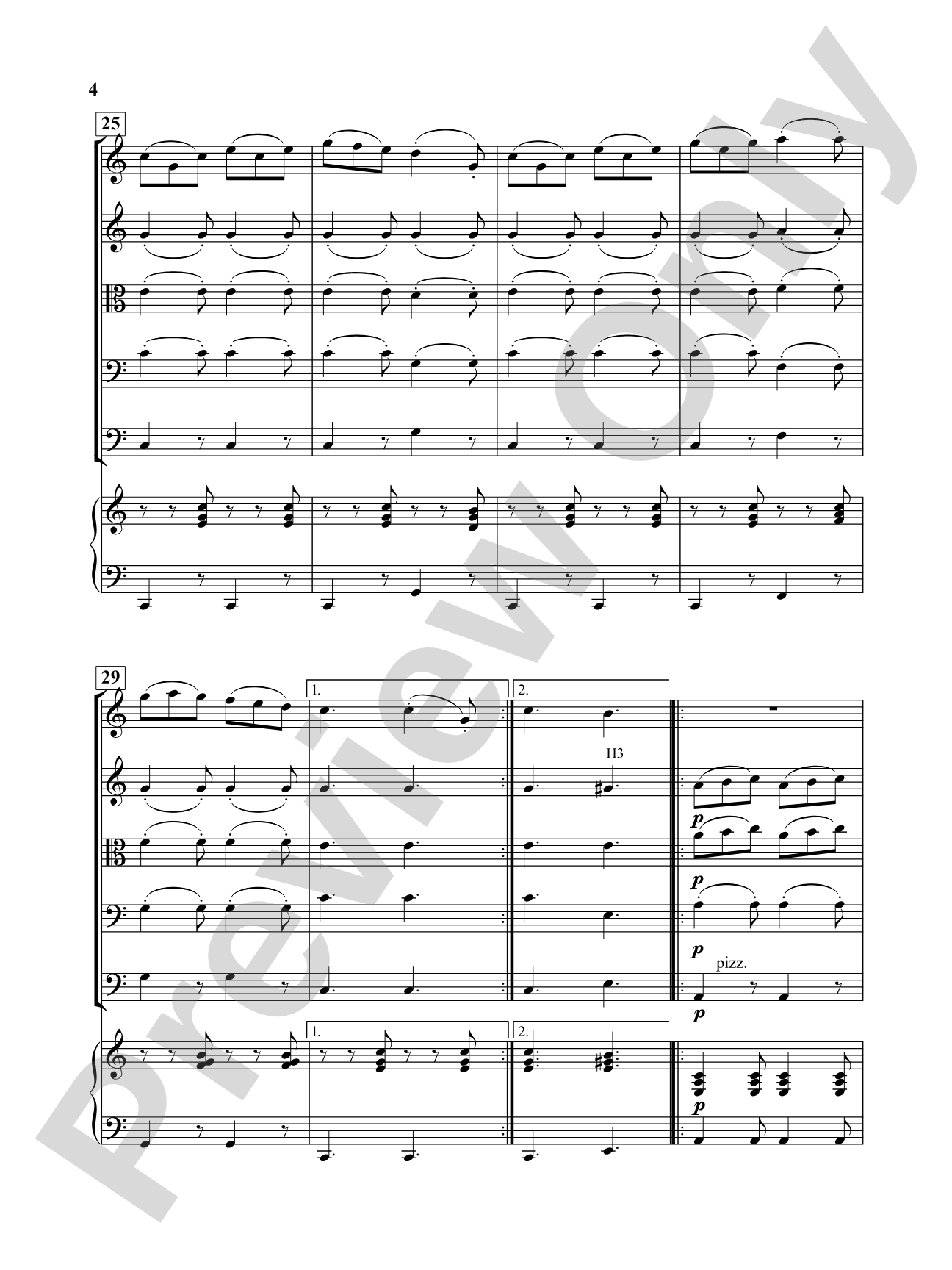
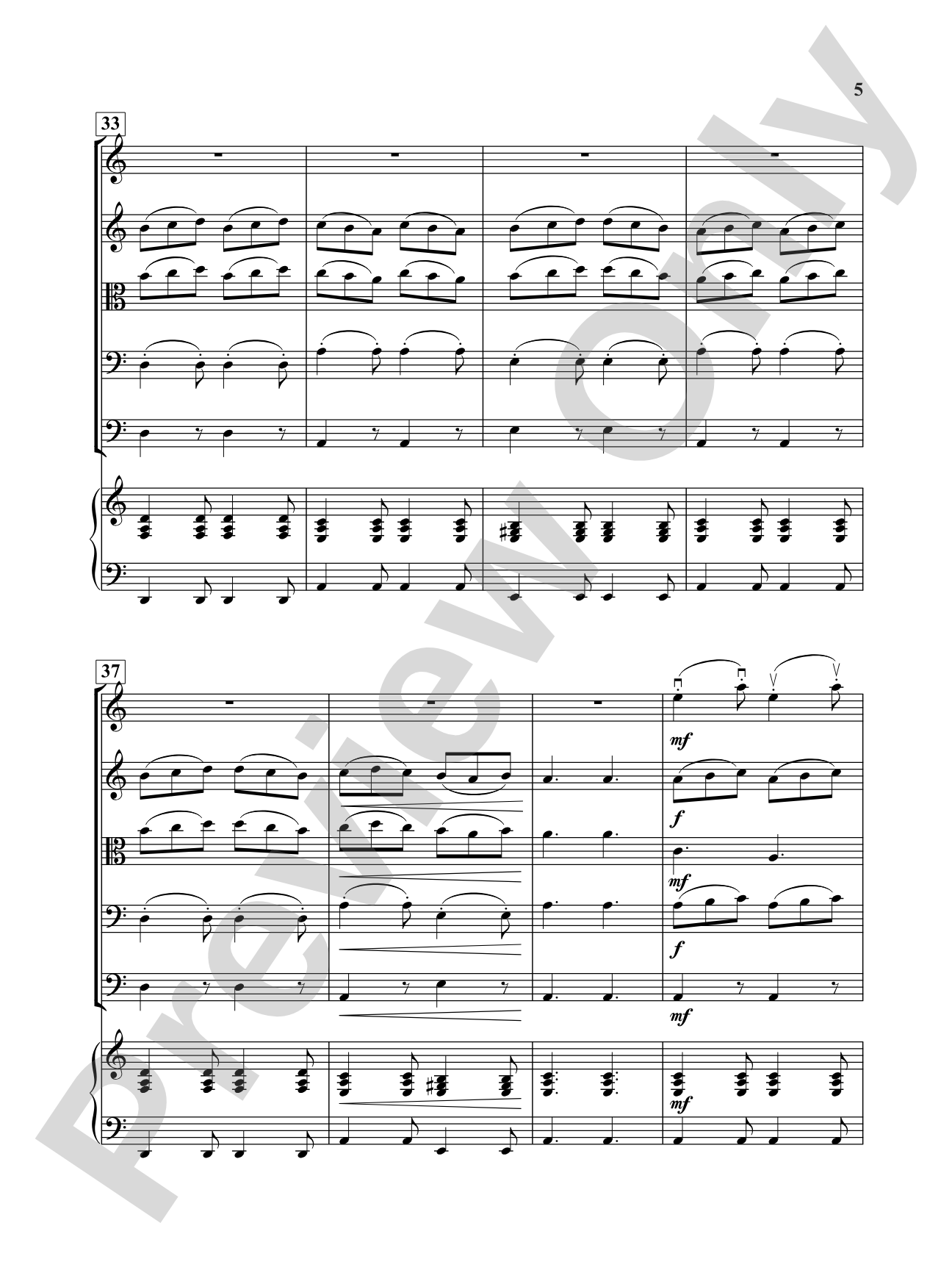
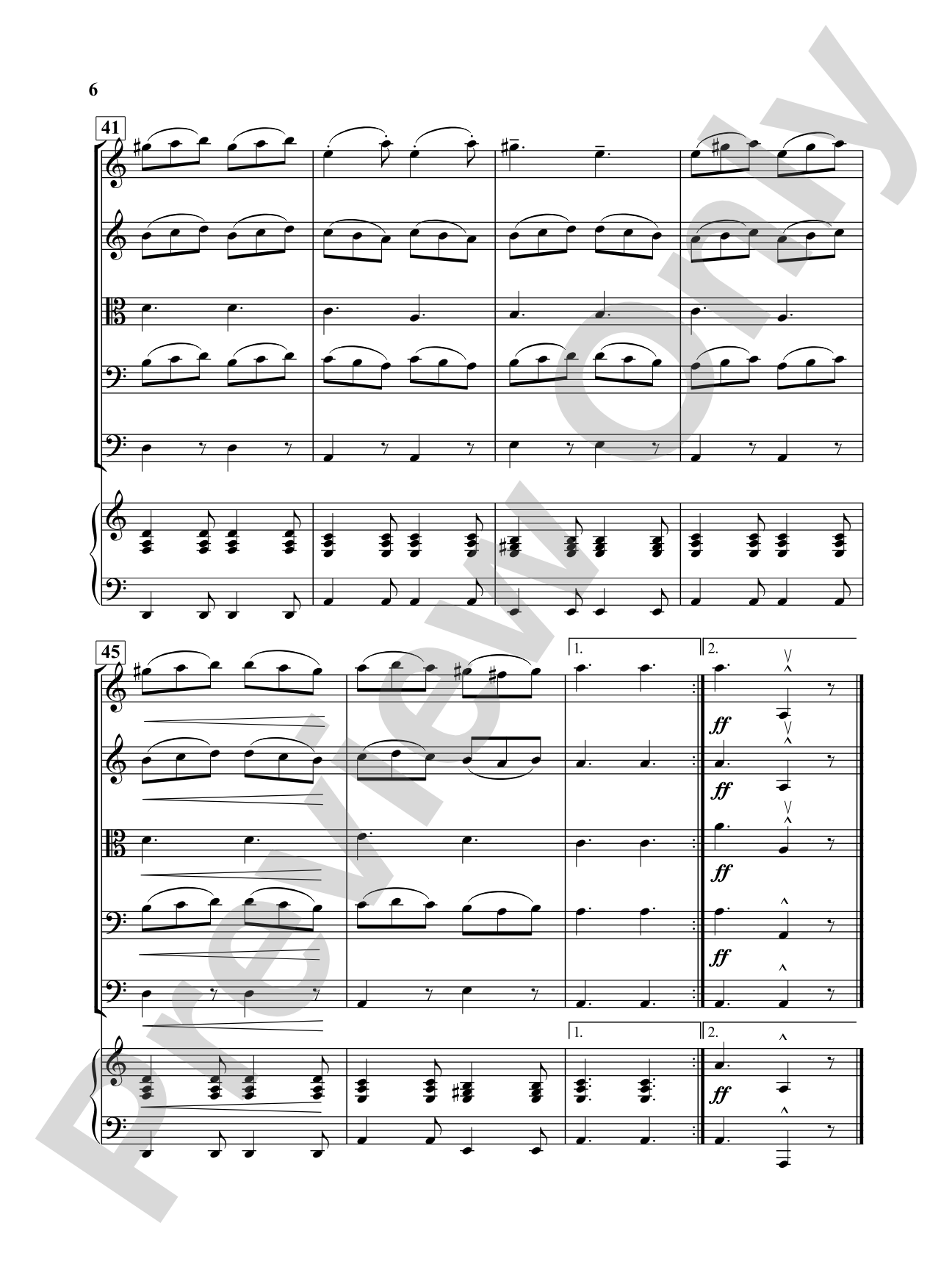

Danza Rustica: String Orchestra Conductor Score & Parts
By Loreta Fin
Grade: 2
Item: 76-PK-0000014
$45.00
Pickup currently not available
Buy Extra Parts (Digital PDF Download)
| Product | Price | Quantity |
|---|---|---|
| Danza Rustica: Score | $7.00 | |
| Danza Rustica: 1st Violin | $5.99 | |
| Danza Rustica: 2nd Violin | $5.99 | |
| Danza Rustica: 3rd Violin (Viola [TC]) | $5.99 | |
| Danza Rustica: Viola | $5.99 | |
| Danza Rustica: Cello | $5.99 | |
| Danza Rustica: String Bass | $5.99 | |
| Danza Rustica: Piano Accompaniment | $5.99 |
Parts Added to Cart!
Description
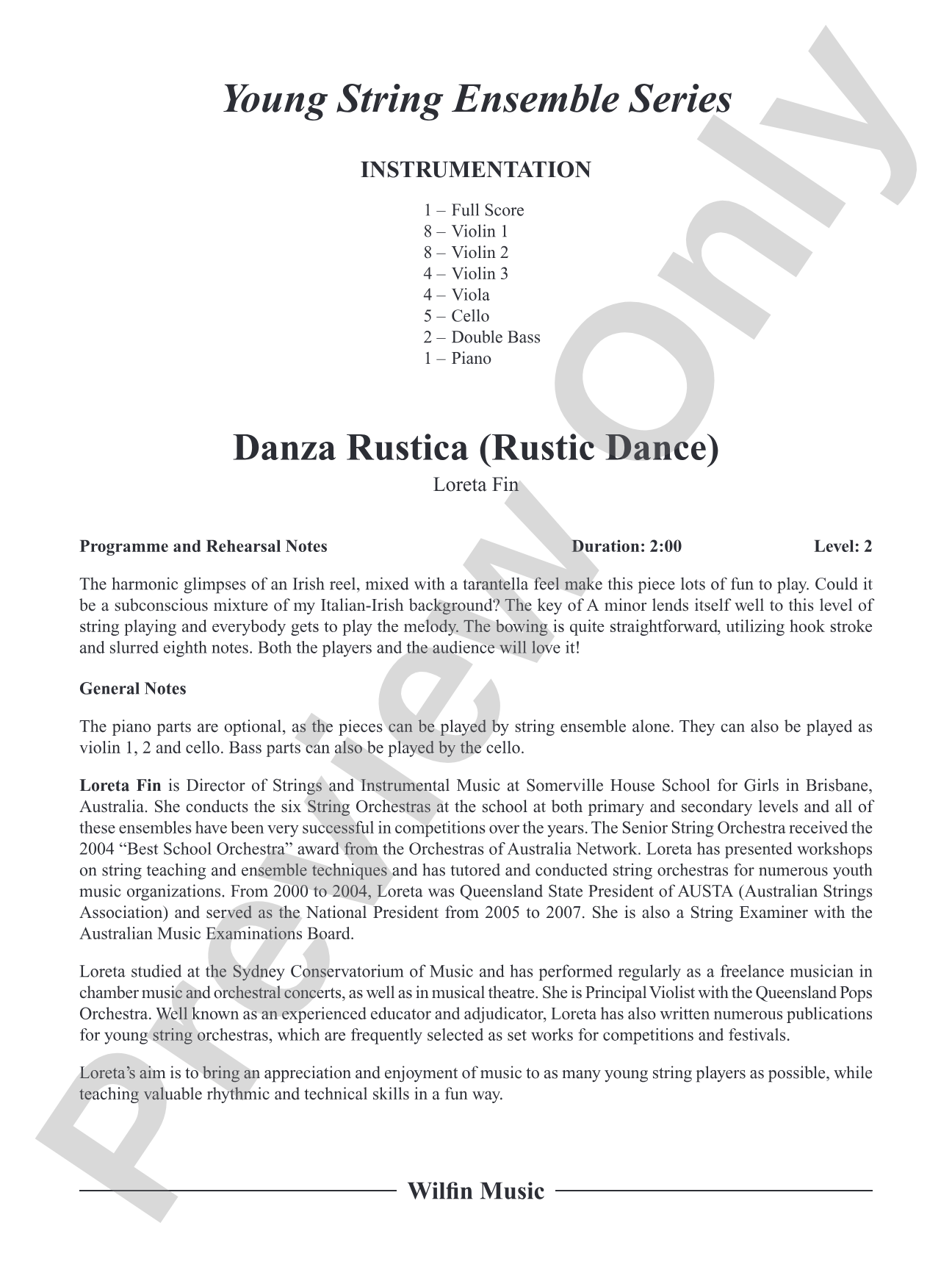
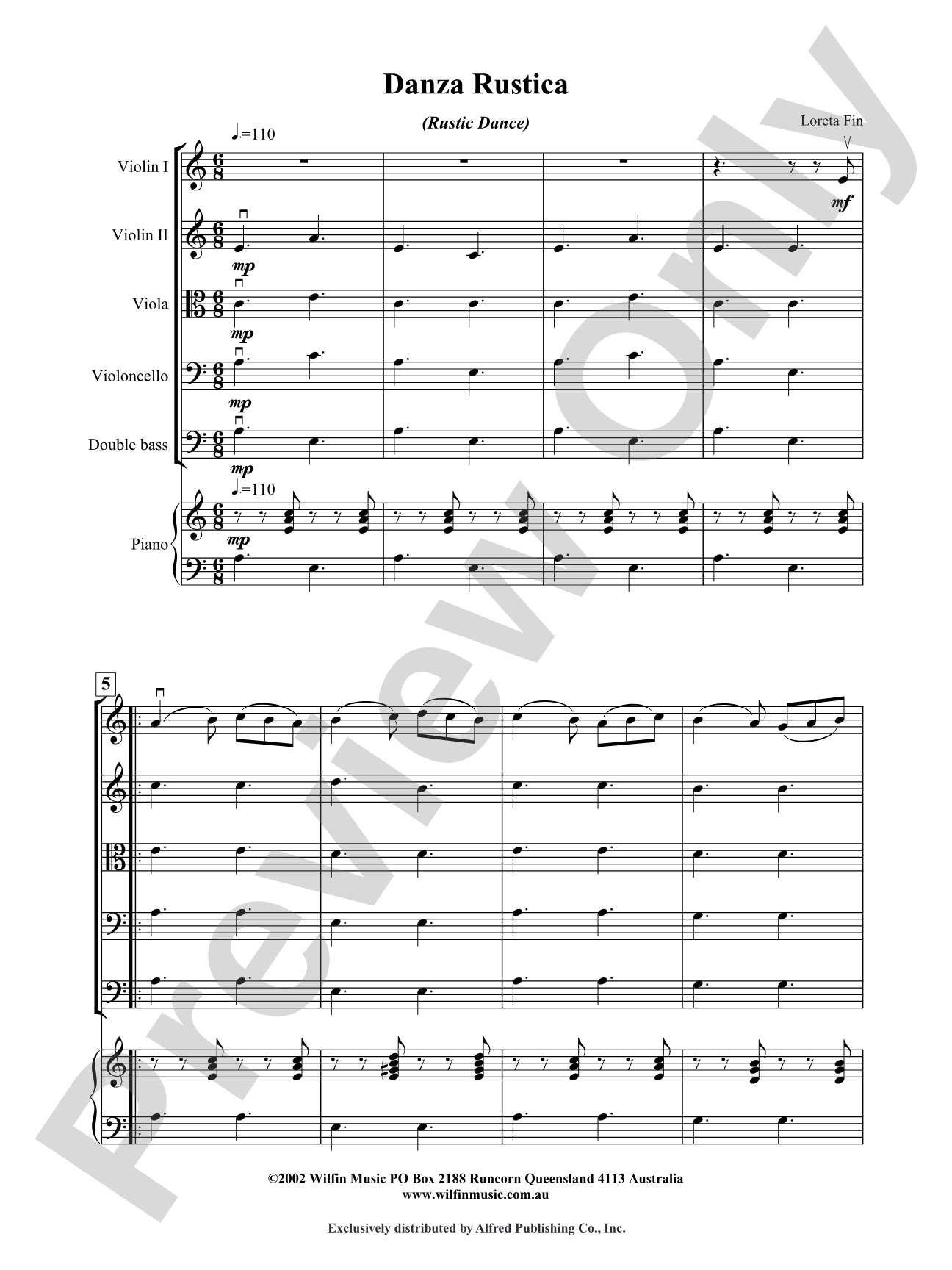
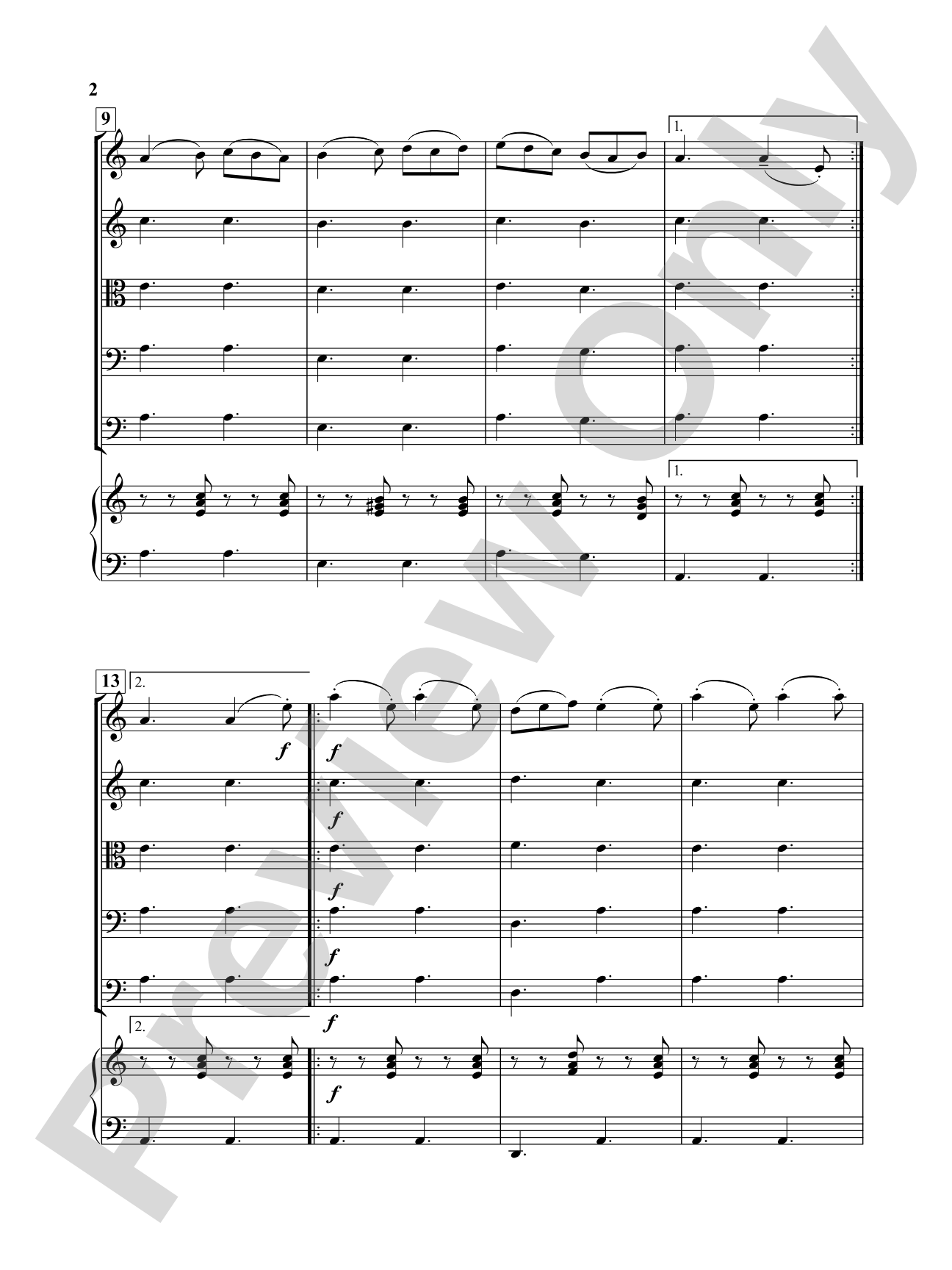
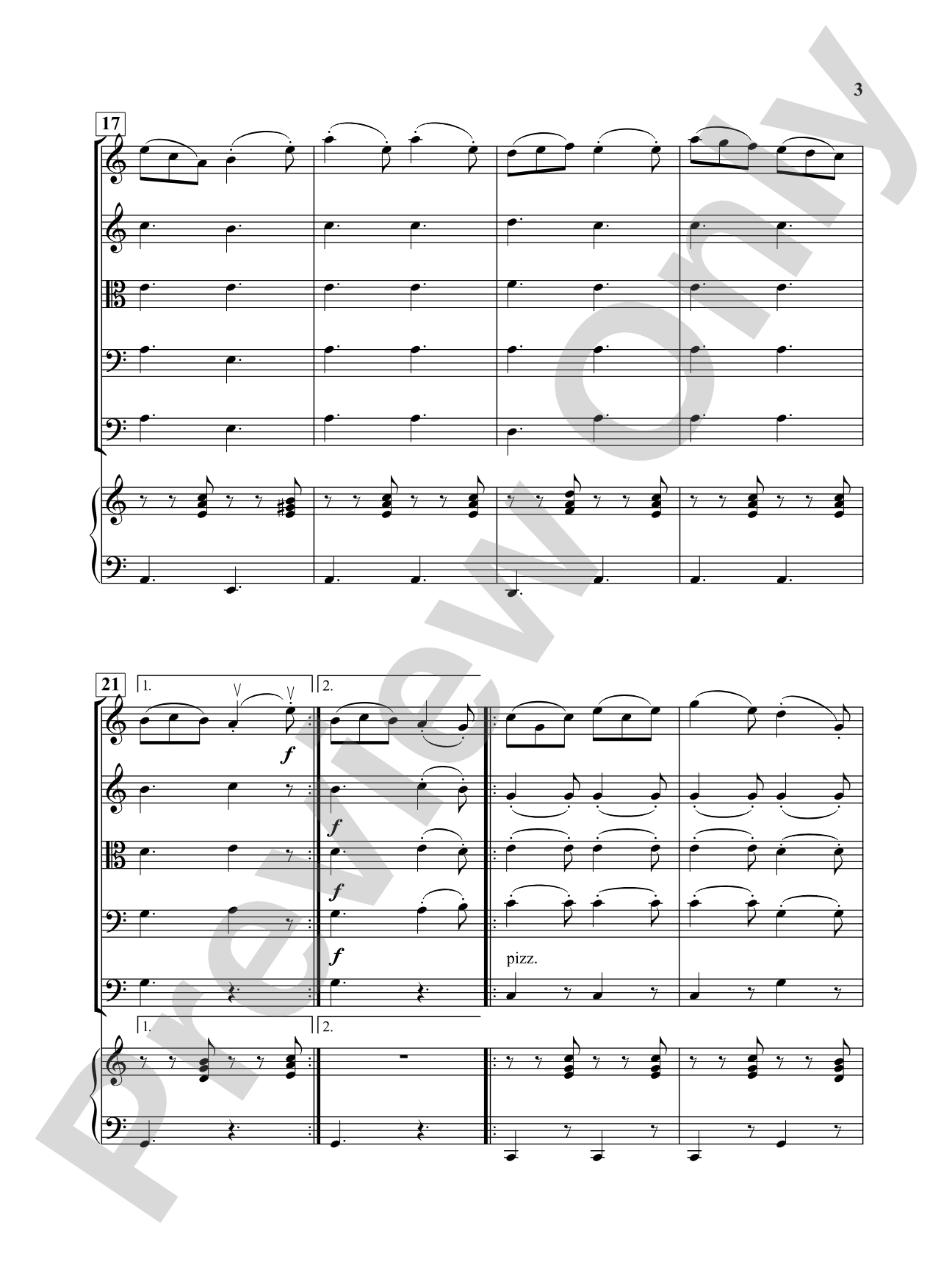
Harmonic glimpses of an Irish reel, mixed with a tarantella feel make this piece lots of fun to play. Everybody gets a go at the melody.


Danza Rustica: String Orchestra Conductor Score & Parts isn't in MakeMusic Cloud just yet...but it could be. Let us know you'd like to see it, and you'll help shape what comes next. In the meantime, start a free trial and dive into thousands of interactive titles your students can play along with today.
Request This Title
Tell us you want it.
Start Your Free Trial
Explore everything that's ready to play right now.
Sample Audio
No sample audio found.
Sample Video
No sample videos found.
Additional Details
Series:
Wilfin String Orchestra: Young String Ensemble Series
Publisher:
Wilfin Music
Page Count:
66
SKU:
76-PK-0000014
More about this title
About the Composer: Loreta Fin

Loreta Fin is an Australian violist, educator, and prolific composer with deep roots in string pedagogy. She studied at the Sydney Conservatorium of Music and served as Principal Viola with the Queensland Pops Orchestra for over 25 years, while maintaining an active chamber music career. Since 1993, she has directed strings at Somerville House School in Brisbane, building a reputation as both a mentor and adjudicator at major Australian competitions and two American National String Teachers' Conferences.
Fin has composed more than 100 works for string orchestra published internationally by Alfred Music, with particular strength in accessible ensemble writing for young players. Her leadership extends across the Australian Strings Association (State and National President), the Queensland Symphony Orchestra's Education Advisory Committee, and regular conducting of State and National Honours Ensembles Programs. She received the National Award for Services to Music and String Teaching in Australia and was nominated for an ARIA "Best Teacher" award, recognizing her lasting impact on string education.
Why we love this
Fin writes with genuine understanding of what makes young string players engaged and confident. Every section of the orchestra gets the melody at different moments, which transforms a Grade 2 piece into a genuine morale booster for your entire section. The blend of Irish reel energy and tarantella character creates rhythmic momentum that carries less experienced players forward without requiring complex bow control.
What to expect
A spirited dance that refuses to sit still, borrowing the lilting swing of an Irish reel and mixing it with the relentless, playful energy of a southern European tarantella. The piece radiates joy and motion without demanding technical virtuosity, inviting players to feel like they're part of something alive and celebratory.
Who it's for
String orchestra directors working with Grade 2 ensembles, particularly those seeking festival or contest repertoire that builds section confidence through shared melodic responsibility. Young string players thrive with music that treats them as equal contributors rather than filling accompaniment roles.
How to get the most out of it
- Emphasize the dance quality in your conducting: lean into the reel's lilting character with clear, rhythmic gestures that help players lock into the forward motion.
- Balance the melody across sections as it passes from violins to violas to lower strings. Cue each entrance deliberately so no section feels their moment is secondary.
- Keep the tarantella energy bright and energetic without sacrificing intonation. A relaxed tempo that allows players to settle their fingers will serve you better than pushing for speed.
- Let your section leaders shape their own phrasing during their solo moments. This ownership builds musicianship and keeps rehearsals from feeling overly conducted.
How to use it
Program this for a festival appearance where you want to showcase ensemble spirit and section strength in equal measure. It pairs well on concert with contrasting slower repertoire, as its infectious energy will energize both audience and players. The accessible Grade 2 difficulty makes it suitable for mid-season programming when sections are finding their balance.
Skills your students will build
- Trading melodic phrases between sections while maintaining ensemble cohesion
- Playing with rhythmic vitality and dance character
- Balancing confidence in solo sections with blending in supporting roles
- Reading mixed dance meters and maintaining pulse across style changes