
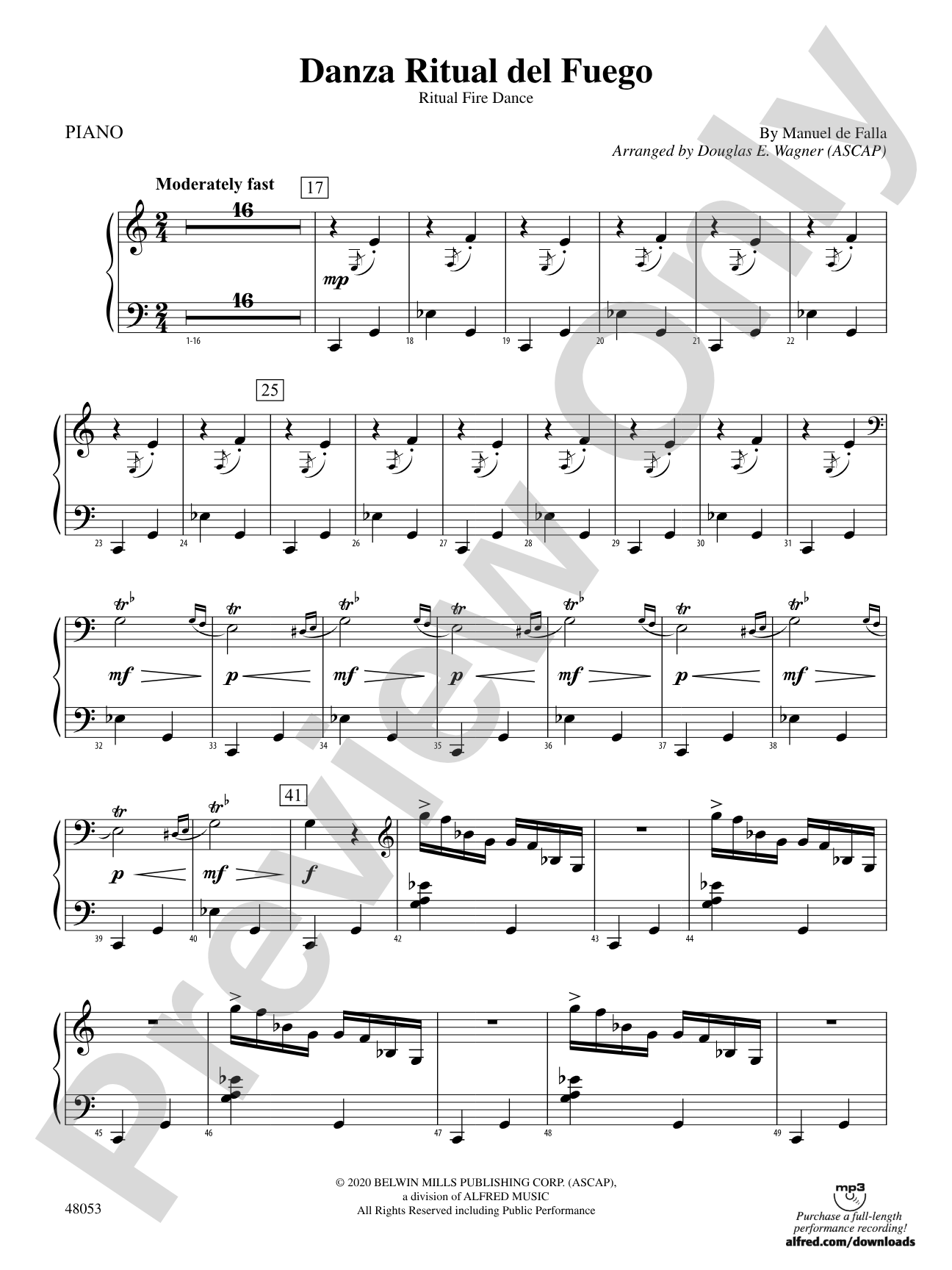
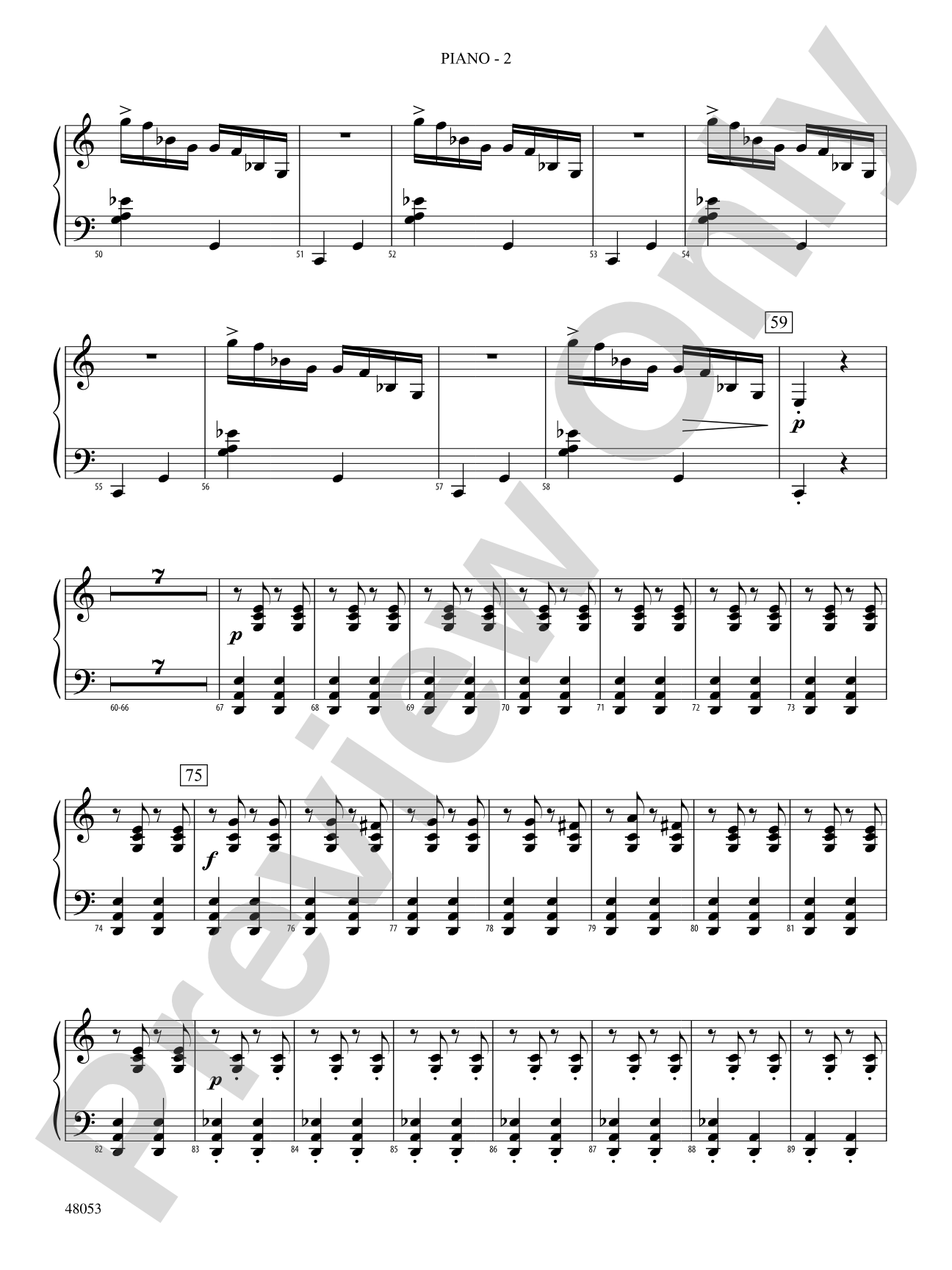

Danza Ritual del Fuego: Piano Accompaniment
Ritual Fire Dance
By Manuel de Falla / arr. Douglas E. Wagner
Grade: 3.5
Item: 00-PC-0018451_K
$5.99
Pickup currently not available
Description
Danza Ritual del Fuego arranged by Douglas E. Wagner is from Manuel de Falla's ballet, El amor brujo. This stunning showpiece is a fully realized, unabridged string orchestra with piano arrangement that reflects all of the tonal color and Spanish flair of the composer's original. Characteristic rhythms and harmonic progressions combine with a variety of string techniques, providing players with the makings of a sure-fire concert or contest success. (4:35) This title is available in MakeMusic Cloud.


Don't just read it, hear it, play along with it, and watch your students grow with it. In MakeMusic Cloud, Danza Ritual del Fuego: Piano Accompaniment comes alive with professional accompaniment, adjustable tempo, and built-in practice tools that turn solo practice into real progress.
Open in the Player
Jump straight in and assign it today.
Start Your Free Trial
Open this title and explore the full library in minutes.
Sample Audio
1
Audio File
--:--
0:00
0:00
Sample Video
Additional Details
Series:
Belwin Concert String Orchestra
Publisher:
Alfred Music
Page Count:
132
SKU:
00-PC-0018451_K
More about this title
About the Composer: Manuel Falla
Manuel de Falla (1876–1946) stands as one of Spain's most important composers, blending nationalist idiom with European modernism. His ballets, particularly El amor brujo and El sombrero de tres picos, established him as a master of orchestral color and rhythmic vitality. Falla's music draws deeply from Spanish folk traditions, flamenco harmonies, and dance forms, making his work instantly recognizable and pedagogically rich for student musicians learning to navigate non-traditional tonal centers and cross-cultural musical expression.
Why we love this
Douglas E. Wagner's arrangement captures the fire and sophistication of Falla's original without compromising accessibility for Grade 3.5 players. The scoring gives every section meaningful musical material while maintaining the ballet's theatrical sweep, making this a rare showpiece that sounds mature without demanding virtuosity. String directors consistently program this piece because it delivers guaranteed audience impact and students leave rehearsals feeling like they've performed something genuinely artistic.
What to expect
Flamenco passion meeting European elegance. The piece pulses with rhythmic drive and Spanish harmonic color, moving from intimate, dance-like passages to moments of blazing intensity. You feel the heat of ritual and celebration, the kind of music that makes string players sit forward in their chairs.
Who it's for
String orchestras at the Grade 3.5 level seeking a concert or festival piece with genuine artistic substance and audience appeal. This works equally well for groups developing technical facility with mixed meters and Spanish idioms, or for ensembles ready to tackle a showpiece that combines accessibility with sophisticated musical content.
How to get the most out of it
- Establish the rhythm section (violins and violas on the main pulse) with absolute clarity in the early rehearsals; the piece's forward momentum depends on rock-solid rhythmic foundation even when the melody sings above.
- Bring the Spanish character forward through articulation and tone color rather than tempo flexibility. This piece thrives on crisp attacks and clean releases, particularly in the faster rhythmic passages.
- Balance the dynamic layers carefully in the fuller sections; ensure the melodic lines (often in first violins) project clearly over the rhythmic accompaniment without drowning out the harmonic support from middle voices.
- Shape the climactic moments by building intensity through layered entries rather than pushing tempo. Allow the accumulation of voices and the harmonic progression to create the sense of mounting passion.
How to use it
Program this as a centerpiece for a concert celebrating Spanish or Latin music traditions, or as a high-impact festival selection that demonstrates both technical control and musical maturity. Its moderate length (4:35) and genre variety make it an excellent pairing with contrasting classical or contemporary works, positioning it as a natural second or third piece in a well-rounded concert.
Skills your students will build
- Reading and executing characteristic Spanish rhythmic figures and syncopation
- Playing with articulation clarity across rapid passages while maintaining phrasing
- Balancing sectional voices in dense harmonic writing
- Controlling vibrato and tone color to reflect different emotional moments
- Maintaining ensemble precision through layered textural entries and key changes