
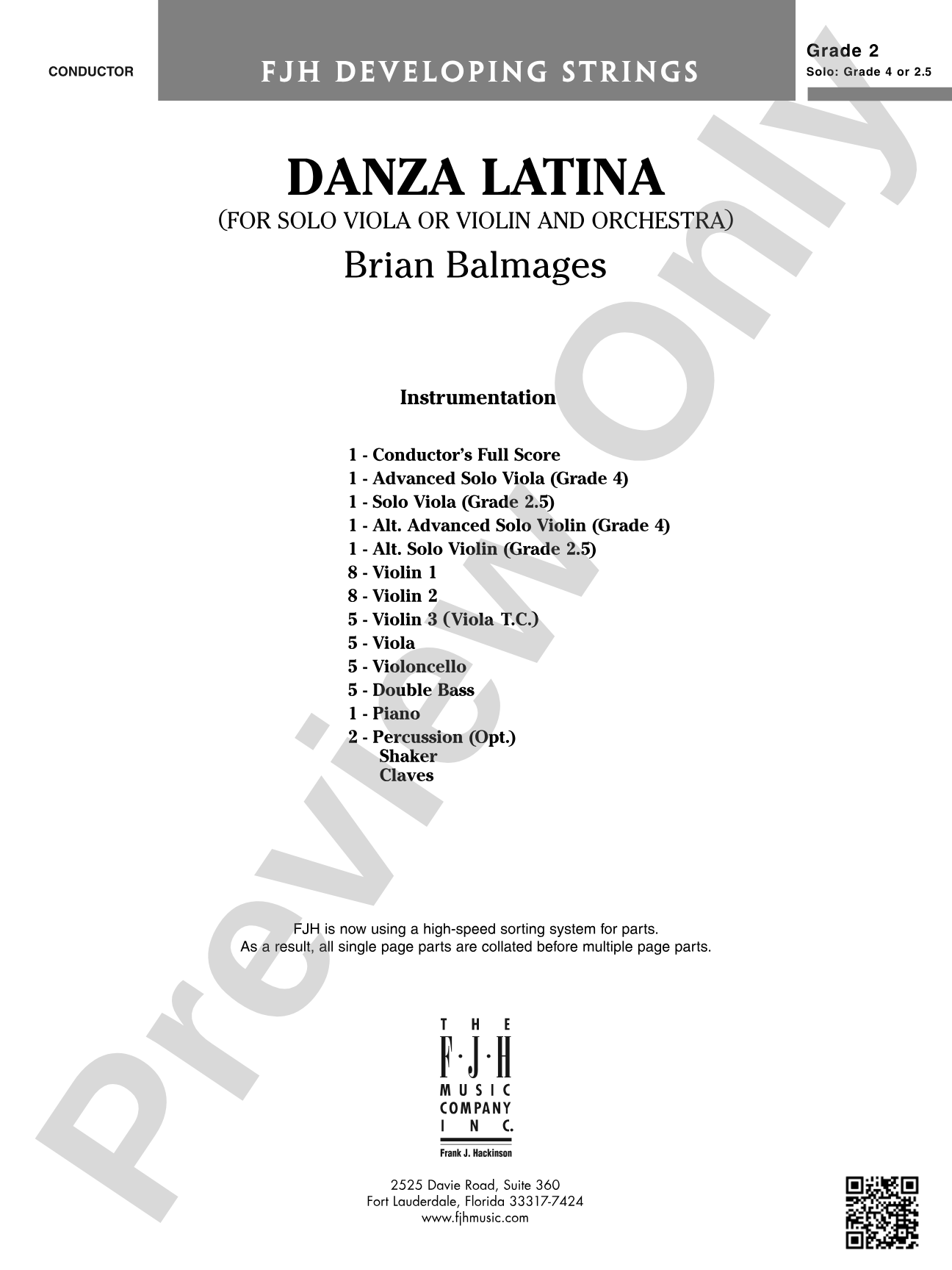
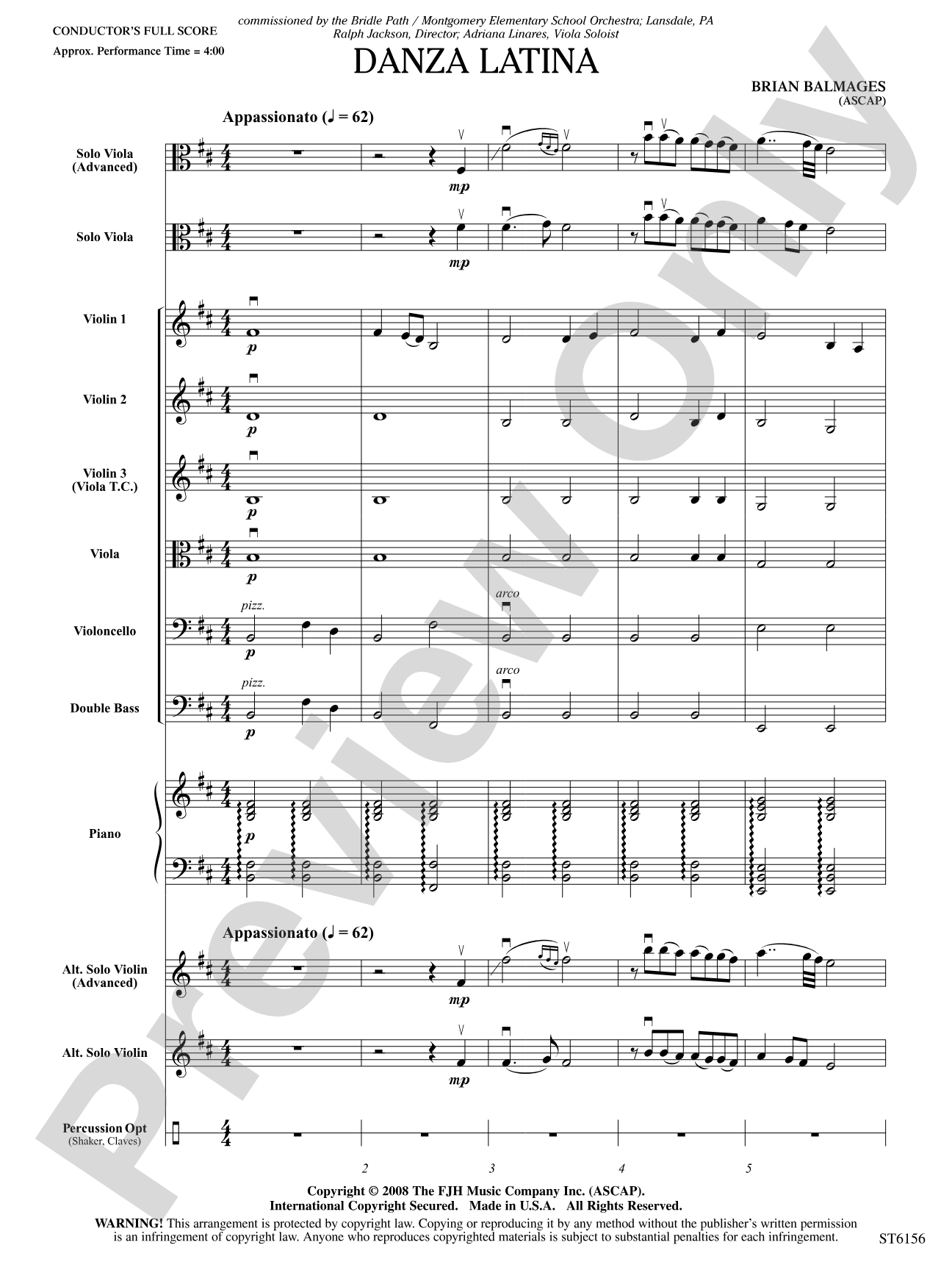
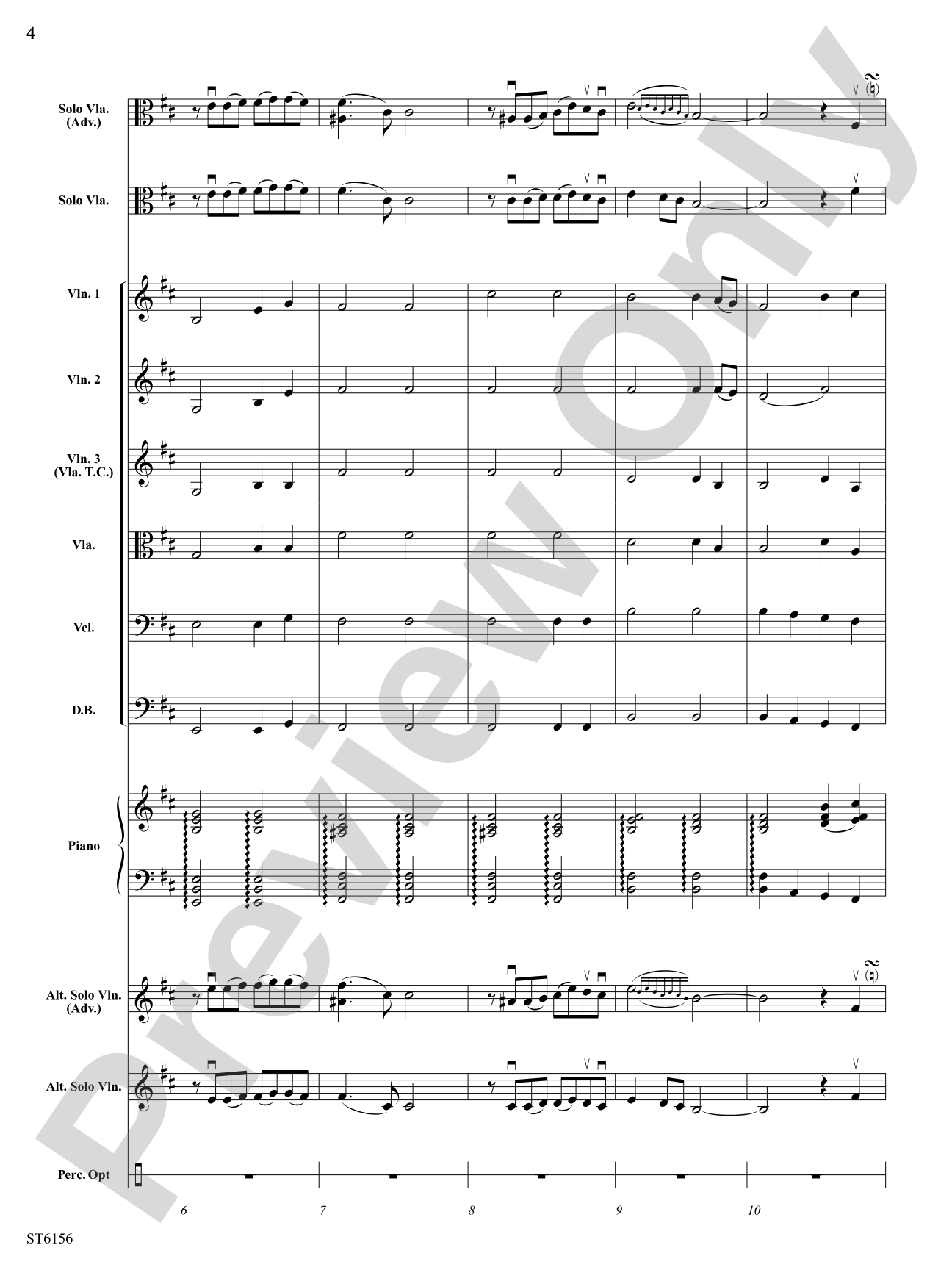
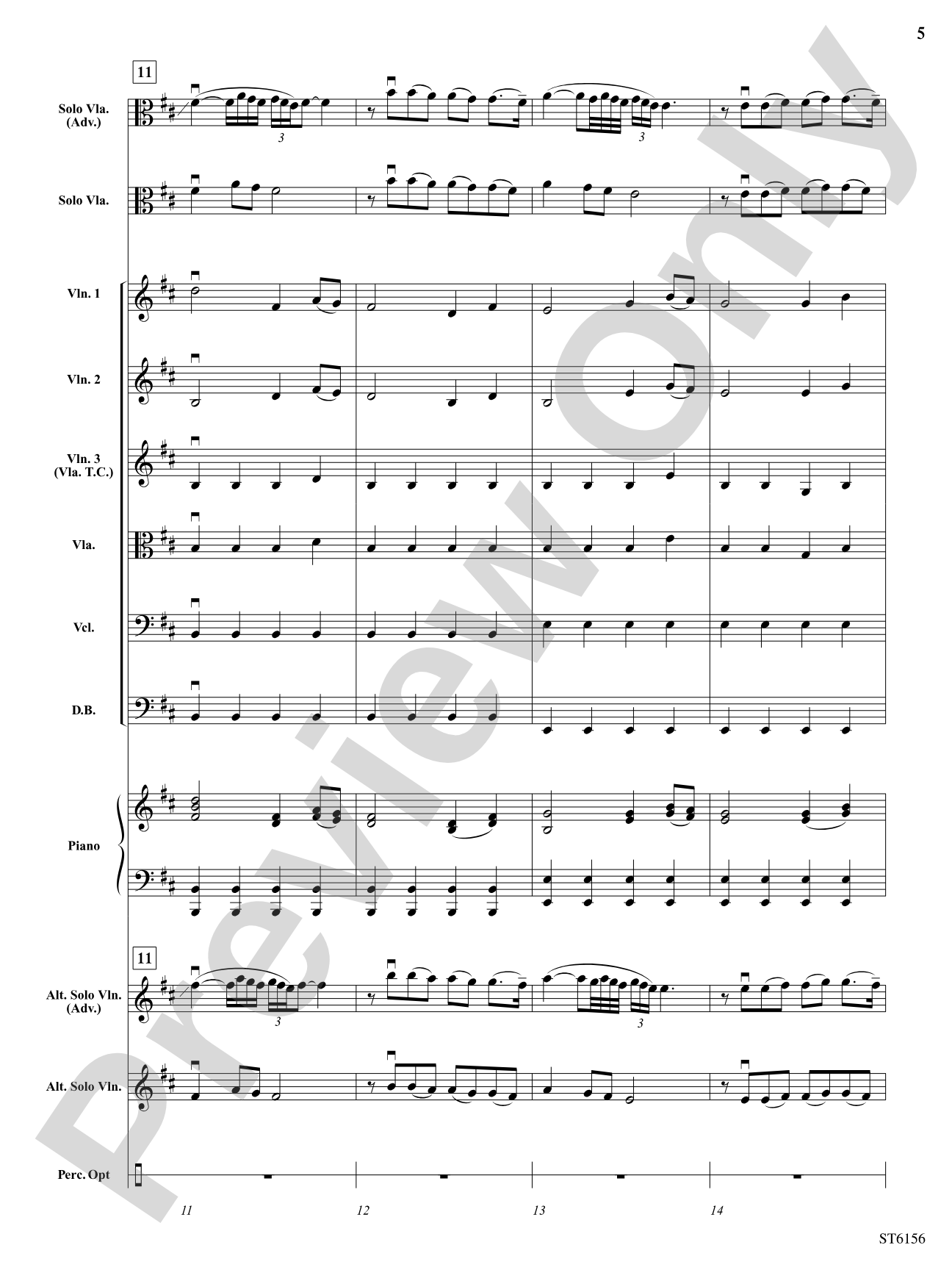
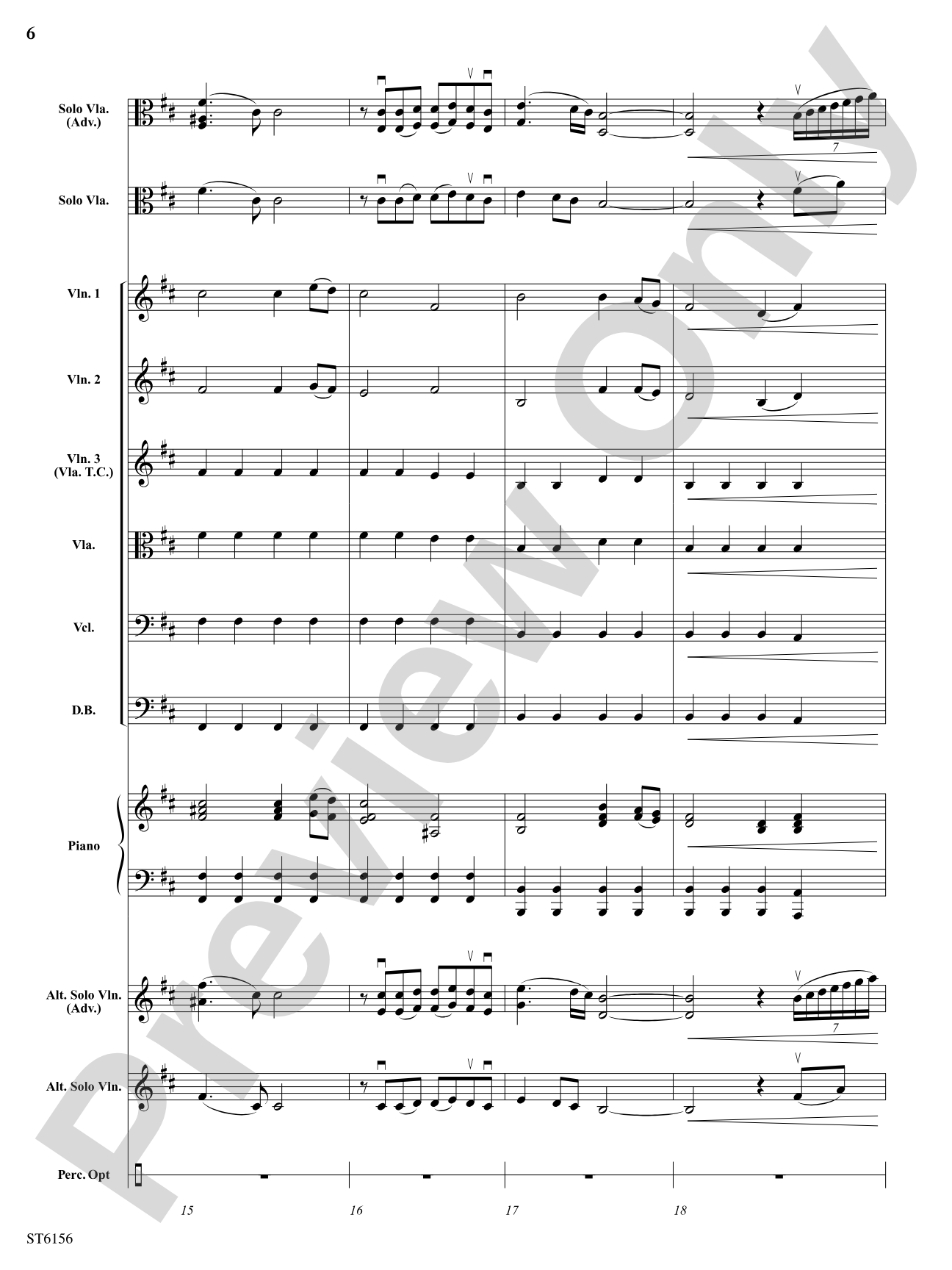
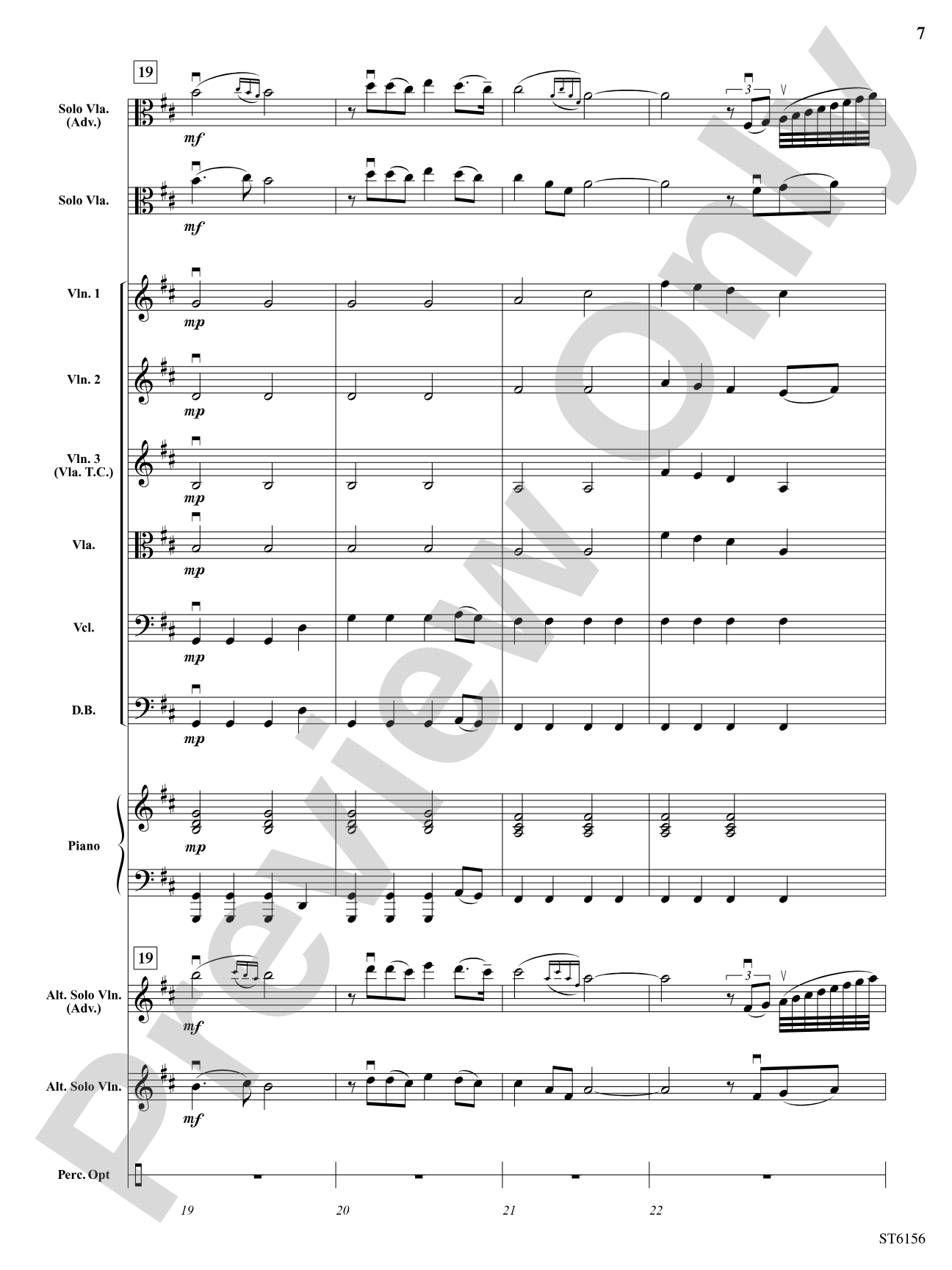
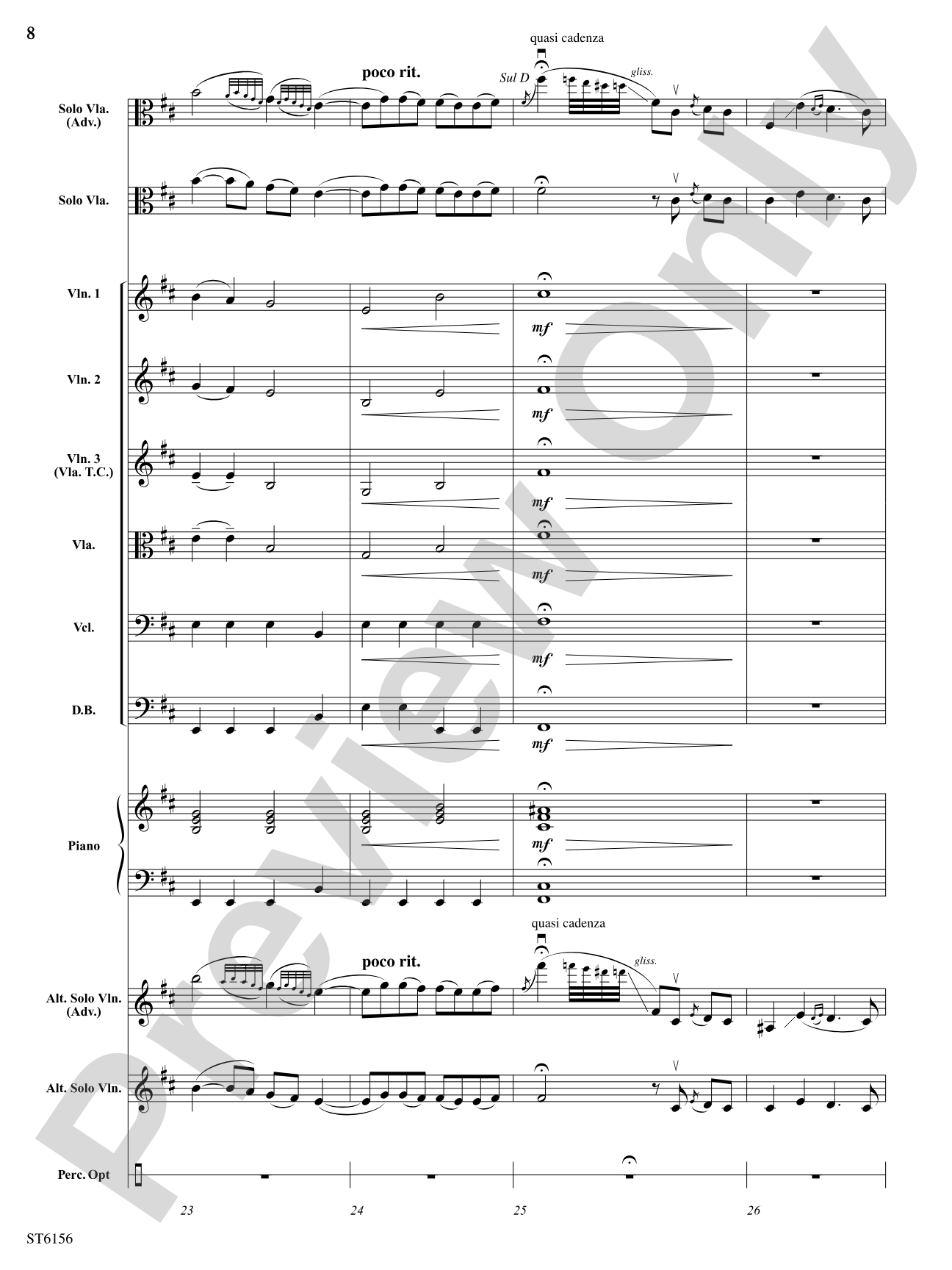
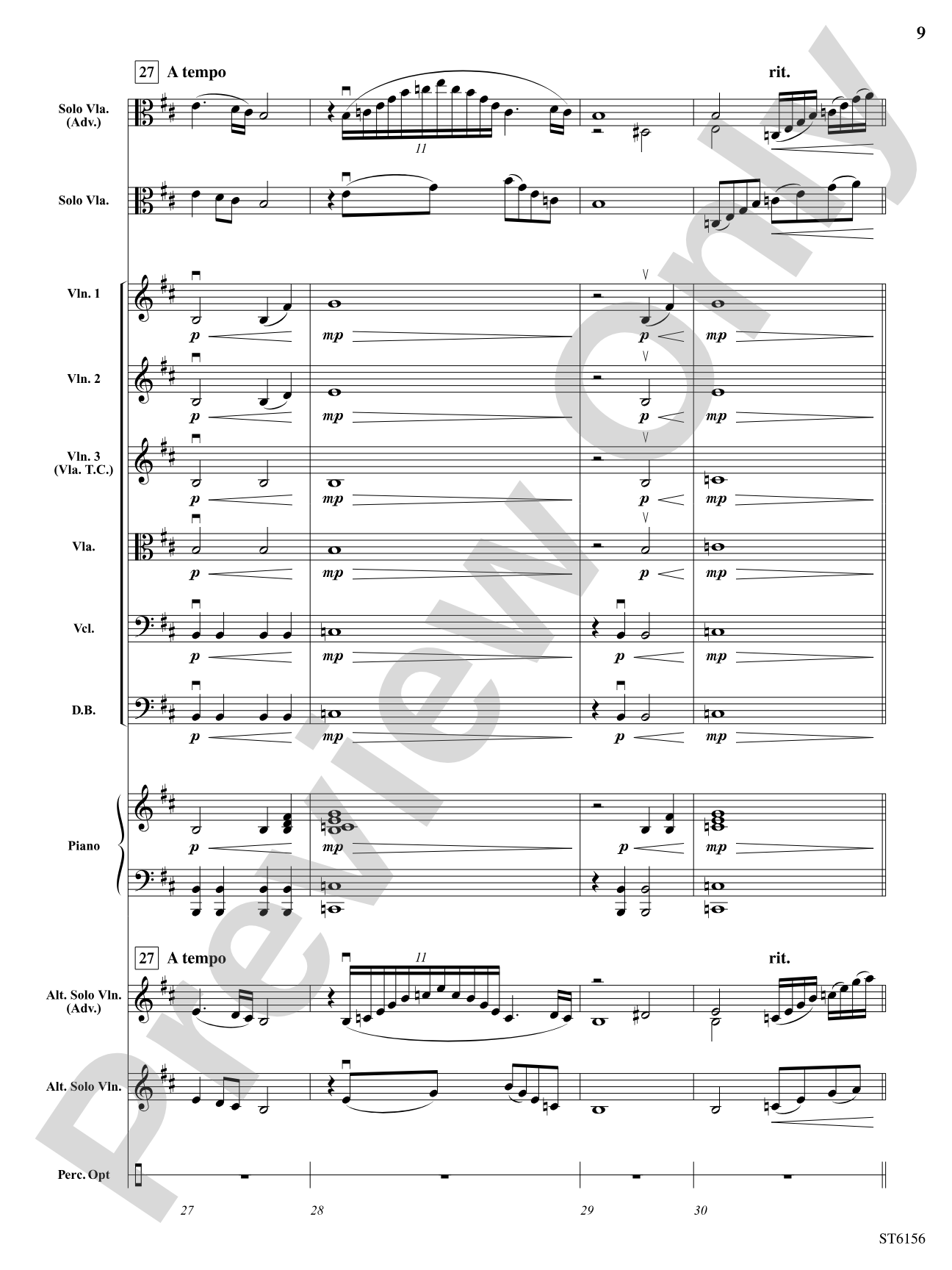
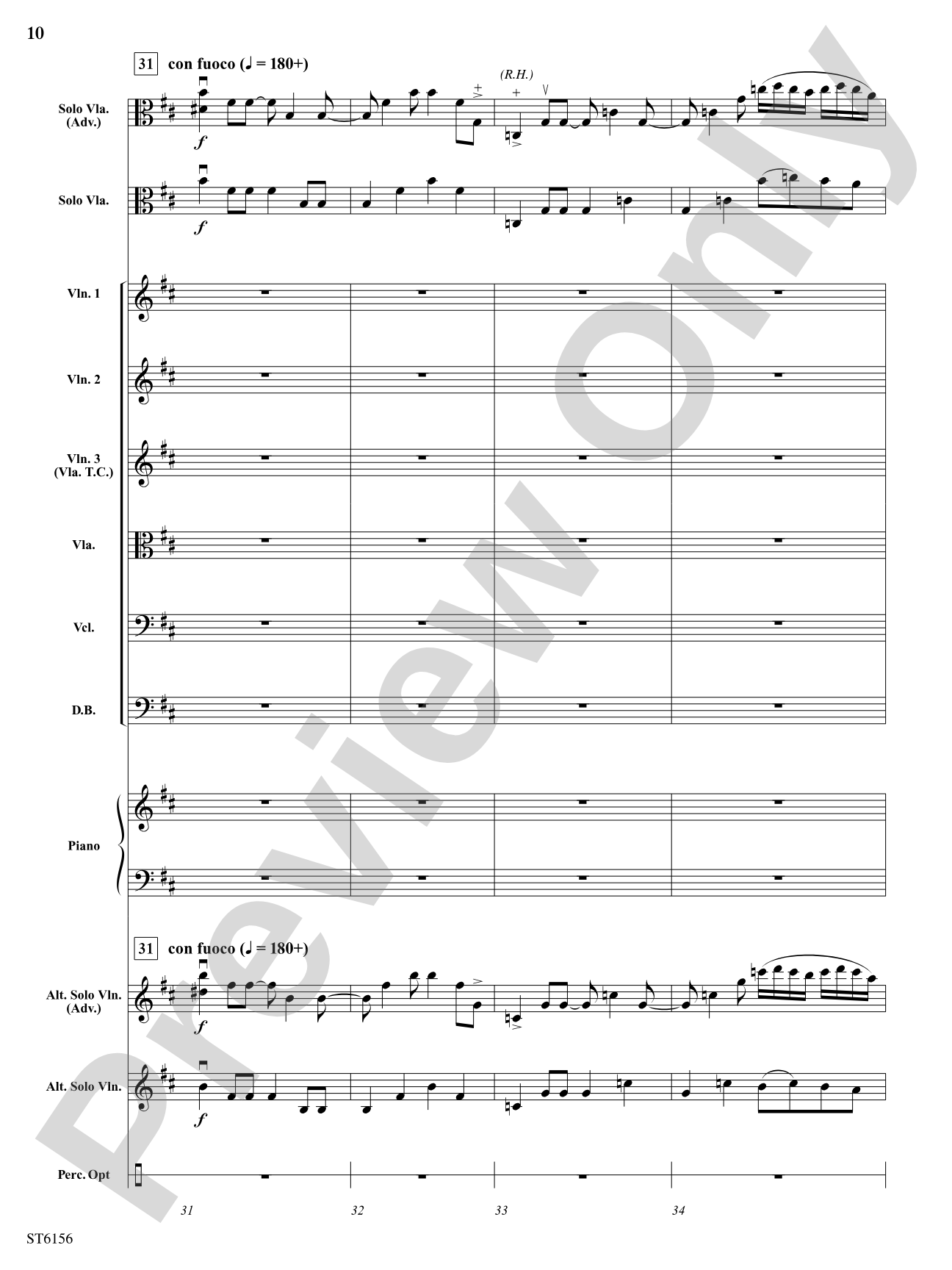
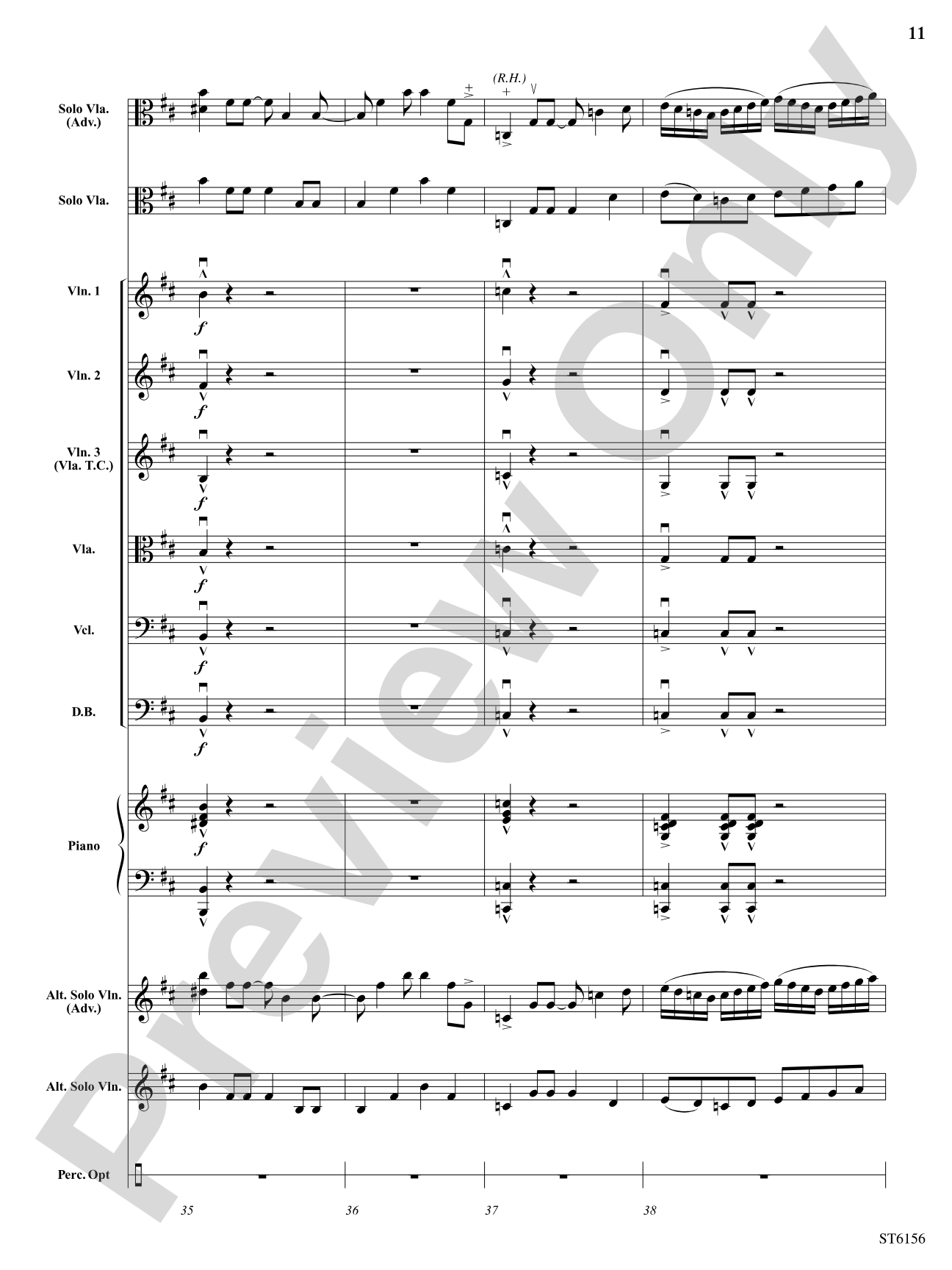
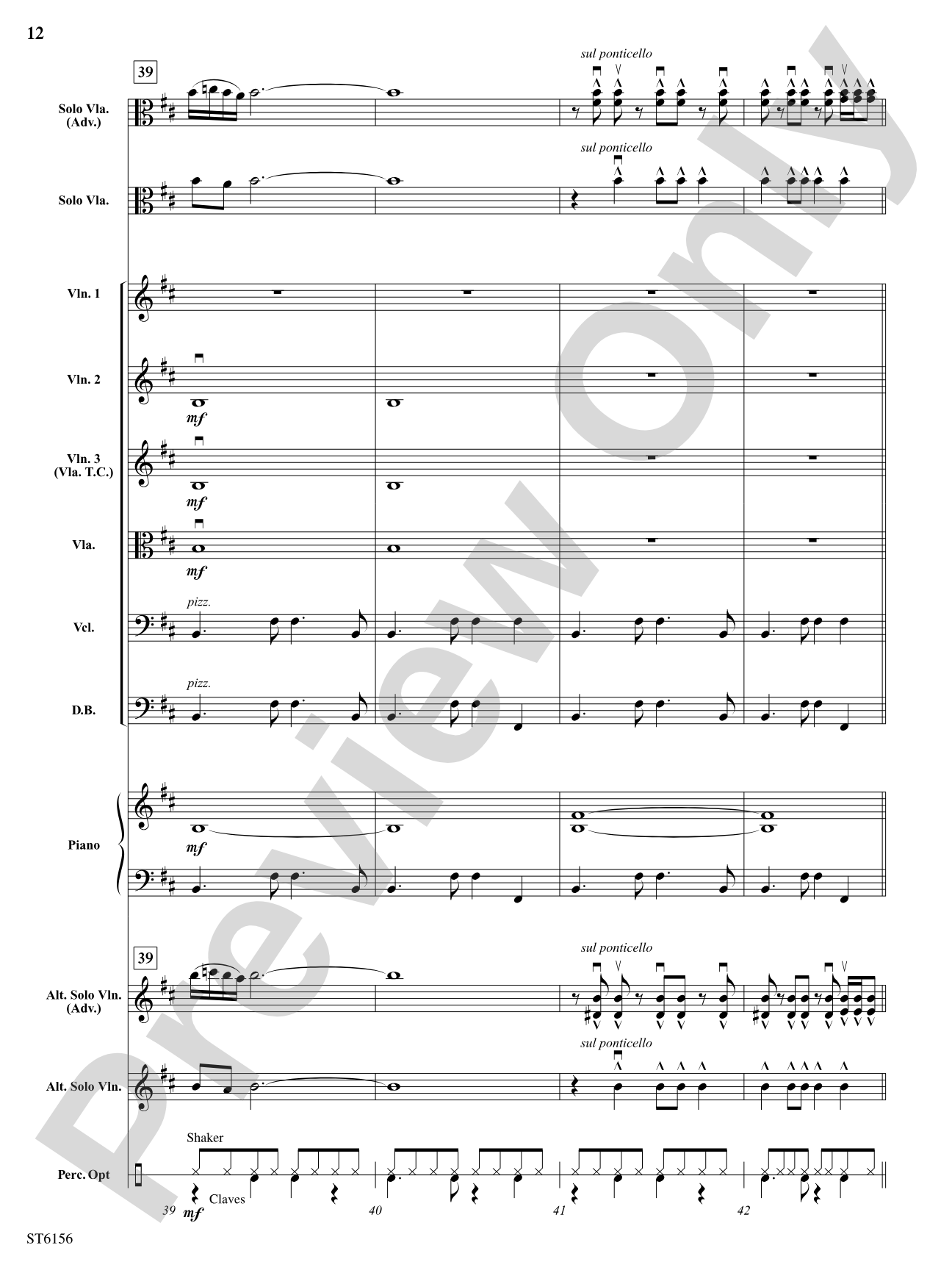
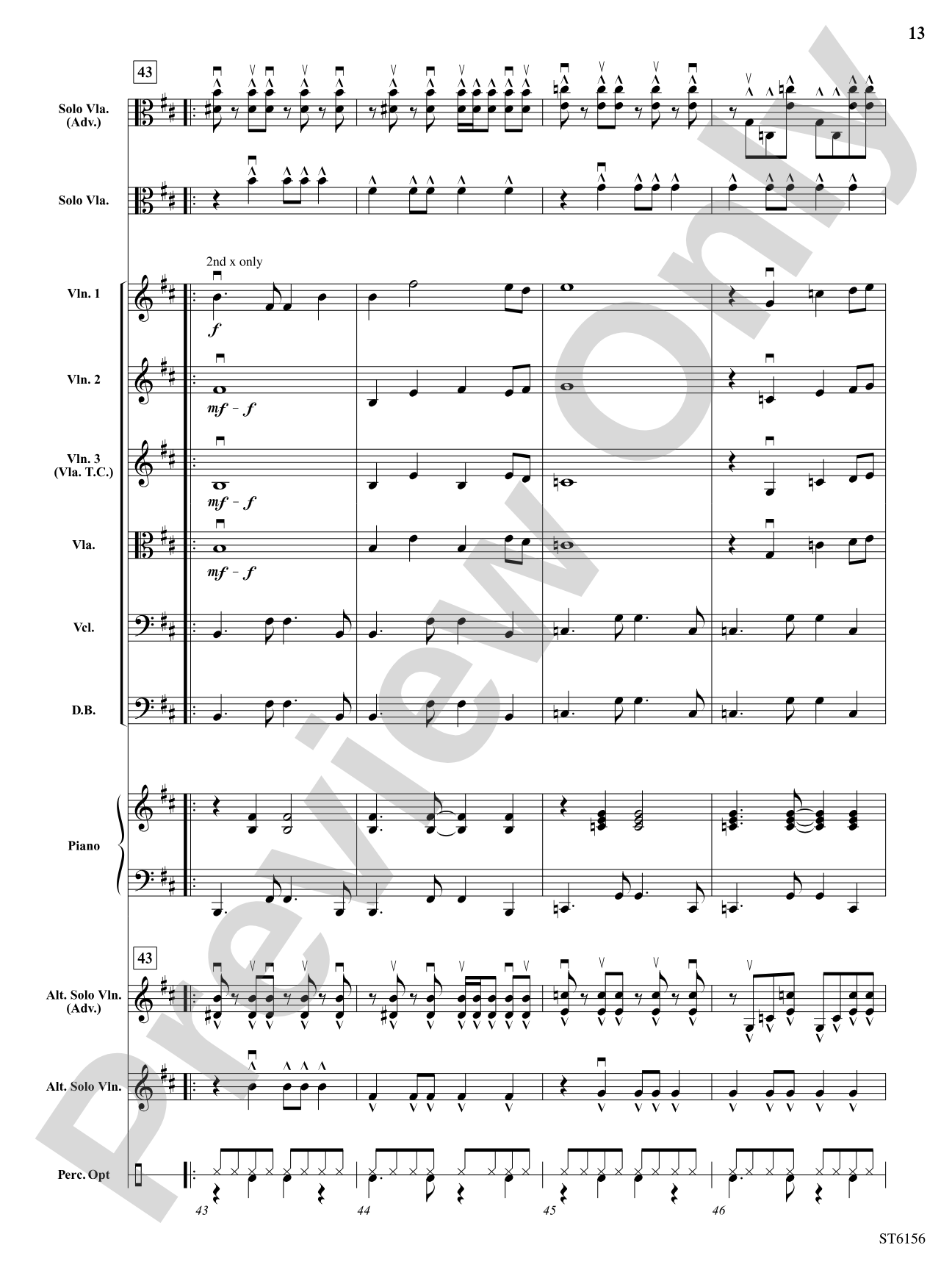
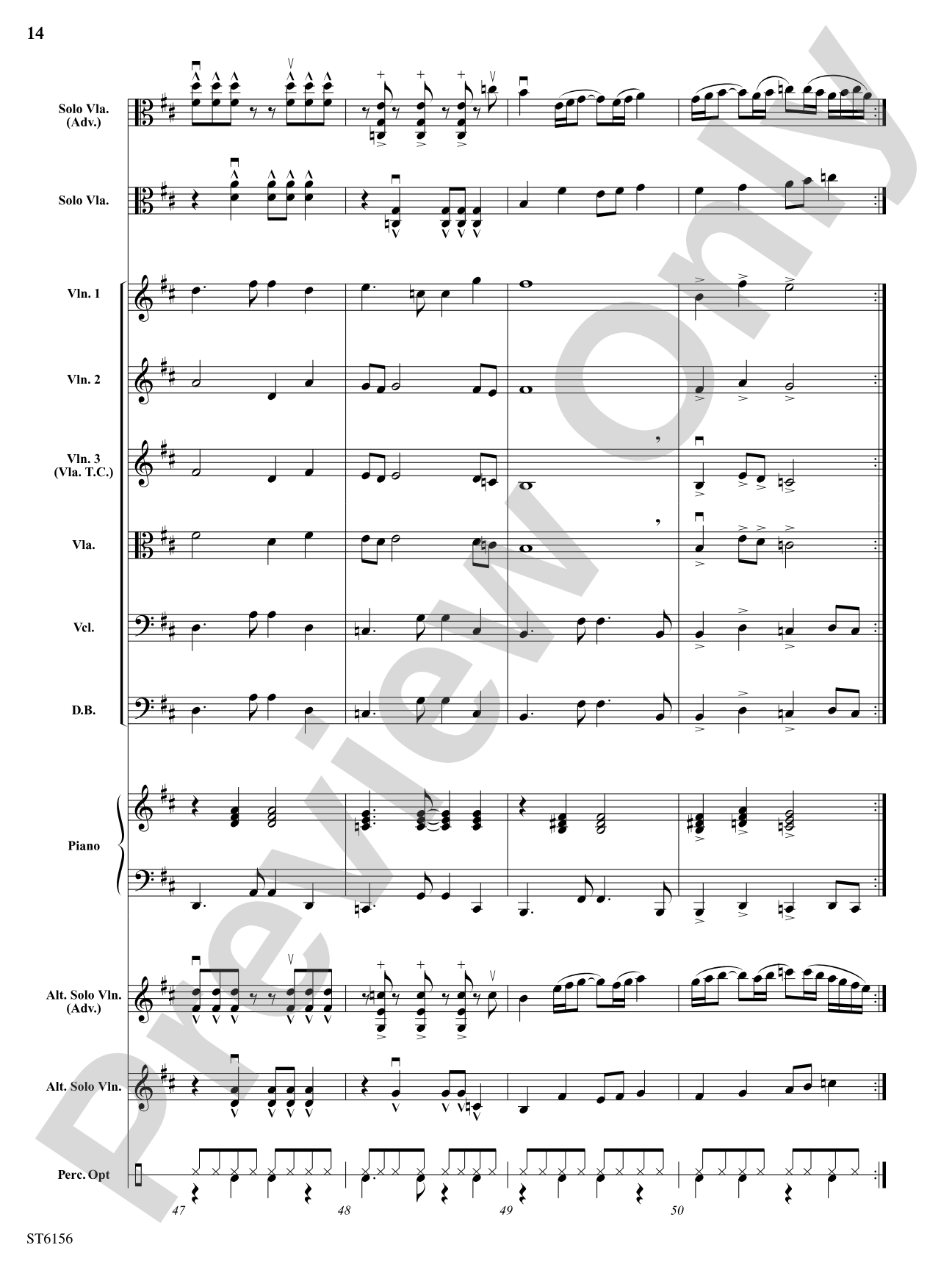
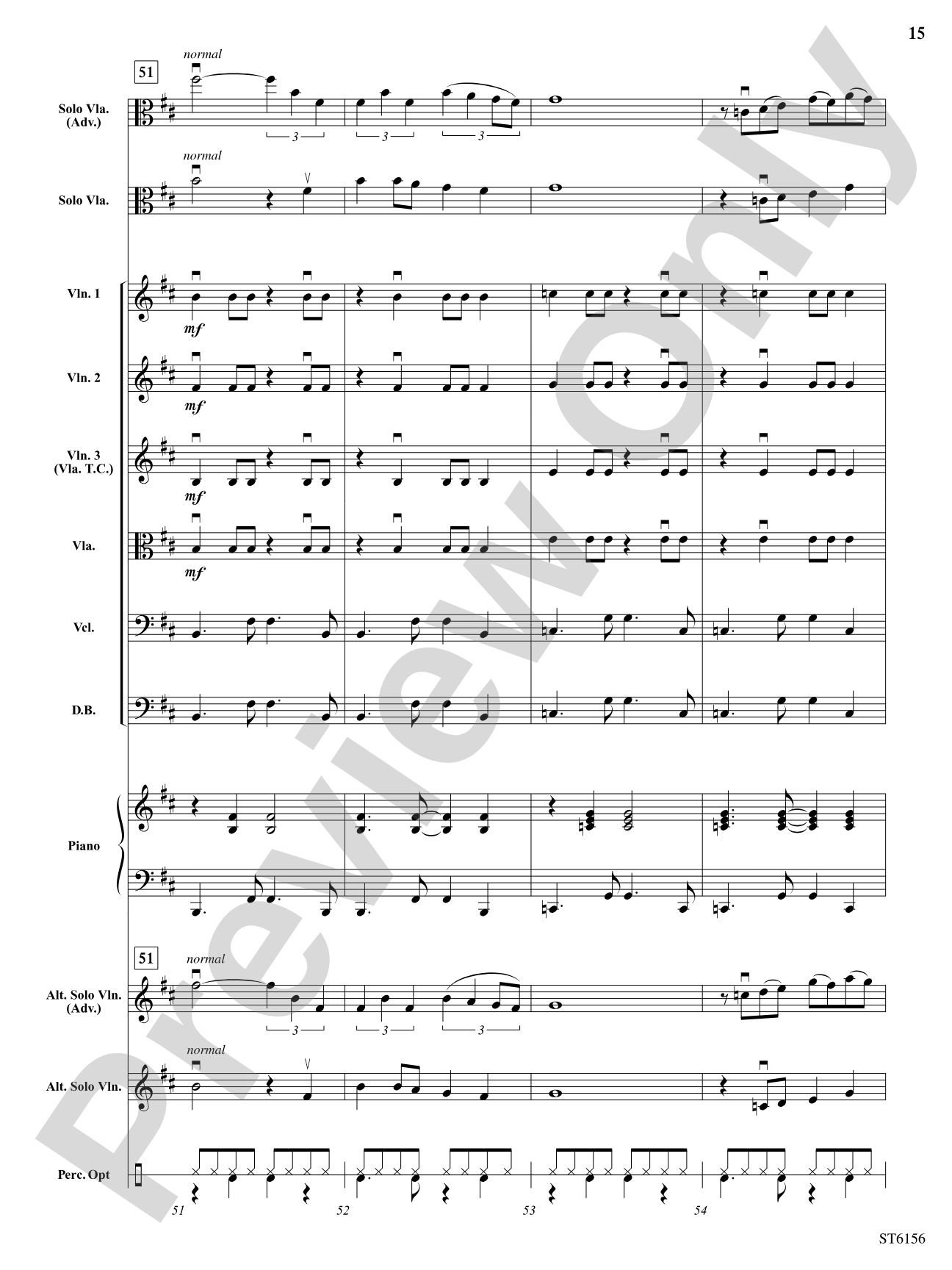
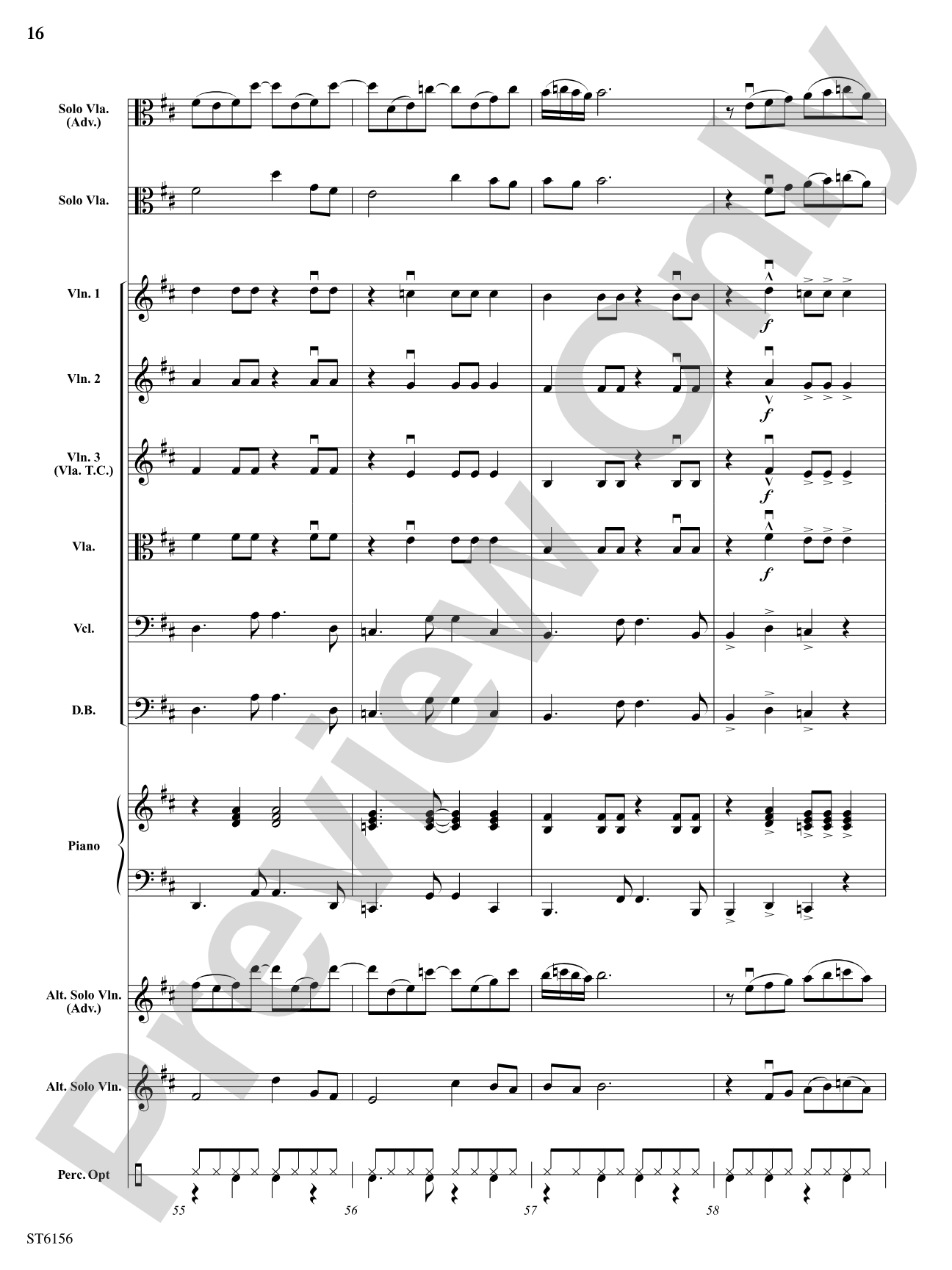
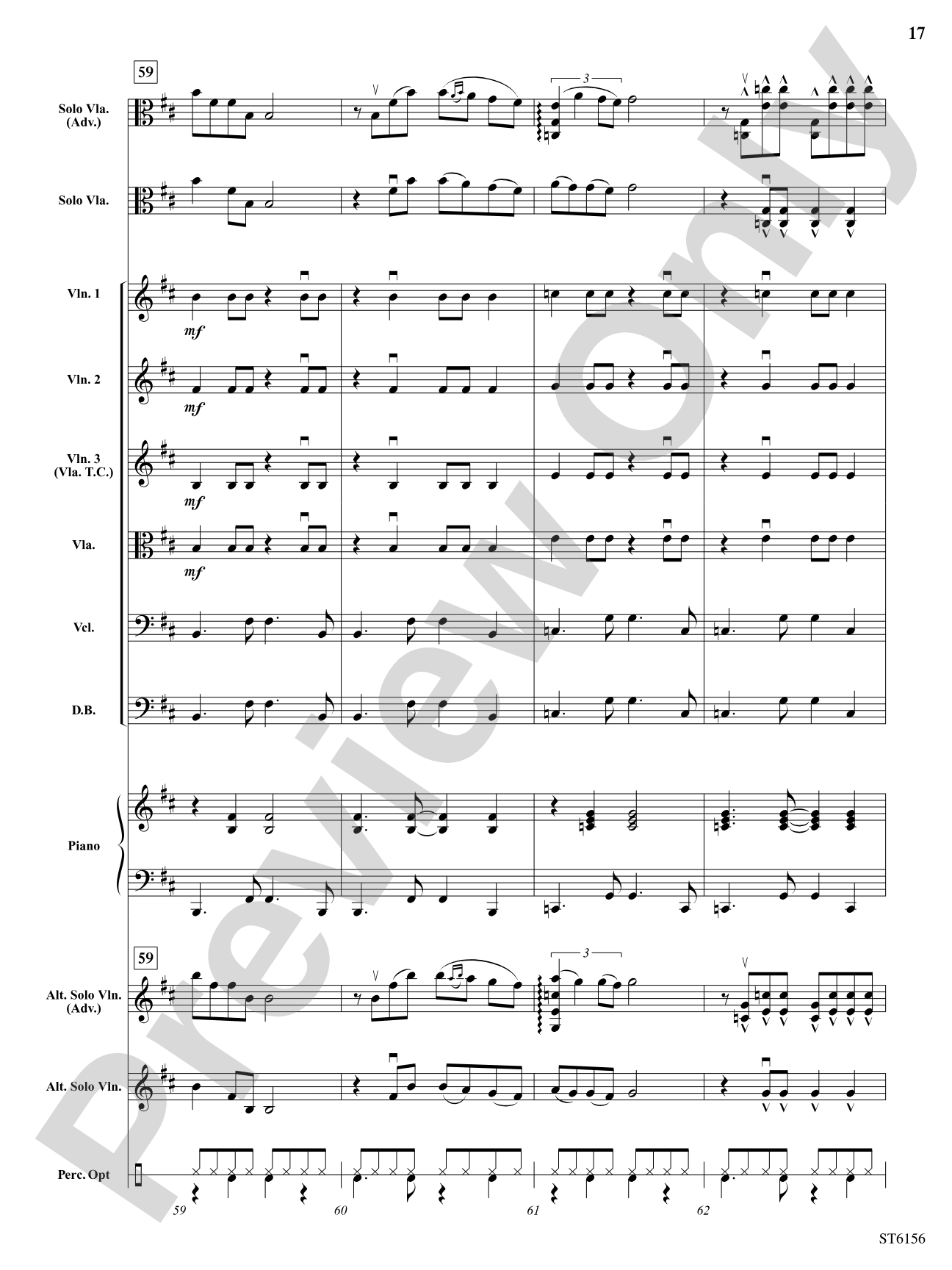
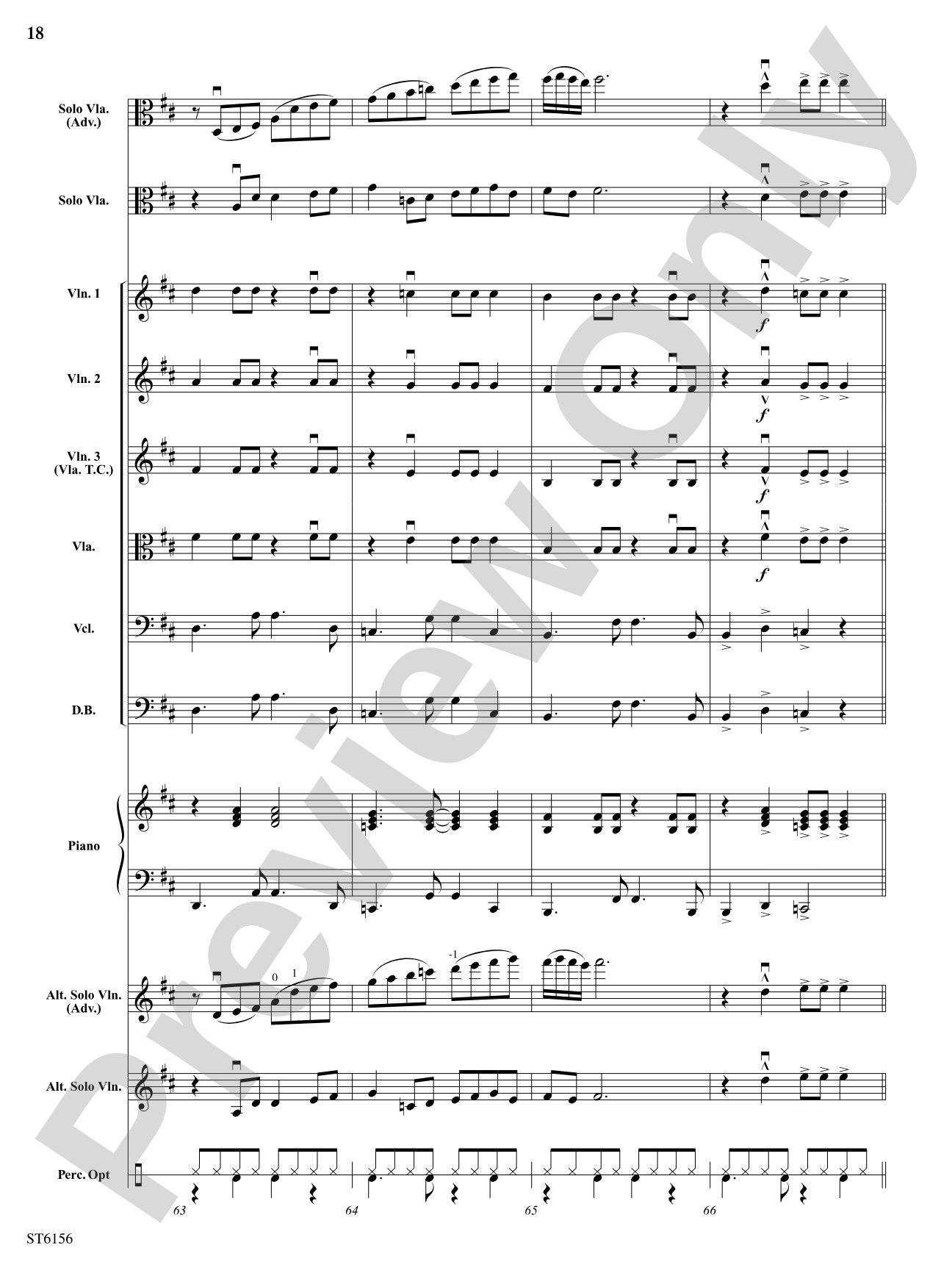
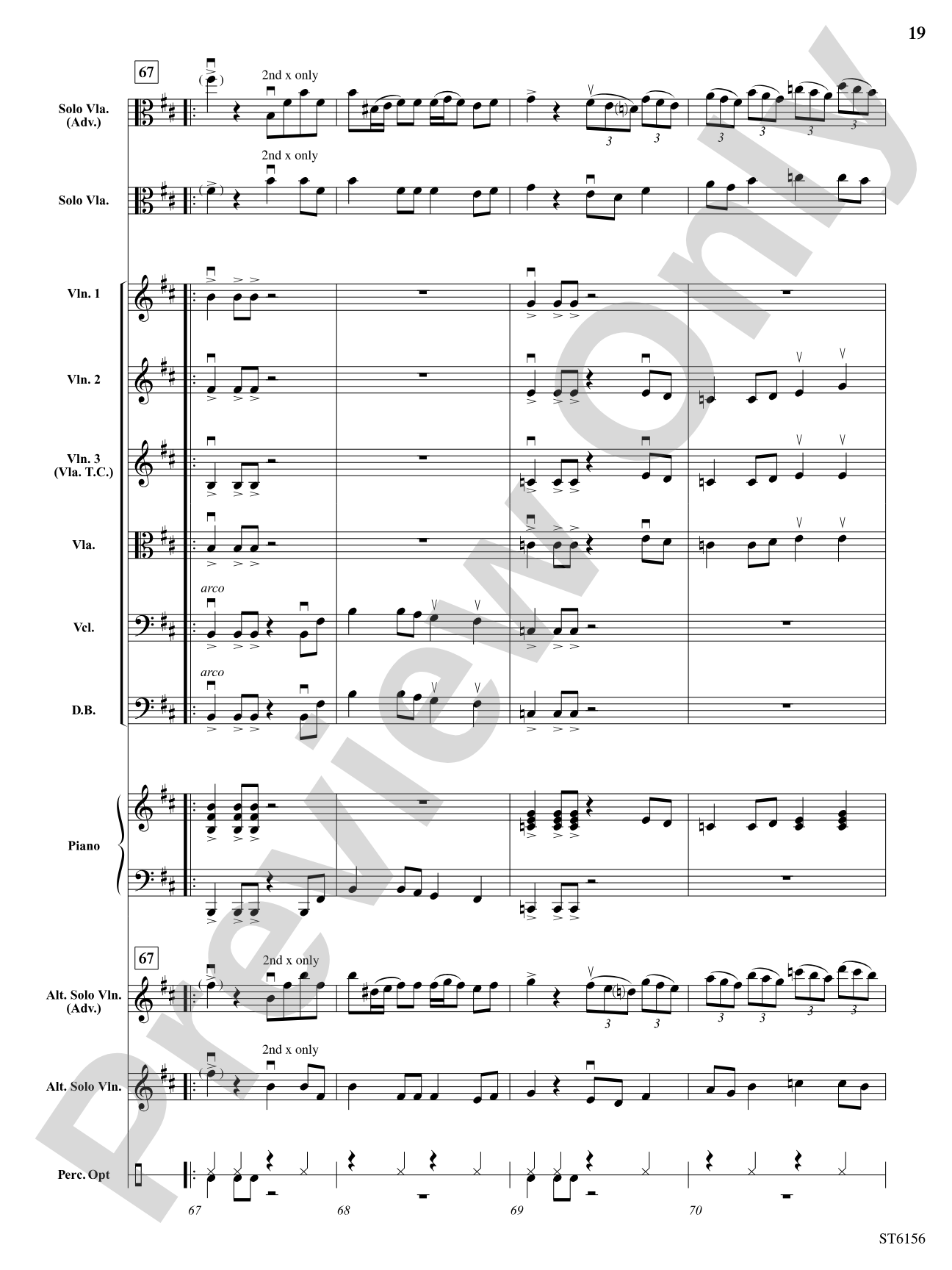
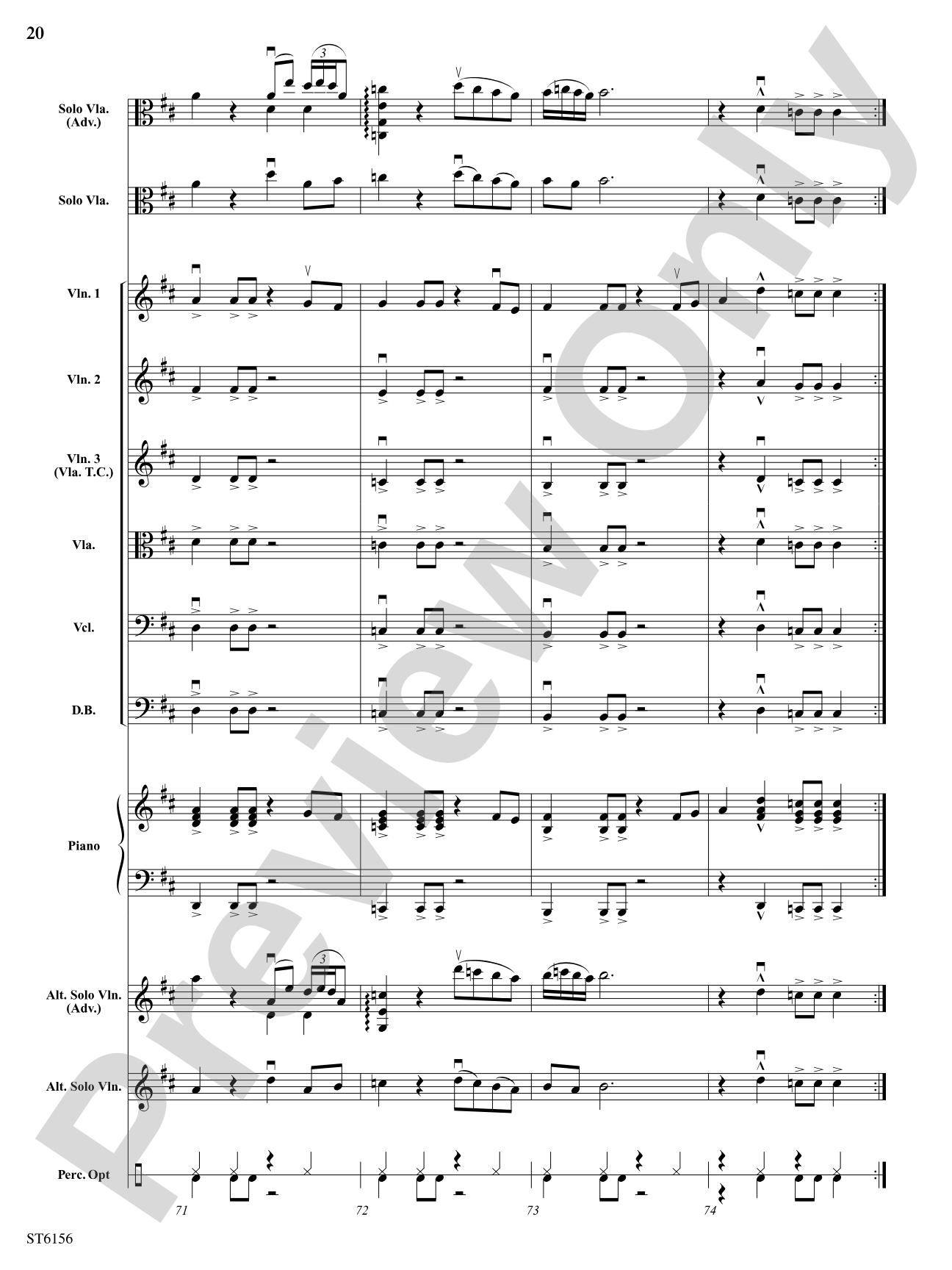
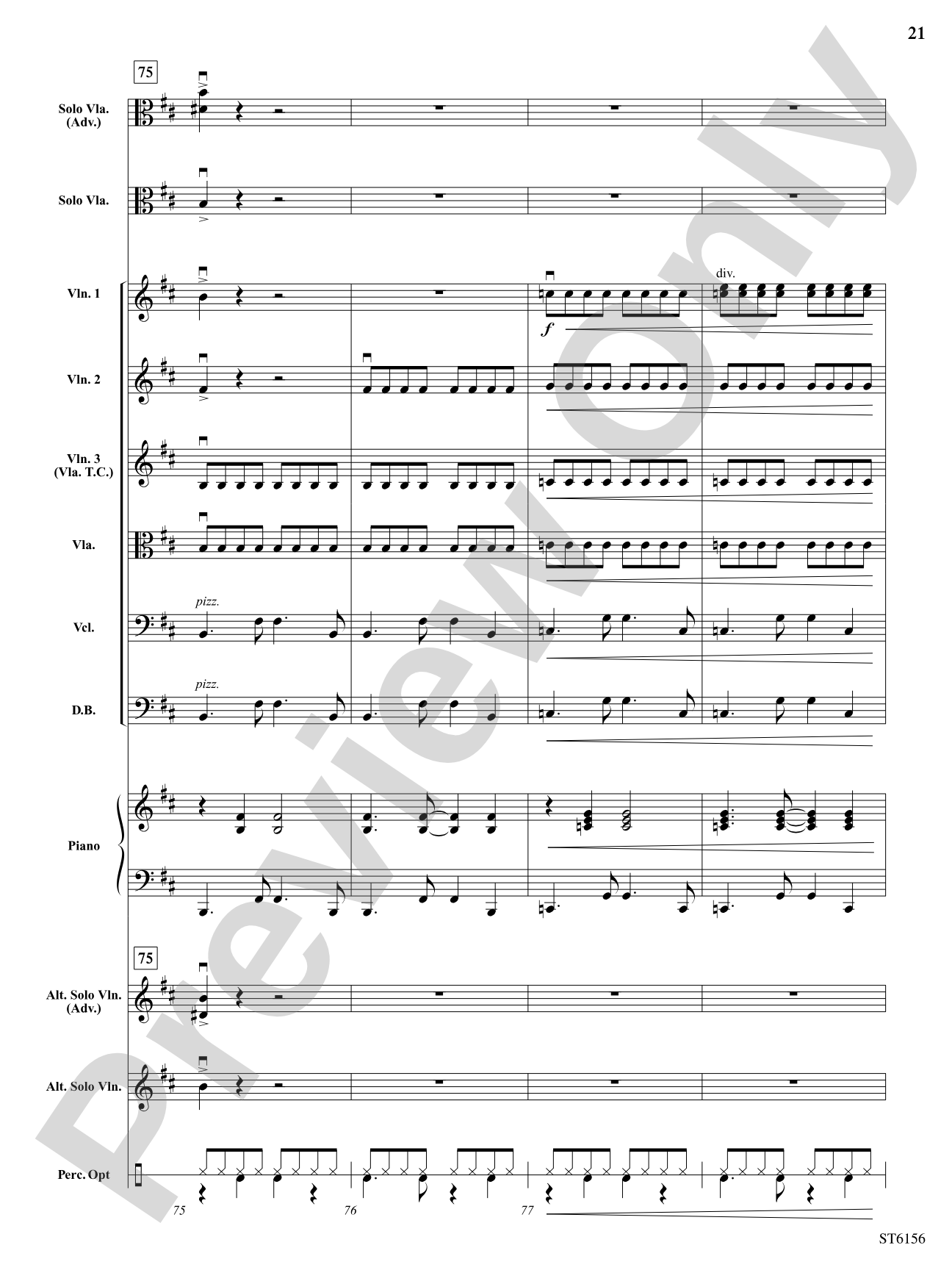
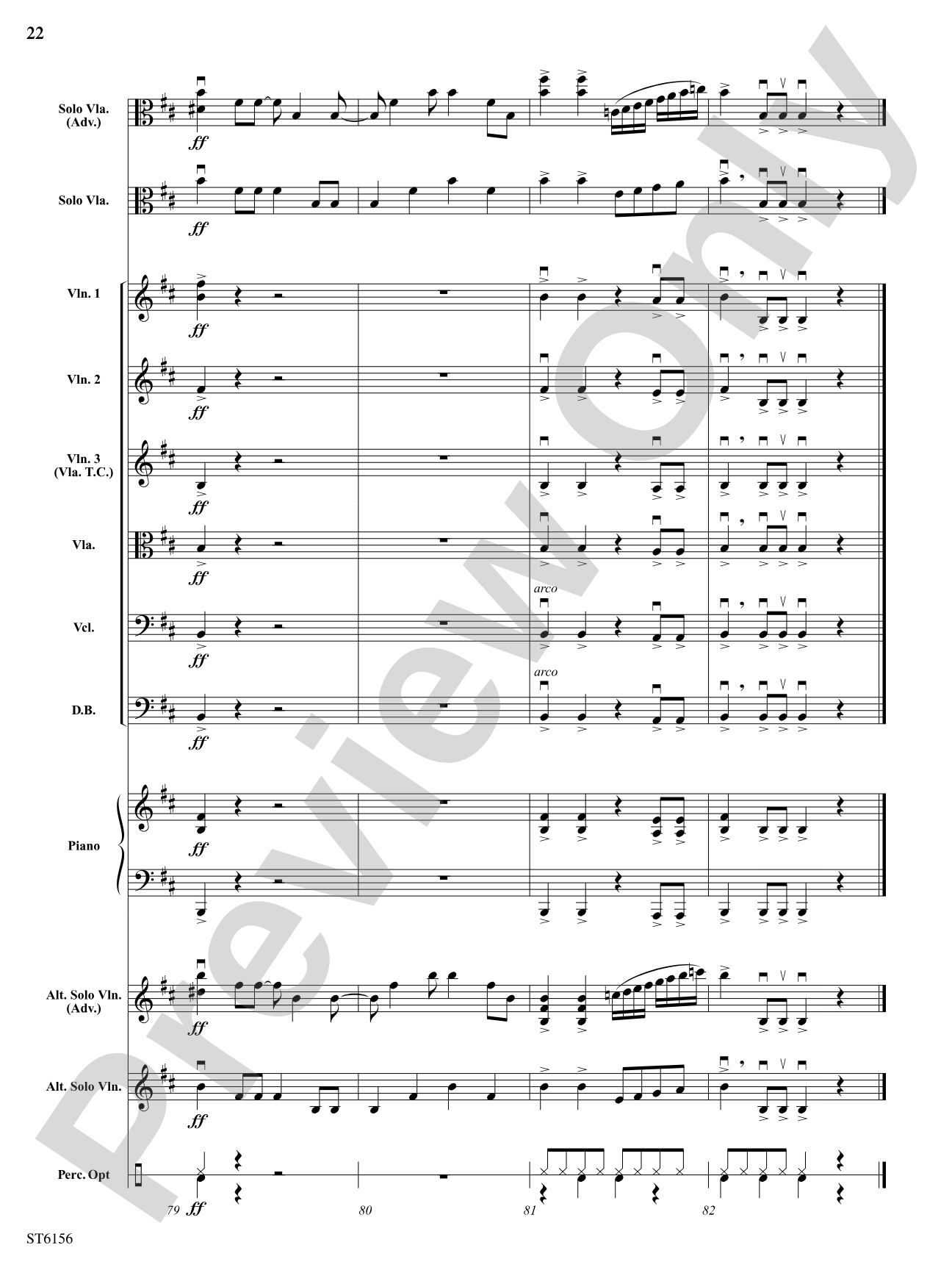

Danza Latina (for Solo Viola or Violin and Orchestra): String Orchestra Conductor Score & Parts
for Solo Viola or Violin and Orchestra
By Brian Balmages
Grade: 2
Item: 98-DST6156
$70.00
Pickup currently not available
Buy Extra Parts (Digital PDF Download)
Parts Added to Cart!
Description
The ultimate in performance flexibility and a great way to add some sizzle to your next concert! Written for a professional Venezuelan-born violist, this work draws inspiration from the passionate melodies and lively dance rhythms of Latin music. Ideal for young orchestras who are interested in featuring a soloist, the piece comes with an advanced viola solo as well as an easier version that can be performed by a violist in your group. Optional advanced and easy solo violin parts are also included, making this piece useful in a variety of situations. Easy percussion parts really add flare, making this the showstopper of your next program. Hot!


Danza Latina (for Solo Viola or Violin and Orchestra): String Orchestra Conductor Score & Parts isn't in MakeMusic Cloud just yet...but it could be. Let us know you'd like to see it, and you'll help shape what comes next. In the meantime, start a free trial and dive into thousands of interactive titles your students can play along with today.
Request This Title
Tell us you want it.
Start Your Free Trial
Explore everything that's ready to play right now.
Sample Audio
1
Audio File
--:--
0:00
0:00
Sample Video
No sample videos found.
Additional Details
Series:
FJH Developing Strings
Publisher:
The FJH Music Company, Inc.
SKU:
98-DST6156
More about this title
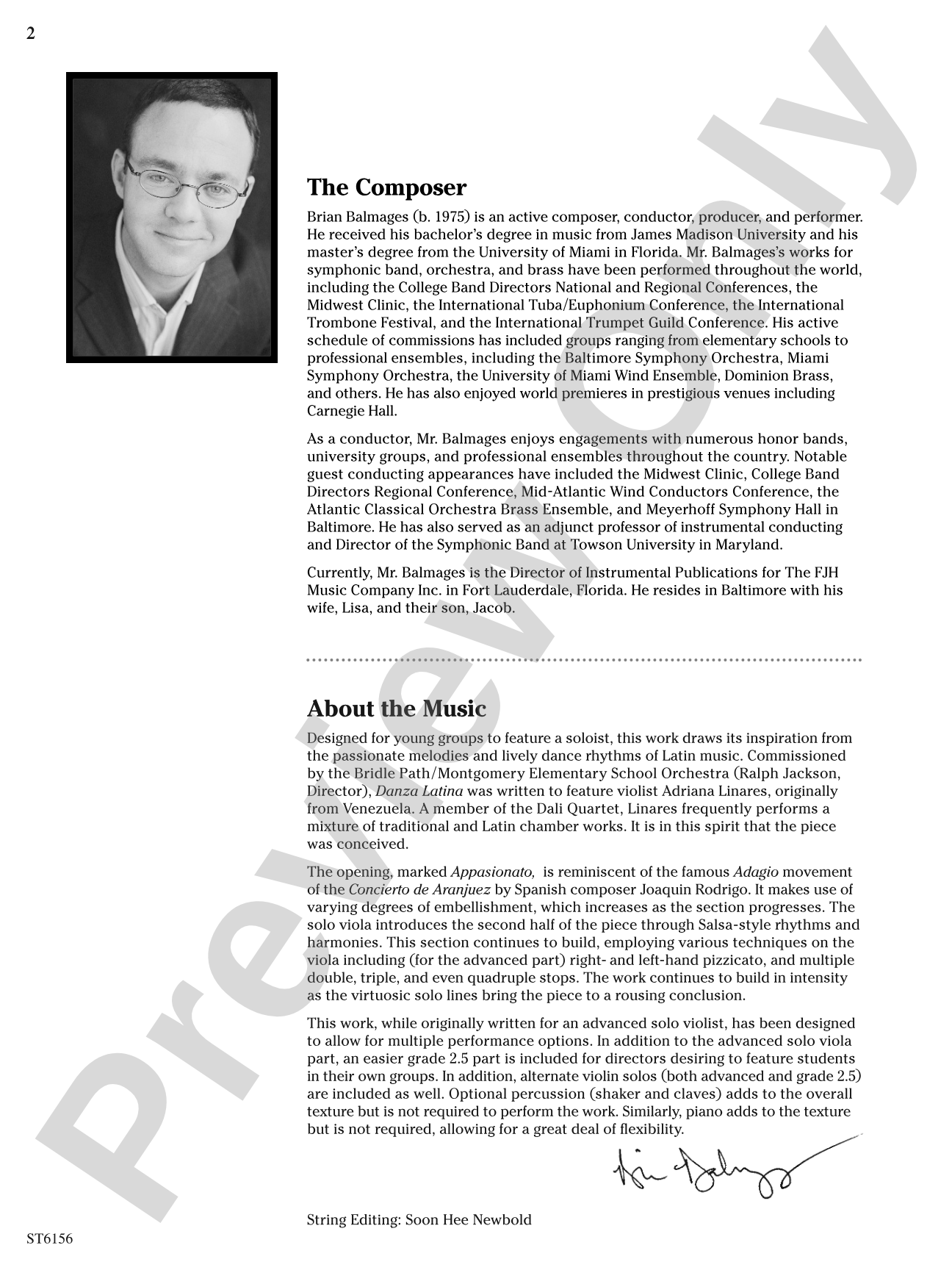
About the Composer: Brian Balmages

Brian Balmages brings equal fluency to orchestral, band, and chamber music across professional and educational settings. His compositions have been heard at Carnegie Hall, the Kennedy Center, Sydney Opera House, and countless school concerts worldwide. He earned the A. Austin Harding Award from the American School Band Directors Association and won the 2020 NBA William D. Revelli Composition Contest. His work has appeared at presidential inaugural events and regional all-state festivals.
Balmages holds degrees from James Madison University and the University of Miami, institutions that have both honored him with distinguished alumni recognition and commissioning opportunities. As a guest conductor, he regularly works with university ensembles, professional orchestras, and regional groups across North America and internationally. He currently serves as Director of MakeMusic Publications and Digital Education for Alfred and MakeMusic.
Why we love this
This piece solves a genuine programming challenge: you get a showstopper with authentic rhythmic energy and Latin flavor that feels both accessible to Grade 2 orchestras and genuinely exciting to perform. The flexibility built into the solo part (advanced viola, easier viola, advanced violin, easier violin) means you're not locked into one soloist's ability level, and the optional easy percussion parts give you control over how much color you want without derailing younger players. The writing is idiomatic without being precious, letting young musicians feel the style in their hands rather than simply reading through it.
What to expect
Energetic and warm, with the unmistakable pulse of Venezuelan and Caribbean rhythms. The music moves between lyrical solo passages that showcase the soloist's voice and rhythmically driving ensemble sections where the strings become percussion instruments themselves, catching fire with infectious dance energy.
Who it's for
String orchestras at the Grade 2 level looking to program a concerto-style feature that doesn't require an advanced soloist. Directors seeking a contest or festival piece with Latin flair and built-in flexibility across ability levels. Any young orchestra wanting a piece that feels sophisticated and current while remaining within reach.
How to get the most out of it
- Lock the clave rhythm between your rhythm section and the solo part before rehearsing with the full orchestra; once that foundation sits, the rest of the ensemble's Latin patterns settle naturally into place.
- Record a rehearsal of just the percussion and soloist so section leaders can hear the rhythmic conversation independent of the full ensemble, then bring it together with confidence.
- Let the soloist set the tempo in early rehearsals rather than driving from the conductor's podium, since the lyrical passages need the freedom to breathe with the Latin phrasing the piece demands.
- Shape the easier solo version with the same stylistic care you'd give the advanced one; the passagework is shorter but the character and rhythmic precision matter equally.
How to use it
Program this as your concert finale to send the audience out with momentum and joy. It works equally well in a spring pops concert, a festival competition set, or a Young Artists recital where you want to spotlight a developing soloist without asking them to carry a heavyweight Romantic concerto. The accessible percussion writing makes it ideal for incorporating younger players into a full orchestra concert.
Skills your students will build
- Latin rhythmic patterns and syncopation specific to Venezuelan and Caribbean styles
- Playing rhythmically alongside a soloist rather than within a choral texture
- Reading and executing easy percussion parts that enhance ensemble color
- Adjusting phrasing and articulation to match Latin dance character
- Balancing solo prominence with responsive ensemble accompaniment