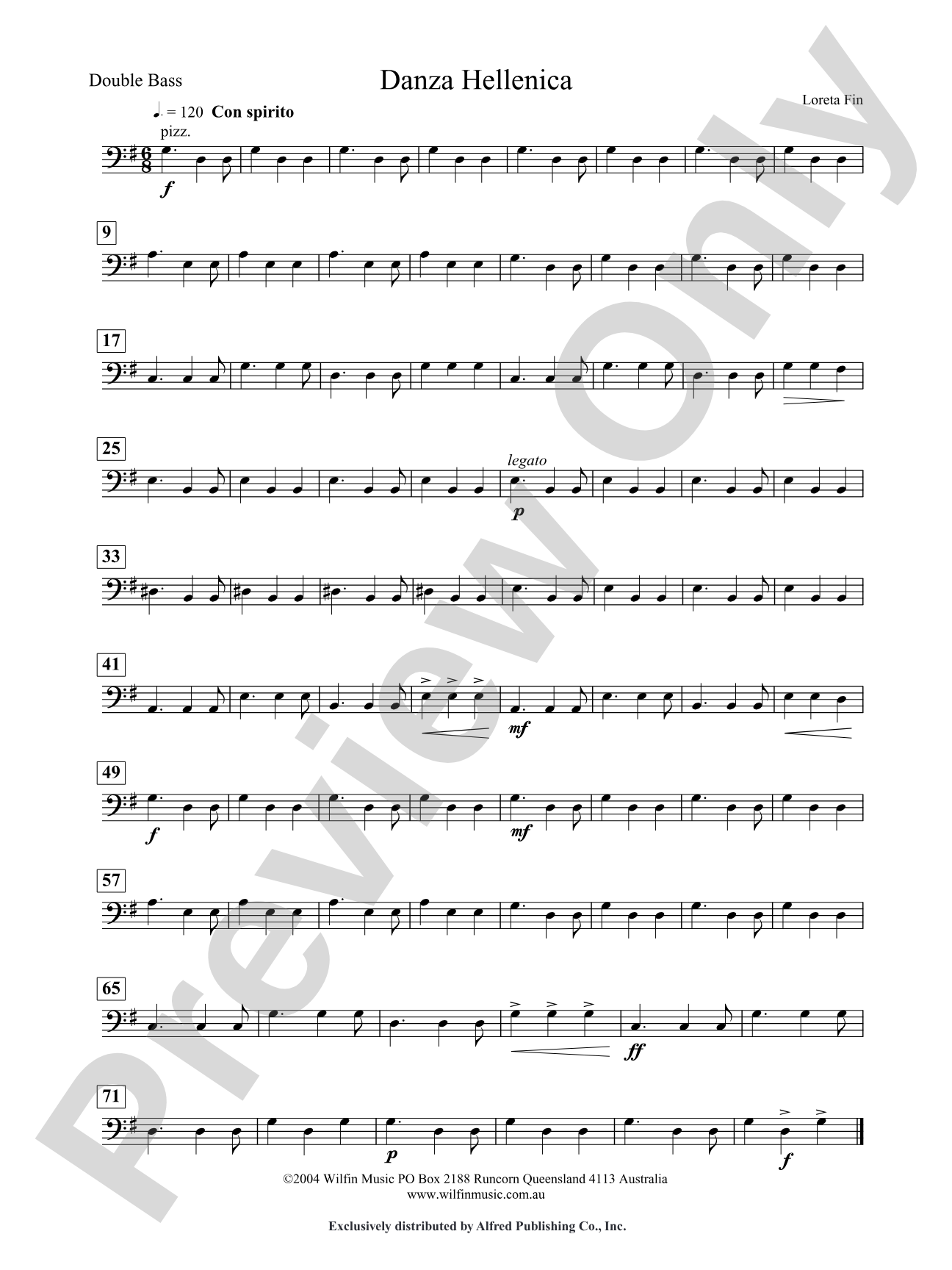
This piece was written to enable students to understand the feel of 6/8 and 3/4 being used in alternate bars. Like all folk music used for dance, the beat is extremely important, and must be "felt in the music" rather than "read off the page."
Discover MakeMusic Cloud: thousands of interactive titles your students can play along with today.
Series:Wilfin String Orchestra: Young String Ensemble Series
Publisher:Wilfin Music
Page Count:66
SKU:76-PC-0000026_SB
More about this title
About the Composer: Loreta Fin
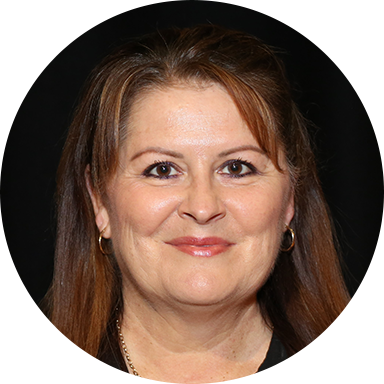
Loreta Fin AM studied violin at the Sydney Conservatorium of Music and served as concertmaster of the Sydney Youth Orchestra before establishing herself as a performing musician across chamber and orchestral settings. For over 25 years, she has held the position of Principal Viola player with the Queensland Pops Orchestra while simultaneously directing strings at Somerville House School in Brisbane since 1993.
Beyond performance, Fin has become a leading figure in Australian string education and advocacy. She served multiple terms as both State and National President of the Australian Strings Association, adjudicated at major competitions throughout Australia, and conducted the State and National Honours Ensembles Programs. As a composer, she has created more than 100 works for string orchestra published internationally by Alfred Music. In 2020, she received the National Award for Services to Music and String Teaching in Australia, and she currently serves as State Advisor for Strings with the Australian Music Examinations Board.
Why we love this
Fin addresses a genuine pedagogical challenge here: teaching the visceral difference between 6/8 and 3/4 through the rhythmic language of folk dance. Rather than drilling meter changes in isolation, this piece embeds them in music that demands students feel the pulse, making the metric distinction musical and memorable. For a Grade 3 ensemble, the balance between accessibility and compositional sophistication is exactly right.
What to expect
The piece carries the energy and lightness of Mediterranean dance music, alternating between the lilting triple feel of 3/4 and the rolling stride of 6/8. The interplay between these two meters creates a spirited, almost playful conversation that rewards ensemble cohesion with immediate musical payoff.
Who it's for
String orchestras at the Grade 3 level who are ready to tackle metric complexity with purpose. This score suits ensembles preparing for festival or contest performance and those seeking repertoire that teaches rhythmic independence without sacrificing musicality.
How to get the most out of it
Establish the pulse internally before each section switch between 6/8 and 3/4. Conduct or count in a way that lets the ensemble anticipate the metric change; sudden shifts will sound rhythmically uncertain.
Let the folk character breathe. The Greek dance idiom thrives on flexibility within the beat, so avoid metronomic rigidity even as you anchor the ensemble's pulse.
Mark the section changes in parts clearly so students can see meter shifts coming. Assign rehearsal letters or numbers to each metric block so language during rehearsal stays precise.
Balance all voice parts so the dance rhythm emerges clearly. This piece works best when no one section dominates the melodic or rhythmic content.
How to use it
Program this when your ensemble needs to demonstrate rhythmic literacy and musicality together, whether at a festival, adjudication, or concert. It pairs well alongside other folk-inspired pieces or as a contrasting middle work between larger Classical or Romantic selections.
Skills your students will build
Reading and performing in alternating 6/8 and 3/4 meters
Internalizing pulse across metric changes
Understanding folk dance rhythm and character
Ensemble precision in metric transitions
Feeling beat placement rather than mechanically counting
You May Also Like
Scan to Complete Your Purchase
Use your phone's camera to scan the code below
You'll log in on your phone and the order will be added to your account