Danza Hellenica Cover Image

Danza Hellenica: String Orchestra Conductor Score & Parts

$45.00 USD
Sale price  $45.00 USD Regular price 
Skip to product information
Danza Hellenica Cover Image

Danza Hellenica: String Orchestra Conductor Score & Parts

By Loreta Fin

Grade: 3

Item: 76-30172

Need it now?

Buy Digital Version
$45.00
Shipped

One moment…

Description
This piece was written to enable students to understand the feel of 6/8 and 3/4 being used in alternate bars. Like all folk music used for dance, the beat is extremely important, and must be "felt in the music" rather than "read off the page."

Danza Hellenica: String Orchestra Conductor Score & Parts isn't in MakeMusic Cloud just yet...but it could be. Let us know you'd like to see it, and you'll help shape what comes next. In the meantime, start a free trial and dive into thousands of interactive titles your students can play along with today.

Sample Pages

Sample Audio
No sample audio found.
Sample Video
Additional Details
Series: Wilfin String Orchestra: Young String Ensemble Series
Publisher: Wilfin Music
Page Count: 66
UPC: 038081327136
SKU: 76-30172

More about this title

About the Composer: Loreta Fin
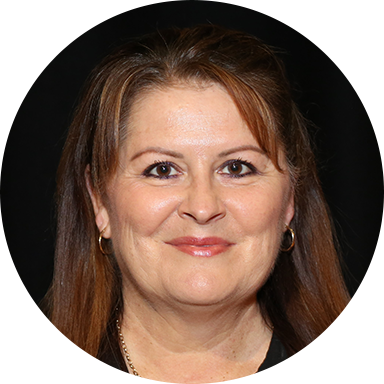
Loreta Fin

Loreta Fin studied viola and violin at the Sydney Conservatorium of Music and spent decades as a performing musician, serving as Principal Viola with the Queensland Pops Orchestra and maintaining an active chamber music practice. Her credentials as an educator run deep: she directed strings at Somerville House School in Brisbane for over 25 years, presented at national teaching conferences in both Australia and the United States, and has adjudicated major competitions across the country.

Beyond the classroom, Fin shaped the Australian string teaching landscape as a long-serving committee member and State and National President of the Australian Strings Association, earning a Queensland State Award for her advocacy work. She has composed over 100 works for string orchestra published internationally, examined for the Australian Music Examinations Board, and in recent years has conducted the national Honours Ensembles Programs. In 2017, she released a comprehensive beginner series for young string students, and her contributions to music education earned her the National Award for Services to Music and String Teaching.

Why we love this

Fin tackles a genuine teaching challenge here: how to make the metric shift between 6/8 and 3/4 feel natural rather than academic. Rather than isolating the rhythmic concept, she embeds it in a dance context where the pulse becomes something students internalize through movement and repetition, not diagram drills. Competent string writing for Grade 3 players keeps the focus where it belongs, on understanding how these meters relate to each other, rather than wrestling with technical demands.

What to expect

The piece carries the propulsive energy of Greek folk dance, with the alternating meters creating a gentle forward momentum rather than metric disruption. The 6/8 sections feel liquid and flowing, while the 3/4 sections snap into focus, and the interplay between them gives the whole work a sense of celebration grounded in genuine folk tradition.

Who it's for

String orchestras working at Grade 3 level who are ready to explore metric variety and understand how different time signatures support musical function rather than exist as theoretical puzzles. This score rewards orchestras with solid ensemble balance and a conductor willing to invest rehearsal time in metric clarity.

How to get the most out of it

  • Establish the pulse in rehearsal without the metronome; use your conducting pattern to make the transition between meters visible to the ensemble so they anticipate the shift rather than react to it.
  • Record a run-through without stopping and listen back together. Often students will recognize the groove in playback more clearly than they hear it in real time.
  • Layer in the accompaniment parts gradually. Start with just cello and bass to anchor the harmonic motion, then add viola, then violins; this keeps the metric structure transparent.
  • Trust the folk music source material. These meters weren't abstract choices, they emerged from movement and celebration. If the ensemble commits to the dance-like character, the rhythm solves itself.

How to use it

Pair this with other pieces that explore meter or regional folk idioms to create a concert theme around rhythm and dance across cultures. It also works well in the second half of the season when your ensemble has developed technical stability and can focus energy on expressive performance choices rather than note accuracy.

Skills your students will build

  • Feeling metric modulation between 6/8 and 3/4 without losing ensemble cohesion
  • Internalizing the pulse through dance-based rhythm rather than counting
  • Recognizing how folk traditions inform time signature choices and phrasing
  • Balancing precision with rhythmic freedom in ensemble playing
  • Conducting preparatory patterns that clarify metric transitions

You May Also Like