Danses Sheet Music Preview

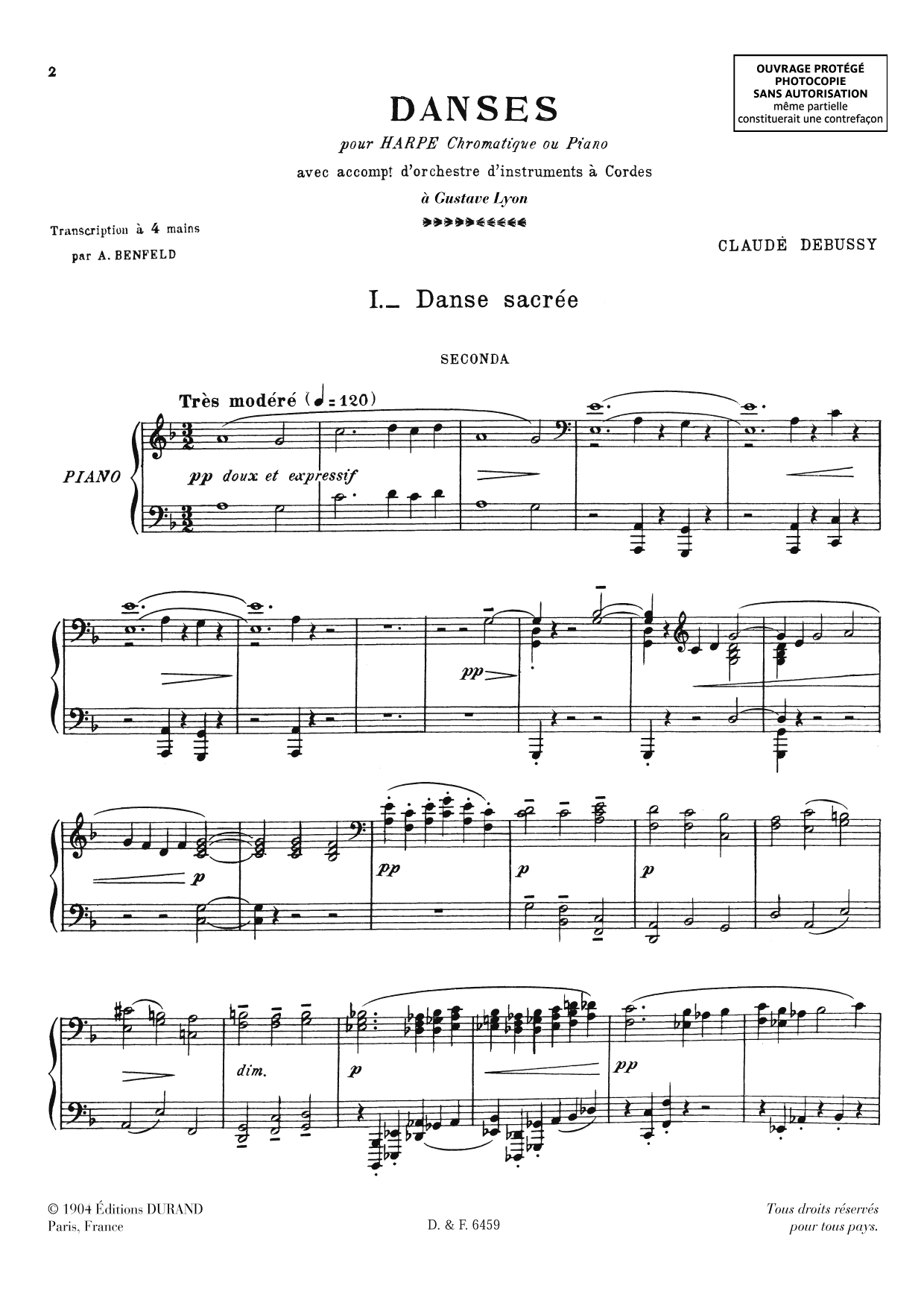
Danses: Piano Duet

By Claude Debussy / Arranged by A. Benfeld

Item: 35-DS00316416

Digital Download
$18.00
Description

Discover MakeMusic Cloud: thousands of interactive titles your students can play along with today.

Sample Audio
No sample audio found.
Sample Video
Additional Details
Publisher: Hal Leonard
Page Count: 24
SKU: 35-DS00316416

More about this title

About the Composer: Claude Debussy

Claude Debussy (1862-1918) fundamentally reshaped how composers approached harmony, timbre, and form in the early twentieth century. Rather than following the dramatic narratives and thick orchestrations of his Romantic predecessors, Debussy treated the orchestra as a palette of colors, using unconventional chord progressions and instrumental combinations to evoke mood and atmosphere.

His music demands that performers think beyond traditional interpretive frameworks. Debussy's scores require attention to subtle dynamic shifts, tonal blending, and the relationship between musical gestures rather than obvious melodic lines. For music educators, his work offers a bridge into modern classical music that students find accessible yet compositionally sophisticated.

Why we love this

Debussy's Danses showcases the orchestrator's gift for translating keyboard textures into rich instrumental color. The arrangement here captures the impressionistic harmonies that define Debussy's voice while giving each section clear material to shape and balance. Directors appreciate how this piece builds ensemble listening skills without demanding virtuosic facility.

What to expect

Impressionistic and fluid, with colors that shift like light on water. The writing emphasizes atmosphere and texture over traditional melodic development, inviting listeners into a world where harmony itself becomes the primary expressive tool.

Who it's for

Advanced high school ensembles and college-level groups ready to engage with early twentieth-century harmonic language. Conductors seeking repertoire that challenges students' listening and interpretive maturity without requiring soloistic virtuosity.

How to get the most out of it

  • Balance the inner voices carefully; Debussy's harmonic logic often sits in the middle registers rather than with prominent melody and bass. Listen across sections rather than just within your own part.
  • Pay close attention to dynamic markings as structural signposts. Subtle crescendos and diminuendos articulate form in this music far more than obvious cadences do.
  • Approach rubato with restraint. Allow phrasing flexibility where marked, but resist the urge to stretch phrases beyond what the harmonic rhythm supports.

How to use it

Pair this with other early twentieth-century works to build a thematic concert exploring new harmonic frontiers. The 24-page score makes it substantial enough to anchor a program segment while remaining accessible for groups expanding into modern repertoire.

Skills your students will build

  • Reading and balancing quartal and quintal harmonies
  • Responding to subtle dynamic and articulation changes as structural devices
  • Blending instrumental timbres to create cohesive harmonic color
  • Maintaining ensemble precision across rubato and flexible phrasing
  • Understanding impressionistic form and development without traditional cadential landmarks

You May Also Like