
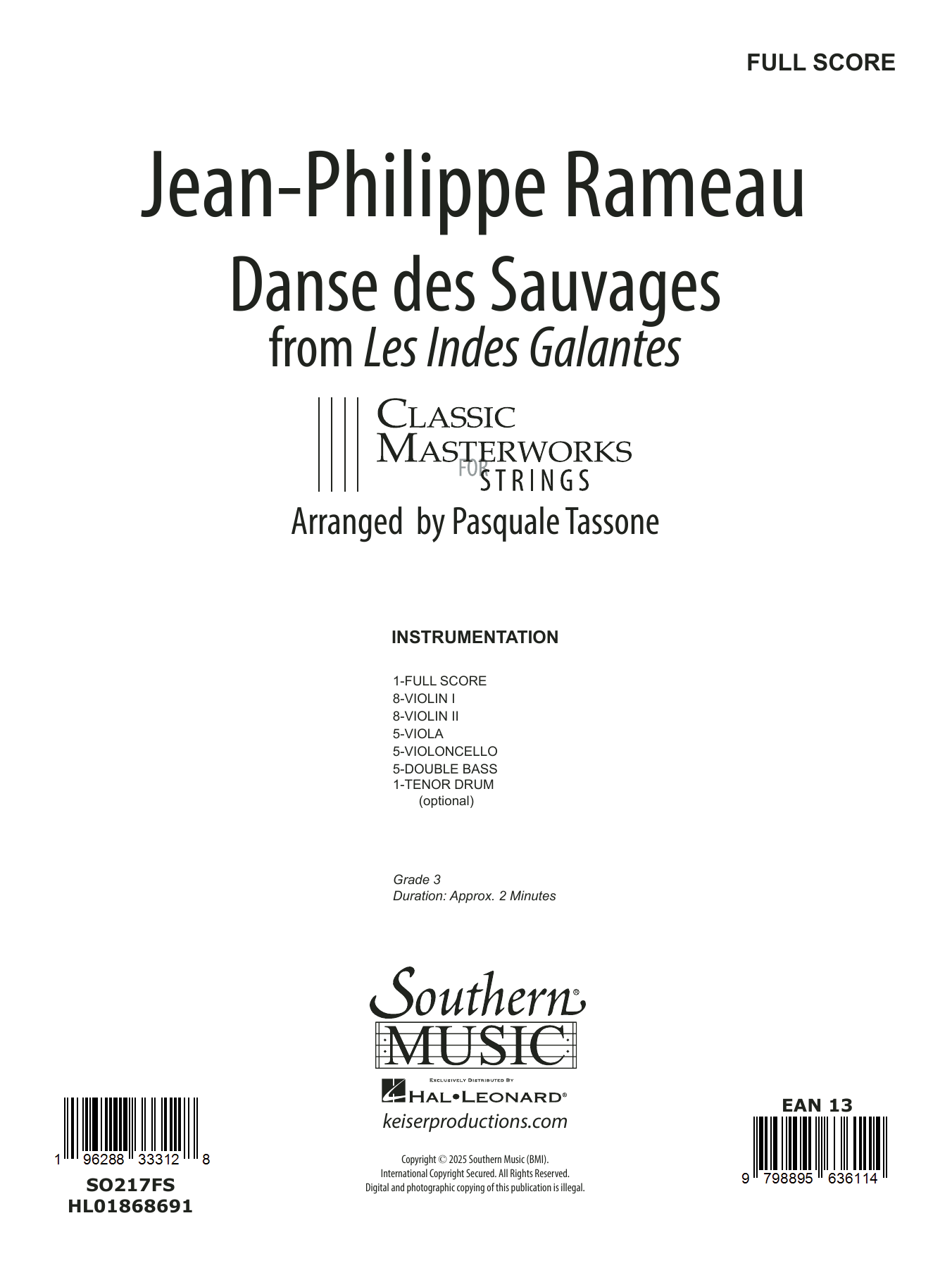

Danse des Sauvages (arr. Pasquale Tassone): String Orchestra Conductor Score & Parts
By Jean Philippe Rameau / Arranged by Pasquale Tassone
Grade: 3
Item: 35-PK01726700
$50.00
Pickup currently not available
Buy Extra Parts (Digital PDF Download)
Parts Added to Cart!
Description
A string orchestra arrangement of the famous Rondeau from the Opera Les Indes Galantes by Jean-Philippe Rameau. The opera was a type of "opera-ballet" with the story taking place in exotic locales- in this case the Gallant Indies. In addition to being a prolific composer, Rameau was also an important music theorist of his time.


Danse des Sauvages (arr. Pasquale Tassone): String Orchestra Conductor Score & Parts isn't in MakeMusic Cloud just yet...but it could be. Let us know you'd like to see it, and you'll help shape what comes next. In the meantime, start a free trial and dive into thousands of interactive titles your students can play along with today.
Request This Title
Tell us you want it.
Start Your Free Trial
Explore everything that's ready to play right now.
Sample Audio
No sample audio found.
Sample Video
No sample videos found.
Additional Details
Publisher:
Hal Leonard
SKU:
35-PK01726700
More about this title
About the Composer: Jean Philippe Rameau
Jean-Philippe Rameau (1683-1764) was a towering figure in French Baroque music, known for his harmonic innovation and dramatic flair. Beyond his prolific output as a composer, Rameau earned lasting respect as a music theorist whose writings on harmony and composition fundamentally shaped how musicians understood voice leading and tonal function. His operas and opera-ballets set the standard for French lyric theater throughout the 18th century.
Why we love this
Rameau's music translates beautifully to the string orchestra medium, and this arrangement captures the theatrical brilliance of the original without demanding the forces of a full baroque ensemble. The rhythmic vitality and ornamental character of the writing make it instantly engaging for players while remaining substantial enough to satisfy an audience. Conductors appreciate how cleanly the arrangement sits in the strings; there's nothing awkward here, only music that sounds idiomatically right.
What to expect
Danse des Sauvages evokes the glamorous exoticism that captivated 18th century European audiences. The music dances with courtly elegance, its rhythmic vitality tempered by ornamental grace, creating a sophisticated soundworld that feels both refined and genuinely alive.
Who it's for
String orchestras at the Grade 3 level benefit from repertoire that combines technical accessibility with genuine musical substance. This arrangement works equally well for school ensembles developing their baroque style and for community orchestras seeking concert material with historical weight and immediate appeal.
How to get the most out of it
- Shape the opening phrases with subtle rubato, allowing the elegant character of the Rondeau to breathe without dragging. Baroque dance forms thrive on forward motion tempered by expressive phrasing.
- Balance the ornamentation carefully so that decorative passages enhance rather than obscure the melodic line. Lighter articulation in the accompaniment figures keeps the texture transparent.
- Emphasize the section breaks that define the rondeau form. Clear articulation between A and B sections helps the audience follow the familiar structure of the piece.
- Tune the harmonic transitions thoughtfully, especially where Rameau's characteristic chromaticism appears. A moment of ensemble listening at these junctures pays dividends in musical cohesion.
How to use it
Pair this with other baroque or Classical string repertoire to build a concert around the enduring appeal of the 18th century aesthetic. Its moderate length makes it an excellent anchor piece for a suite of dances or a concert that showcases French musical influence. The accessibility of the arrangement also makes it suitable as the standalone featured work on a chamber concert or school ensemble recital.
Skills your students will build
- Baroque phrasing and ornamentation
- Rhythmic precision in dance forms
- Balanced string textures with multiple voice lines
- Intonation in chromatic harmonic progressions
- Stylistic understanding of rondeau form