Danse Bacchanale Sheet Music Preview

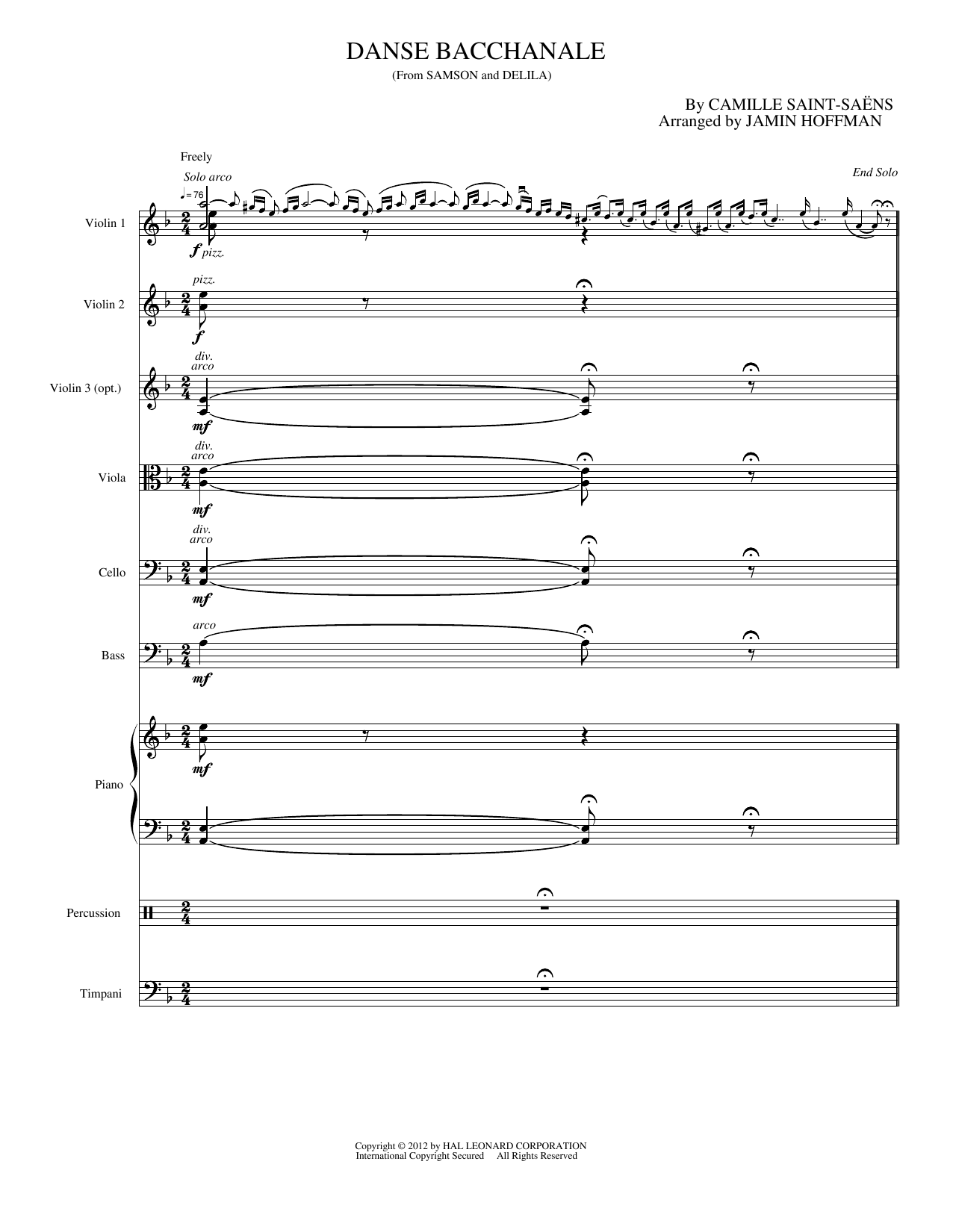
Danse Bacchanale: String Orchestra Conductor Score & Parts

By Camille Saint-Saëns / Arranged by Jamin Hoffman

Grade: 3-4

Item: 35-PK00426373

Digital Download
$50.00

Buy Extra Parts (Digital PDF Download)

Product Price Quantity
Danse Bacchanale - Full Score $50.00

Parts Added to Cart!

Description
Danse Bacchanale

Danse Bacchanale: String Orchestra Conductor Score & Parts isn't in MakeMusic Cloud just yet...but it could be. Let us know you'd like to see it, and you'll help shape what comes next. In the meantime, start a free trial and dive into thousands of interactive titles your students can play along with today.

Sample Audio
No sample audio found.
Sample Video
Additional Details
Publisher: Hal Leonard
SKU: 35-PK00426373

More about this title

About the Composer: Camille Saint-Saëns

Camille Saint-Saëns (1835–1921) was a French composer of towering technical skill and prolific output across every major genre. His mastery of orchestration and gift for memorable melody made him one of the most performed composers of his era, and his work remains central to the concert repertoire today. Saint-Saëns wrote with crystalline clarity and structural elegance, qualities that make his music both accessible to young players and endlessly rewarding to study.

Beyond his famous concertos and symphonic poems, Saint-Saëns composed extensively for theater and ballet, including "Samson et Dalila," which contains some of his most vivid orchestral writing. His facility with color and rhythm, evident in works like "Danse Bacchanale," shows a composer who understood how to capture drama and movement in sound.

Why we love this

Jamin Hoffman's arrangement distills the orchestral energy of the original into textures that sit beautifully for younger string players without sacrificing the piece's rhythmic drive or harmonic interest. The Grade 3-4 level hits that sweet spot where ensembles can sound genuinely accomplished while still tackling material that extends their technical range. It's the kind of work that earns applause and gives students a real taste of what it means to perform a "real" concert piece.

What to expect

Sensual and propulsive, with a Mediterranean warmth that evokes the ancient bacchanal. The music surges and subsides like waves, driven by rhythmic patterns that feel almost hypnotic, with pockets of lyrical beauty that break through the momentum before the energy builds again.

Who it's for

String orchestras at the intermediate level (grades 3-4) looking for a work with genuine theatrical flair and strong audience appeal. This arrangement suits ensembles ready to move beyond folk-song-style pieces but still building confidence in balance and sustained tone.

How to get the most out of it

  • Build the rhythmic momentum gradually across the opening sections; resist the temptation to rush, and let the repetitive figures establish a clear pulse before texture deepens.
  • Balance the viola and cello lines carefully when they carry the main melodic material, as younger ensembles often default to favoring first violins.
  • Shape the dynamic swells by thinking of them as waves of energy; bow pressure and string weight matter more than raw volume at this level.
  • Watch your section transitions, especially when the texture shifts suddenly; a controlled breath or blink from the conductor keeps the piece cohesive.

How to use it

Pair this with other Saint-Saëns orchestral works or classical showstoppers for a concert themed around 19th-century virtuosity and color. It works equally well as a powerful closer to a pops concert or as a serious orchestral selection in a more traditional program. The piece's brisk length and theatrical impact make it ideal for festivals or competition settings where you want to leave a strong impression.

Skills your students will build

  • Reading and executing rhythmic figures with subdivisions and syncopation
  • Balancing multiple melodic lines across the full ensemble
  • Sustaining consistent tone and intonation during repeated ostinato patterns
  • Responding to dynamic shape and tempo subtleties from the conductor
  • Ensemble cohesion across section transitions and texture changes

You May Also Like