

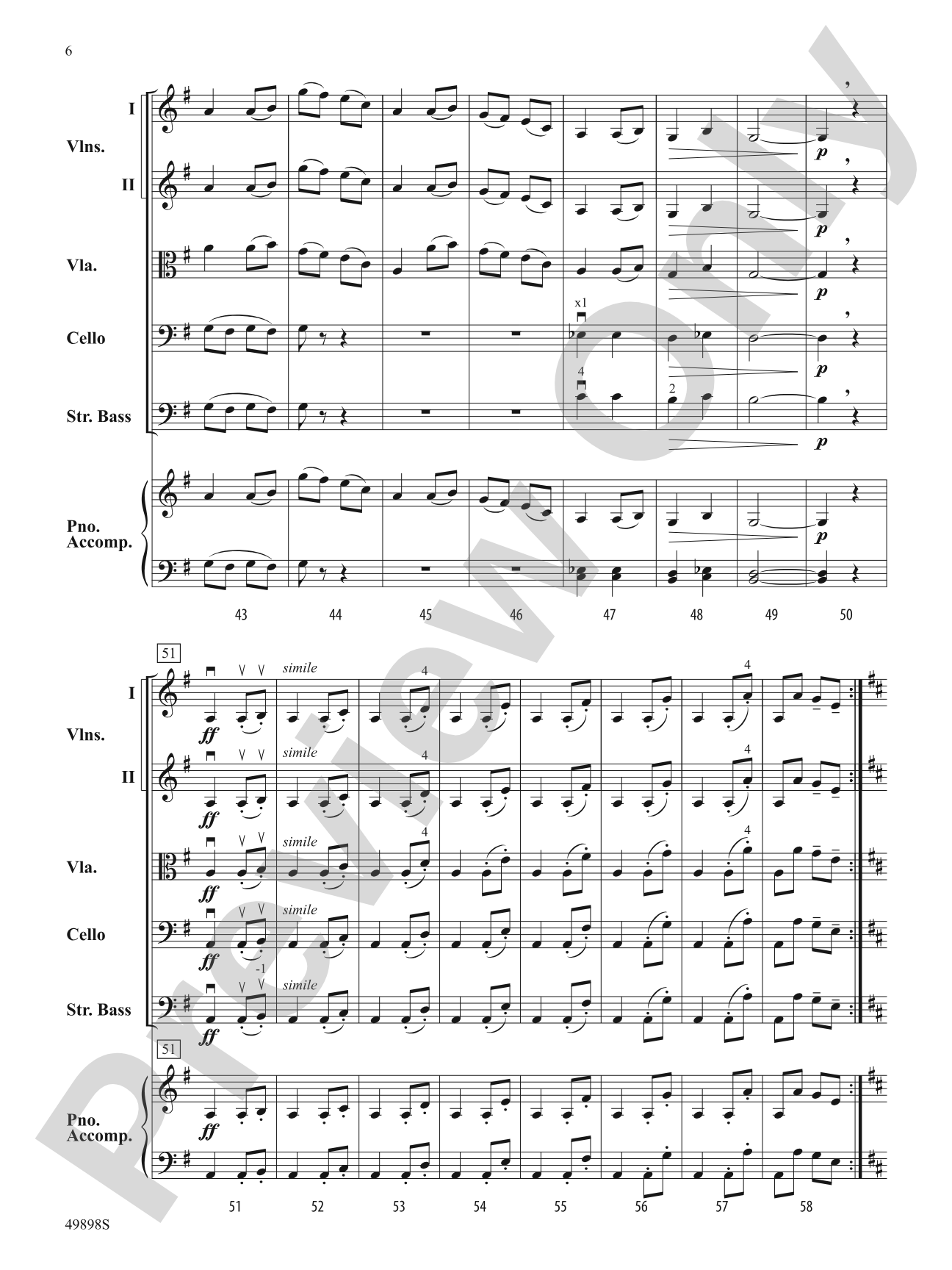
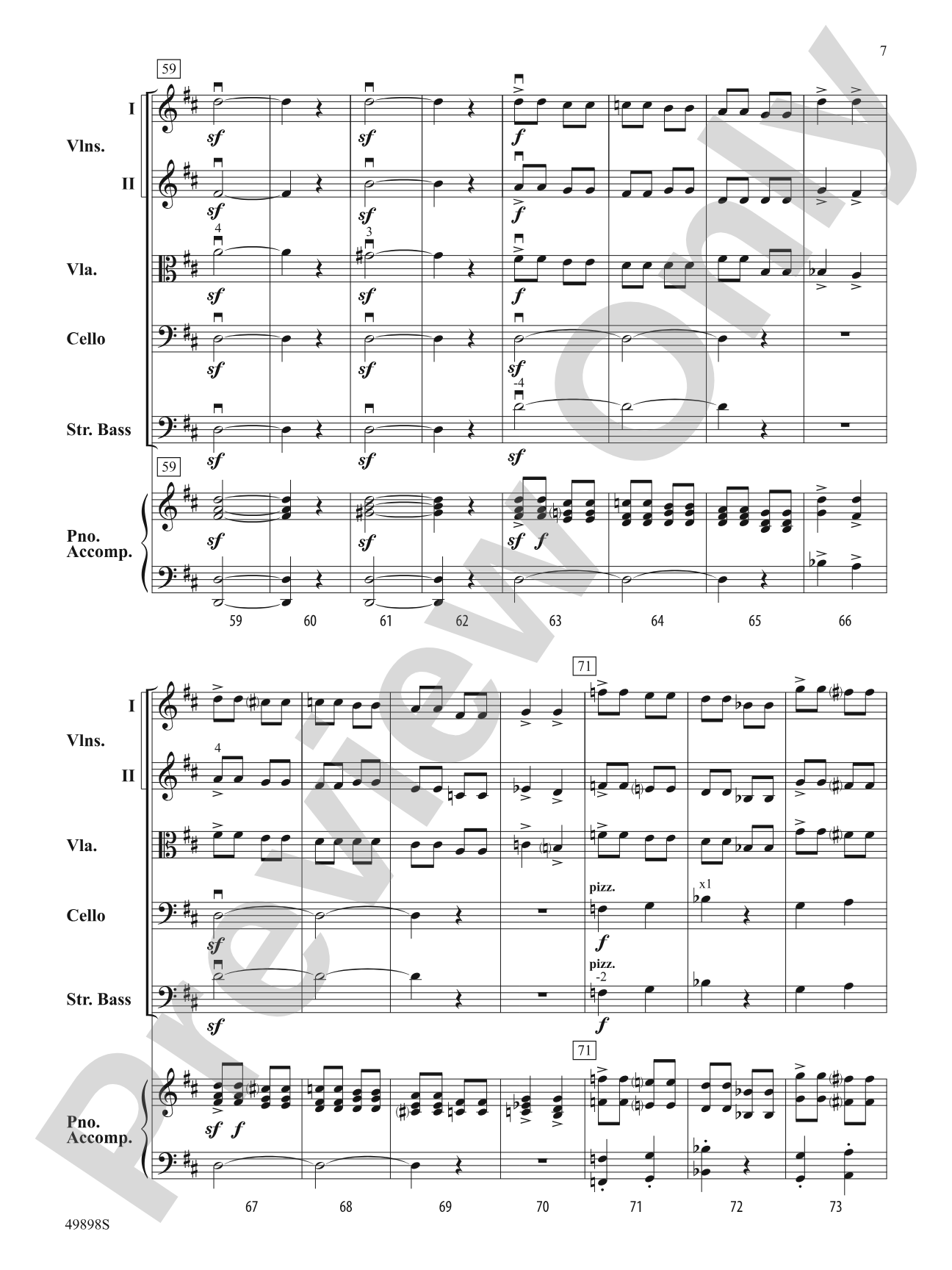
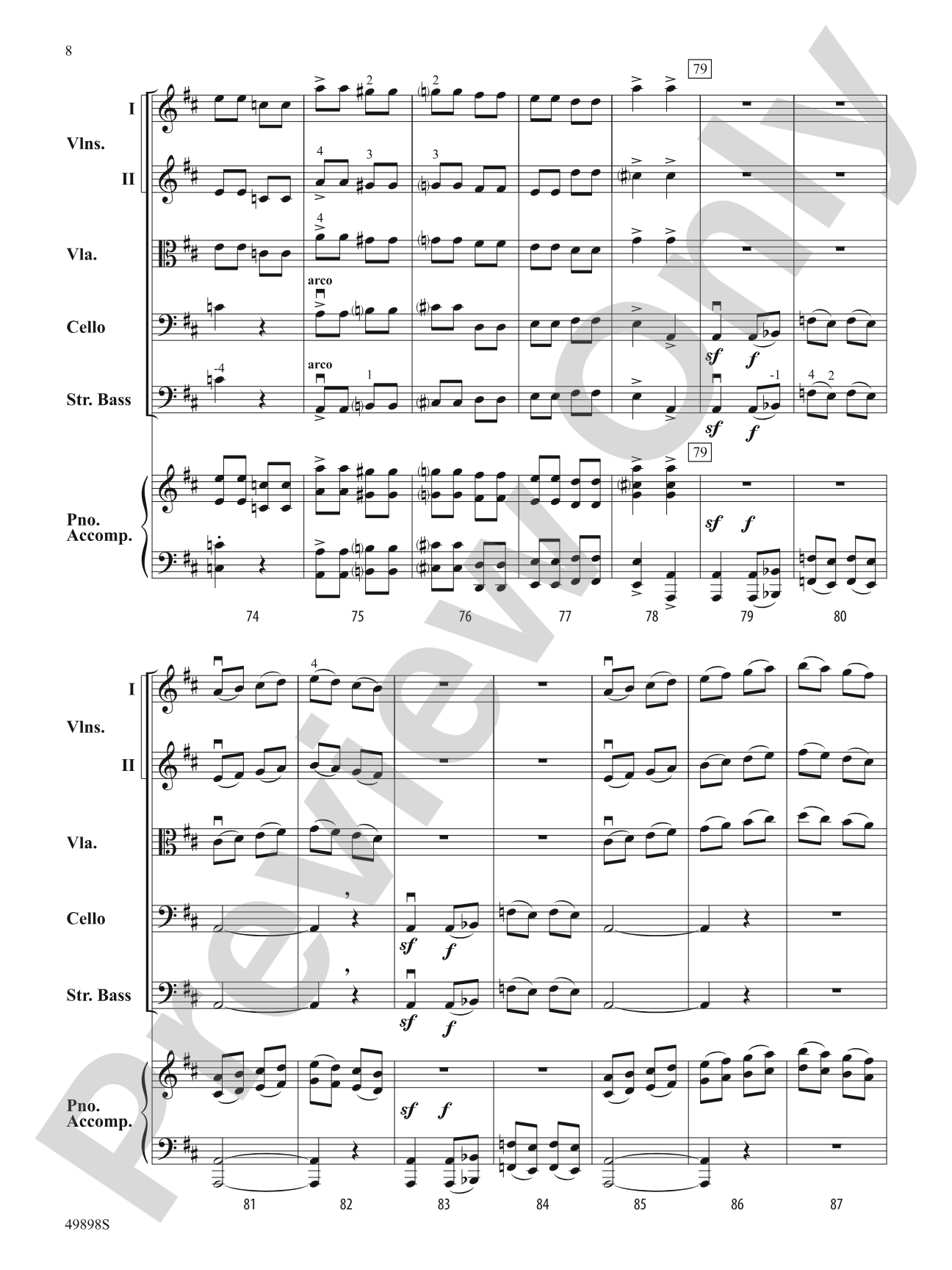
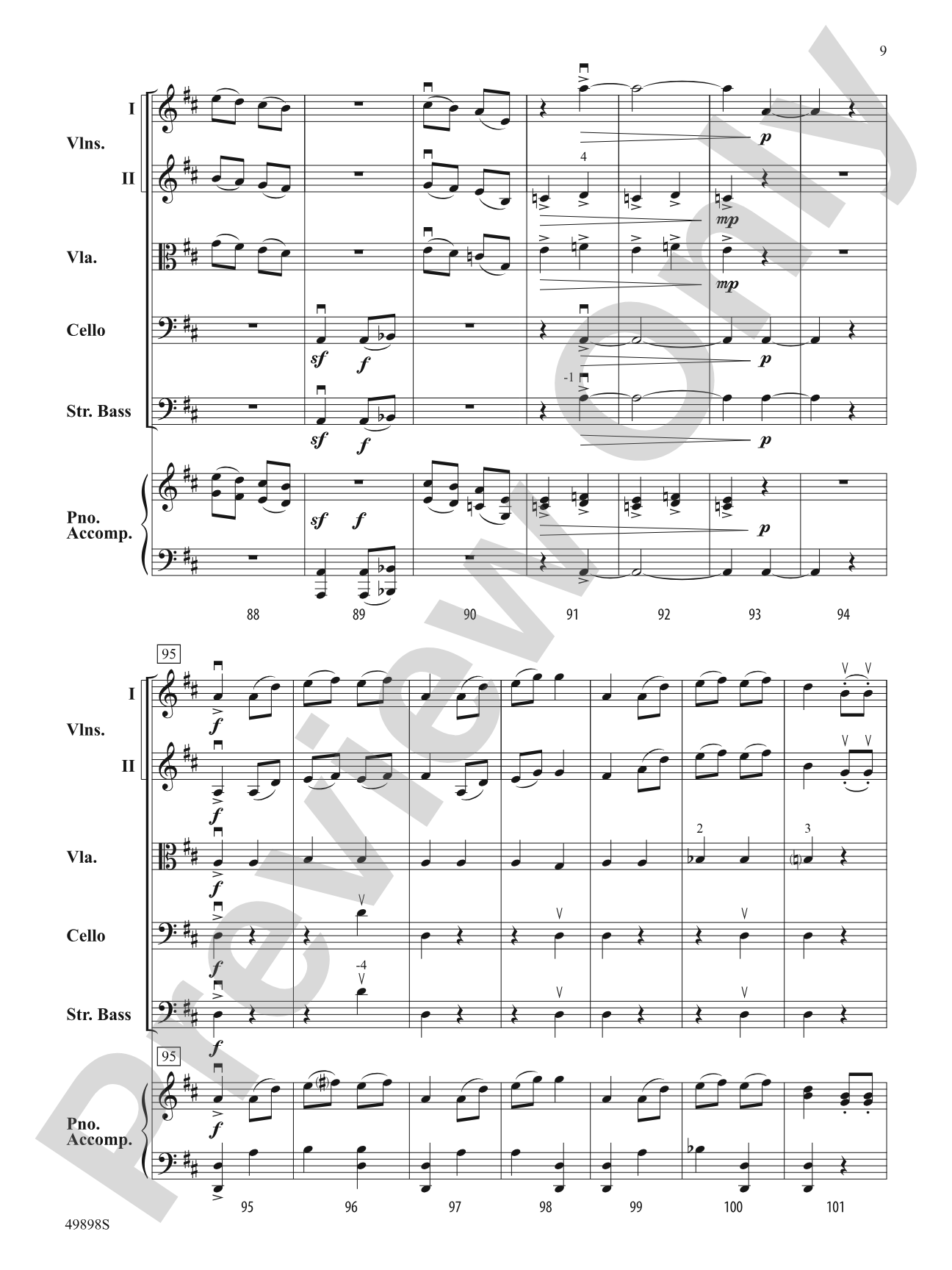
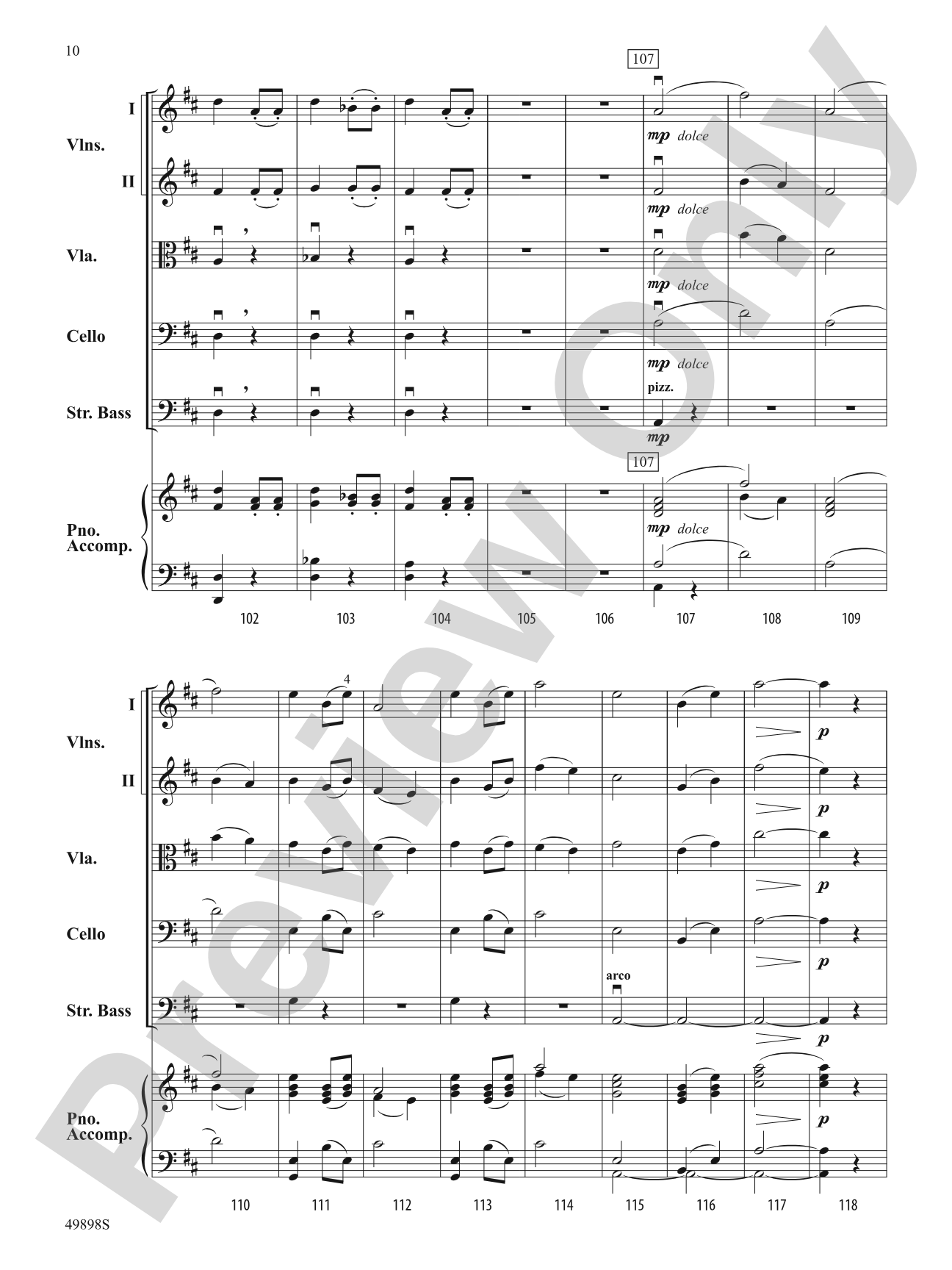
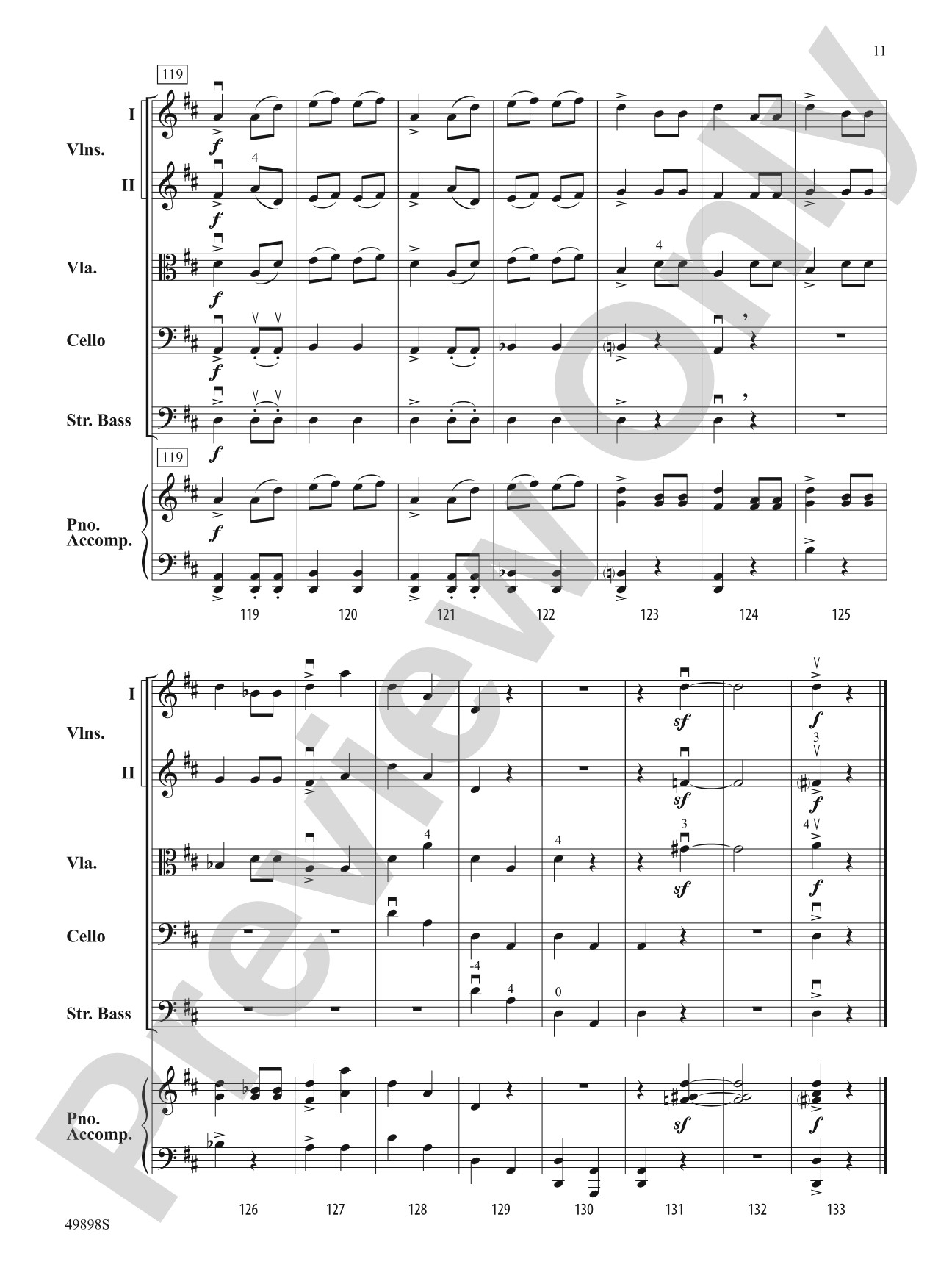

Danse: String Orchestra Conductor Score & Parts
From African Suite
By Samuel Coleridge-Taylor / arr. Kirk Moss
Grade: 3
Item: 00-PK-0008723

$65.00
Pickup currently not available
Buy Extra Parts (Digital PDF Download)
| Product | Price | Quantity |
|---|---|---|
| Danse: Score | $10.00 | |
| Danse: 1st Violin | $3.00 | |
| Danse: 2nd Violin | $3.00 | |
| Danse: Viola | $3.00 | |
| Danse: Cello | $3.00 | |
| Danse: String Bass | $3.00 | |
| Danse: Piano Accompaniment | $3.00 |
Parts Added to Cart!
Description
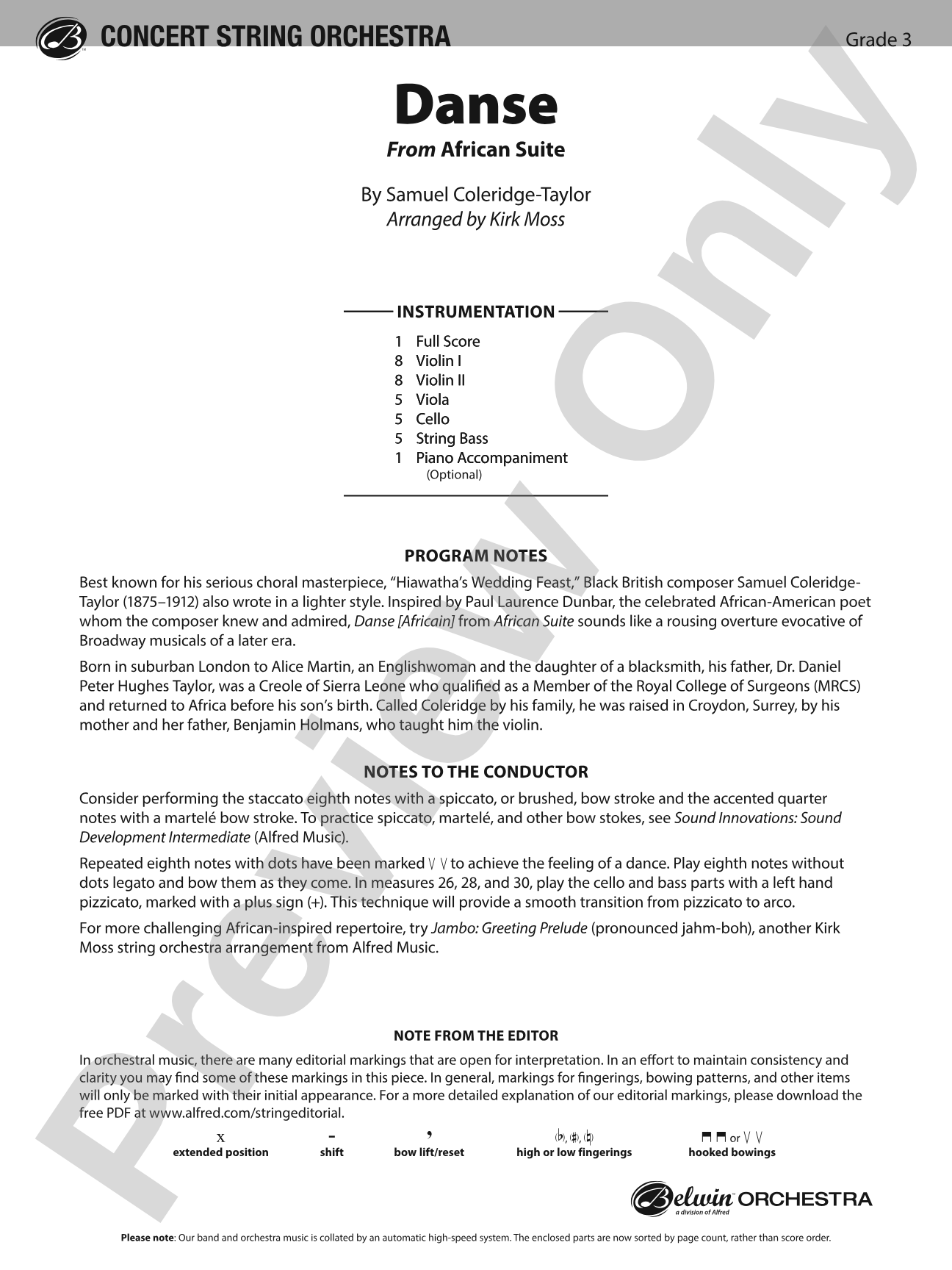
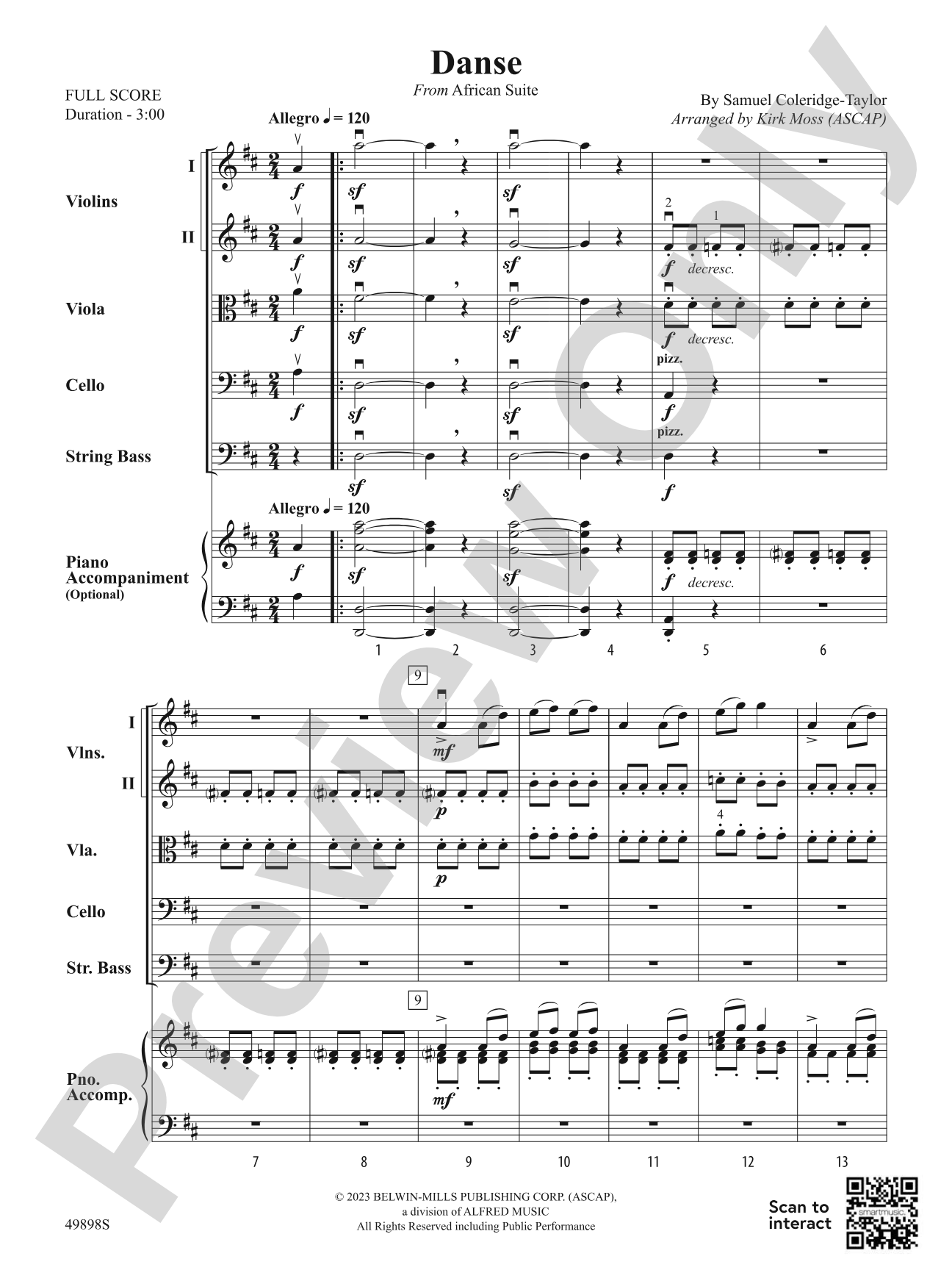
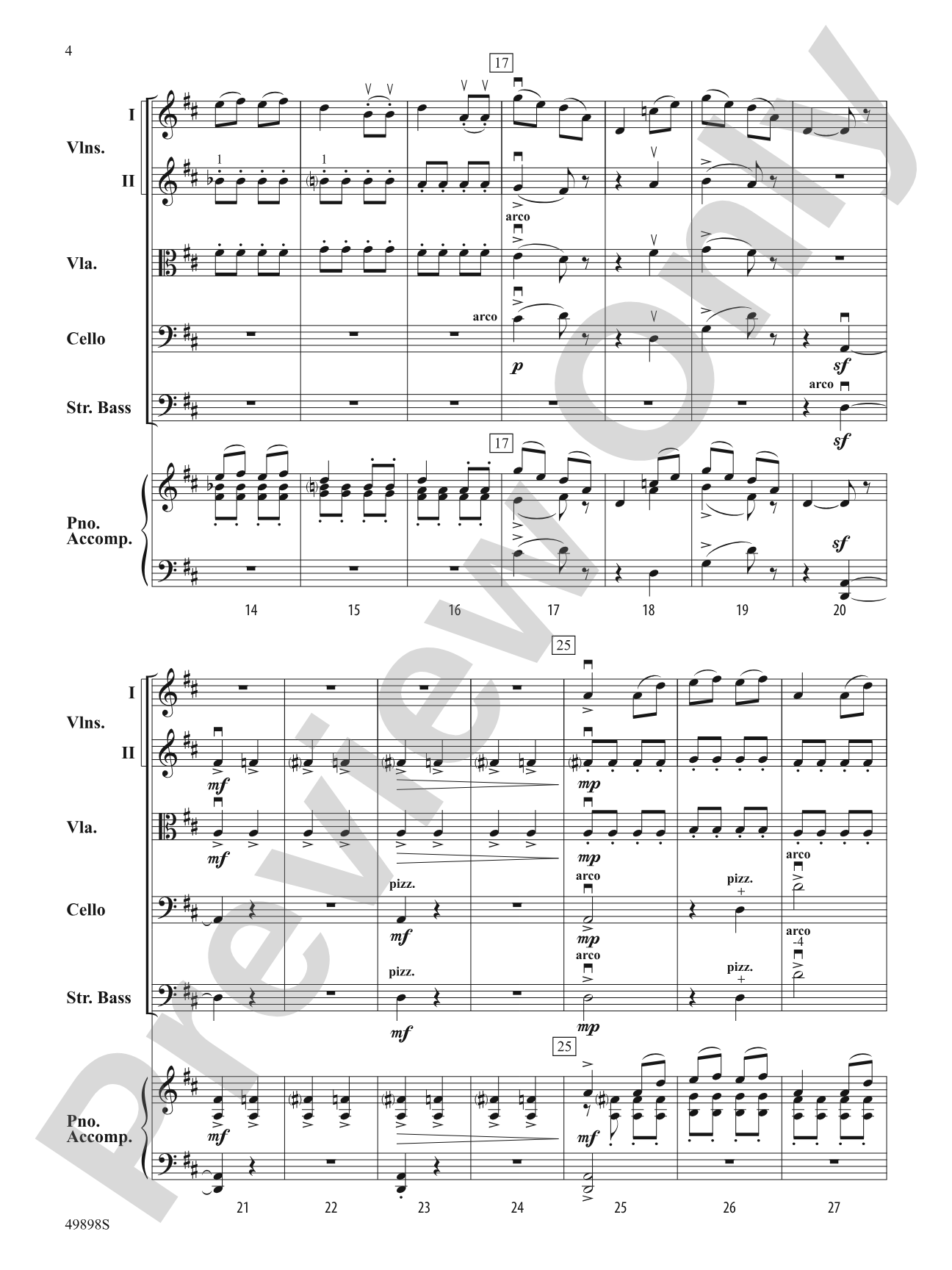
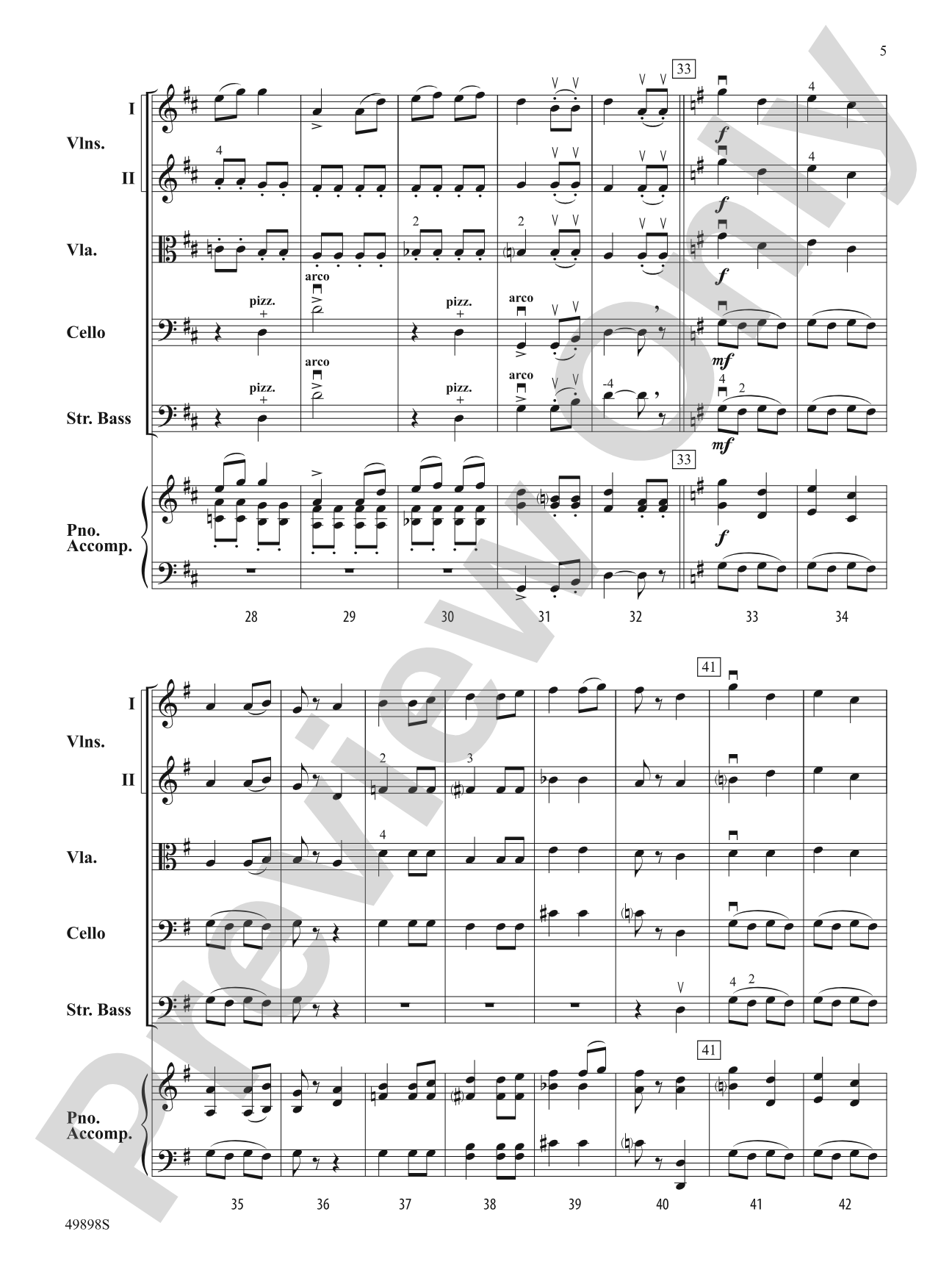
Originally composed for piano as the final movement of "African Suite," Danse begins with two introductory chords followed by energetic swinging rhythms and repeated angular melodies. Students will love the moods in this festive overture, evocative of later Broadway musicals. The artistic turning point of Samuel Coleridge-Taylor's career happened in his twenties when he met the African-American poet Paul Laurence Dunbar. Dunbar influenced the young composer to concentrate on his African heritage. Born in suburban London to Alice Martin, an Englishwoman and the daughter of a blacksmith, his father, Dr. Daniel Peter Hughes Taylor, was a Creole of Sierra Leone who qualified as a Member of the Royal College of Surgeons (MRCS) and returned to Africa before his son's birth. Called Coleridge by his family, he was raised in Croydon, Surrey, by his mother and her father, Benjamin Holmans, who taught him the violin. (3:00)


Don't just read it, hear it, play along with it, and watch your students grow with it. In MakeMusic Cloud, Danse: String Orchestra Conductor Score & Parts comes alive with professional accompaniment, adjustable tempo, and built-in practice tools that turn solo practice into real progress.
Open in the Player
Jump straight in and assign it today.
Start Your Free Trial
Open this title and explore the full library in minutes.
Sample Audio
1
Audio File
--:--
0:00
0:00
Sample Video
Additional Details
Series:
Belwin Concert String Orchestra
Publisher:
Alfred Music
SKU:
00-PK-0008723
More about this title
About the Composer: Samuel Coleridge-Taylor
Samuel Coleridge-Taylor (1875-1912) was a groundbreaking British composer whose career took a decisive turn in his twenties when he encountered the African-American poet Paul Laurence Dunbar. That meeting galvanized Coleridge-Taylor to embrace and celebrate his own African heritage through his compositions, a choice that set him apart from his contemporaries and infused his work with distinctive rhythmic and melodic character. Born in suburban London to an English mother and a Sierra Leonean father who was a surgeon, Coleridge-Taylor grew up in Croydon under the mentorship of his grandfather, who taught him violin and nurtured his musical gifts from childhood.
Why we love this
Kirk Moss has transformed Coleridge-Taylor's infectious piano finale into an arrangement that lets string players own the rhythmic drive and melodic swagger of this piece. The swinging, angular themes sit naturally on strings, and the festive energy makes it work as either a standalone opener or a closing spark for a concert. This is the kind of masterwork arrangement that students remember because it swings hard without losing its sophistication.
What to expect
Danse pulses with celebratory energy from its opening chords forward. The swinging rhythms and angular melodies feel almost theatrical in scope, evoking the spirit of later Broadway scores while remaining rooted in Coleridge-Taylor's African heritage. It's the kind of piece that makes an ensemble sound bigger and more confident than its grade level might suggest.
Who it's for
This piece suits string orchestras at the Grade 3 level who are ready to explore stylistic nuance beyond standard pedagogical literature. Directors looking to program something with historical substance and contemporary swagger will find students engaged by the swinging rhythms and vivid character.
How to get the most out of it
- Lean into the swing feel of those repeated angular melodies; they should lilt forward rather than sit squarely on the beat, giving the piece its Broadway-adjacent character.
- Balance the introductory chords so the ensemble enters the energetic section together with confidence and precision.
- Emphasize rhythmic clarity in the string parts to let the festive momentum build organically through the arrangement.
How to use it
Open a concert with this to establish mood and momentum, or close one on a high note of jubilation. It pairs well with standard string orchestra fare at this level and reads beautifully as a festival or contest selection where stylistic variety and historical significance matter.
Skills your students will build
- Articulating angular melodic shapes across string sections
- Maintaining swing rhythms with rhythmic precision
- Balancing ensemble sonority in fast-moving harmonic progressions
- Responding to conductor phrasing in contemporary arrangements of classical works