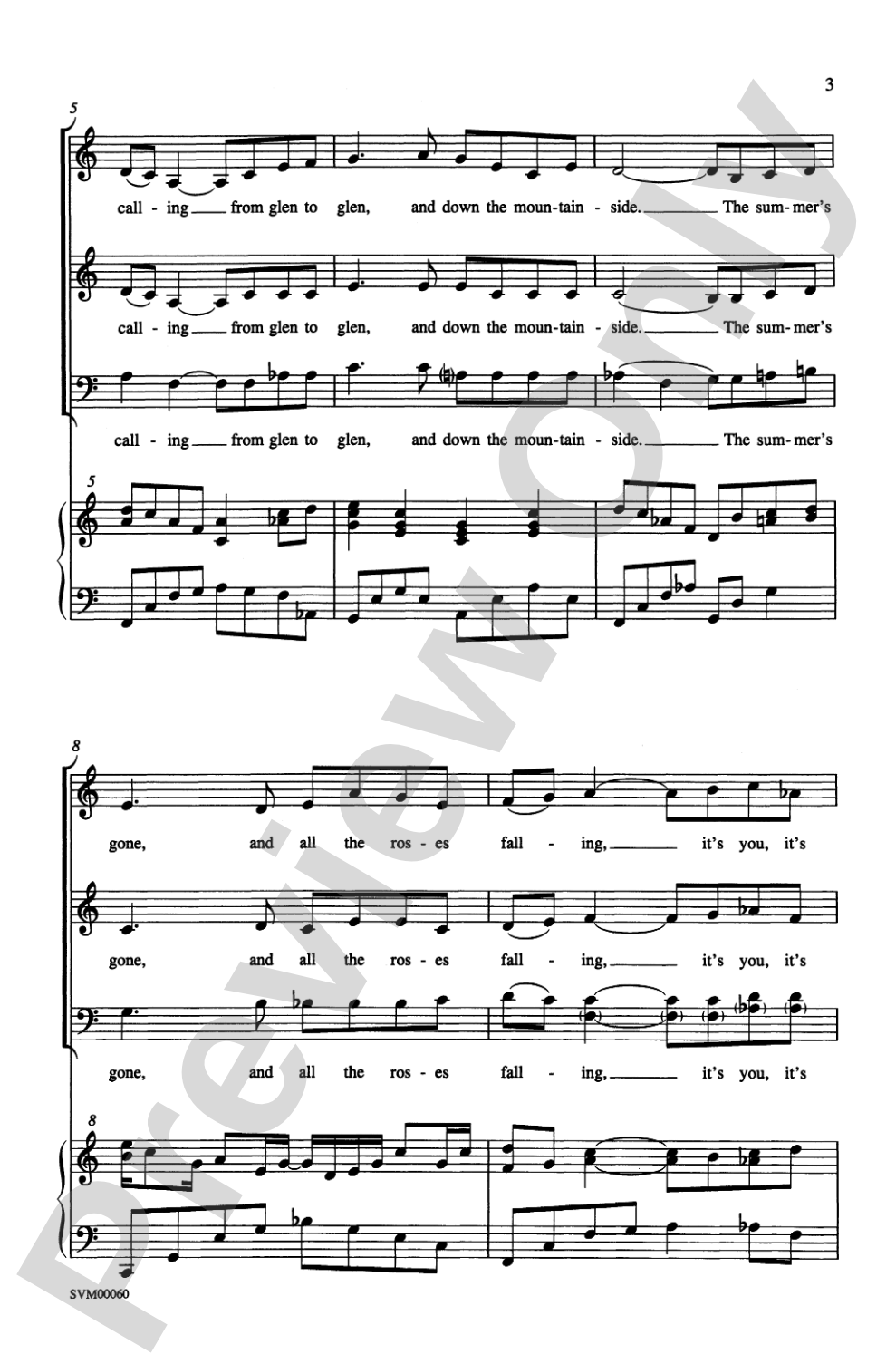
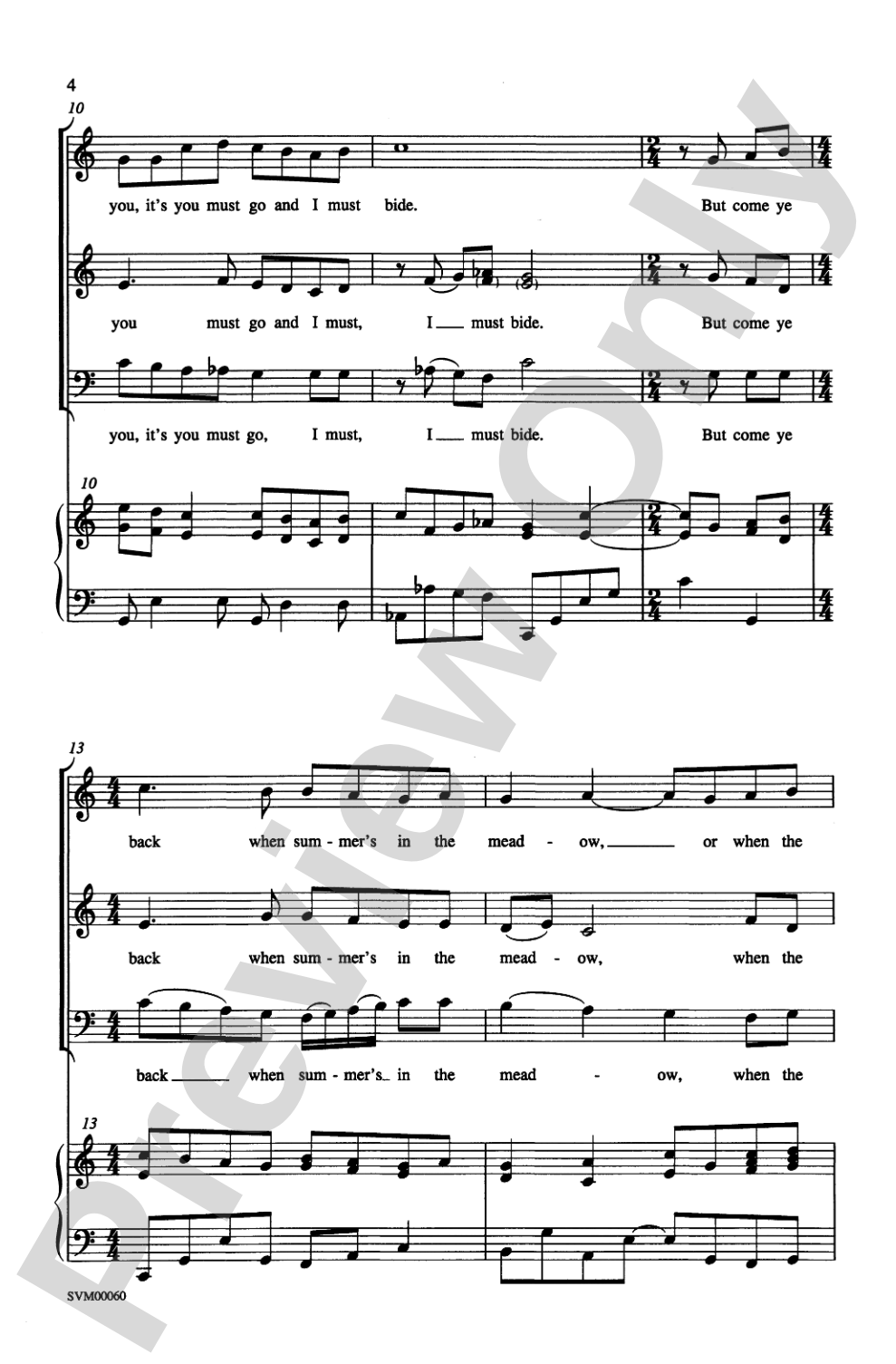
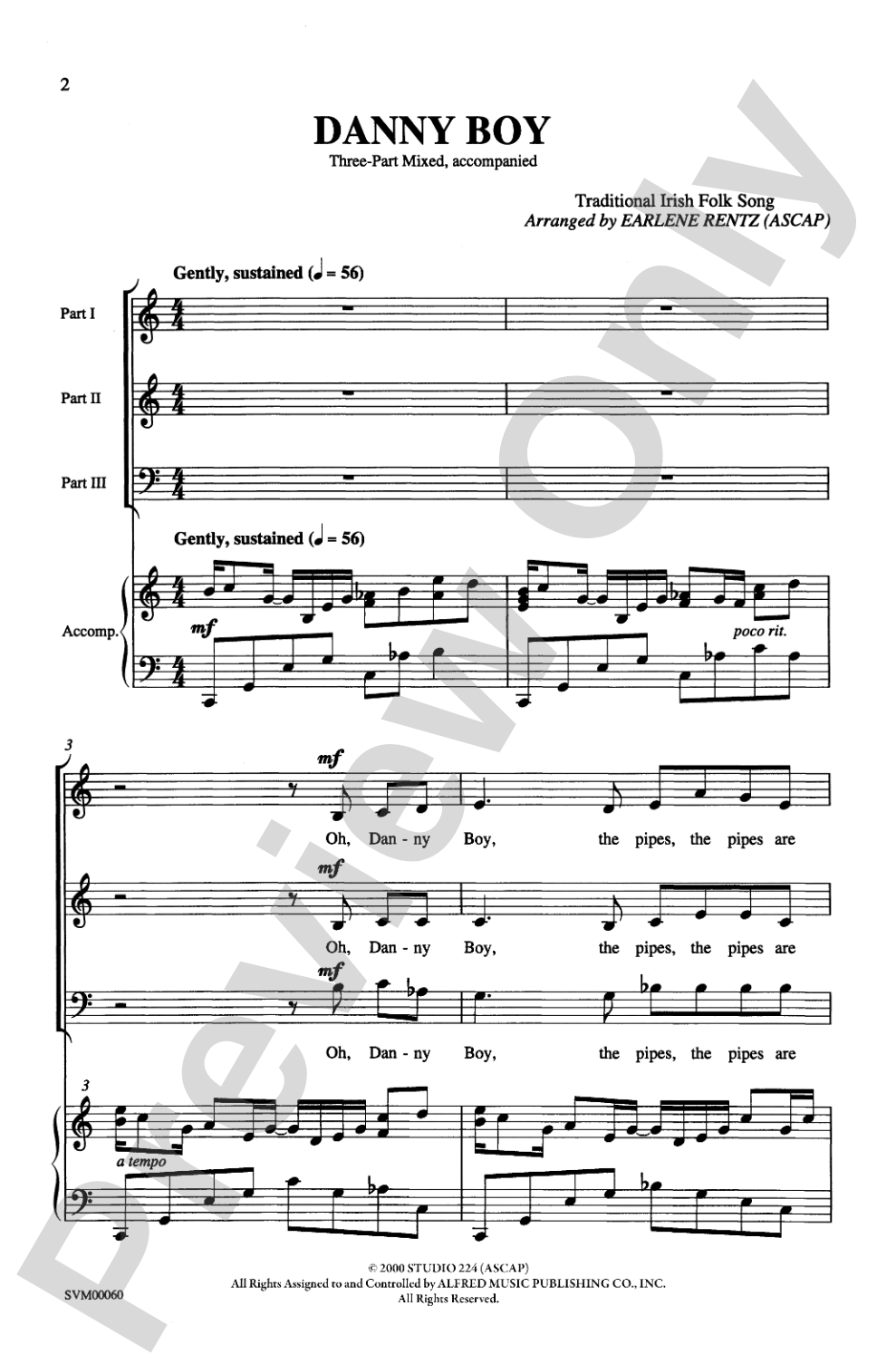
Danny Boy Sheet Music Preview

Danny Boy: 3-Part Mixed Choral Octavo

Arr. Earlene Rentz

Item: 00-PO-0005325

Digital Download
$2.25

Minimum order quantity: 20 copies

Description
Always a favorite on performance programs, this popular Irish folksong is arranged by Earlene Rentz. Beautiful, moving parts and lush harmonies are supported by a complimentary piano accompaniment that propels the forward feel of this melody.

Danny Boy: 3-Part Mixed Choral Octavo isn't in MakeMusic Cloud just yet...but it could be. Let us know you'd like to see it, and you'll help shape what comes next. In the meantime, start a free trial and dive into thousands of interactive titles your students can play along with today.

Sample Audio
No sample audio found.
Sample Video
Additional Details
Series: Alfred Archive Edition: Studio PR Catalog
Publisher: Alfred Music
Page Count: 12
SKU: 00-PO-0005325

More about this title

About the Arranger: Earlene Rentz

Earlene Rentz

Earlene Rentz brings two decades of classroom experience to her work as a choral composer and arranger. She spent seven years teaching choral music across elementary, junior high, and high school levels in public schools, then moved into higher education where she taught choral music pedagogy for twelve years. Her deep understanding of what singers at every level can achieve informs every arrangement she creates.

Rentz has conducted All-State Choirs in Georgia, Florida, Kentucky, and Alabama, and her published catalog includes over 700 choral works distributed through 17 different publishers. Based in North Carolina, she continues to be a prolific voice in contemporary choral literature.

Why we love this

Rentz's arrangement honors the emotional core of Danny Boy while making it genuinely singable for mixed voices at the high school and community choir level. The piano accompaniment doesn't simply support the voices; it creates forward momentum and harmonic richness that lifts the familiar melody into something fresh. This is the kind of arrangement that sounds sophisticated in performance without demanding virtuosic ensemble skills.

What to expect

Rentz captures the yearning, wistful quality of this Irish melody while surrounding it with warm, moving harmonies that feel inevitable rather than decorative. The piano accompaniment gives the piece a gentle forward motion that keeps it from sagging into sentimentality, lending a quality that feels both timeless and immediate.

Who it's for

This arrangement works for high school, college, and adult community choirs seeking a concert piece that connects emotionally without requiring advanced sight-reading skills. SAB voicing makes it accessible to mixed choirs with limited tenor or baritone sections, and the moderate difficulty ensures singers can focus on musicality and interpretation rather than survival.

How to get the most out of it

  • Shape the melody phrases across the bar lines rather than stopping at measure breaks; the Irish character of this tune depends on lyrical, connected phrasing throughout.
  • Balance the three parts so the soprano line remains audible as the primary melody even when altos and baritones carry harmonic material; check blend in unison sections first, then add the harmony.
  • Work the piano accompaniment early with your singers so they understand how their vocal line sits within the harmonic context Rentz has created; the accompaniment propels the piece, and singers who hear it in rehearsal will commit more securely to their parts.
  • Pay attention to vowel consistency in the sustained notes, particularly on the lyric "pipe"—pure vowels here will let the lush harmonies bloom without sounding forced.

How to use it

This works beautifully as a concert closer or as part of a folk song set. Its emotional weight and accessibility make it an excellent bridge between more demanding contemporary works and lighter fare, and it's particularly effective on programs that honor cultural traditions or feature seasonal or memorial themes.

Skills your students will build

  • Sustaining long phrases with consistent breath support across entire musical ideas
  • Balancing three independent vocal lines while maintaining overall blend
  • Interpreting lyrical, connected phrasing in traditional melody
  • Singing in harmony within a rich, complex harmonic context
  • Listening to and responding to piano accompaniment as a collaborative partner

You May Also Like