Daniel Sheet Music Preview

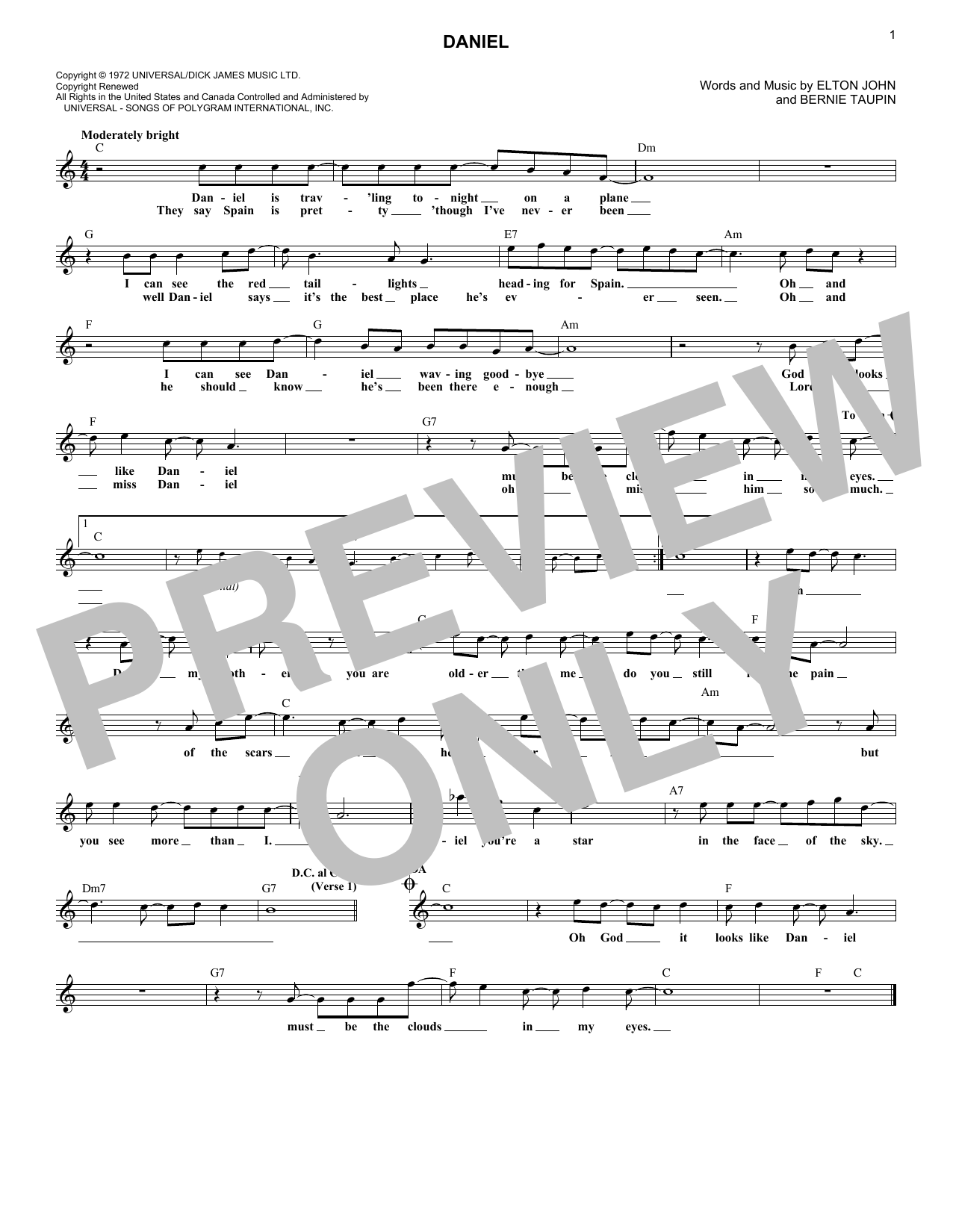
Daniel: Lead Sheet / Fake Book

As performed by Elton John

Item: 35-DS00377420

Digital Download
$3.99
Description

Daniel: Lead Sheet / Fake Book isn't in MakeMusic Cloud just yet...but it could be. Let us know you'd like to see it, and you'll help shape what comes next. In the meantime, start a free trial and dive into thousands of interactive titles your students can play along with today.

Sample Audio
No sample audio found.
Sample Video
Additional Details
Publisher: Hal Leonard
Page Count: 1
SKU: 35-DS00377420

More about this title

About the Artist: Elton John

Elton John stands as one of the most influential singer-songwriters of the rock era, with a catalog that spans decades of innovation in melody and harmonic sophistication. His ability to craft emotionally resonant songs with memorable hooks has made his work enduring material for musicians across all levels, and his compositions reward close study of pop songwriting craft.

Why we love this

Daniel captures the introspective storytelling that defines Elton John's best work, and the lead sheet format makes it accessible for singers and pianists who want to explore his compositional voice without getting buried in arrangement details. The song's harmonic movement and lyrical phrasing offer real insight into how a masterful pop writer thinks about melody and accompaniment.

What to expect

Daniel unfolds with genuine tenderness, a song built on vulnerability and memory rather than grand gestures. The harmonic landscape is richer than typical pop fare, creating space for both contemplation and emotional honesty.

Who it's for

Pianists and singers building familiarity with substantial pop standards will find real value in Daniel's melody and harmonic vocabulary. It works equally well for students learning to interpret a lead sheet and for performers adding a more introspective number to a pop or rock set.

How to get the most out of it

  • Pay attention to where the melody sits against the harmony; Elton's melodies often work best when they're slightly detached from the obvious chord tones, creating a conversational rather than hymn-like quality.
  • Experiment with the rhythmic flexibility of the accompaniment, especially in the verses. The written rhythm is a guide, but this song breathes more naturally when the pianist breathes with the vocalist.
  • Let the emotional arc of the lyrics shape your dynamic choices; the tune doesn't require dramatic swells, but it does need thoughtful shaping across the full form.

How to use it

This works beautifully as a bridge between classical and contemporary repertoire in a cabaret or recital setting, offering singers a chance to demonstrate interpretive maturity. It's also an excellent choice for a pop or musical theater class where students benefit from studying an artist whose melodic sensibility bridges commercial and artistic concerns.

Skills your students will build

  • Interpreting lead sheets with harmonic sophistication
  • Understanding how pop melodies interact with chord changes
  • Developing interpretive phrasing in contemporary vocal music
  • Building accompaniment from chord symbols with stylistic sensitivity

You May Also Like