Dangerous Mood Sheet Music Preview

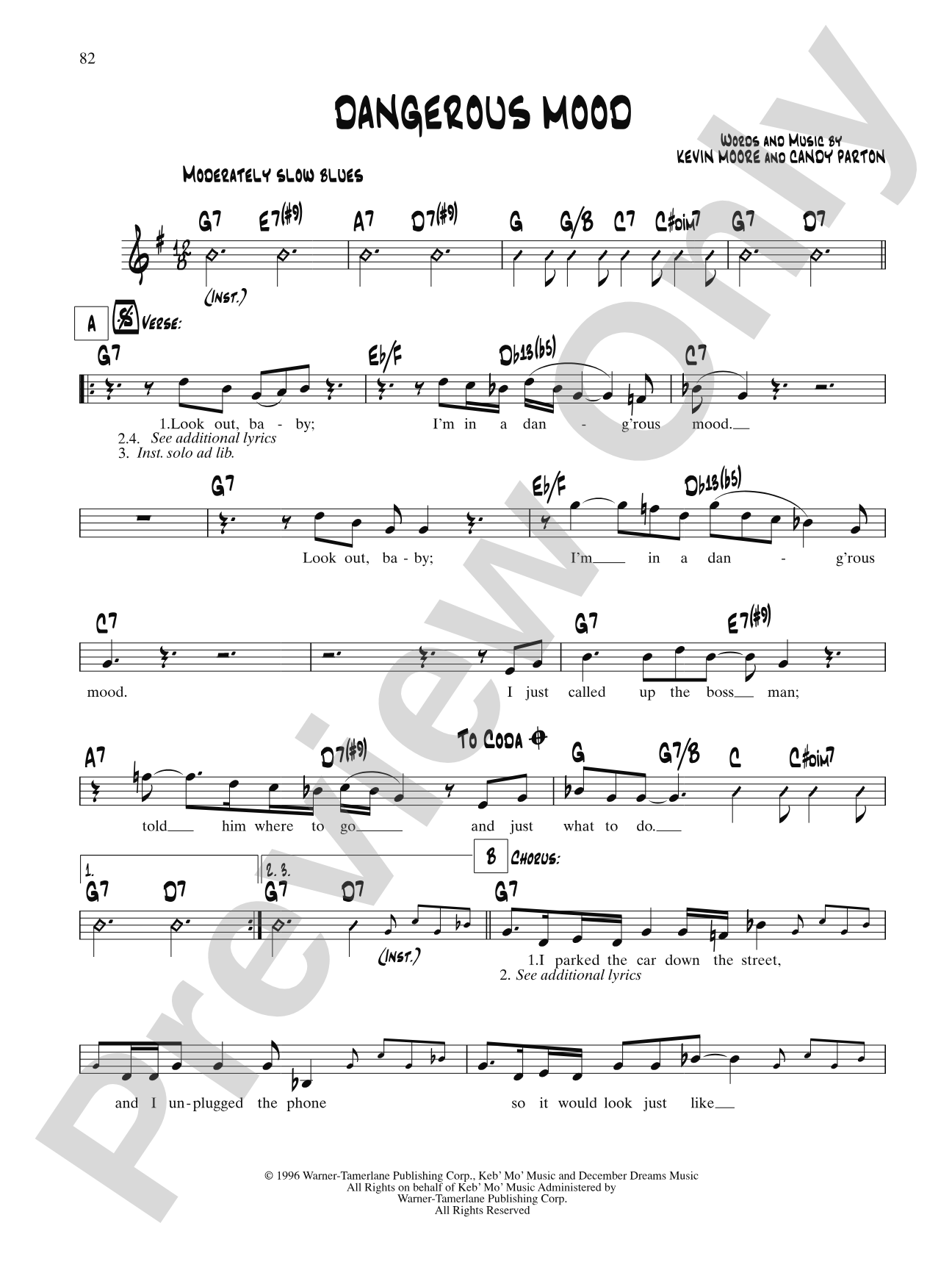
Dangerous Mood: Lead Sheet

B. B. King

Item: 00-PSL-000460

Digital Download
$1.99

One moment…

Description
Titles are: If You Love Me * The Thrill Is Gone * Rock Me Baby * Please Send Me Someone to Love * Baby I Love You * Ain't Nobody Home * There Must Be a Better World Somewhere * Confessin' the Blues * Paying the Cost to Be the Boss * Dangerous Mood * Keep It Coming * Cryin' Won't Help You Babe * Night Life.

Dangerous Mood: Lead Sheet isn't in MakeMusic Cloud just yet...but it could be. Let us know you'd like to see it, and you'll help shape what comes next. In the meantime, start a free trial and dive into thousands of interactive titles your students can play along with today.

Sample Audio
No sample audio found.
Sample Video
Additional Details
Publisher: Alfred Music
Page Count: 120
SKU: 00-PSL-000460

More about this title

About the Artist: B. B. King

B. B. King (1925-2015) shaped the sound of modern blues guitar and became one of the most influential musicians of the 20th century. His expressive, bent-note style and soulful phrasing transformed how guitarists approach the instrument, making him essential listening for anyone serious about blues vocabulary and tone.

King's career spanned over six decades, during which he recorded hundreds of songs, performed thousands of concerts, and mentored generations of players. His contributions extend far beyond performance; his approach to melodic soloing, vibrato control, and emotional communication through the guitar established the language that blues and rock guitarists still speak today.

Why we love this

These lead sheets give you access to King's most essential recordings in a format built for studying his approach. Rather than simply learning songs, you're working through a masterclass in blues phrasing, structure, and the subtle techniques that make his playing immediately recognizable. This collection spans his catalog strategically, so you see how he adapted his vocabulary across different tempos, song forms, and emotional landscapes.

What to expect

Raw, soulful, and endlessly inventive. These songs carry the weight of King's lived experience, moving from slow-burn ache (Please Send Me Someone to Love) to driving energy (Rock Me Baby) and everything in between. The emotional directness is what draws people in; the lead sheet gives you the skeleton, but King's spirit is already embedded in every melody.

Who it's for

Guitarists building fluency in blues language who want to move beyond learning riffs and start understanding how King constructed his solos and melodic ideas. This works for intermediate to advanced players comfortable reading lead sheets and ready to use them as a springboard for improvisation and arrangement.

How to get the most out of it

  • Study the melody line not as a fixed sequence of notes, but as a shape King bends and reshapes through his phrasing. Notice where he accelerates into a phrase and where he lags behind the beat for effect.
  • Use the chord changes as a foundation for soloing, but prioritize the call-and-response conversation between the vocal melody and your fills. King rarely plays over every chord; he creates space and responds to what the singer is saying.
  • Spend time on the quieter, slower pieces (Night Life, Confessin' the Blues) where vibrato, sustain, and note choice matter more than speed. These reveal King's touch and his understanding of dynamics across a full range.
  • Reference recordings of these songs alongside the lead sheets. King's interpretations vary across different recordings and live versions; seeing multiple approaches will deepen your understanding of how these structures work.

How to use it

Use this for a blues guitar unit where students study both melody and harmonic structure together, or as a self-directed study resource where intermediate players work through King's catalog over the course of a semester. These pieces also serve as reference material when teaching solo transcription and arrangement; they're familiar enough that students can focus on method rather than deciphering unfamiliar changes.

Skills your students will build

  • Reading lead sheet notation and chord symbols in blues contexts
  • Recognizing 12-bar blues form variations and turnarounds
  • Analyzing call-and-response phrasing between melody and accompaniment
  • Understanding blues scale application across different harmonic movements
  • Identifying stylistic markers (bends, vibrato, timing) in King's melodic approach
  • Developing vocabulary for improvisation and reharmonization over standard changes

You May Also Like