
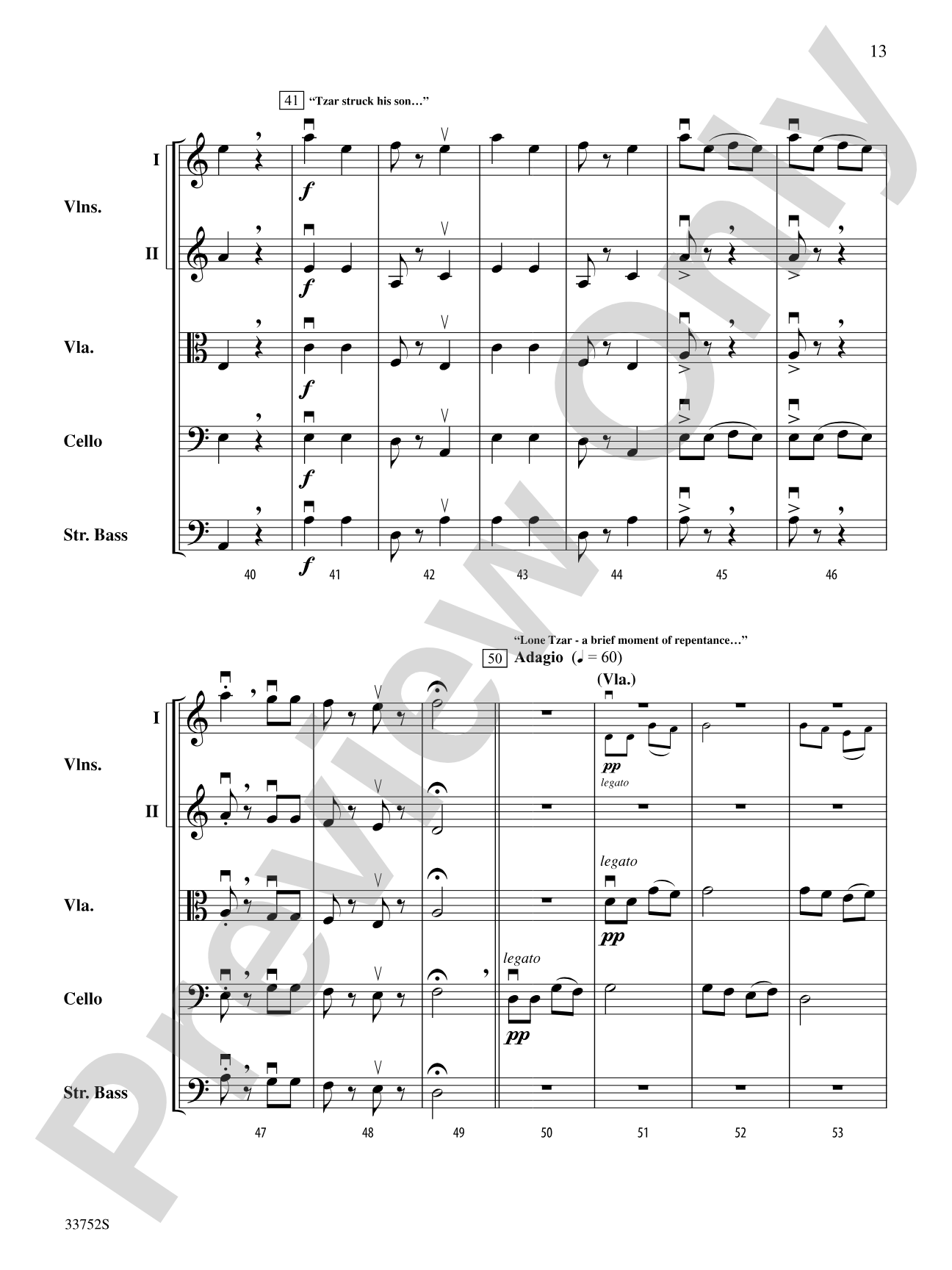
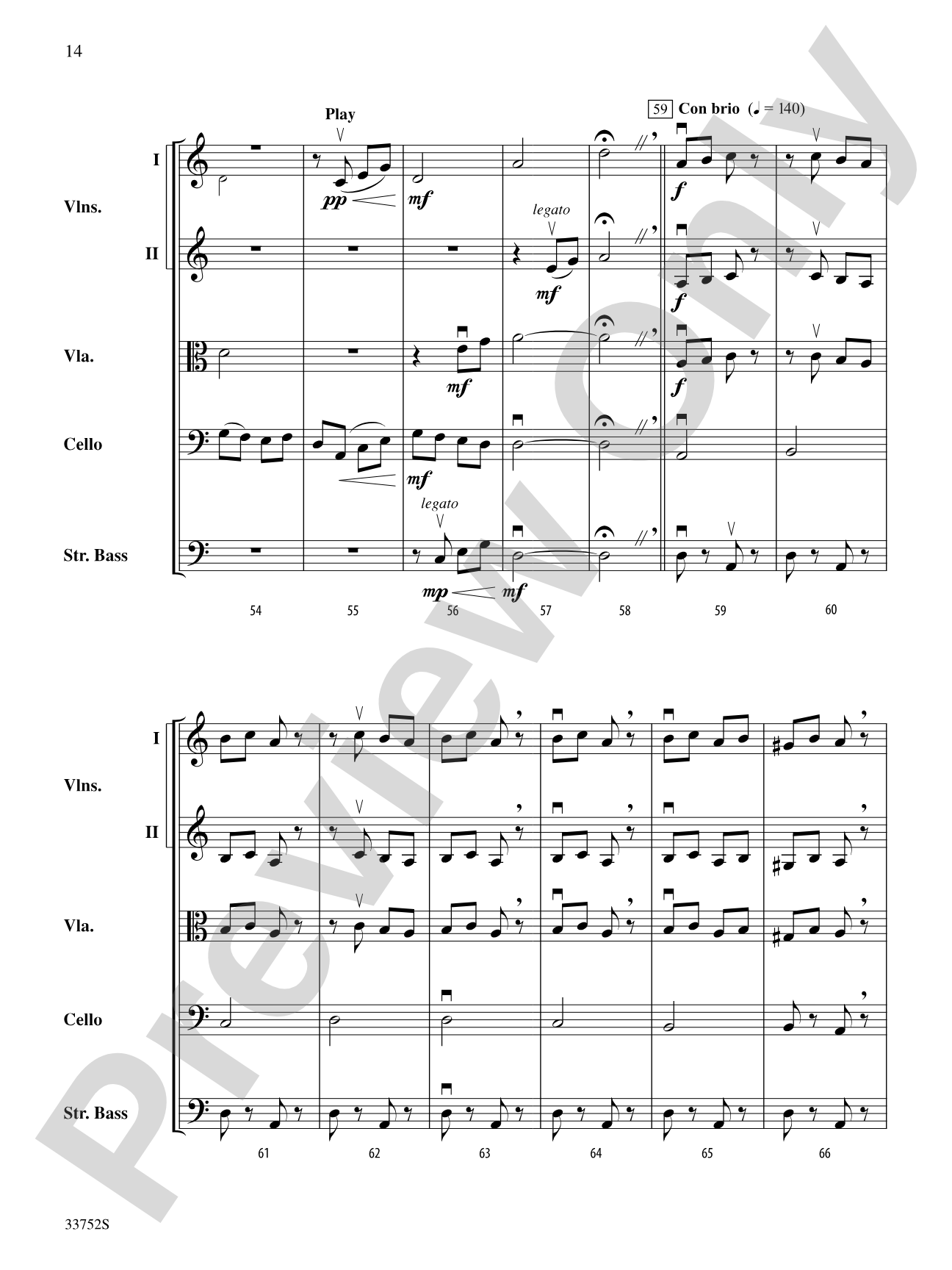
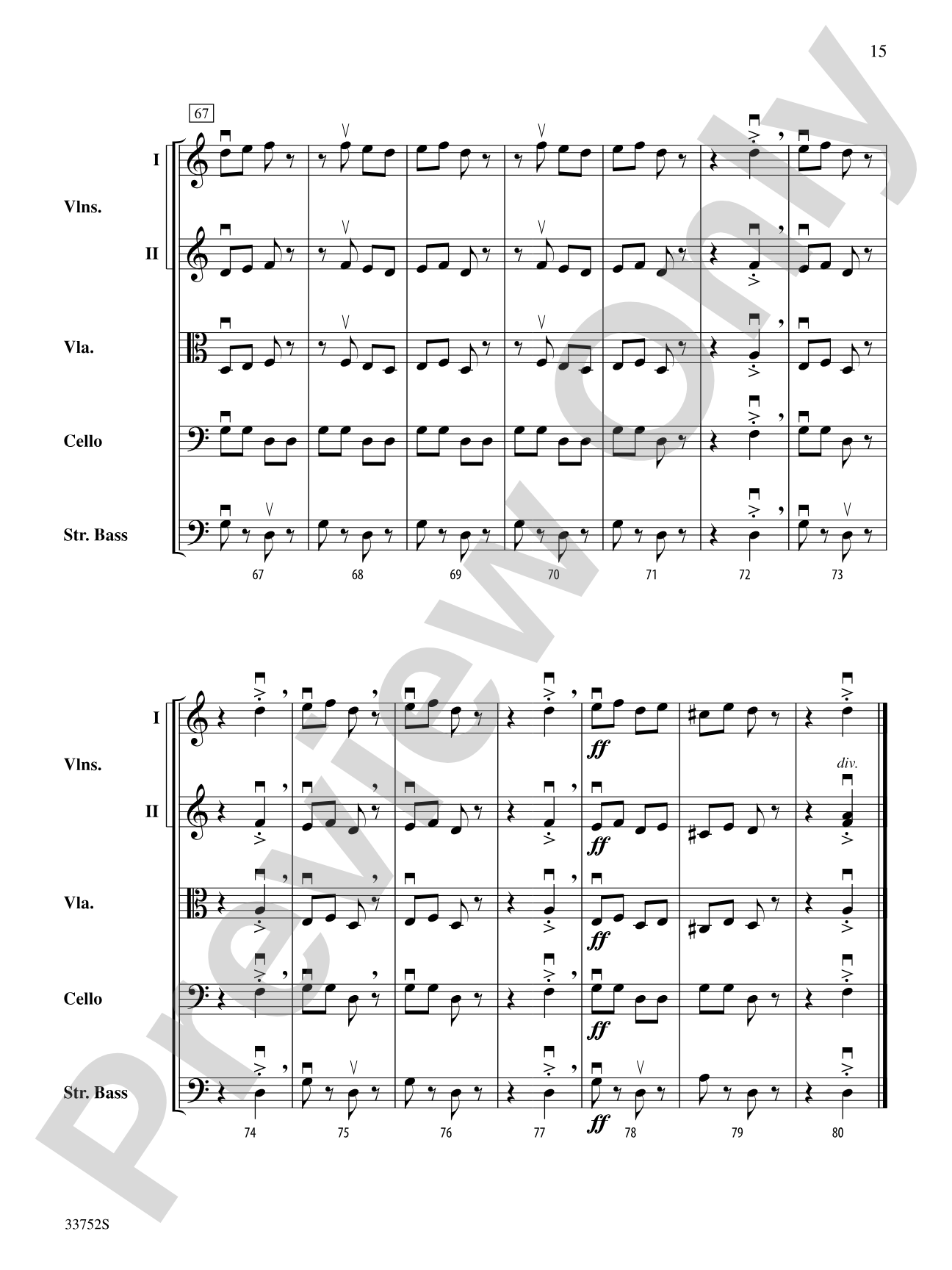
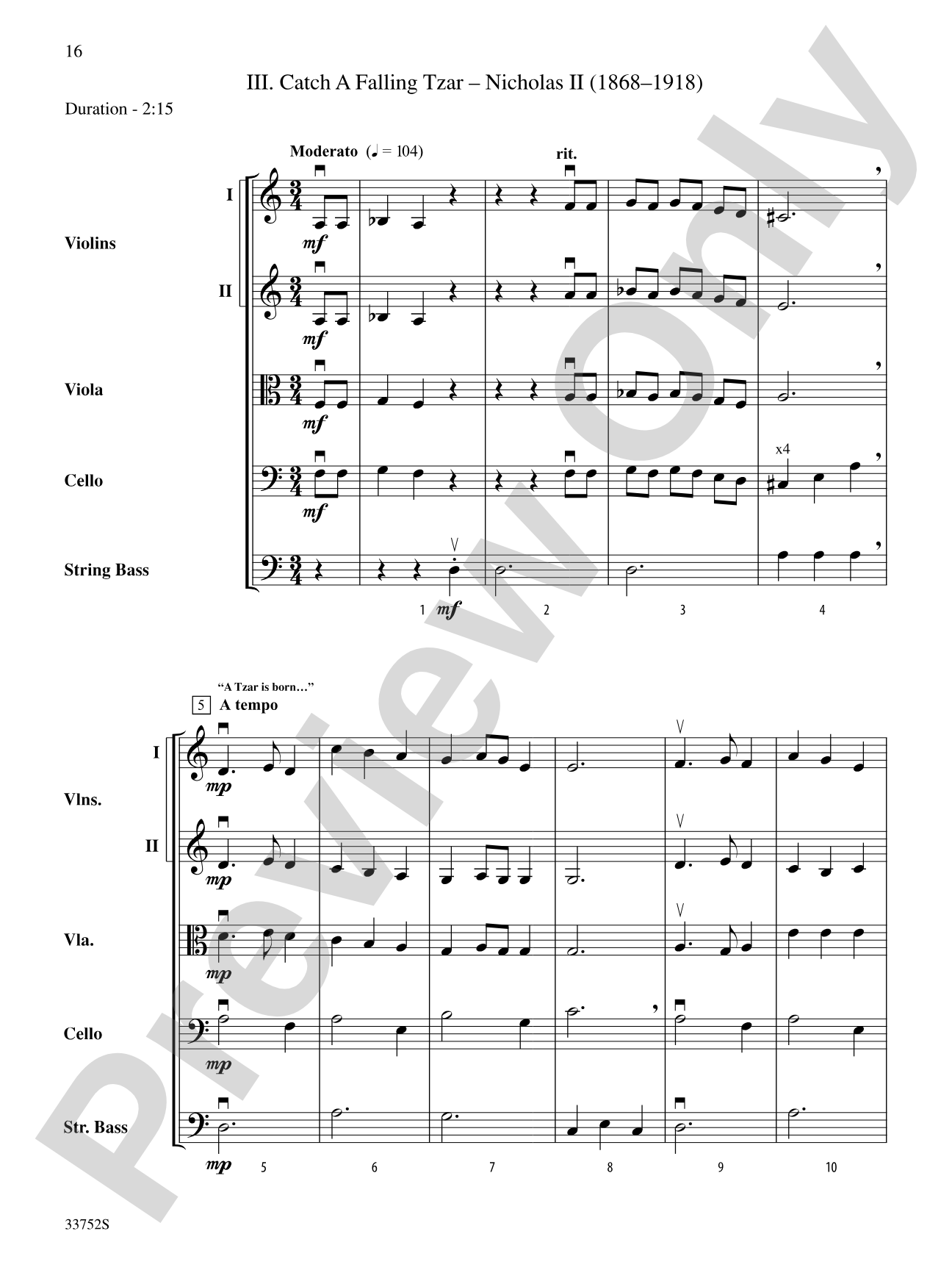
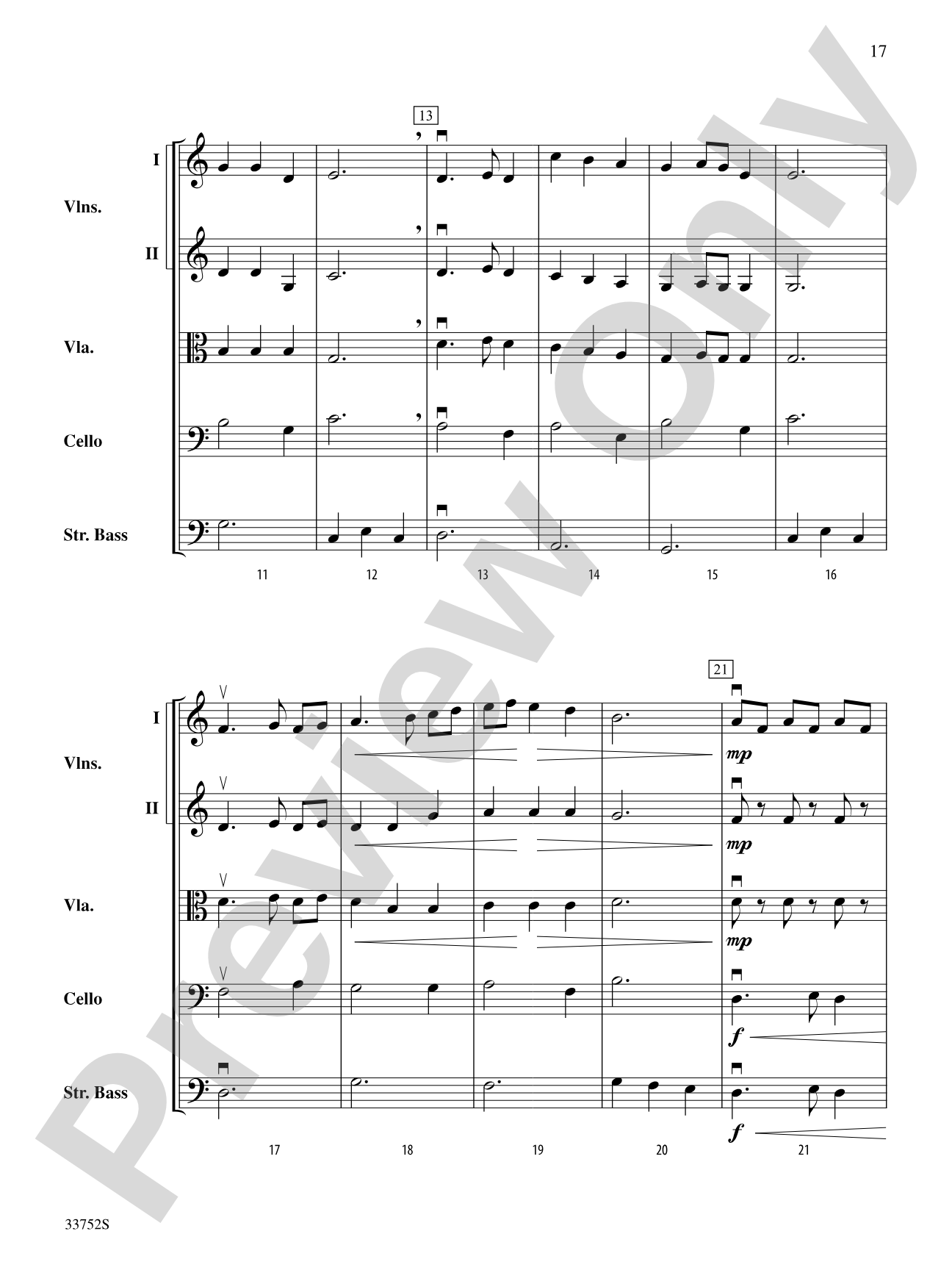
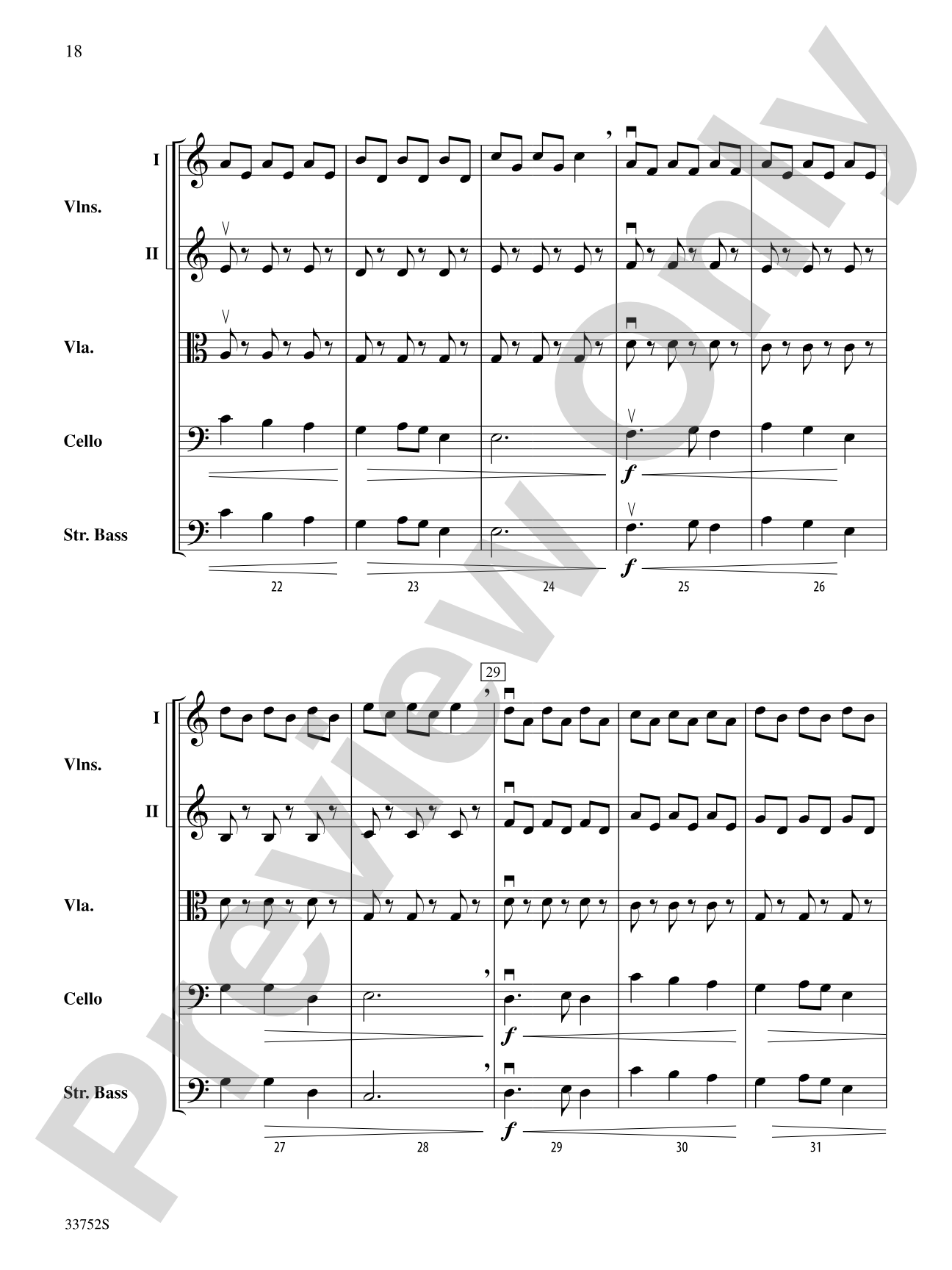
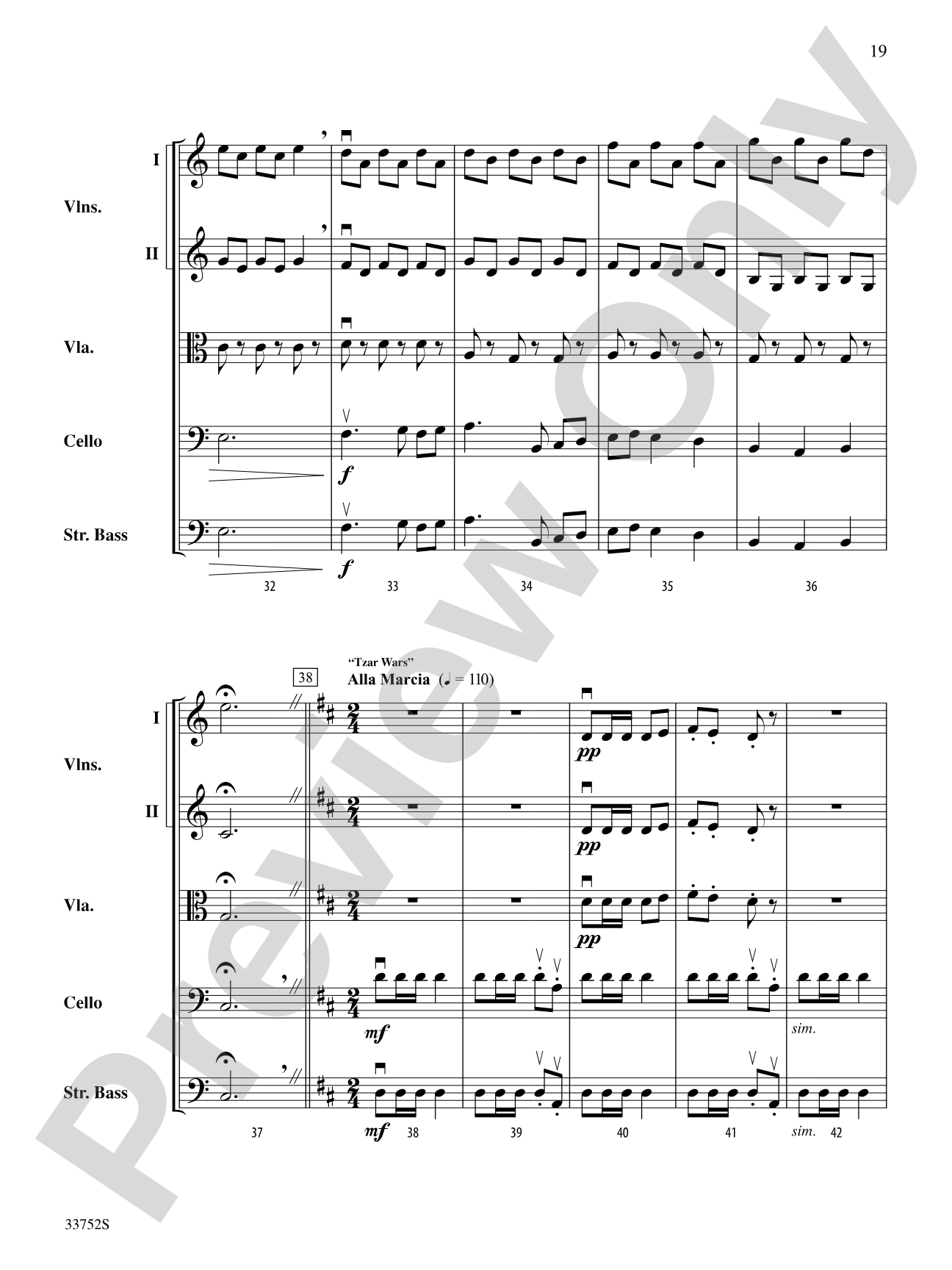
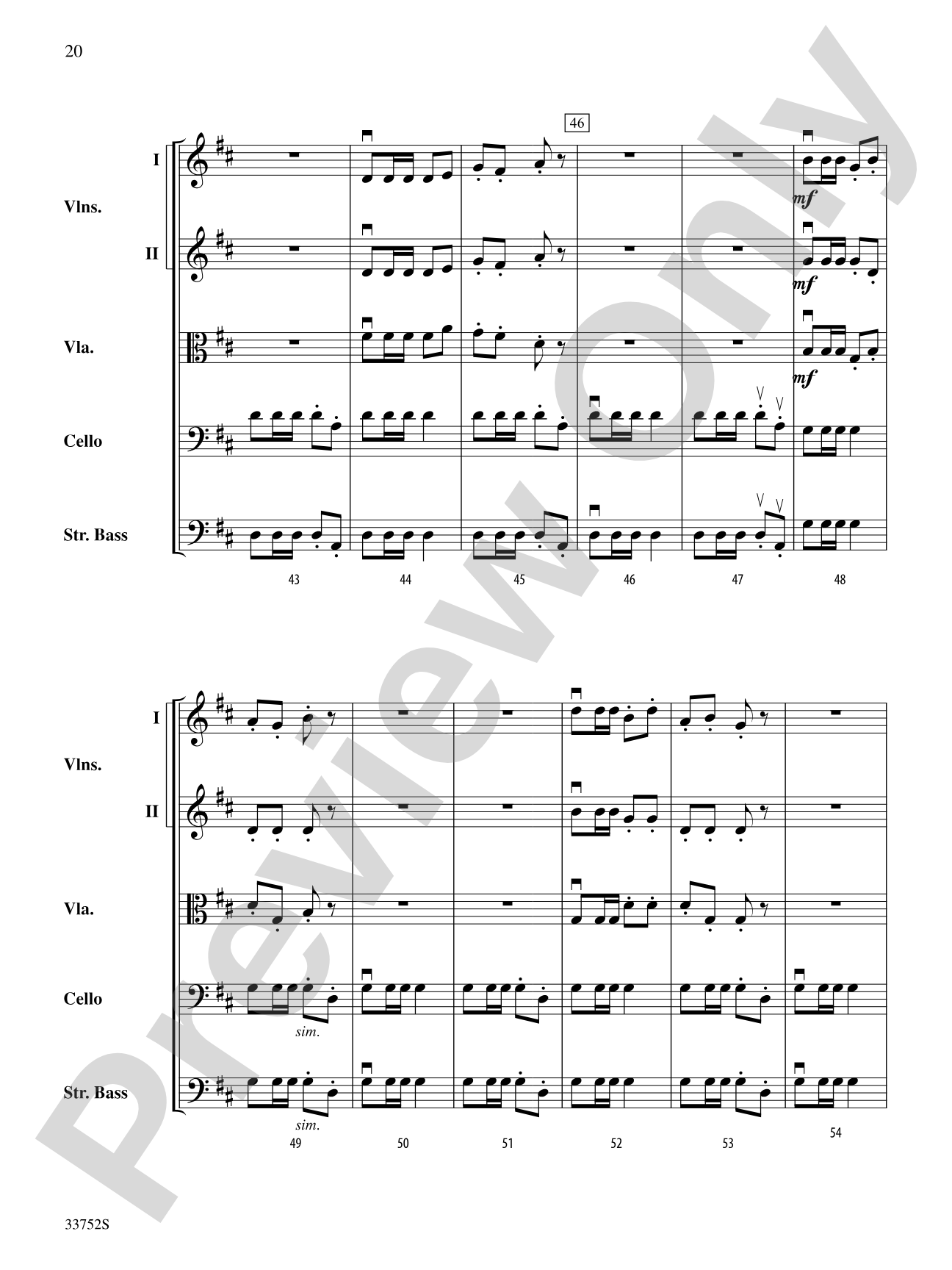
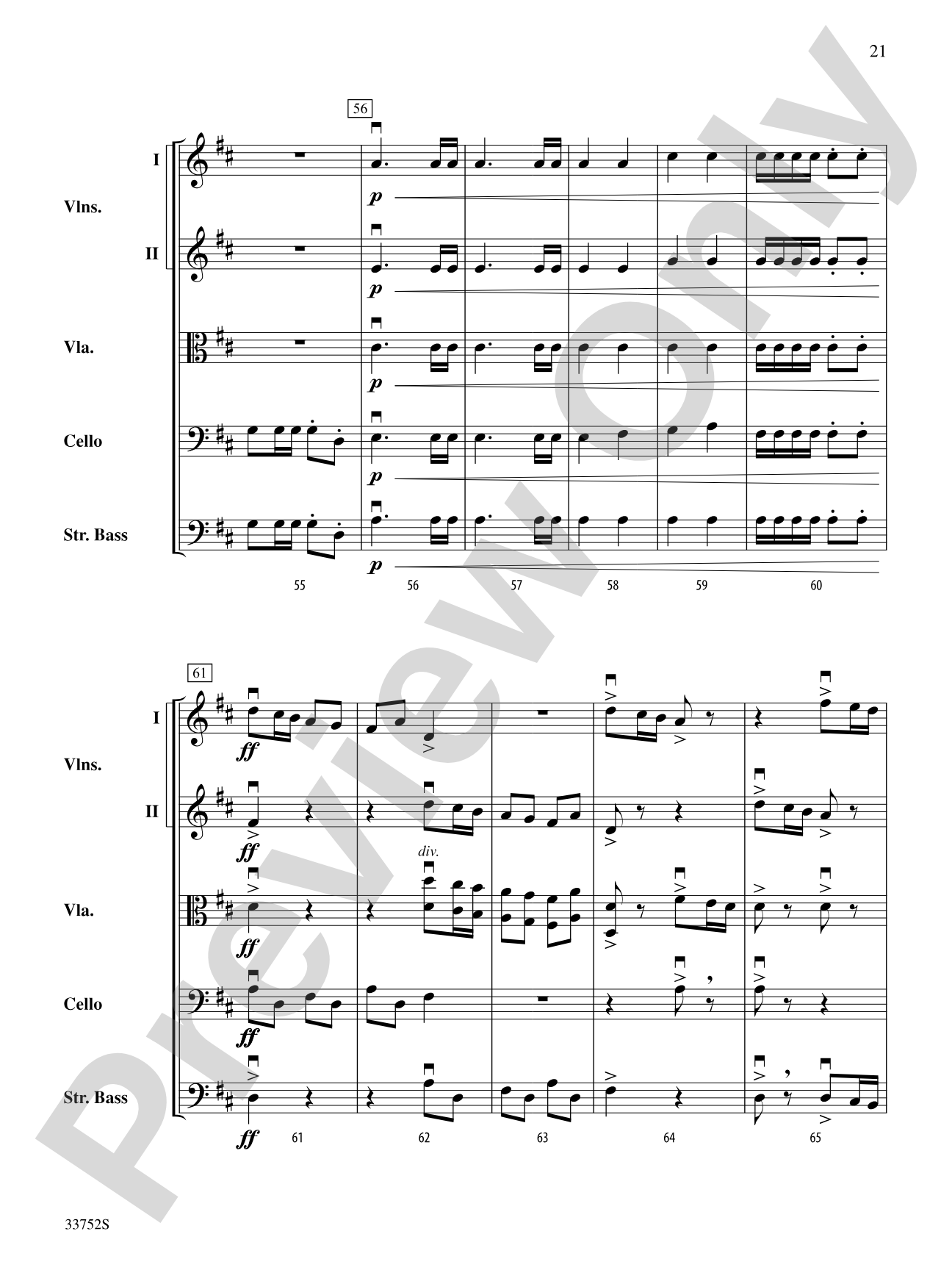
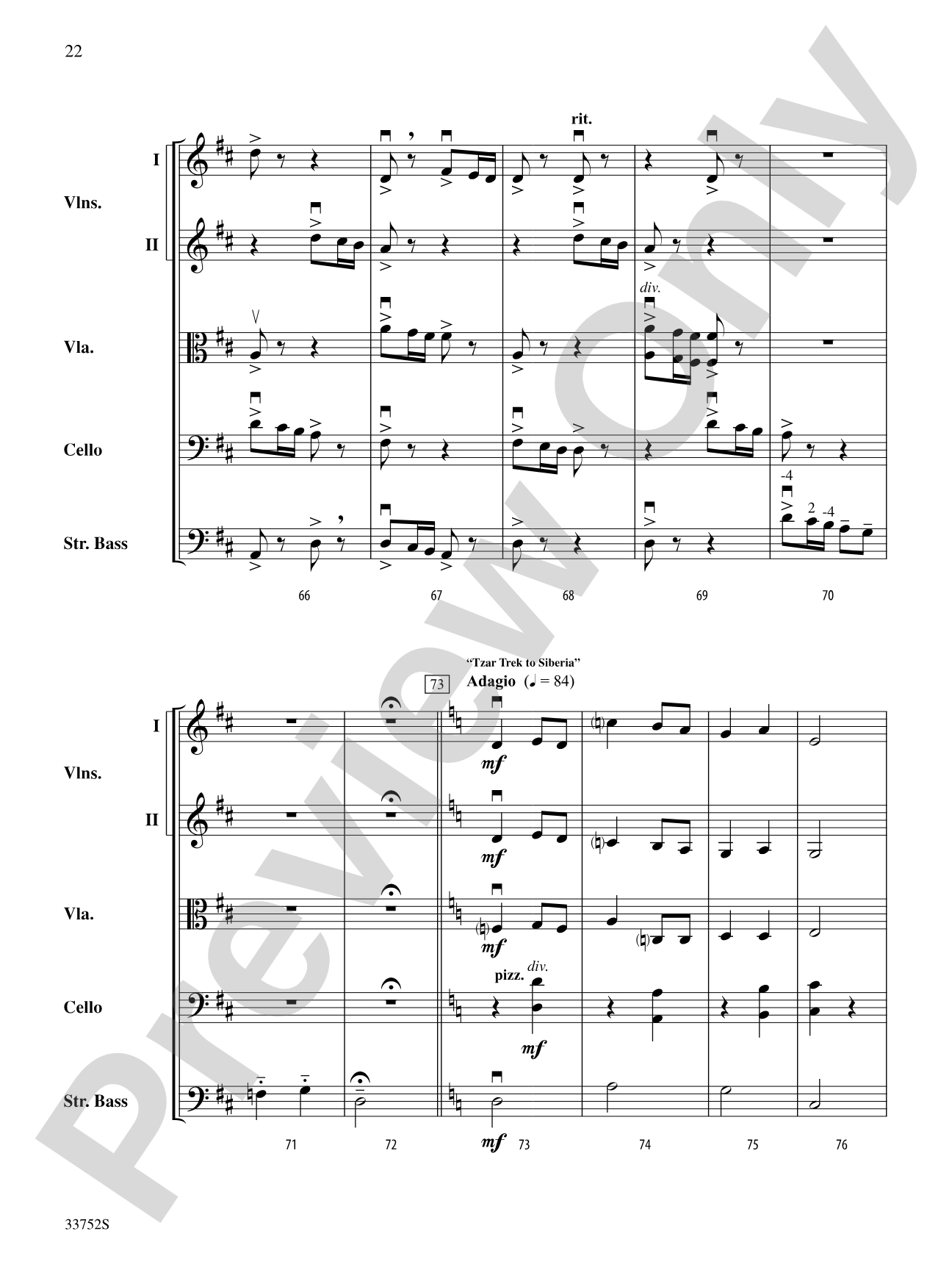
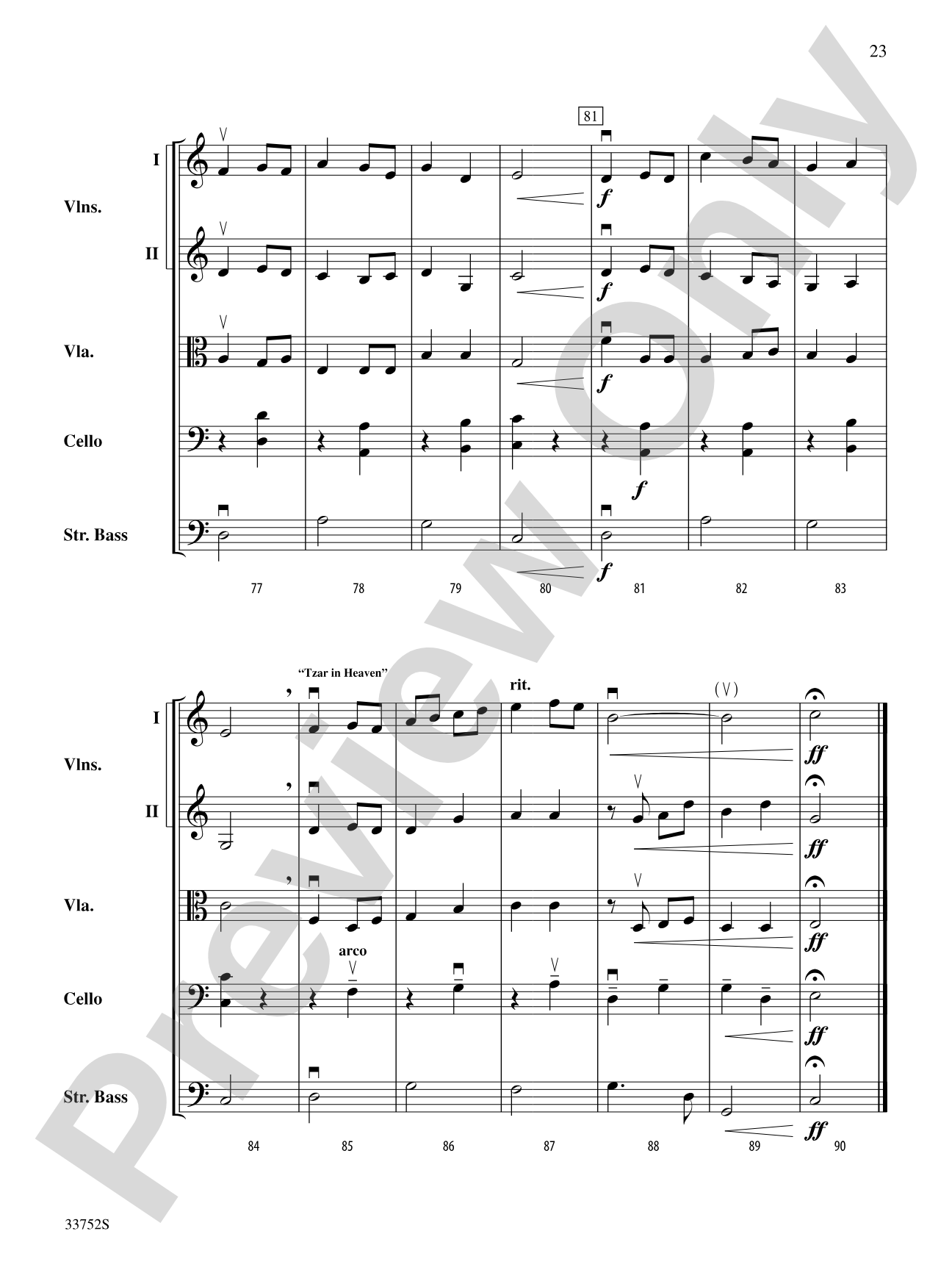


Dancing with the Tzars: String Orchestra Conductor Score & Parts
By Karen Kyriakou
Grade: 3
Item: 00-PK-0004240

$55.00
Pickup currently not available
Buy Extra Parts (Digital PDF Download)
| Product | Price | Quantity |
|---|---|---|
| Dancing with the Tzars: Score | $8.00 | |
| Dancing with the Tzars: 1st Violin | $5.99 | |
| Dancing with the Tzars: 2nd Violin | $5.99 | |
| Dancing with the Tzars: Viola | $5.99 | |
| Dancing with the Tzars: Cello | $5.99 | |
| Dancing with the Tzars: String Bass | $5.99 |
Parts Added to Cart!
Description
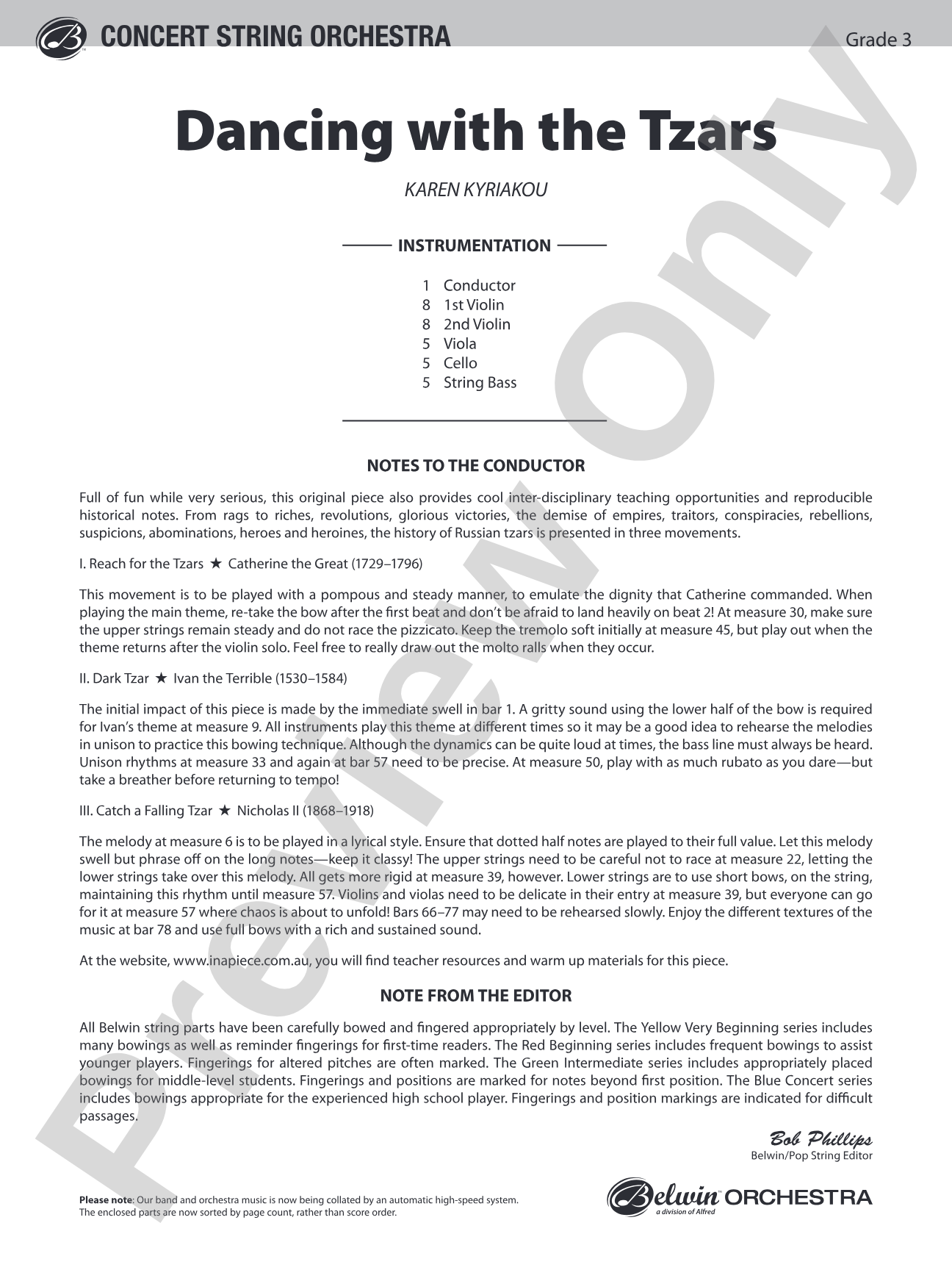
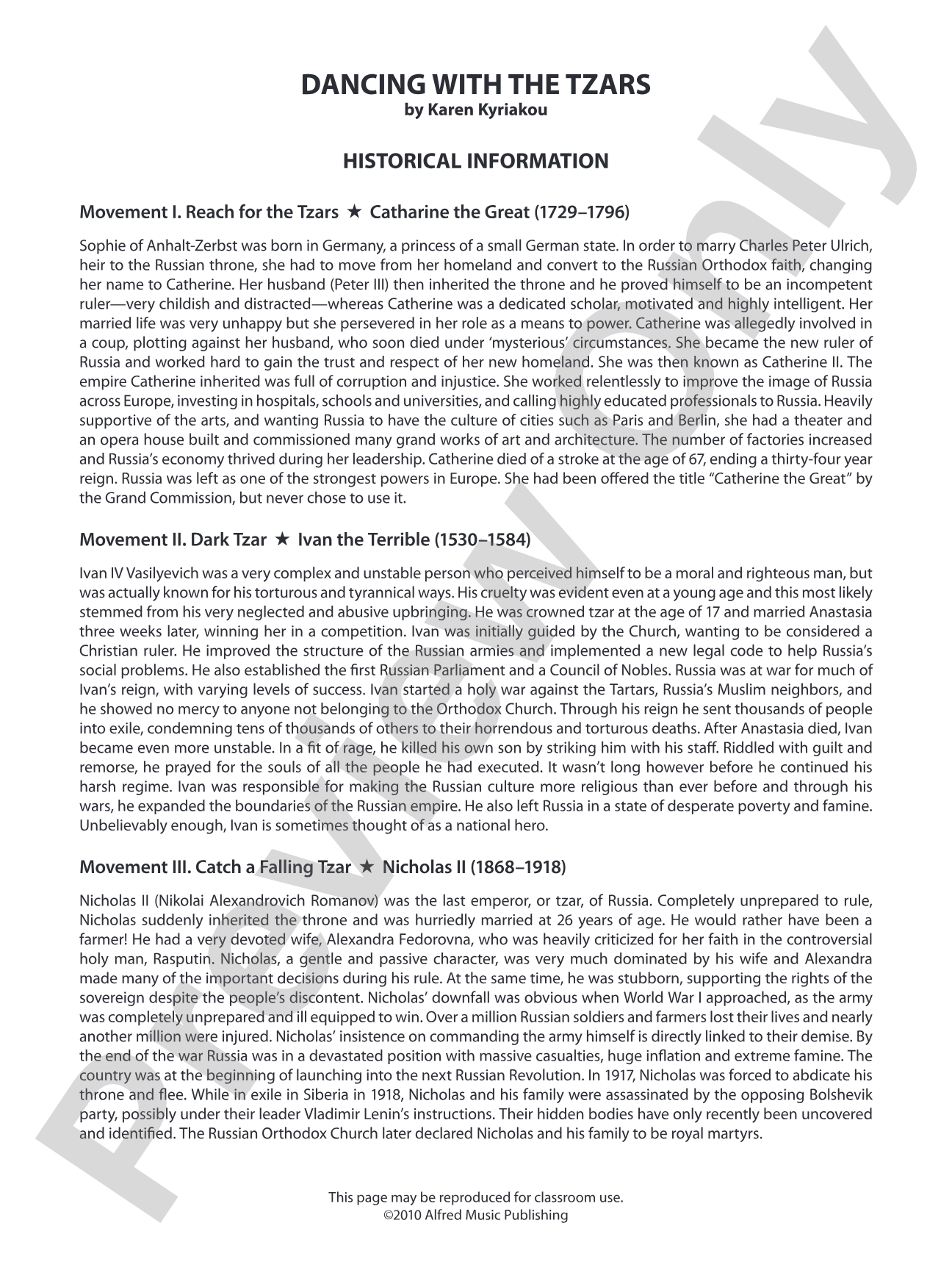
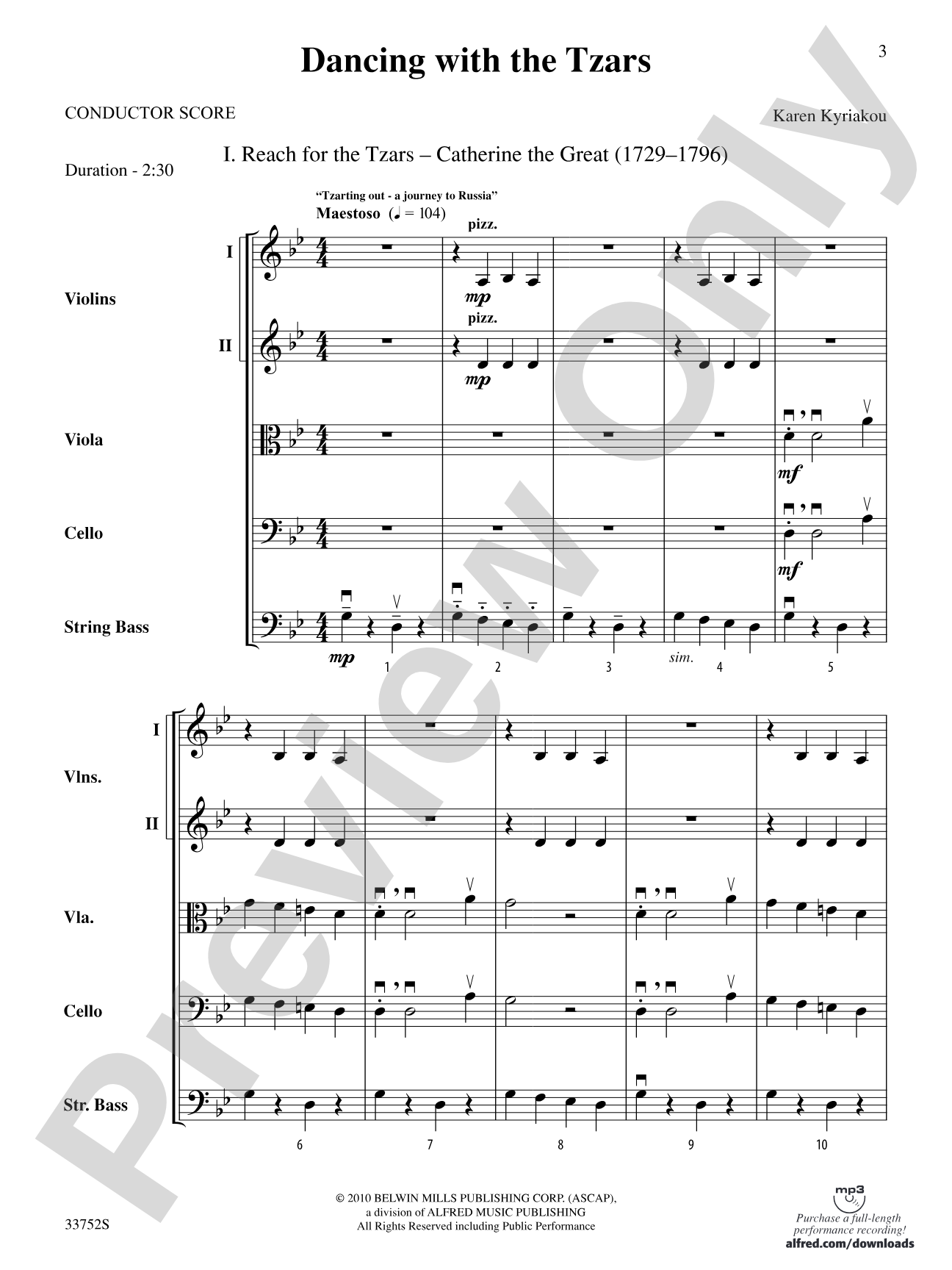
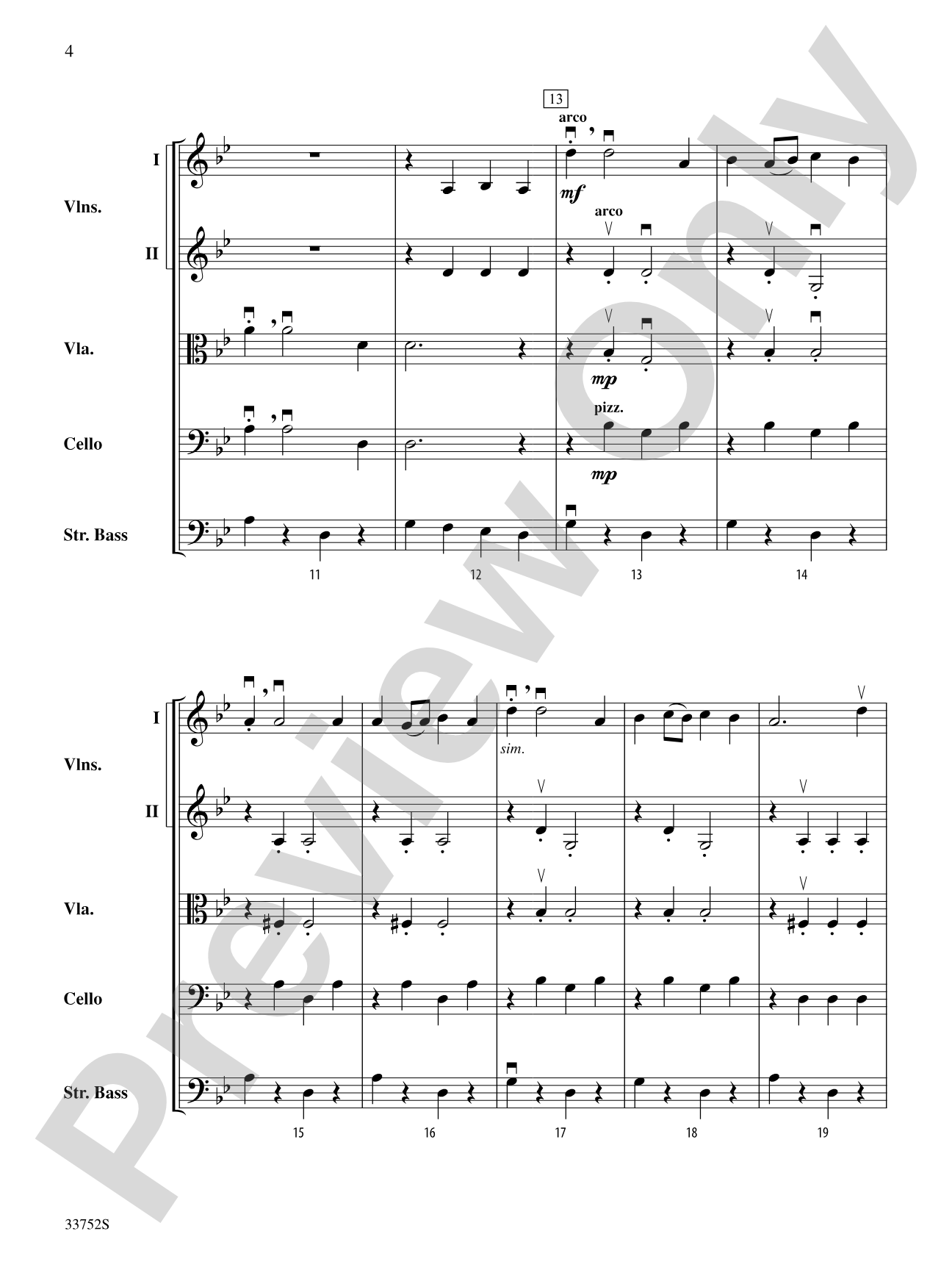
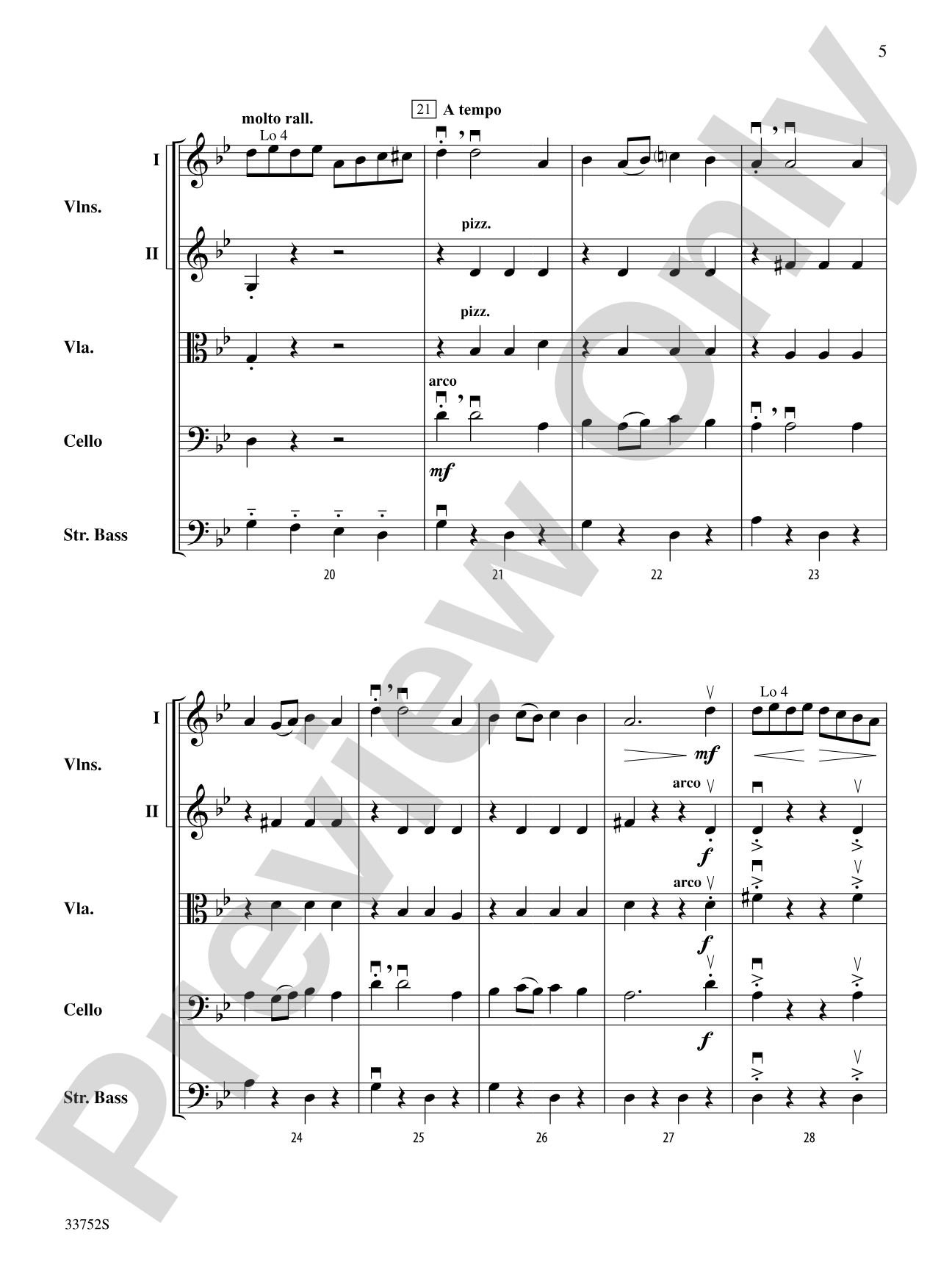
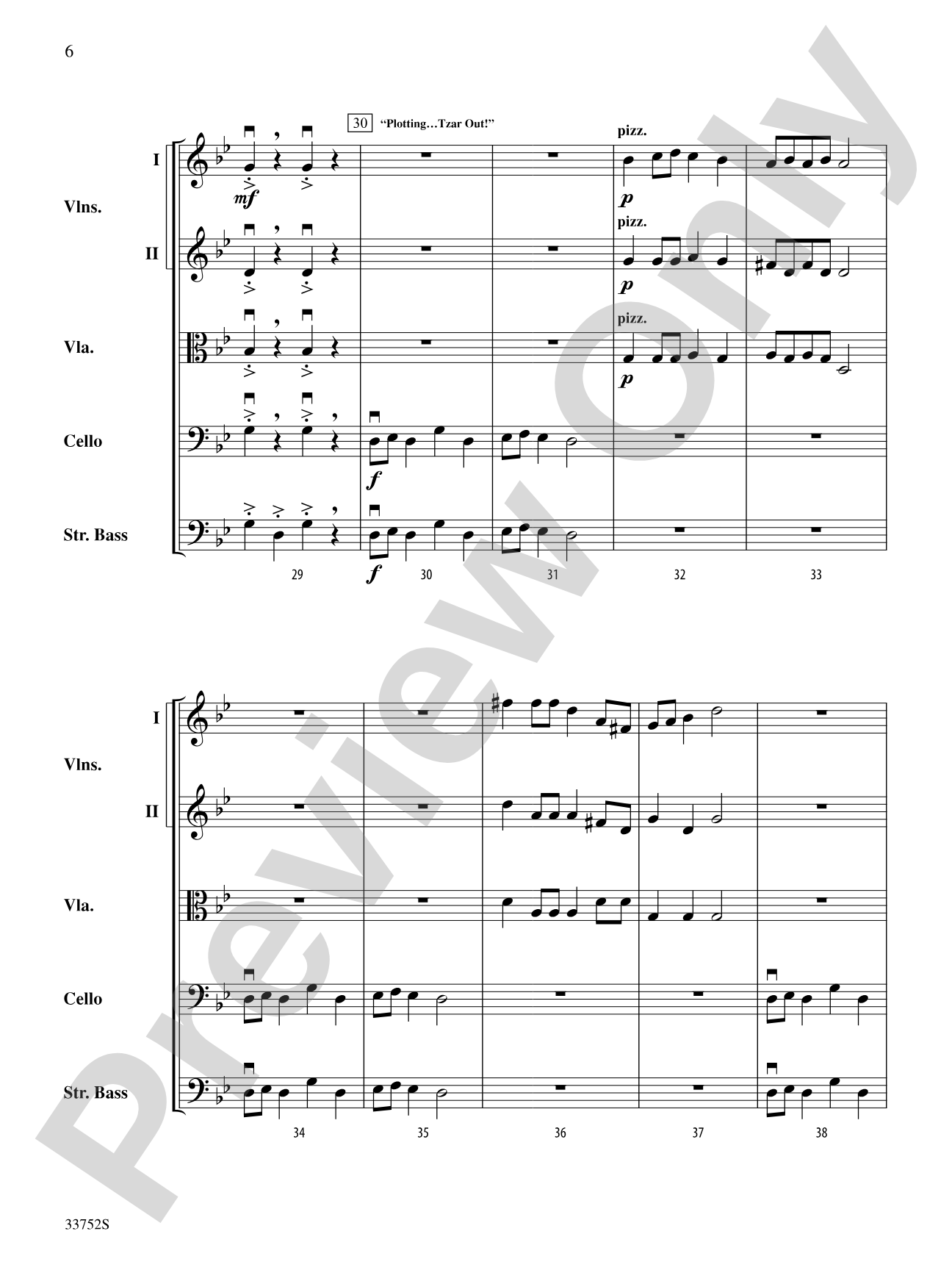
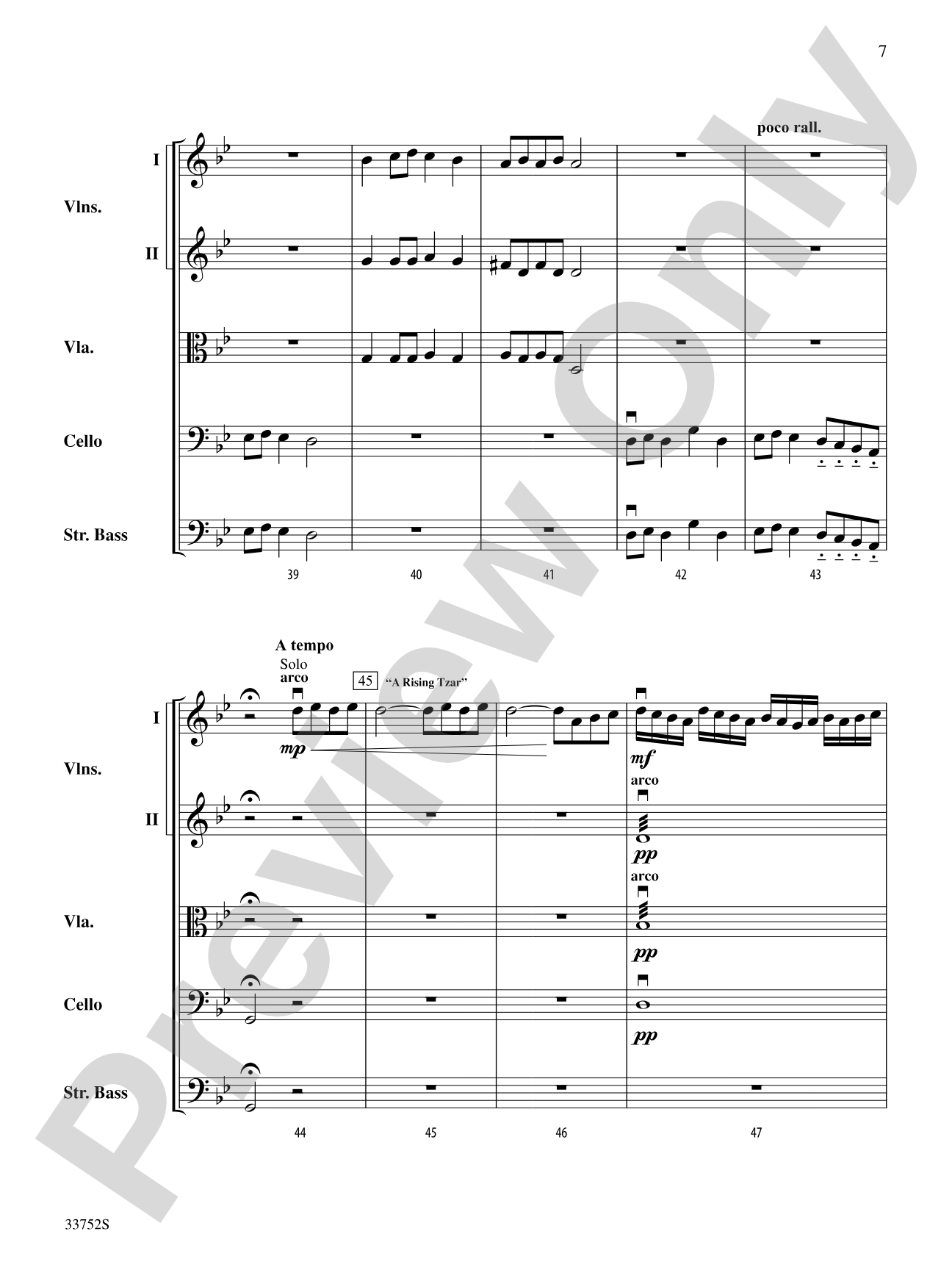
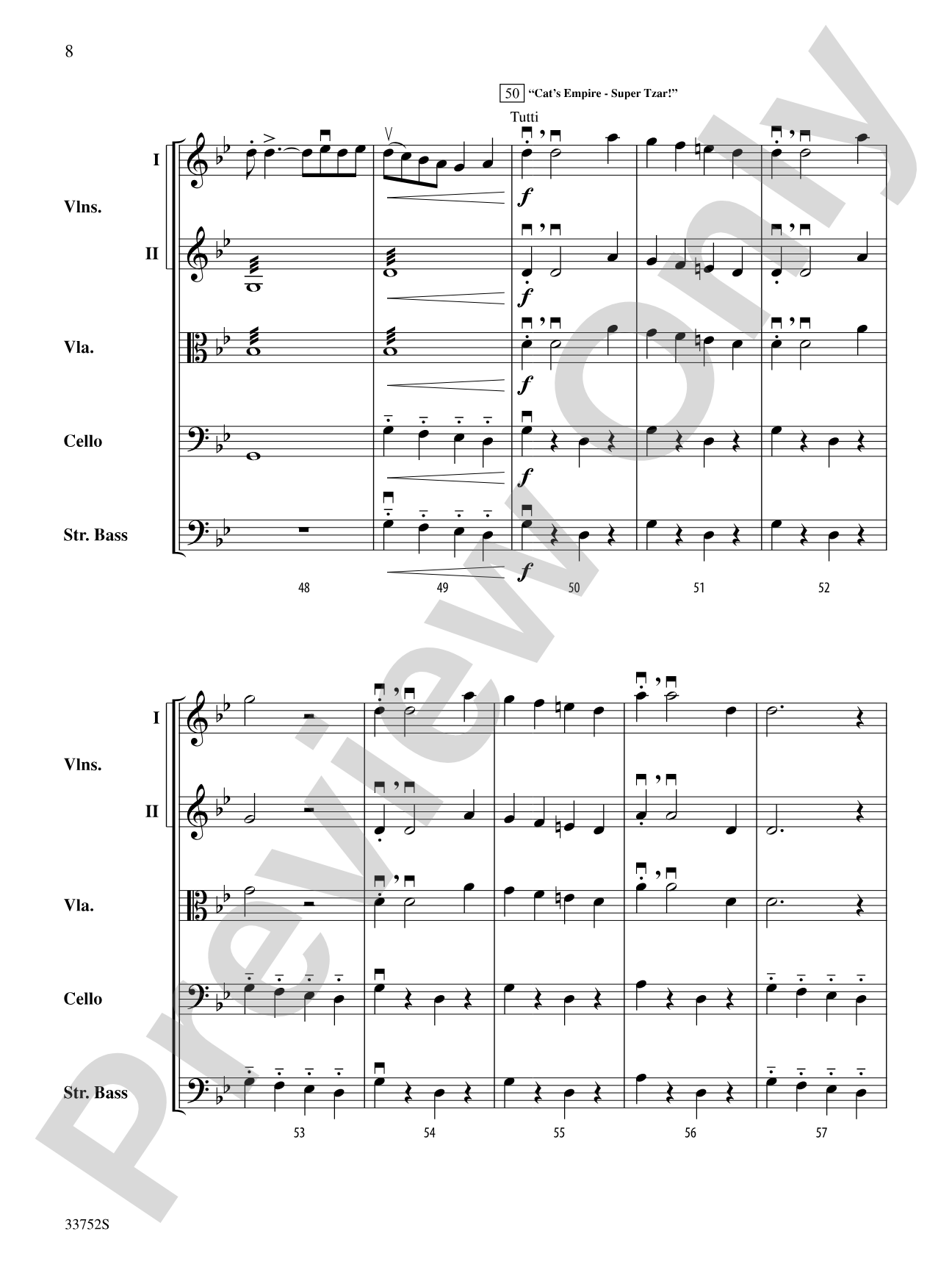
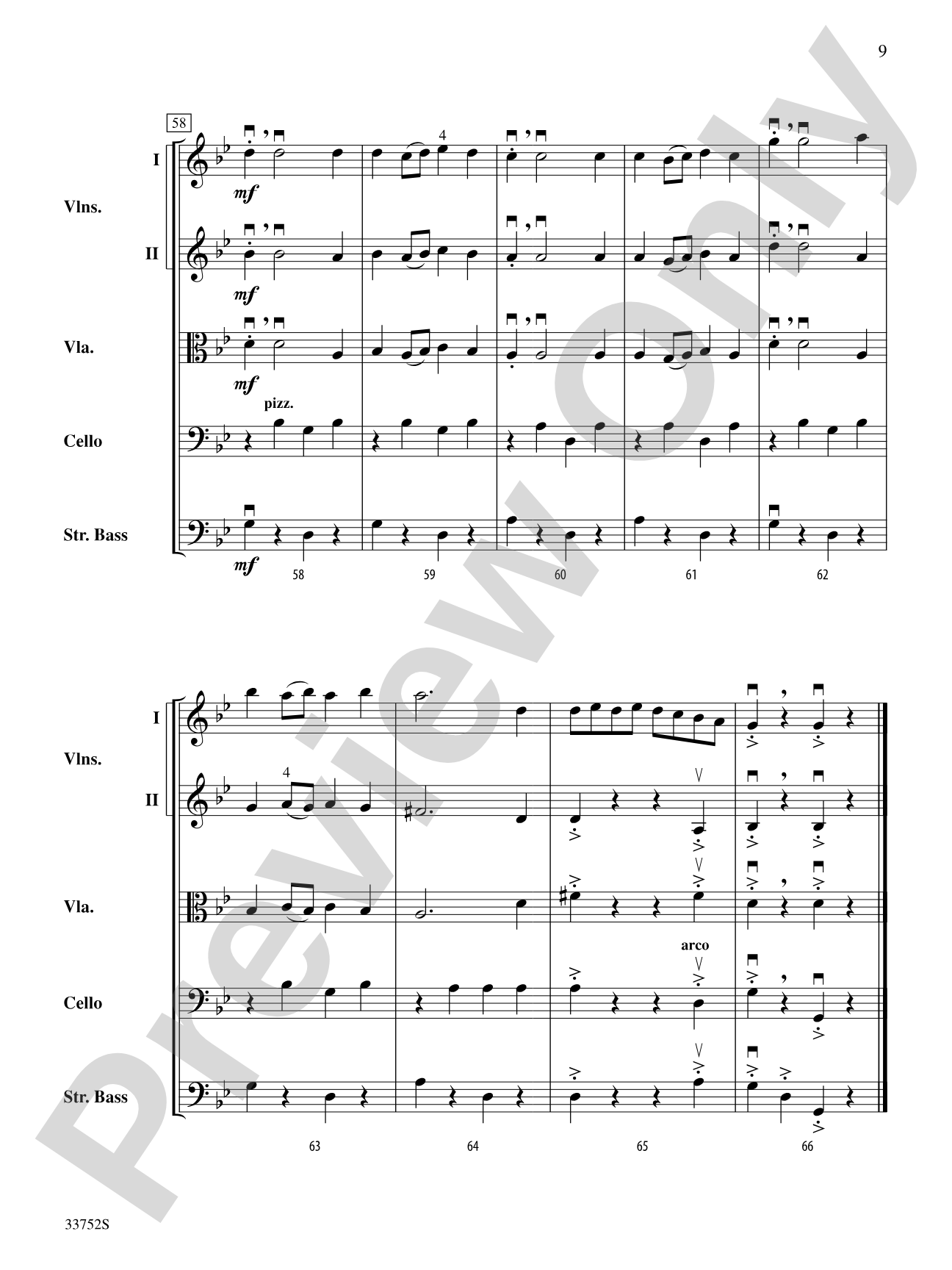
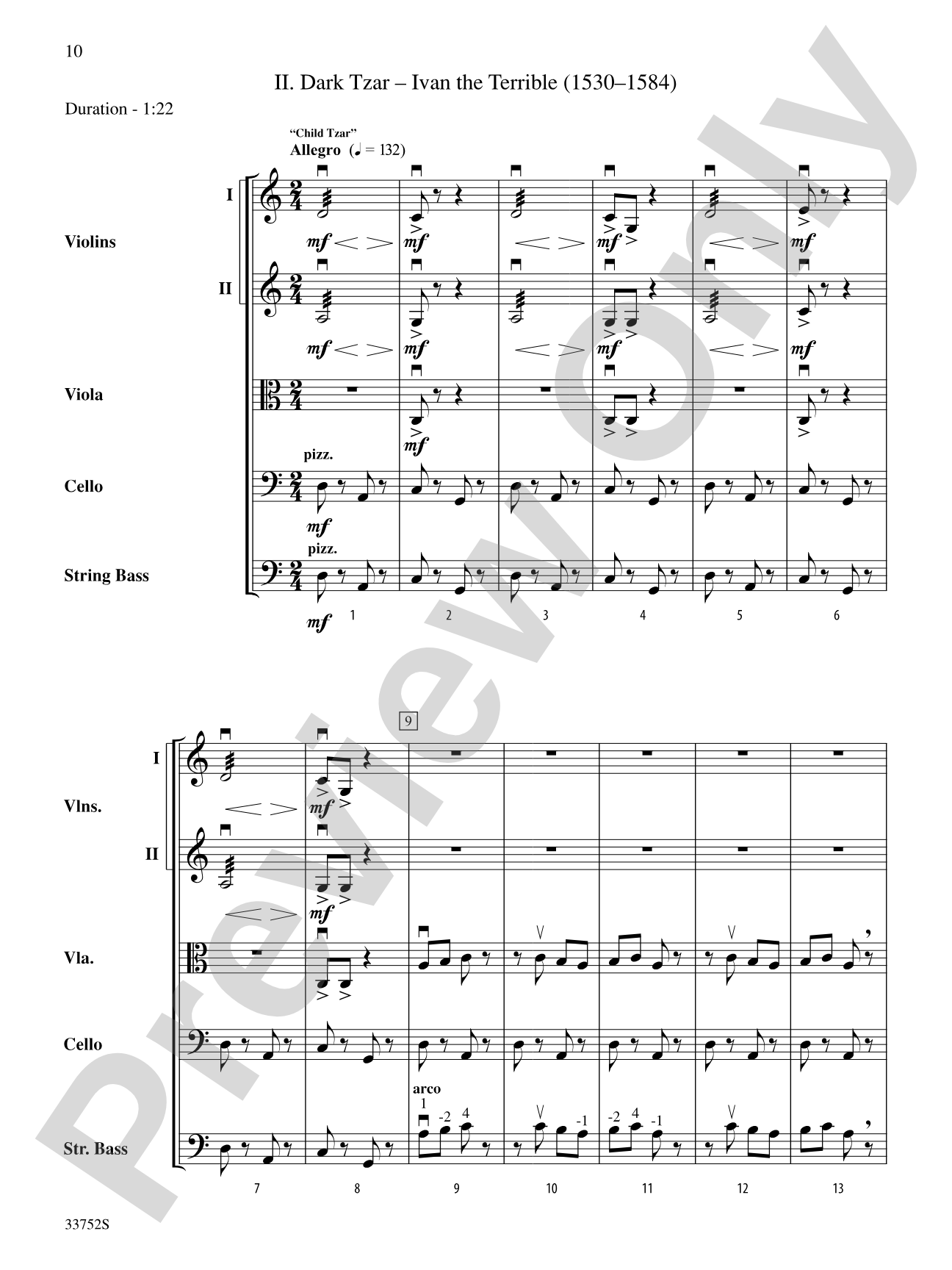
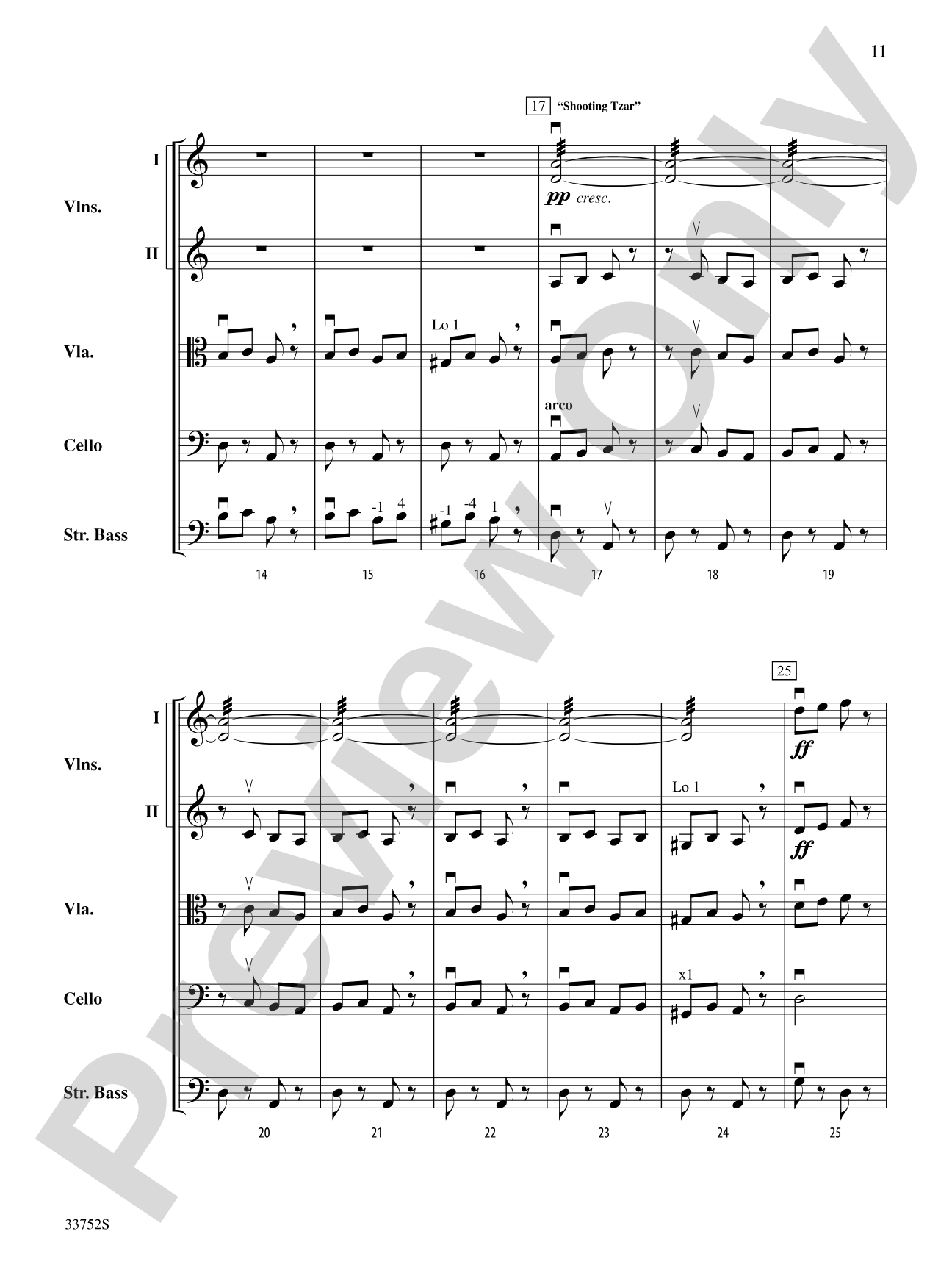
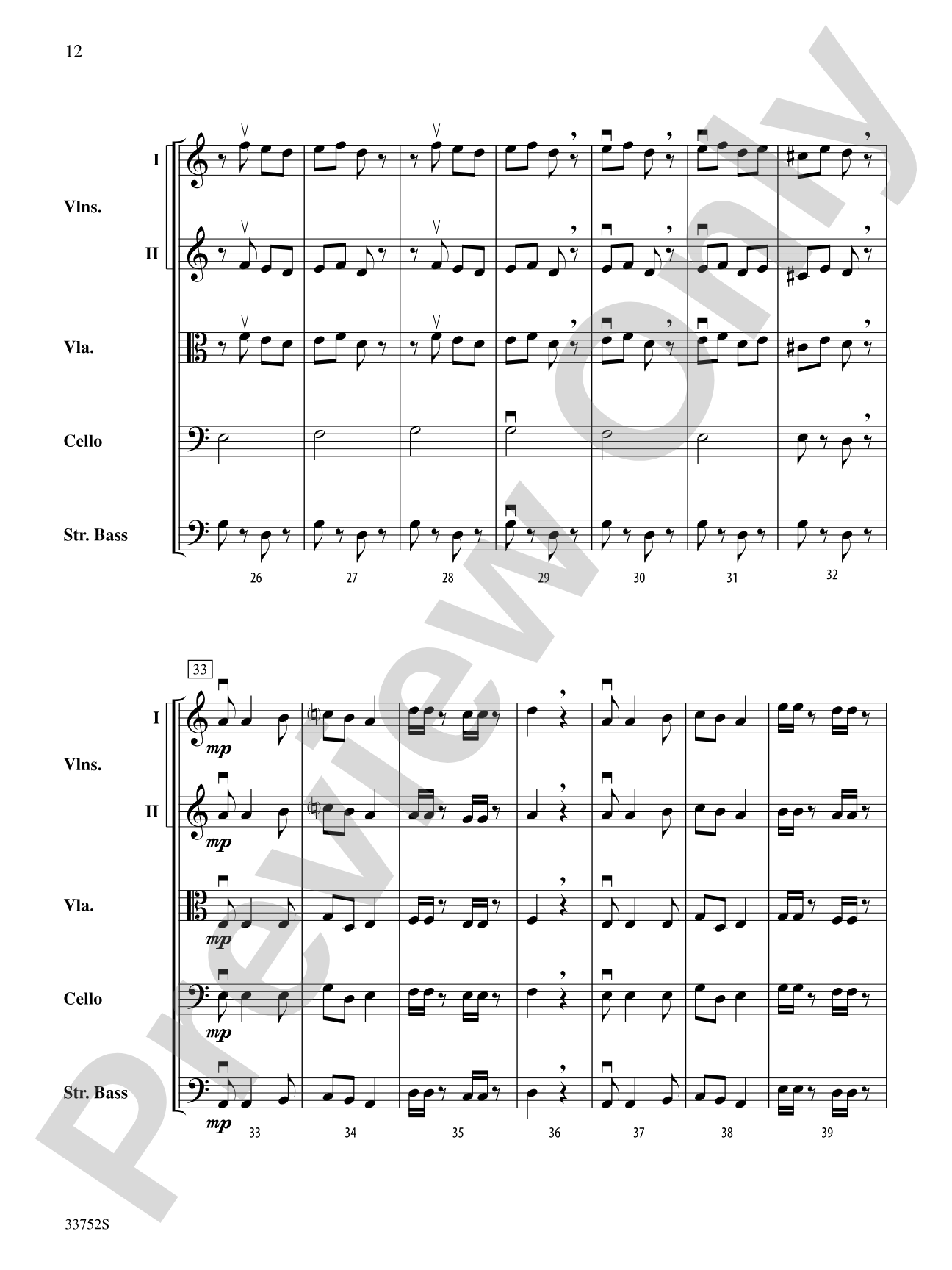
Full of fun while very serious, this original piece also provides cool inter-disciplinary teaching opportunities and reproducible historical notes. From rags to riches, revolutions, glorious victories, the demise of empires, traitors, conspiracies, rebellions, suspicions, abominations, heroes and heroines, the history of Russian tzars is presented in three movements. Play the music that takes you through a journey of the lives of these colorful historic figures as each instrumental part shares the melodic role.


Don't just read it, hear it, play along with it, and watch your students grow with it. In MakeMusic Cloud, Dancing with the Tzars: String Orchestra Conductor Score & Parts comes alive with professional accompaniment, adjustable tempo, and built-in practice tools that turn solo practice into real progress.
Open in the Player
Jump straight in and assign it today.
Start Your Free Trial
Open this title and explore the full library in minutes.
Sample Audio
1
Audio File
--:--
0:00
0:00
Sample Video
No sample videos found.
Additional Details
Series:
Belwin Concert String Orchestra
Publisher:
Alfred Music
Page Count:
124
SKU:
00-PK-0004240
More about this title
About the Composer: Karen Kyriakou
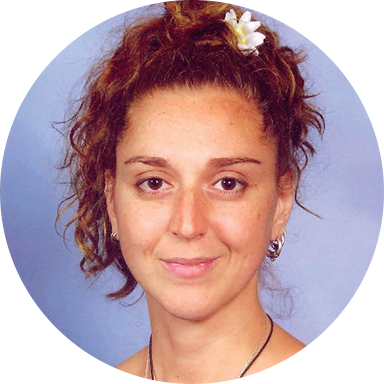
Karen Kyriakou brings together classical training, community engagement, and a gift for storytelling through music. A violinist and music educator with degrees from the University of Melbourne and Monash University, she has spent her career teaching in schools, community settings, and her private studio while maintaining an active performance schedule. Her work extends across string ensembles, theatre projects, and the world-music ensemble Kazband, which has received consistent radio play throughout Australia.
Kyriakou's approach to composition centers on the classroom and the ensemble. She regularly leads workshops in improvisation and composition, serves as a guest composer-in-residence with school and community groups, and participates in the Musica Viva In Schools program as both performer and composer. Her recent projects include pioneering music-making with deaf students and directing an Auslan choir in Beethoven's Ninth with the Melbourne Symphony Orchestra. She is an active member of the Australian Strings Association and presents at music education conferences across her state.
Why we love this
This piece bridges historical content and musical storytelling in a way that keeps students engaged without sacrificing orchestration quality. The three-movement structure traces Russian history from the dramatic to the whimsical, and Kyriakou distributes melodic material across the string sections so every player feels the narrative unfold. The reproducible historical notes transform a concert into a cross-curricular event, while the Grade 3 accessibility means even younger orchestras can tackle serious musical ground.
What to expect
Dancing with the Tzars captures the sweep of Russian history in musical color. The piece moves between stately grandeur and mischievous energy, with orchestration that feels both dramatic and accessible. Students hear themselves as storytellers, carrying melodies that illuminate the rise and fall of empires.
Who it's for
This work suits intermediate string orchestras looking for concert-quality repertoire with educational depth. Directors teaching Grade 3 ensembles who want to expand beyond pure technique into narrative and history will find a natural fit here.
How to get the most out of it
- Balance the shifting melodic roles carefully as different sections take the lead; mark your score to show which section carries the main theme in each passage so your ensemble tracks the narrative together.
- Shape each movement to reflect its historical episode. Allow rubato and dynamic sweep in the grand moments, then tighten the rhythmic precision when the music turns playful or restless.
- Use the conductorless moments (if any occur) as opportunities for the ensemble to listen and blend across sections rather than relying on external cues.
How to use it
Program this as the centerpiece of a thematic concert exploring history through music, or use it to anchor a spring concert that balances lighter works with substantial material. The reproducible historical notes allow you to print program notes for the audience or distribute them to students as part of music history instruction during rehearsals.
Skills your students will build
- Passing melodic material smoothly between string sections
- Maintaining ensemble unity while tracking a multi-movement narrative
- Balancing historical context with musical interpretation
- Reading extended passages in the upper and lower registers across different voice parts