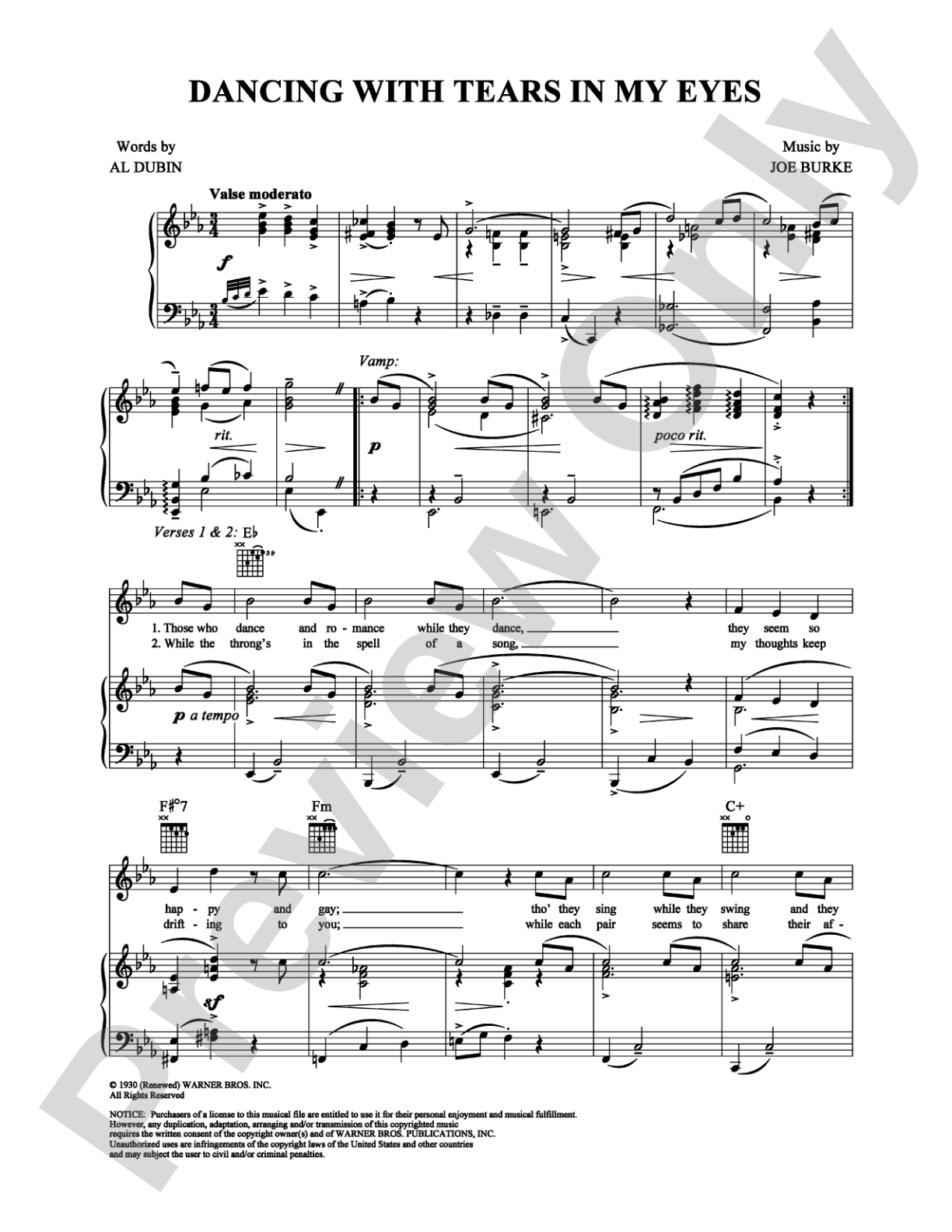
Dancing With Tears in My Eyes: Piano/Vocal/Chords Digital Sheet Music

Dancing With Tears in My Eyes: Piano/Vocal/Chords Digital Sheet Music

Joe Burke, Ruth Etting

Item: 00-PS-0005335

Digital Download
$3.99
Description

Dancing With Tears in My Eyes: Piano/Vocal/Chords Digital Sheet Music isn't in MakeMusic Cloud just yet...but it could be. Let us know you'd like to see it, and you'll help shape what comes next. In the meantime, start a free trial and dive into thousands of interactive titles your students can play along with today.

Sample Audio
No sample audio found.
Sample Video
Additional Details
SKU: 00-PS-0005335

More about this title

About the Artist: Ruth Etting

Ruth Etting (1896-1978) was one of the most popular vocalists of the 1920s and 1930s, known for her warm contralto and sophisticated interpretive style. She recorded extensively during the early jazz and popular music era, bringing dramatic expressiveness to standards that defined the American songbook. Her recordings remain essential listening for understanding vocal phrasing and emotional delivery in classic jazz and popular song.

Why we love this

This arrangement captures a standard from jazz's golden age with genuine emotional weight. The piano/vocal/chords format gives singers and pianists flexibility to explore rubato and dynamic shaping while staying grounded in the harmonic sophistication of the era.

What to expect

Bittersweet and introspective, with the minor-key melancholy of a torch song. The title evokes restrained emotion, tension between joy and sorrow, and the sophisticated resignation that defines great jazz ballad singing.

Who it's for

Singers and pianists exploring classic jazz standards and the vocal traditions of the 1920s-1930s. This works for voice lesson repertoire, jazz ensemble singers, and pianists building their jazz standards vocabulary.

How to get the most out of it

  • Shape the vocal line with legit phrasing rather than strict time; the lyrics drive the emotional arc more than the beat
  • Use the chord chart to explore comping variations that support the vocalist's interpretation without competing for space
  • Balance the vocal intimacy of the lyric with enough support from the piano to maintain clarity in both parts

How to use it

Feature this as a solo number in a jazz or cabaret-style recital, or pair it with other Etting-era standards for a thematic program exploring Depression-era songwriting. It works equally well in a voice lesson setting where students are building interpretive depth.

Skills your students will build

  • Legit phrasing and rubato in jazz ballad contexts
  • Harmonic awareness through chord chart reading
  • Emotional storytelling through lyric interpretation
  • Piano comping and accompaniment texture choices

You May Also Like