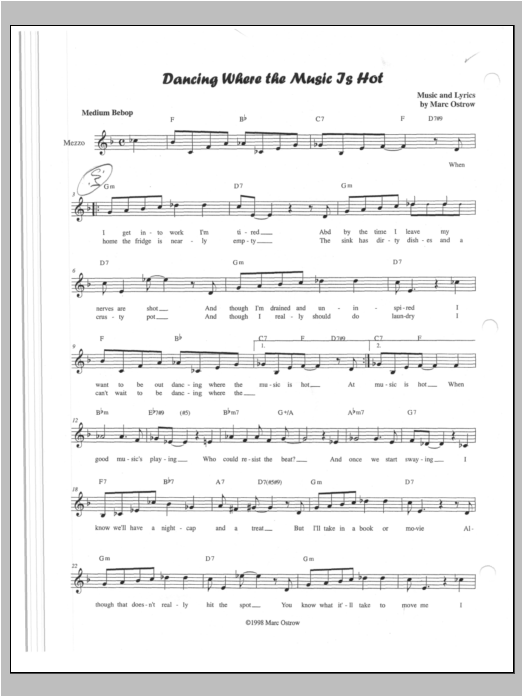
Dancing Where The Music Is Hot Sheet Music Preview

Dancing Where The Music Is Hot: Jazz Ensemble Conductor Score & Parts

Arranged by Marc Ostrow

Item: 35-PK00265254

Digital Download
$2.30

Buy Extra Parts (Digital PDF Download)

Parts Added to Cart!

Description
An uptempo vocal number in bebop style. Lead sheet available, can be adapted to any number of ensembles. Duration: 03:00

Dancing Where The Music Is Hot: Jazz Ensemble Conductor Score & Parts isn't in MakeMusic Cloud just yet...but it could be. Let us know you'd like to see it, and you'll help shape what comes next. In the meantime, start a free trial and dive into thousands of interactive titles your students can play along with today.

Sample Audio
No sample audio found.
Sample Video
Additional Details
Publisher: Hal Leonard
SKU: 35-PK00265254

More about this title

Why we love this

Bebop style vocal writing that actually sits in the voice. Ostrow has crafted a number with real melodic hooks and ensemble moments that keep your singers engaged without burying the story in overly complex harmony.

What to expect

Bright, playful, and propulsive. The bebop language creates a sense of sophisticated fun, like the music is in on its own joke. From the downbeat, your ensemble will feel the swing and want to move with it.

Who it's for

Jazz ensembles looking for a vocal feature that brings character and humor to a concert. Works equally well in a traditional big band setting or a smaller combo, since the arrangement adapts to ensemble size.

How to get the most out of it

  • Lock the tempo early in rehearsal. The three-minute arc depends on consistent forward motion, and even slight rubato in the wrong places will drag the energy.
  • Balance the lead vocal high enough that the lyrics cut through the ensemble figures. This number lives and dies by the humor and personality of the vocalist.
  • Encourage the rhythm section to listen actively for the vocal phrasing. Jazz ensemble parts written this way reward musicians who follow rather than push the beat.

How to use it

Use this as an opener or second piece when you need to establish energy and set a lighter tone. It pairs well with a blues or a ballad, giving you a natural programming arc within a set.

Skills your students will build

  • Singing over syncopated ensemble figures
  • Responding to bebop rhythmic language and phrasing
  • Ensemble balance when accompanying a featured soloist
  • Flexibility with ensemble size and instrumentation

You May Also Like