
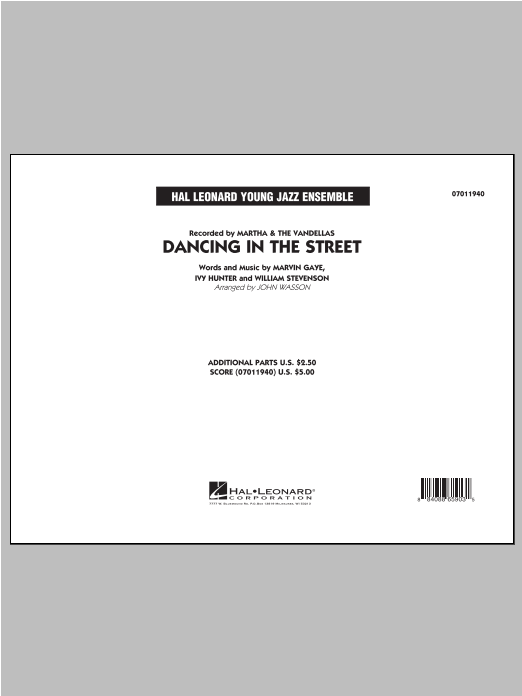

Dancing In The Street: Jazz Ensemble Conductor Score & Parts
By Ivy Hunter / By Marvin Gaye / By William Stevenson / Arranged by John Wasson
Grade: 3
Item: 35-PK00250191
$50.00
Pickup currently not available
Buy Extra Parts (Digital PDF Download)
Parts Added to Cart!
Related Items
Dancing In The Street: Jazz Ensemble Conductor Score |
$6.00
|
View |
Description
Recorded in 1964 by Martha Reeves and the Vandellas, this moderate tempo rock hit became a signature tune of the Motown sound. John Wasson's soulful version for jazz ensemble stays true to the original feel while adding a bit of contemporary flare.


Discover MakeMusic Cloud: thousands of interactive titles your students can play along with today.
Sample Audio
No sample audio found.
Sample Video
Additional Details
Publisher:
Hal Leonard
SKU:
35-PK00250191
More about this title
About the Composer: Ivy Hunter
Ivy Hunter was a prolific songwriter and producer at Motown Records during its golden era, co-writing some of the label's most enduring hits. Working alongside Marvin Gaye and William Stevenson, Hunter helped shape the Motown sound that defined 1960s pop and R&B, with a gift for crafting memorable melodies and infectious grooves that crossed genre and generational boundaries.
Hunter's contributions to Motown's catalog demonstrate a deep understanding of what makes a song stick in the listener's mind. His collaborative approach to songwriting produced records that worked equally well on the radio, in live performance, and across multiple instrumental arrangements, making his compositions ideal fodder for today's student musicians.
Why we love this
John Wasson's arrangement captures the irresistible groove of the original without oversimplifying it for young players. The chart respects what makes this song iconic while building accessibility into every section, giving your students a chance to swing a genuine Motown classic that audiences will recognize immediately.
What to expect
Summer heat, packed dance floors, infectious energy that won't let you sit still. The arrangement keeps the original's forward momentum and celebratory spirit while adding just enough contemporary sophistication to feel fresh, creating a performance that bounces with joy.
Who it's for
Grade 3 jazz ensembles looking for a crowd-pleasing chart that teaches genuine groove and swing feel without requiring advanced technical chops. This works equally well for groups still building fundamentals and more experienced players seeking material that swings hard and connects with listeners.
How to get the most out of it
- Lock the straight 8th-note feel in the rhythm section first; the pocket here is what sells the tune, so spend rehearsal time getting comfortable with the written groove before layering in horn parts.
- Shape the melody line with a light touch in the bridge. The arrangement breathes better when you resist the urge to push the volume up during the turnaround figures.
- Let the background figures breathe between your soloist's statements. The spaces are as important as the notes for maintaining the original song's conversational feel.
- Balance the bass line prominently without drowning out the ensemble comping. A clear low end anchors the Motown pocket that students will feel when they lock in.
How to use it
Drop this into a spring or end-of-year concert to close a set on an upbeat note that gets audiences on their feet. It also pairs naturally with other Motown or classic rock material, giving you a anchor piece if you're building a program around music from the 1960s and early 1970s.
Skills your students will build
- Swing rhythm and straight-8th note feel discrimination
- Comping figures and ensemble synchronization
- Soloing within a blues-based harmonic framework
- Dynamic control in background parts and horn voicings
- Reading and executing contemporary jazz ensemble notation