
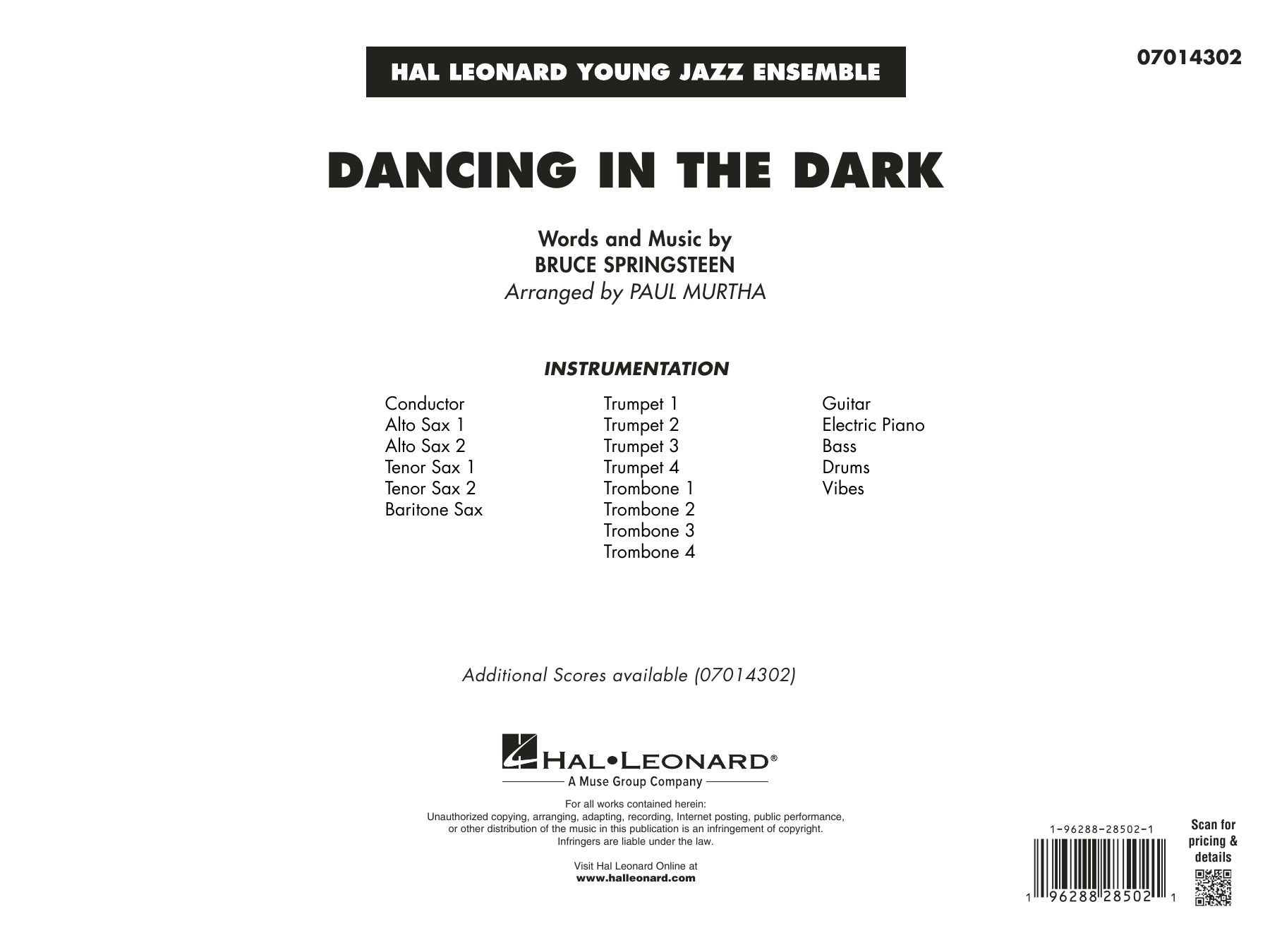

Dancing In The Dark (arr. Paul Murtha): Jazz Ensemble Conductor Score & Parts
As performed by Bruce Springsteen / Arranged by Paul Murtha
Grade: 3
Item: 35-PK01603322
$50.00
Pickup currently not available
Buy Extra Parts (Digital PDF Download)
Parts Added to Cart!
Description
All the grit, and rock and roll drive of the original Springsteen hit is captured in this masterful arrangement. A rare bari sax solo feature kicks off the melody. Great scoring. Lead trumpet plays E, lead trombone plays F.


Dancing In The Dark (arr. Paul Murtha): Jazz Ensemble Conductor Score & Parts isn't in MakeMusic Cloud just yet...but it could be. Let us know you'd like to see it, and you'll help shape what comes next. In the meantime, start a free trial and dive into thousands of interactive titles your students can play along with today.
Request This Title
Tell us you want it.
Start Your Free Trial
Explore everything that's ready to play right now.
Sample Audio
No sample audio found.
Sample Video
No sample videos found.
Additional Details
Publisher:
Hal Leonard
SKU:
35-PK01603322
More about this title
About the Artist: Bruce Springsteen
Bruce Springsteen emerged from the New Jersey rock scene in the 1970s to become one of America's most consequential songwriters, known for narratives that blend personal struggle with working-class dignity. His compositions span decades of cultural relevance, from arena anthems to intimate character studies, making his catalog a natural fit for educators seeking material with both musicality and substance.
For music students, Springsteen's work offers a master class in songwriting craft: economical melodies that stick, chord progressions that serve storytelling, and arrangements that build momentum. His influence on popular music structure and lyrical authenticity makes studying his compositions valuable across jazz, rock, and pop education contexts.
Why we love this
Paul Murtha's arrangement captures the propulsive energy of the original without sacrificing the intimacy that makes this song endure. The decision to spotlight the bari sax immediately sets this apart from predictable lead trumpet voicings, and the overall orchestration honors Springsteen's rock sensibility while giving it genuine swing feel. Directors get a Grade 3 chart that sounds far more sophisticated than its difficulty level suggests.
What to expect
The arrangement channels late-night energy and street-level confidence. There's a swagger in the voicings and a relentless forward momentum that mirrors the original track's anxious restlessness, but the swing treatment lifts it into something celebratory rather than desperate.
Who it's for
High school and college jazz ensembles seeking accessible yet credible repertoire that engages both student performers and audiences. Directors programming pop and rock material will find this a natural complement to more traditional jazz standards, offering students a chance to apply swing interpretation to material they already know.
How to get the most out of it
- Balance the bari sax solo with space rather than volume; the warmth of the instrument carries more weight than pushing the dynamic. Let the rhythm section pocket tightly behind it.
- Emphasize the rhythmic drive of the piece by locking the kick drum and bass line together first, then building horn entrances on top of that foundation.
- Shape the lead trumpet and lead trombone parts (E and F respectively) with genuine rock sensibility; avoid a classical vibrato approach even at softer dynamics.
- Use the original recording as a listening reference for groove and attitude, but commit the ensemble to the written chart's tempo rather than chasing the recording's interpretation.
How to use it
Close a concert set with this for maximum audience connection; the accessibility of the melody combined with legitimate ensemble sophistication creates a satisfying finale that bridges musical generations. Alternatively, program it early in a jazz concert to establish an energetic tone and build credibility with listeners unfamiliar with contemporary jazz repertoire.
Skills your students will build
- Applying swing feel and articulation to rock-derived melodies
- Voice leading within a secondary lead trumpet part (E above concert pitch)
- Balancing soloists with ensemble accompaniment
- Reading and executing groove-based rather than strictly metered rhythm writing
- Translating studio arrangement concepts into live performance contexts