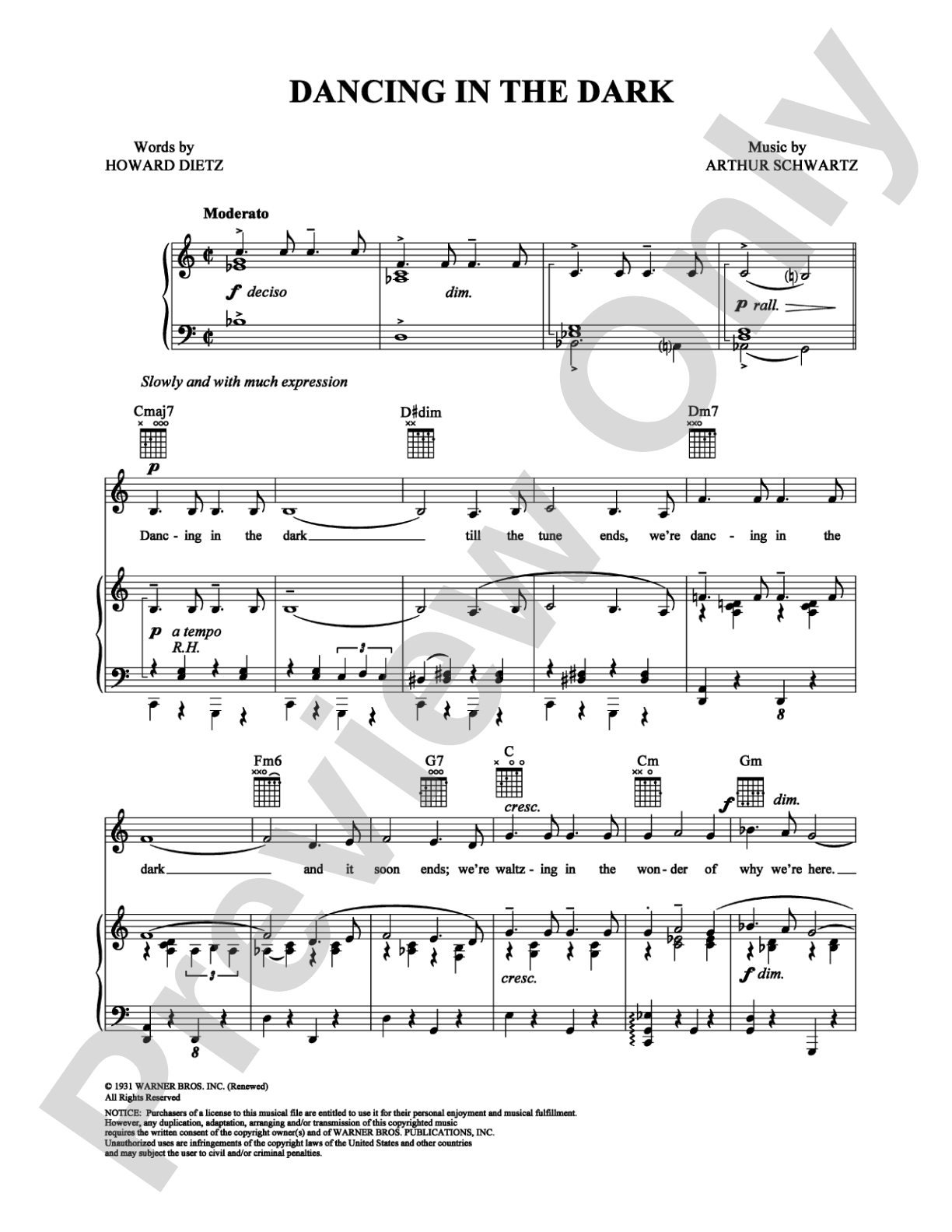
Dancing in the Dark: Piano/Vocal/Chords Digital Sheet Music

Dancing in the Dark: Piano/Vocal/Chords Digital Sheet Music

Arthur Schwartz

Item: 00-PS-0008426

Digital Download
$3.99
Description

Dancing in the Dark: Piano/Vocal/Chords Digital Sheet Music isn't in MakeMusic Cloud just yet...but it could be. Let us know you'd like to see it, and you'll help shape what comes next. In the meantime, start a free trial and dive into thousands of interactive titles your students can play along with today.

Sample Audio
No sample audio found.
Sample Video
Additional Details
SKU: 00-PS-0008426

More about this title

Why we love this

This standard belongs in every jazz and pop vocalist's working library. The piano/vocal/chords format gives pianists the harmonic structure they need to comp effectively while singers focus on the melody and lyric, making it ideal for collaborations between players at different experience levels.

What to expect

Sophisticated and intimate, this standard moves with an elegant swing. The harmonic language is rich without being overly complex, creating space for both the piano and voice to shine in easy dialogue.

Who it's for

Vocalists preparing auditions, jazz combos, and piano accompanists building their standards repertoire. This format works equally well in a vocal studio lesson, a small jazz ensemble, or a singer-pianist duo preparing for a cabaret or recital.

How to get the most out of it

  • Study the chord symbols carefully; they often suggest specific voicings that shape the song's harmonic color. Pianists should experiment with shell voicings and passing chords to fill space without overshadowing the vocal line.
  • Lock the tempo with your accompanist before performing. This standard typically benefits from a relaxed, conversational feel rather than strict metronomic precision.
  • Pay attention to the lyrical phrasing marked on the vocal line. These cues guide where the piano should push the tempo slightly forward or pull back to breathe with the singer.

How to use it

Program this alongside other standards from the same era for a jazz or American songbook recital. It also works beautifully as a feature number in a variety show or as a teaching piece in a vocal jazz ensemble where students learn to balance melody, harmony, and accompaniment in real time.

Skills your students will build

  • Reading and interpreting chord symbols for jazz comping
  • Balancing vocal phrasing with piano accompaniment
  • Understanding harmonic movement in standards-based repertoire
  • Collaborating between voice and piano parts with different notation systems

You May Also Like