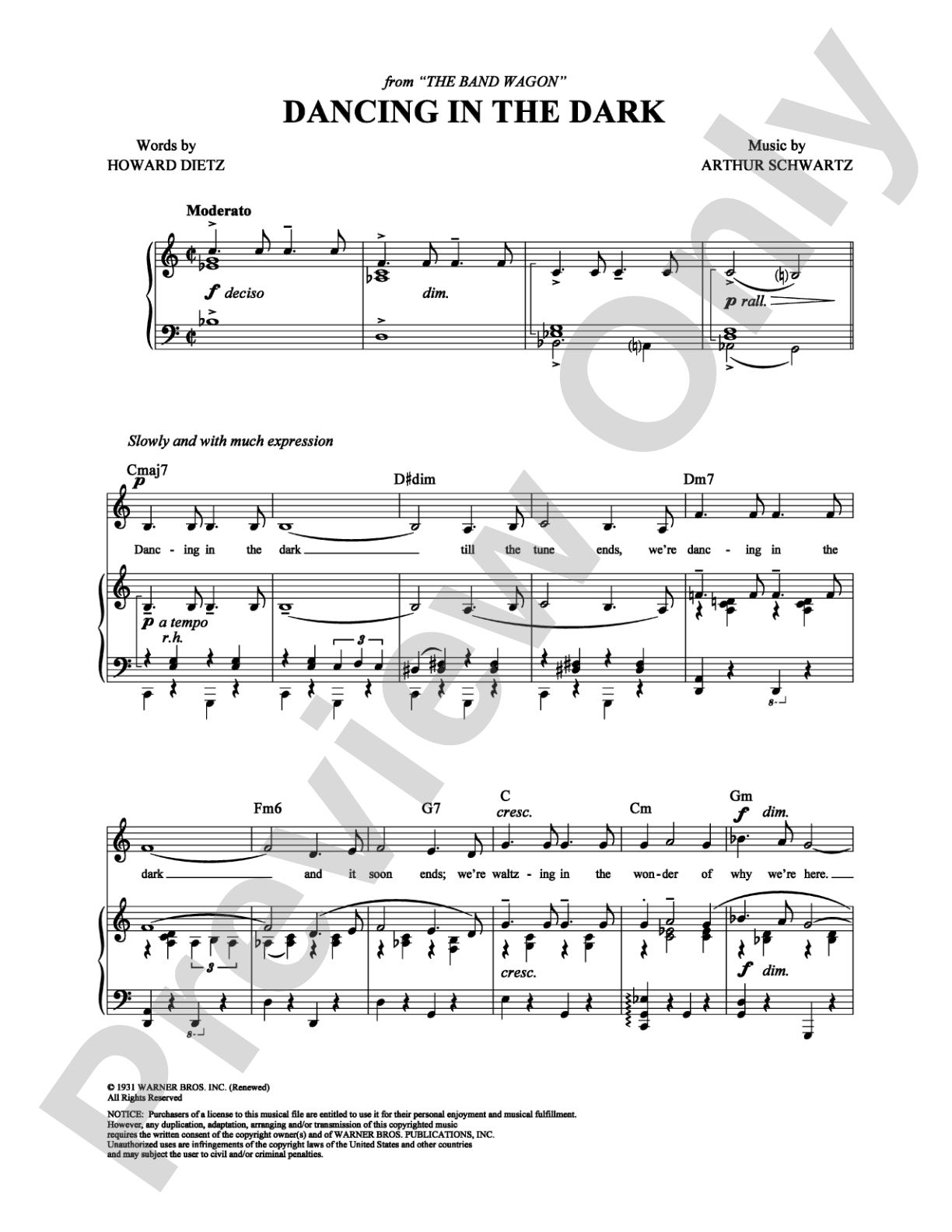
Dancing in the Dark: Piano/Vocal/Chords Digital Sheet Music

Dancing in the Dark: Piano/Vocal/Chords Digital Sheet Music

Bing Crosby, Arthur Schwartz

Item: 00-PS-0001957

Digital Download
$3.99
Description

Dancing in the Dark: Piano/Vocal/Chords Digital Sheet Music isn't in MakeMusic Cloud just yet...but it could be. Let us know you'd like to see it, and you'll help shape what comes next. In the meantime, start a free trial and dive into thousands of interactive titles your students can play along with today.

Sample Audio
No sample audio found.
Sample Video
Additional Details
SKU: 00-PS-0001957

More about this title

About the Artist: Bing Crosby

Bing Crosby (1903-1977) was an American singer and actor whose smooth baritone and innovative recording techniques shaped popular music for decades. His influence extended far beyond the recording studio; his interpretations of jazz standards and popular songs became benchmarks for singers in all genres, making him essential listening for anyone studying vocal phrasing, timing, and interpretive choices in American song.

Why we love this

This standard offers singers a chance to inhabit an American classic with genuine emotional stakes. The piano/vocal/chords format gives your pianists real work to do, comping opportunities, the chance to support a vocalist's phrasing, and room to develop the kind of sensitivity that separates accompanists from piano players.

What to expect

Moody and introspective, the piece wraps you in a cool, urbane atmosphere where every note feels carefully chosen. There's an ache to the harmony that invites intimate interpretation, somewhere between melancholy and acceptance.

Who it's for

This arrangement suits singers developing artistry in the Great American Songbook, from advanced high school vocalists to college students and adult learners seeking authentic jazz standards. Pianists looking to accompany vocalists in recitals or practice rooms will find clear chord symbols and a manageable range of technical demands.

How to get the most out of it

  • Study how Crosby's phrasing sits just behind the beat in verses; this rhythmic placement creates intimacy without dragging the tempo.
  • Balance the vocal melody with the chord accompaniment by using the lower register of the piano to anchor harmonies while keeping the upper voicings transparent.
  • Approach the bridge with a subtle lift in dynamics and warmth rather than a dramatic shift, letting the harmonic movement itself create forward momentum.
  • Let silence breathe between phrases; resist the urge to fill every moment with sound or busy accompaniment figures.

How to use it

Program this alongside other standards from the 1930s-1940s era to build a cohesive concert set, or use it as a bridge piece between more theatrical material and purely jazz repertoire. It works equally well in a recital dedicated to American song or as a solo feature in a cabaret-style event.

Skills your students will build

  • Reading and interpreting jazz chord symbols and chord changes
  • Vocal phrasing and rhythmic placement relative to the beat
  • Harmonic analysis of chromatic voice leading in jazz standards
  • Piano accompaniment techniques for vocal ballads
  • Stylistic interpretation of mid-century popular music

You May Also Like