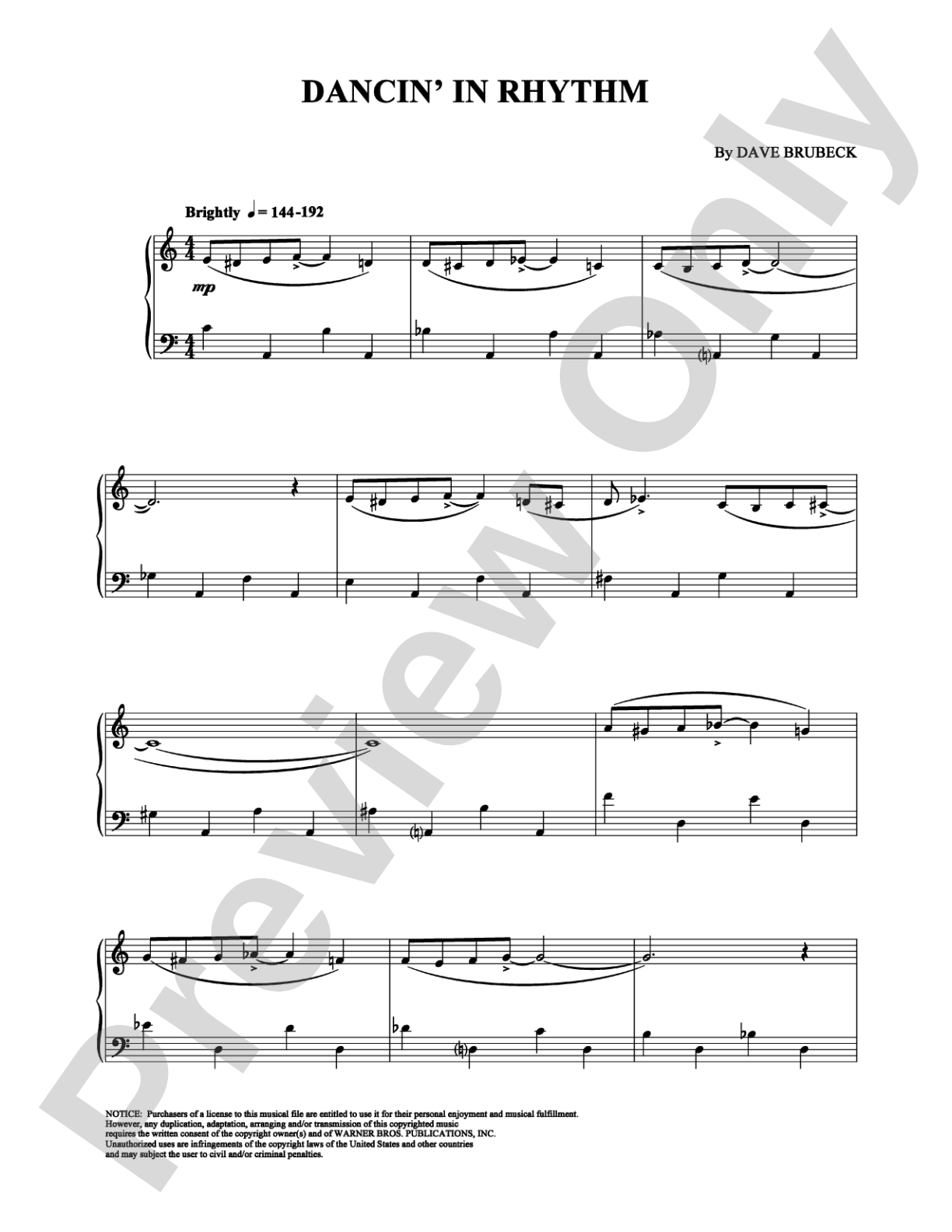
Dancin' in Rhythm: Piano Digital Sheet Music

Dancin' in Rhythm: Piano Digital Sheet Music

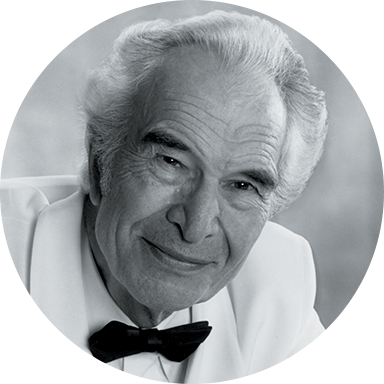
Dave Brubeck

Item: 00-PS-0000770

Digital Download
$3.99
Description

Dancin' in Rhythm: Piano Digital Sheet Music isn't in MakeMusic Cloud just yet...but it could be. Let us know you'd like to see it, and you'll help shape what comes next. In the meantime, start a free trial and dive into thousands of interactive titles your students can play along with today.

Sample Audio
No sample audio found.
Sample Video
Additional Details
SKU: 00-PS-0000770

More about this title

About the Artist: Dave Brubeck

Dave Brubeck

Dave Brubeck stands as one of the most consequential figures in American jazz, equally revered as a virtuoso improviser and a rigorous composer working across multiple genres. His formal training under Darius Milhaud at Mills College shaped his approach to blending jazz idioms with classical structures, a synthesis evident in his numerous orchestral works, chamber pieces, choral compositions, and large-scale vocal works performed by ensembles ranging from the London Symphony Orchestra to cathedral choirs worldwide.

Beyond his musical innovations, Brubeck played a pivotal role in advancing racial integration in mid-twentieth-century American music. His historic 1959 album "Time Out" became the first jazz recording to sell over a million copies, anchored by the enduring composition "Take Five." Throughout a career spanning decades, he received the Presidential Medal of the Arts, Grammy Lifetime Achievement Award, and election to the American Classical Music Hall of Fame, cementing his dual legacy as both a groundbreaking performer and a prolific composer of lasting significance.

Why we love this

Brubeck's writing for solo piano balances jazz accessibility with harmonic sophistication, making this piece a natural fit for pianists who want to develop their jazz language without sacrificing musical substance. The notated score respects both the improvisational tradition and the performer's need for clear guidance, allowing students to understand Brubeck's harmonic and rhythmic thinking while still finding room for personal expression.

What to expect

The piece captures the rhythmic vitality and harmonic playfulness Brubeck is known for, with a groove that feels both intellectually engaging and genuinely fun to play. There's a lightness and conversational quality to the melody, as though Brubeck is sharing a witty observation rather than lecturing, all set against a rhythmic foundation that propels the music forward with infectious energy.

Who it's for

This piece serves pianists from intermediate-advanced levels who are beginning to explore jazz composition and want to learn from a master's notated work. Students preparing for jazz competitions, recitals featuring twentieth-century American music, or portfolios that blend classical and jazz traditions will find substantive material here.

How to get the most out of it

  • Shape the melody with a lyrical touch even during uptempo passages; Brubeck's jazz phrases often benefit from the same dynamic sensitivity you'd bring to a classical line.
  • Anchor the left hand rhythm without letting it become metronomic; think of it as a conversation with, not a accompaniment to, the right-hand line.
  • Lean into the syncopated phrases by feeling the underlying pulse rather than fighting it; this creates the rhythmic ease that defines Brubeck's style.
  • Explore the harmonic color changes Brubeck notates, especially chord voicings that might feel unfamiliar at first read; they're intentional compositional choices, not performance options.

How to use it

Place this alongside other twentieth-century American piano works to create a concert section that showcases jazz's influence on concert music, or pair it with classical pieces by composers Brubeck admired to highlight the cross-pollination between genres. It also serves well as a recital closer that leaves audiences energized, or as an educational demonstration piece for students learning how great improvisers translate their language into written form.

Skills your students will build

  • Reading jazz chord voicings and understanding harmonic movement beyond diatonic function
  • Playing syncopated rhythms with precision and musical ease
  • Interpreting notated jazz phrasing to sound conversational rather than mechanical
  • Translating between the written page and idiomatic performance in jazz piano style

You May Also Like