
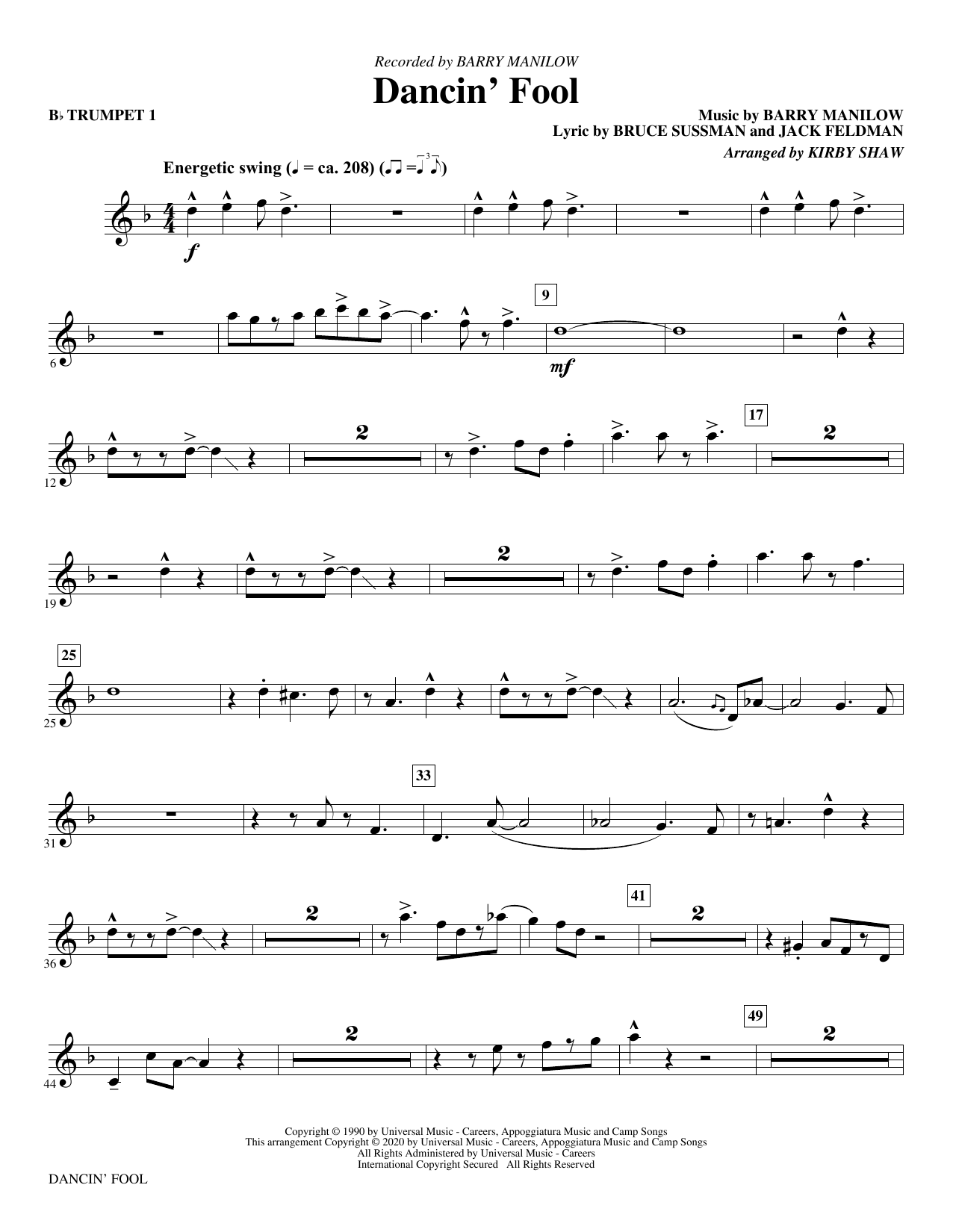

Dancin' Fool (arr. Kirby Shaw): Choral Instrumental Pak
As performed by Barry Manilow / Arranged by Kirby Shaw
Item: 35-PK00459229
$30.00
Pickup currently not available
Buy Extra Parts (Digital PDF Download)
Parts Added to Cart!
Description
Here is a great chart in the style of Krupa and Rich and a super hot arrangement. Try to sit still when you hear this--it can't be done. If you don't have a big band, the showtrax really brings the style alive.


Dancin' Fool (arr. Kirby Shaw): Choral Instrumental Pak isn't in MakeMusic Cloud just yet...but it could be. Let us know you'd like to see it, and you'll help shape what comes next. In the meantime, start a free trial and dive into thousands of interactive titles your students can play along with today.
Request This Title
Tell us you want it.
Start Your Free Trial
Explore everything that's ready to play right now.
Sample Audio
No sample audio found.
Sample Video
No sample videos found.
Additional Details
Publisher:
Hal Leonard
SKU:
35-PK00459229
More about this title
About the Artist: Barry Manilow
Barry Manilow rose to prominence in the 1970s as a composer, arranger, and performer known for crafting melodically sophisticated pop songs with orchestral sensibility. His work bridges pop accessibility and musical craft, making him a natural fit for educators seeking material that engages students while maintaining artistic integrity. Manilow's catalog has proven durable in educational settings precisely because his songs reward careful arrangement and ensemble musicianship.
For choral and jazz programs, Manilow's compositions offer something beyond novelty: they demand real interpretive work from singers and musicians. Kirby Shaw's arrangement of Dancin' Fool captures this spirit by channeling the swing and precision associated with big band masters, giving students a pathway into jazz vocabulary through material they often find genuinely enjoyable.
Why we love this
Kirby Shaw takes a Barry Manilow pop standard and translates it into the language of classic big band swing, creating something that sounds both contemporary and timeless. The arrangement pulls off a neat trick: it's vocally accessible and energetic while still respecting jazz conventions that drummers like Gene Krupa and Buddy Rich established. Your ensemble will sound polished and swinging without needing a full 18-piece band.
What to expect
Propulsive and giddy. The arrangement captures the perpetual motion and good humor of the original song while channeling the precision and drive of mid-century swing. It's the kind of piece that makes listeners want to move, but it earns that response through real musicianship and rhythmic integrity.
Who it's for
Jazz choirs and show choirs looking for material that swings authentically without sounding dated. Directors who want their ensembles to explore big band vocabulary through a pop song students already know. Programs seeking a fun, high-energy number that builds genuine musicianship rather than relying on novelty.
How to get the most out of it
- Study the showtrax carefully if you're building this chart without a live rhythm section. The accompaniment does essential work establishing the swing feel and style authenticity that makes Kirby Shaw's voicings land properly.
- Lock the entrance of the vocal line with precision; the punch of this arrangement depends on the choir attacking together with the precision of a single voice.
- Shape the dynamics with restraint. The swing groove can flatten if the arrangement is sung at one volume level. Let the chart breathe by honoring the rises and releases Shaw notated.
- Balance instrumental solos or passages against choral sections. This material thrives on contrast between tight ensemble singing and moments where rhythm and horns take focus.
How to use it
Slot this into a jazz or pops concert as a showstopper that connects to repertoire from the swing era, or use it in a show choir concert where it'll generate immediate audience engagement. The piece also works well in a spring concert that mixes pop standards with jazz arrangements, bridging students' listening habits and ensemble goals.
Skills your students will build
- Swing articulation and phrasing specific to jazz idiom
- Rhythmic precision in ensemble contexts with syncopated material
- Balancing solo and sectional responsibilities within a single arrangement
- Listening to and responding to rhythm section cues and groove
- Interpretation of stylistic markings derived from big band conventions