
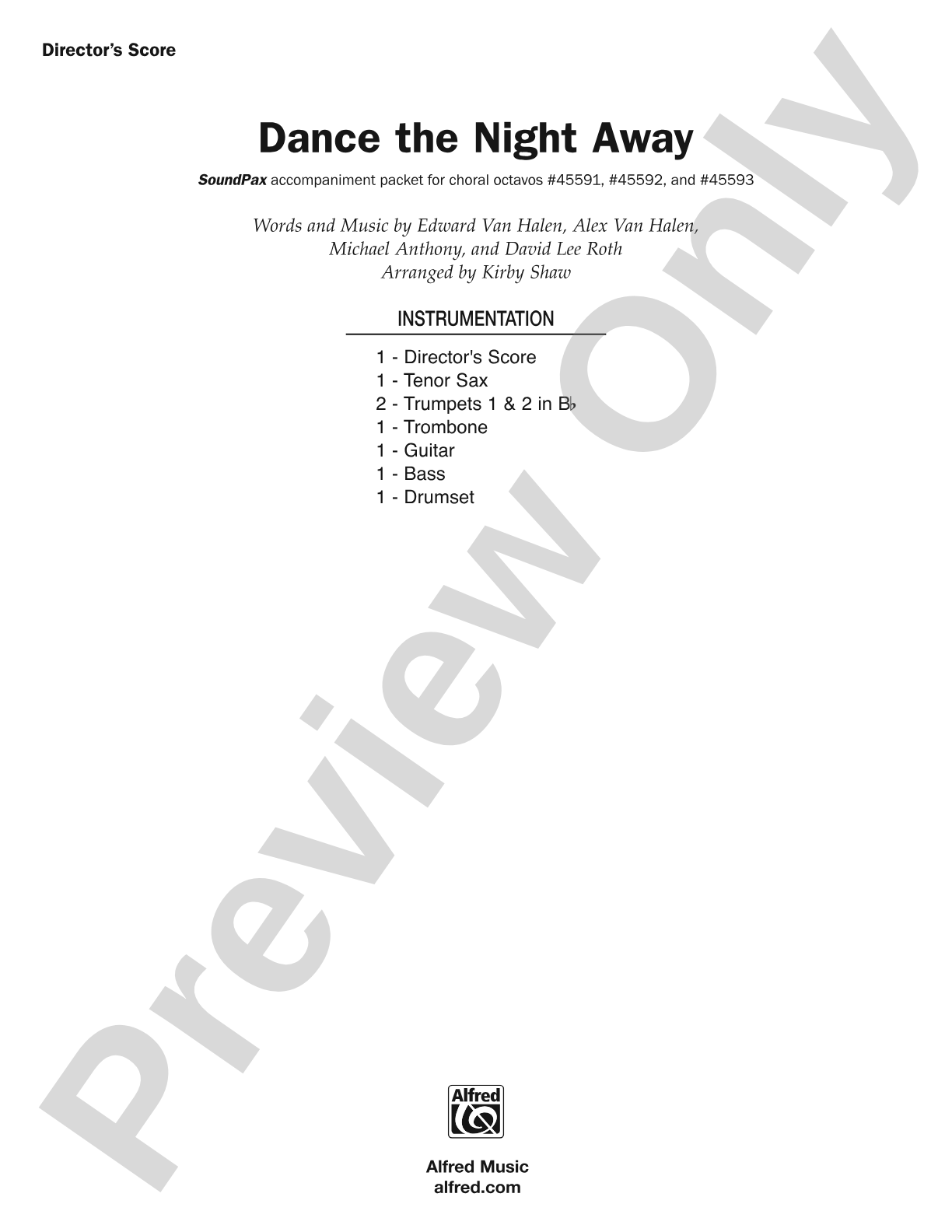

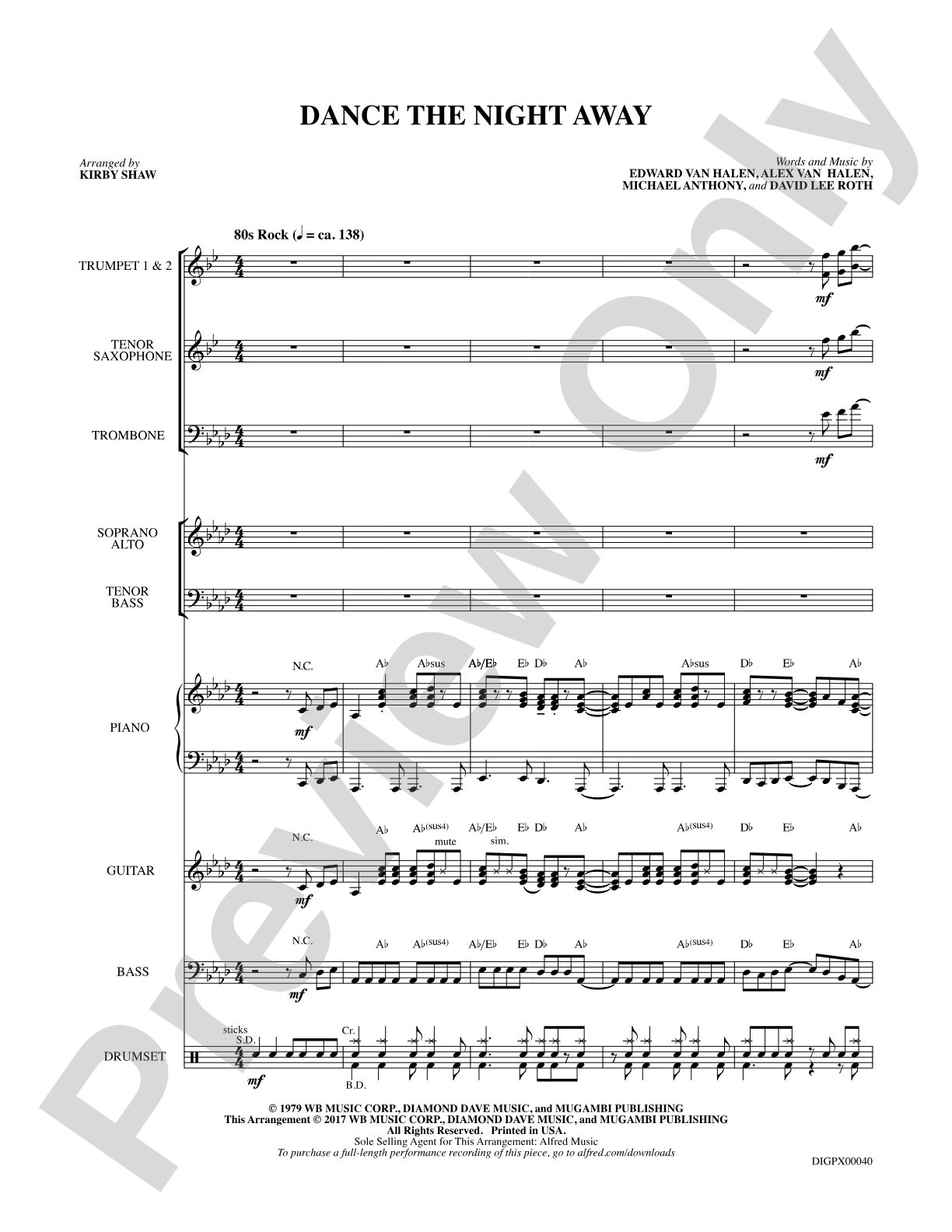
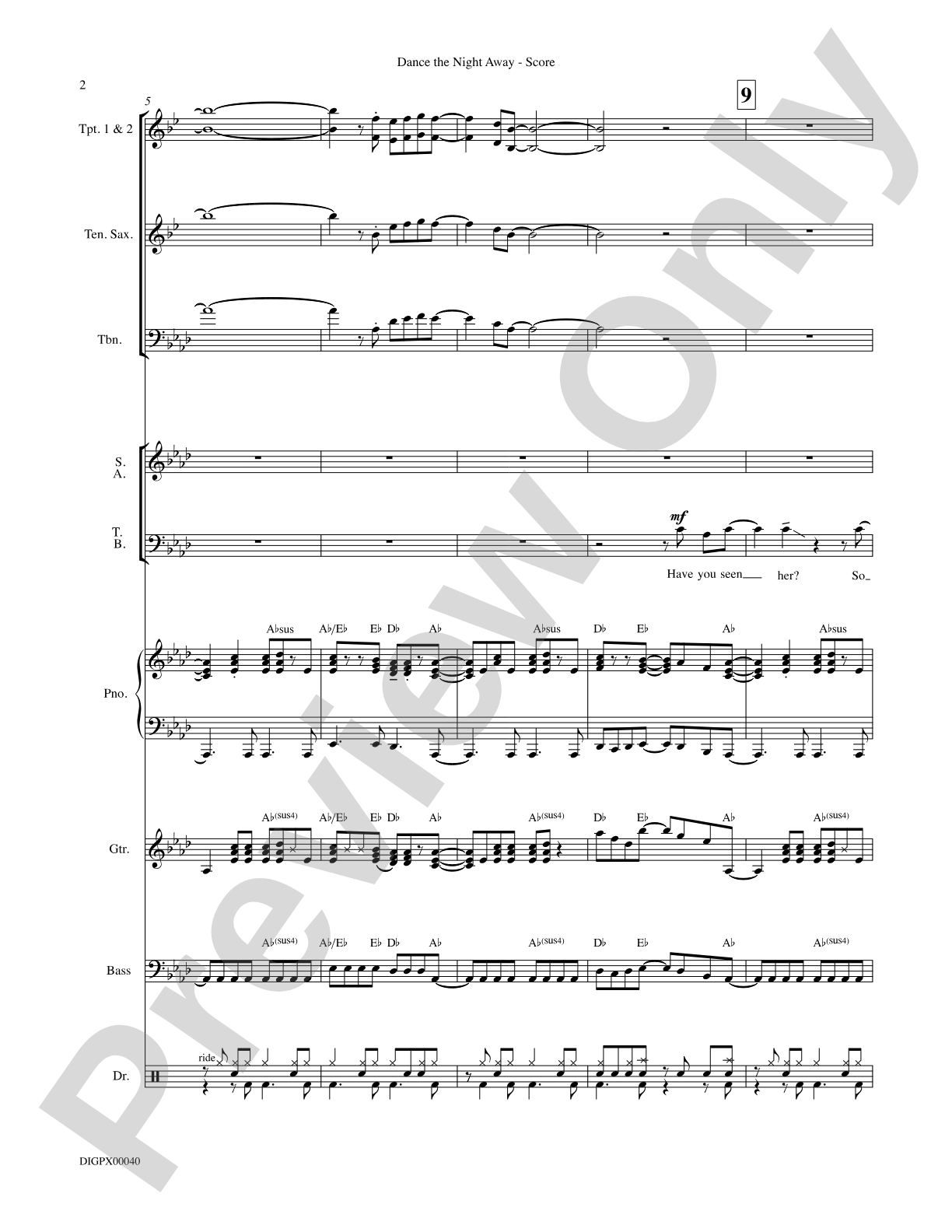
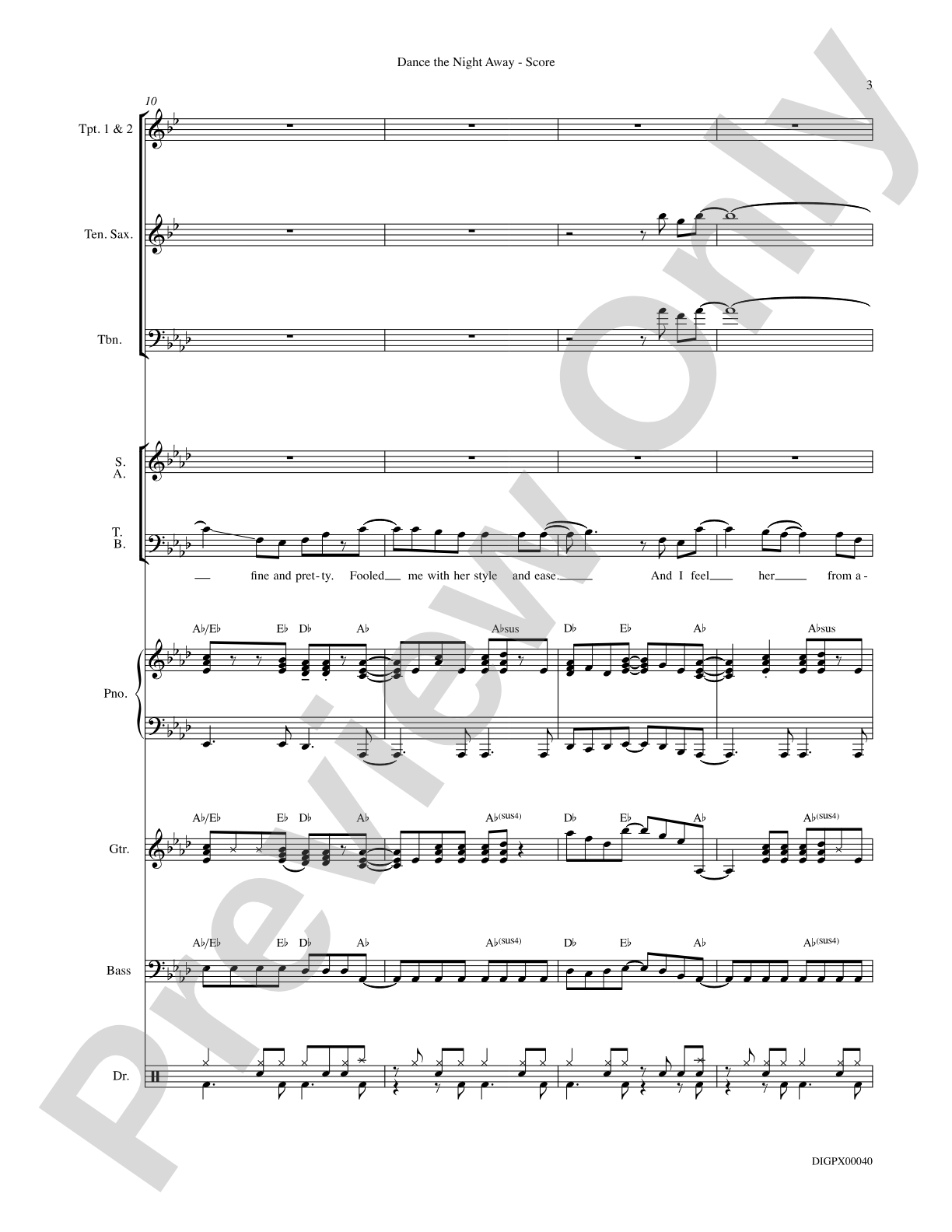
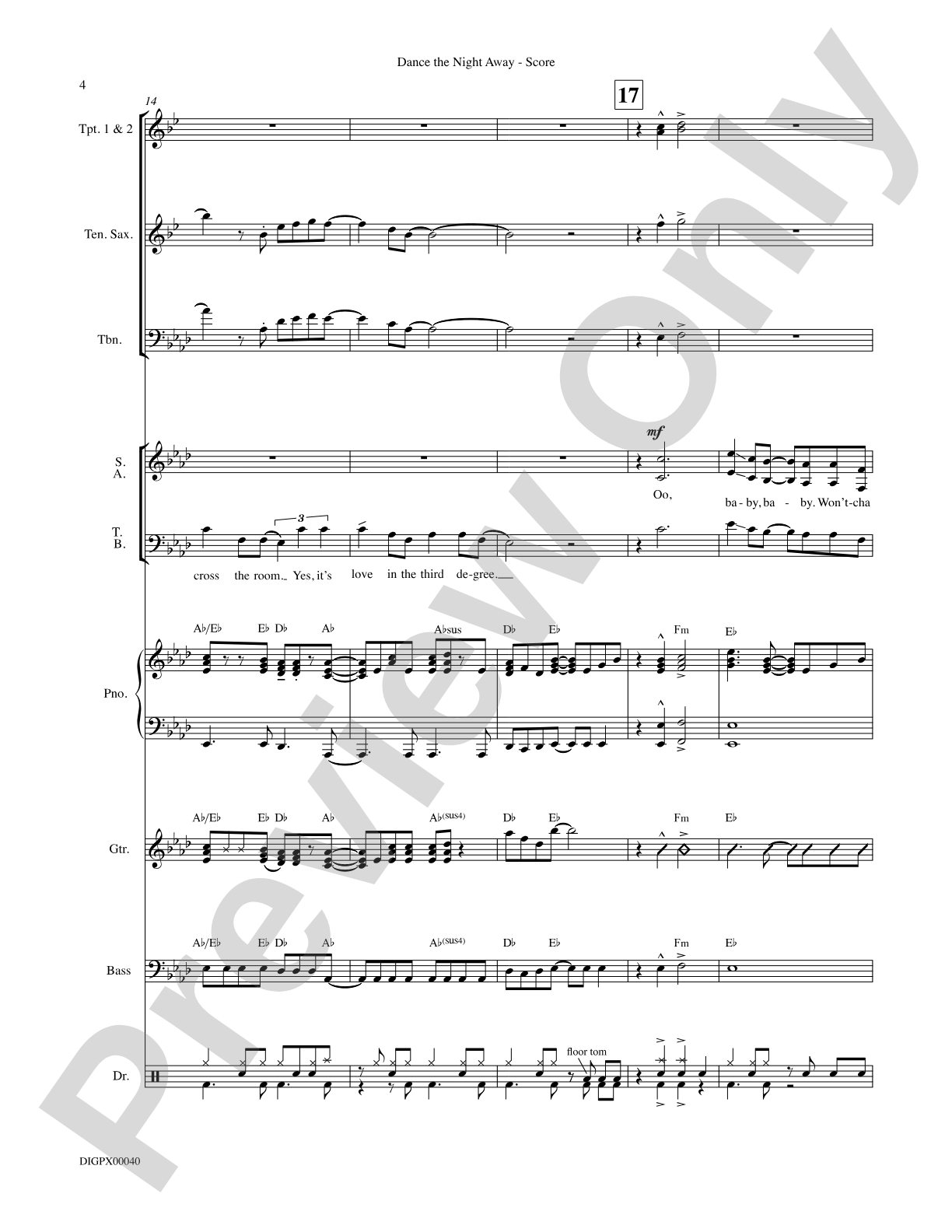
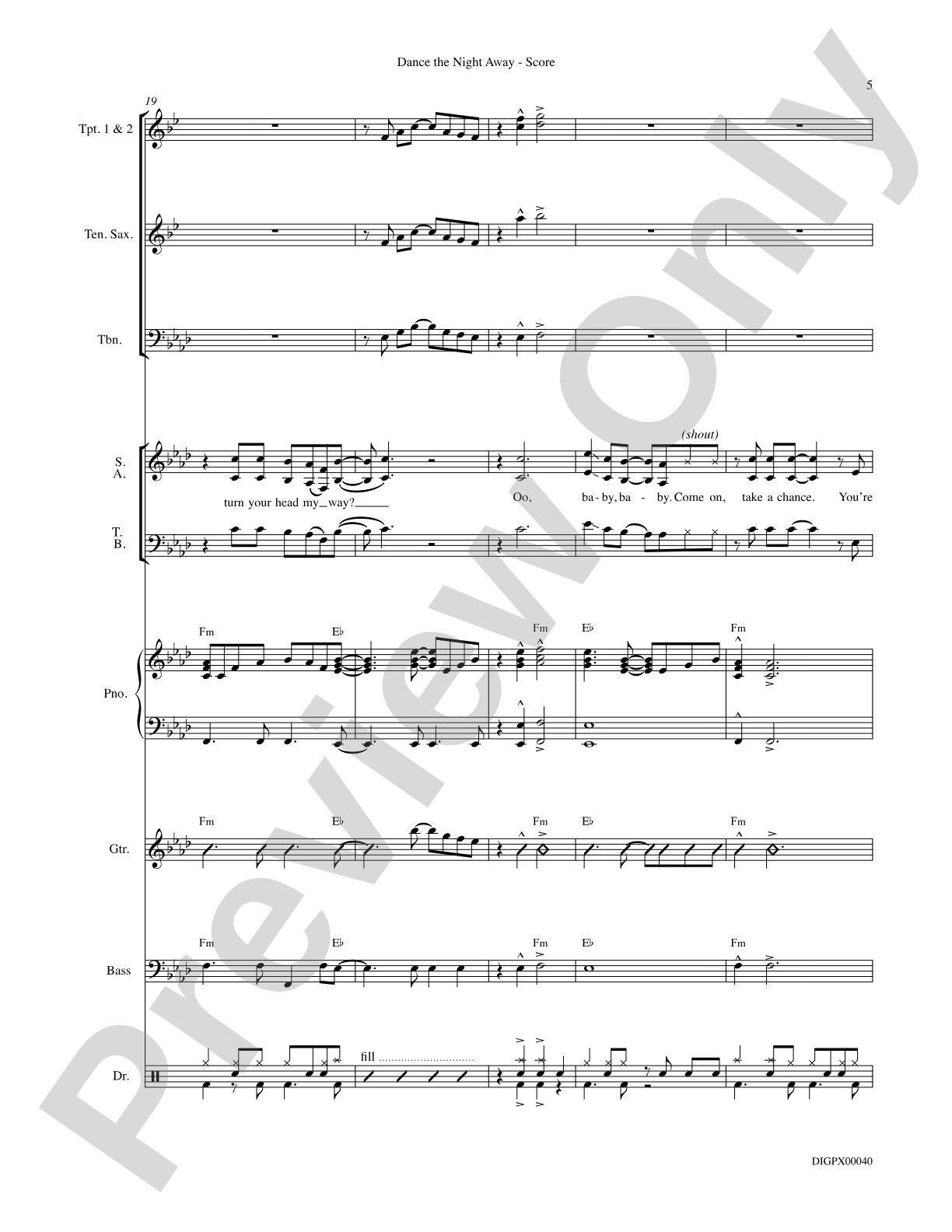
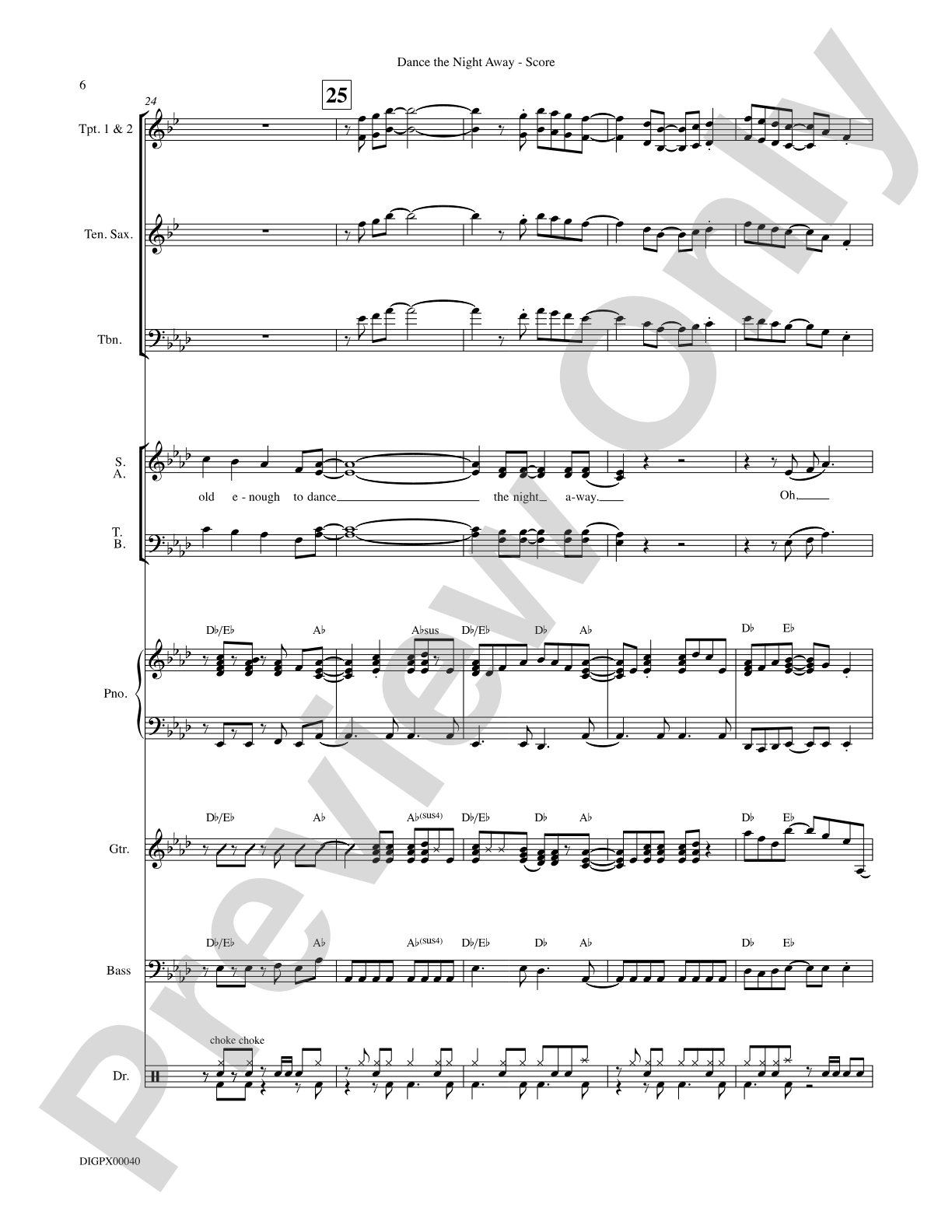
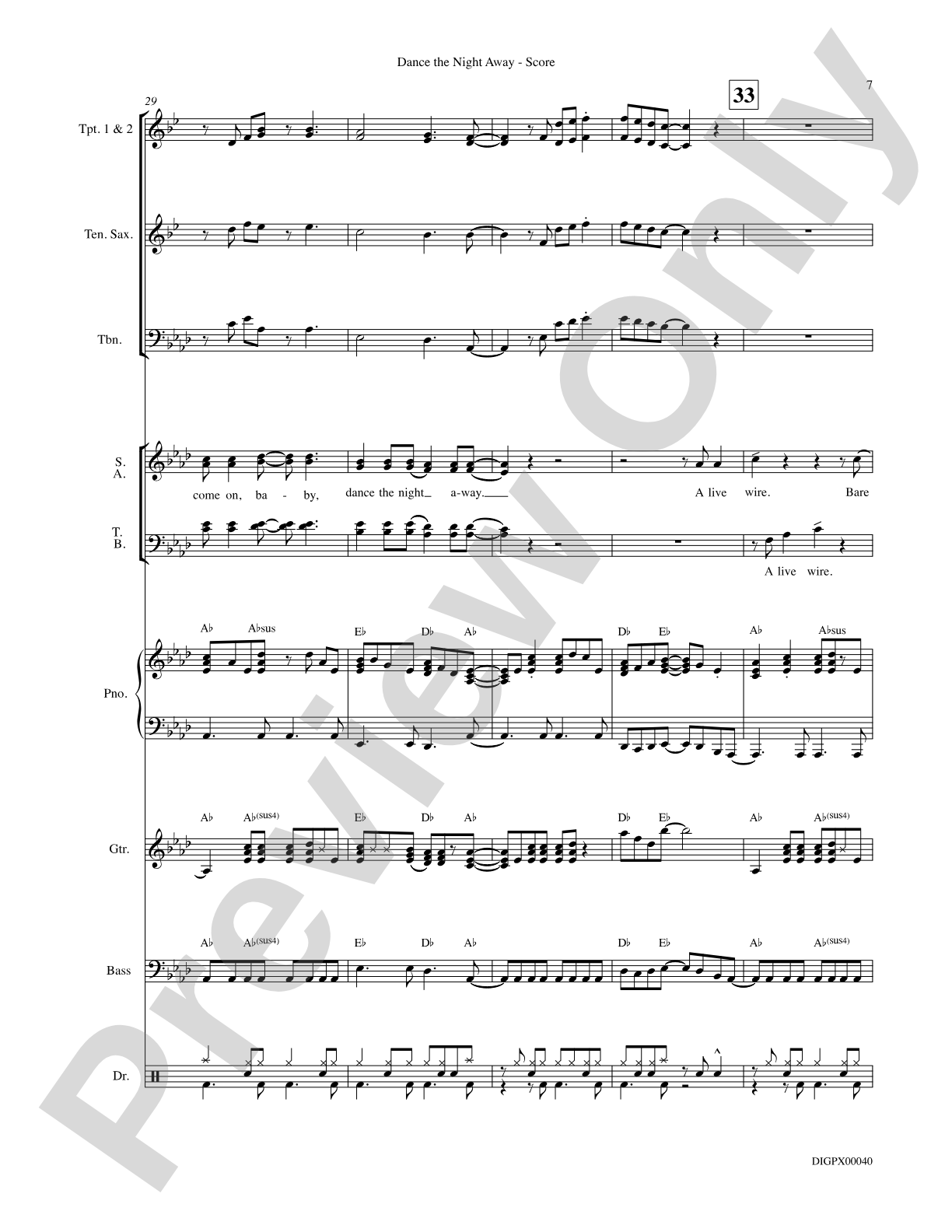
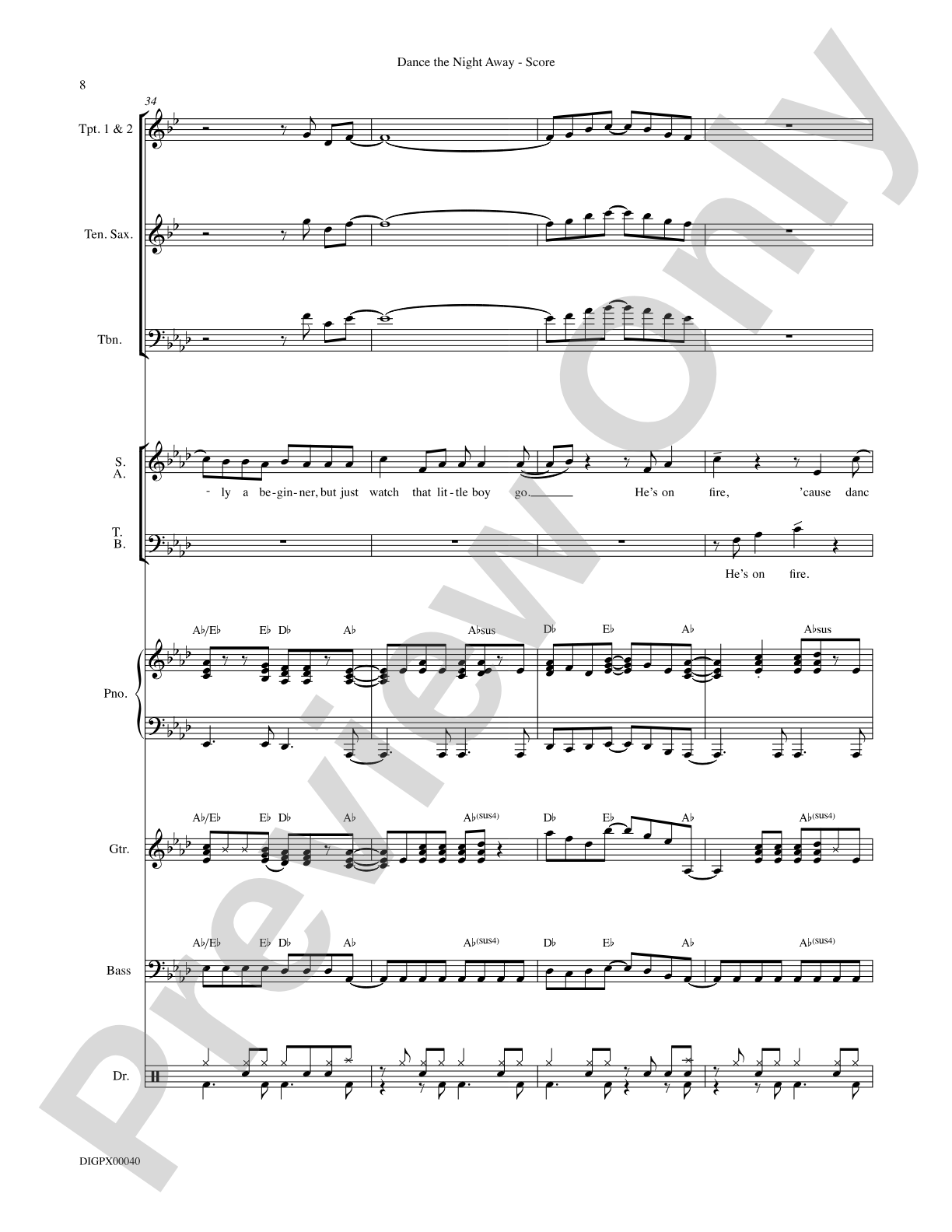
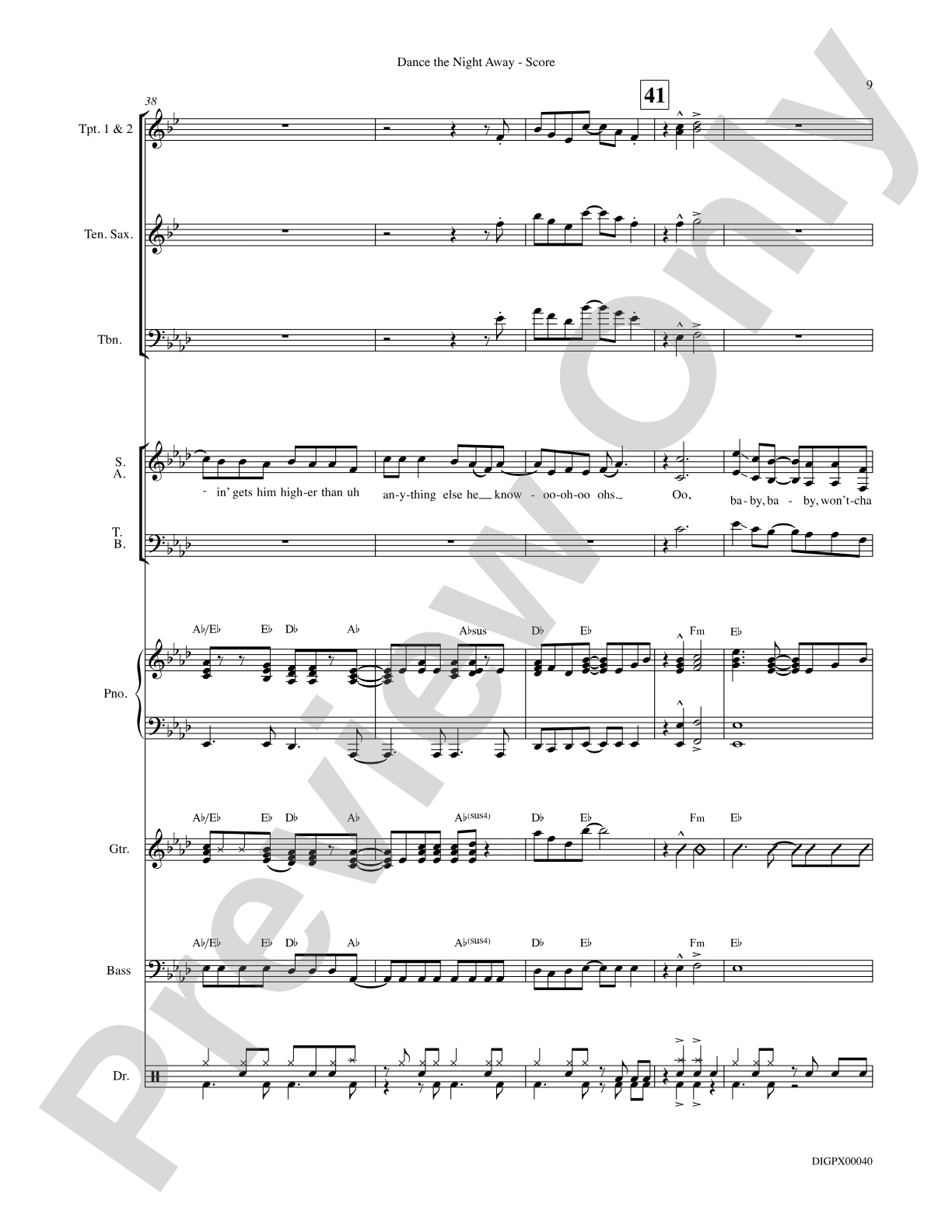
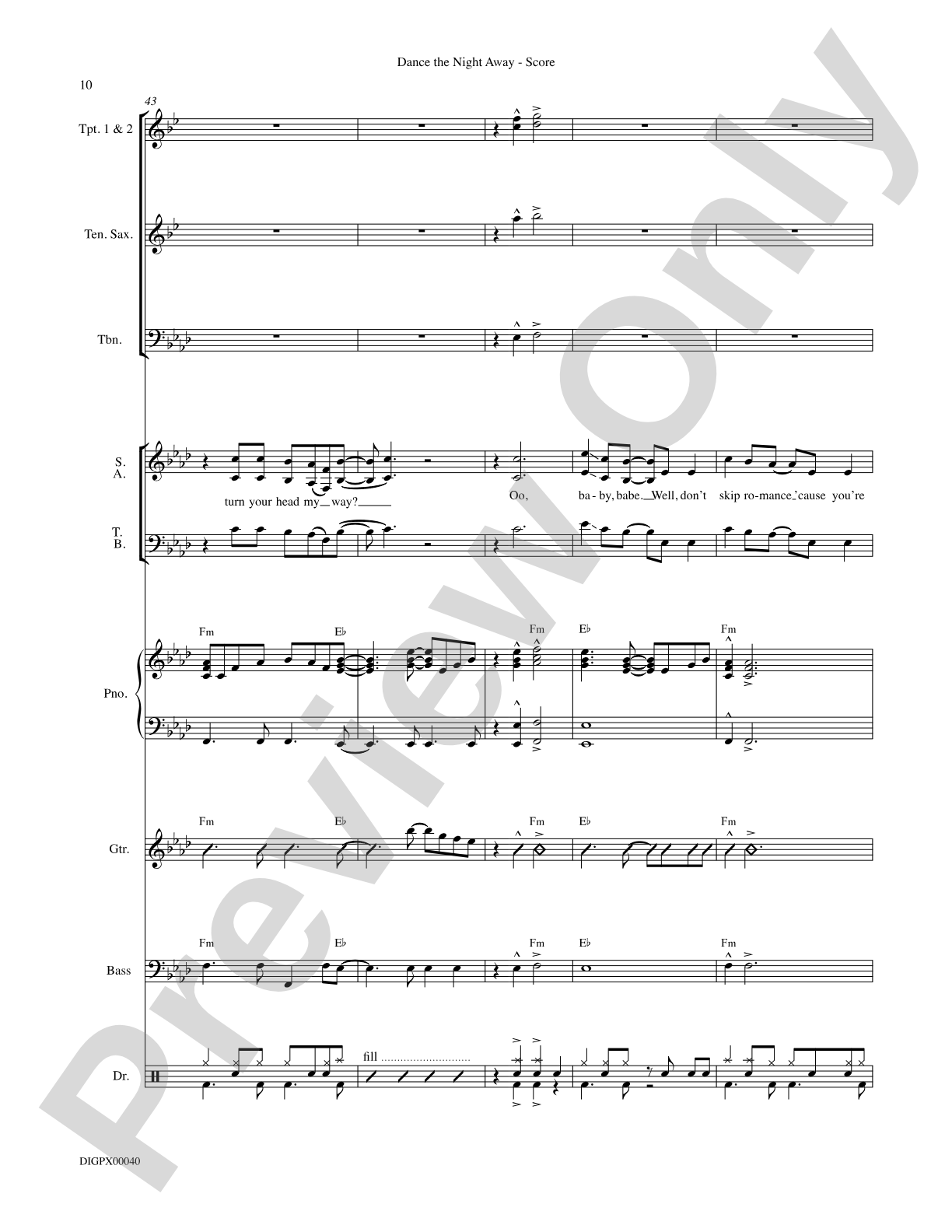
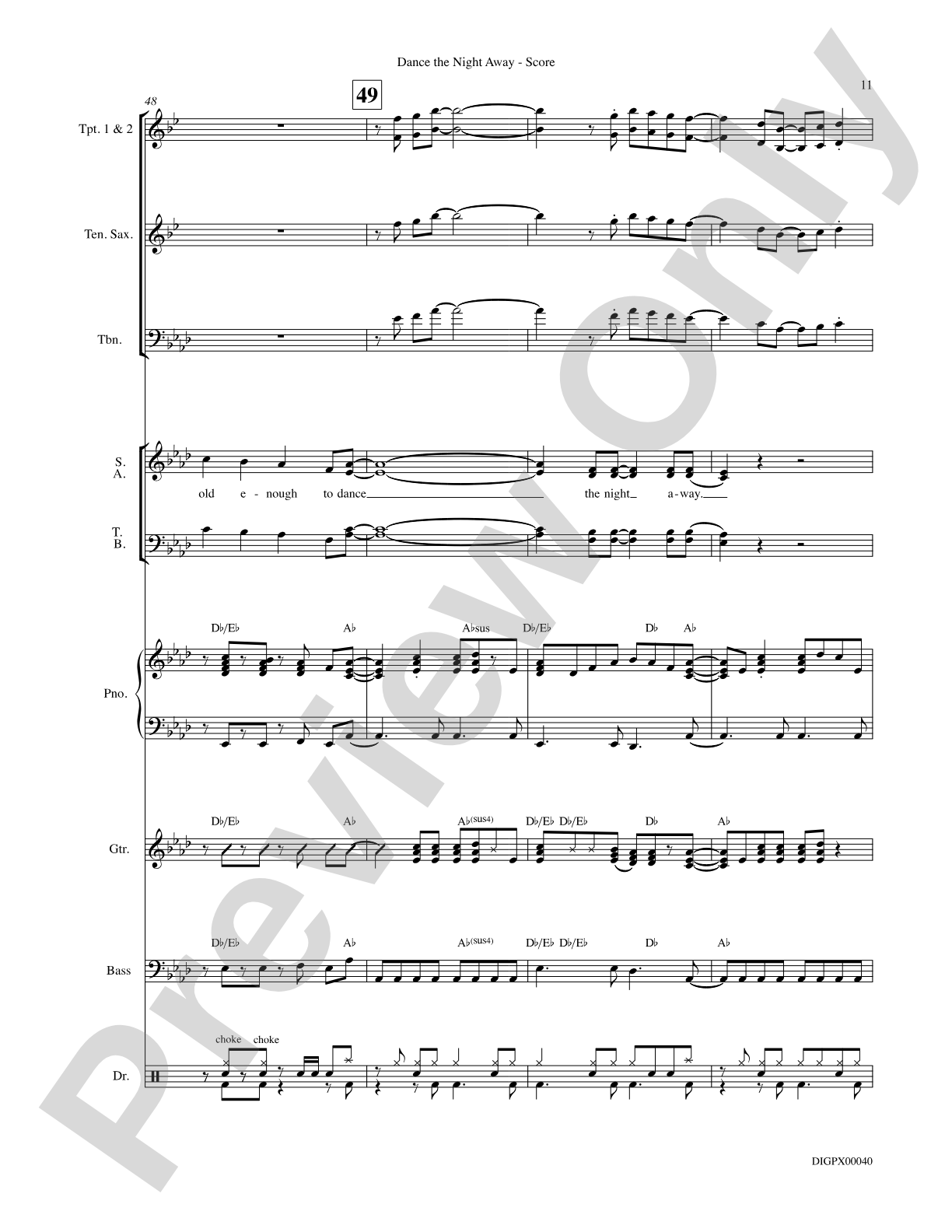
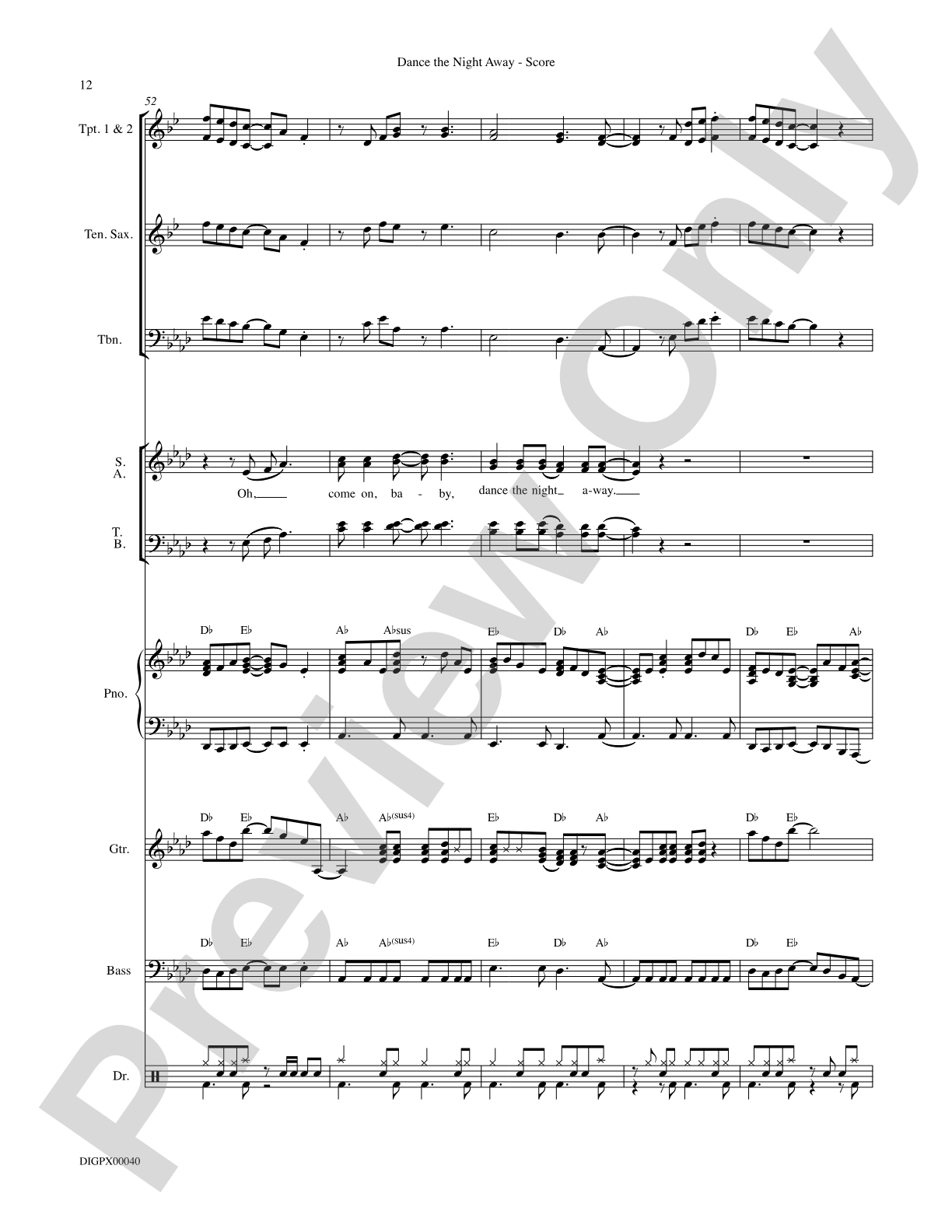
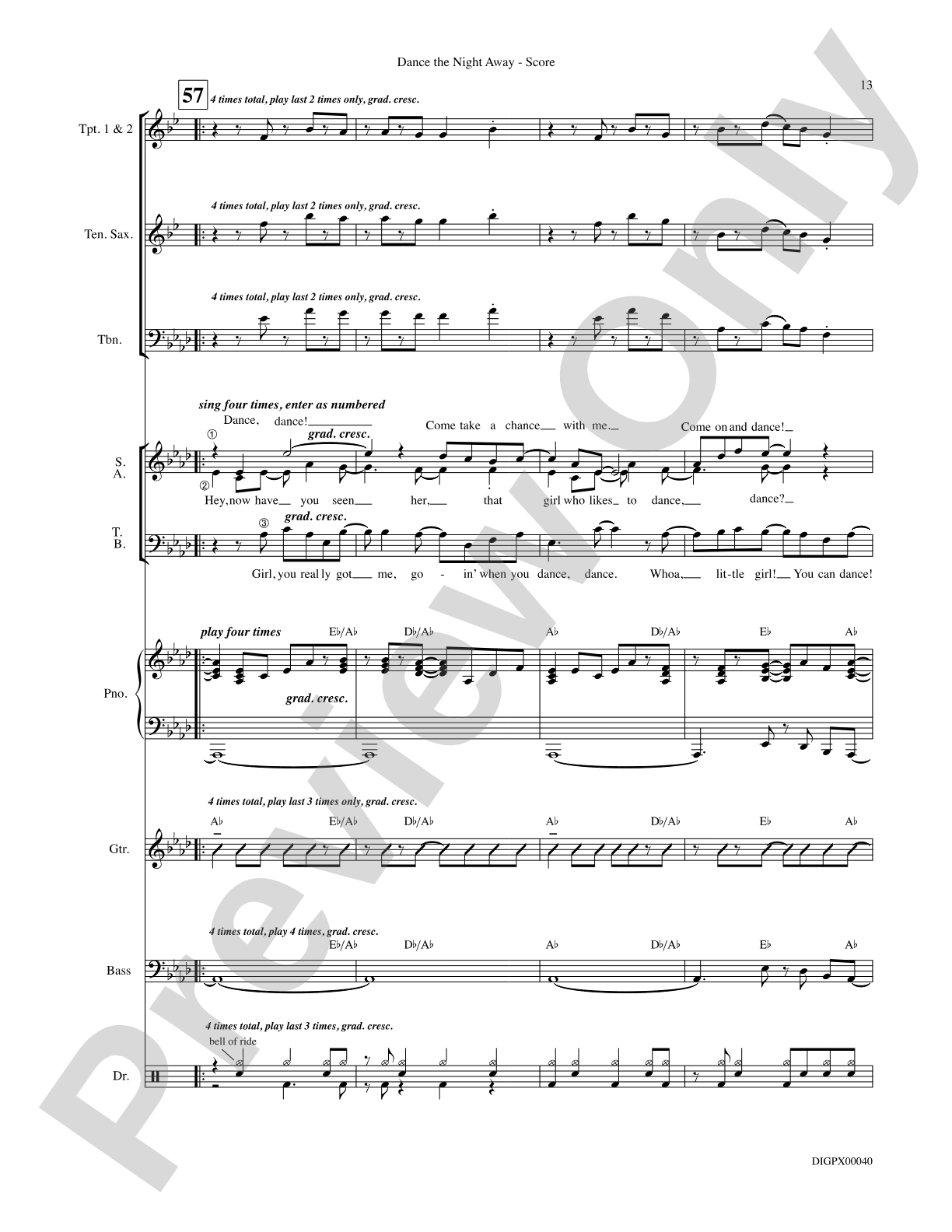
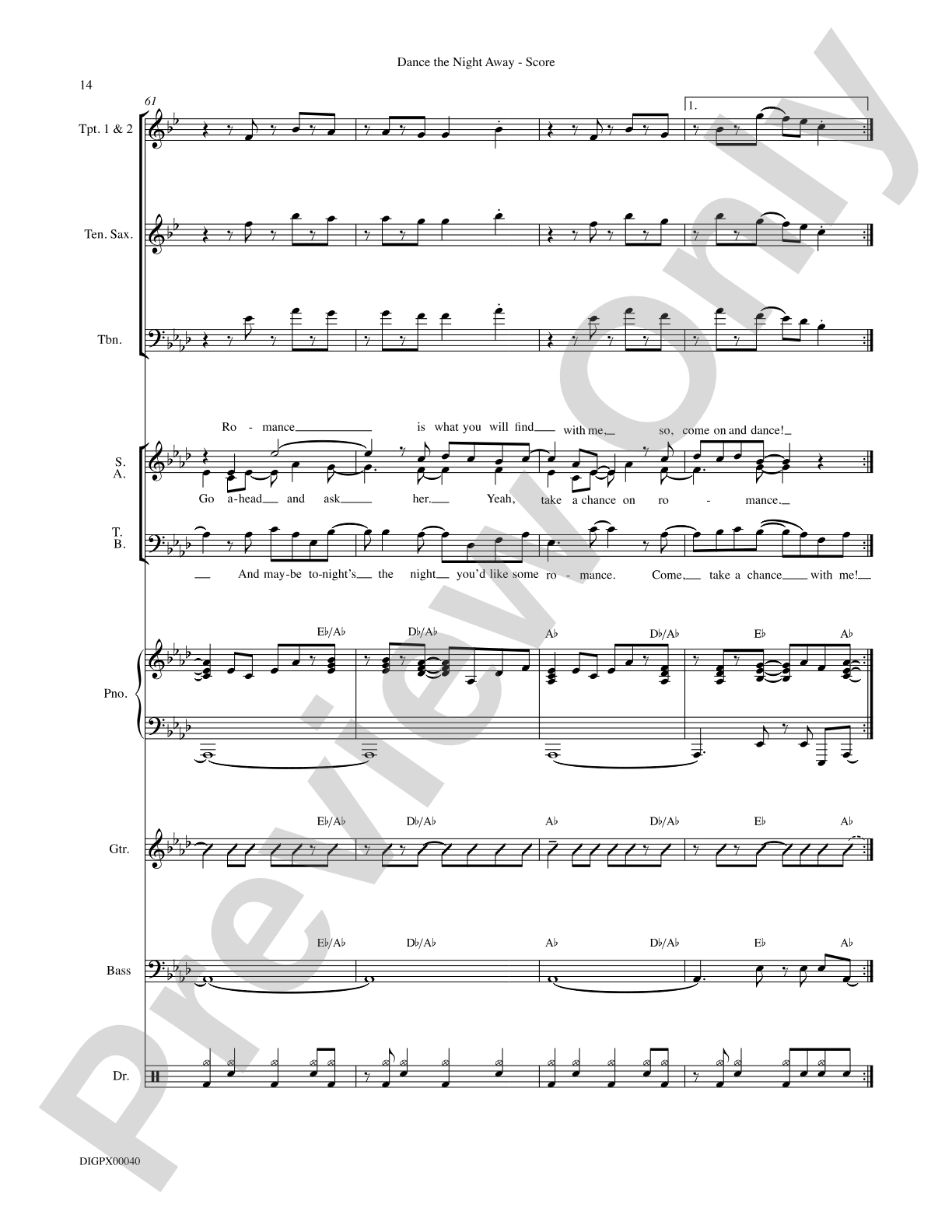
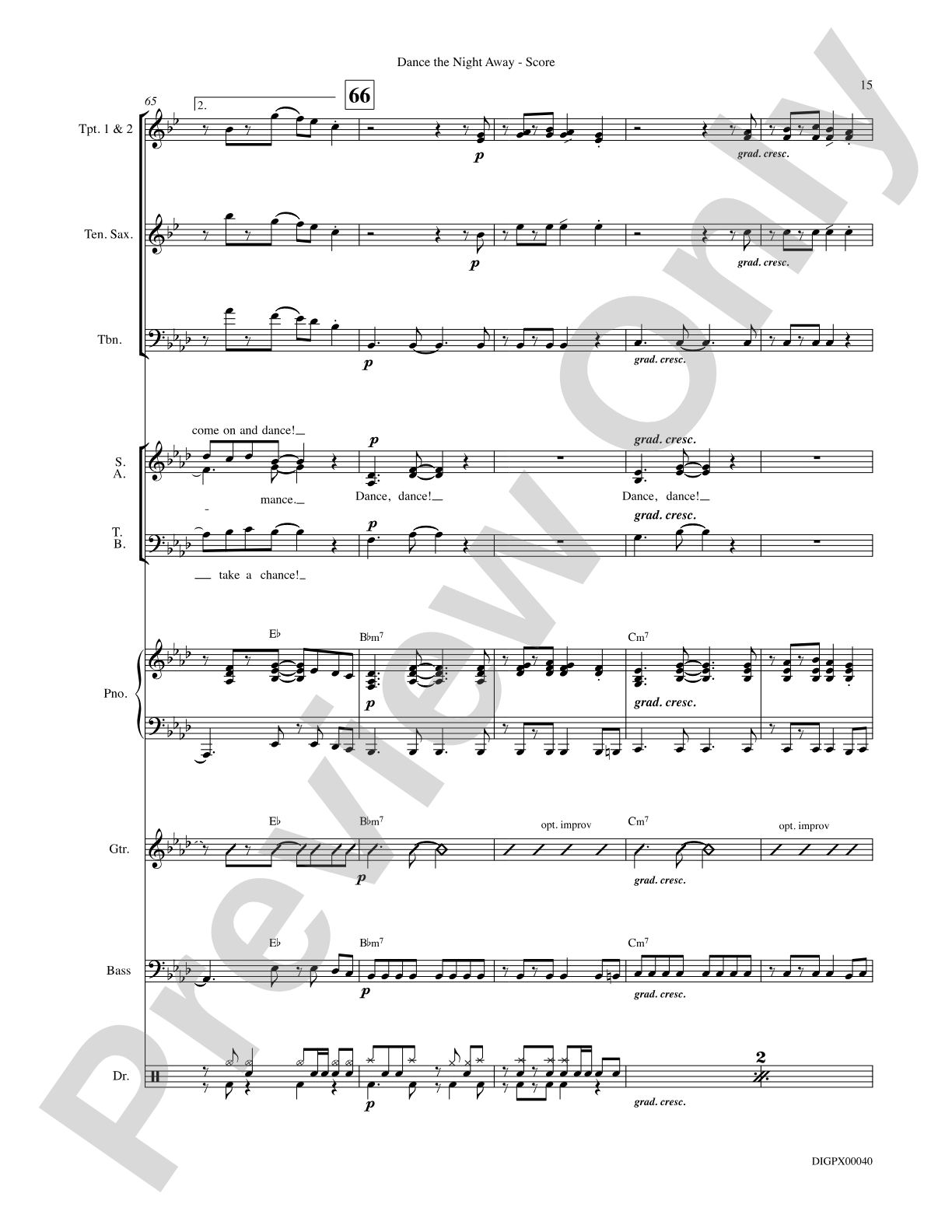
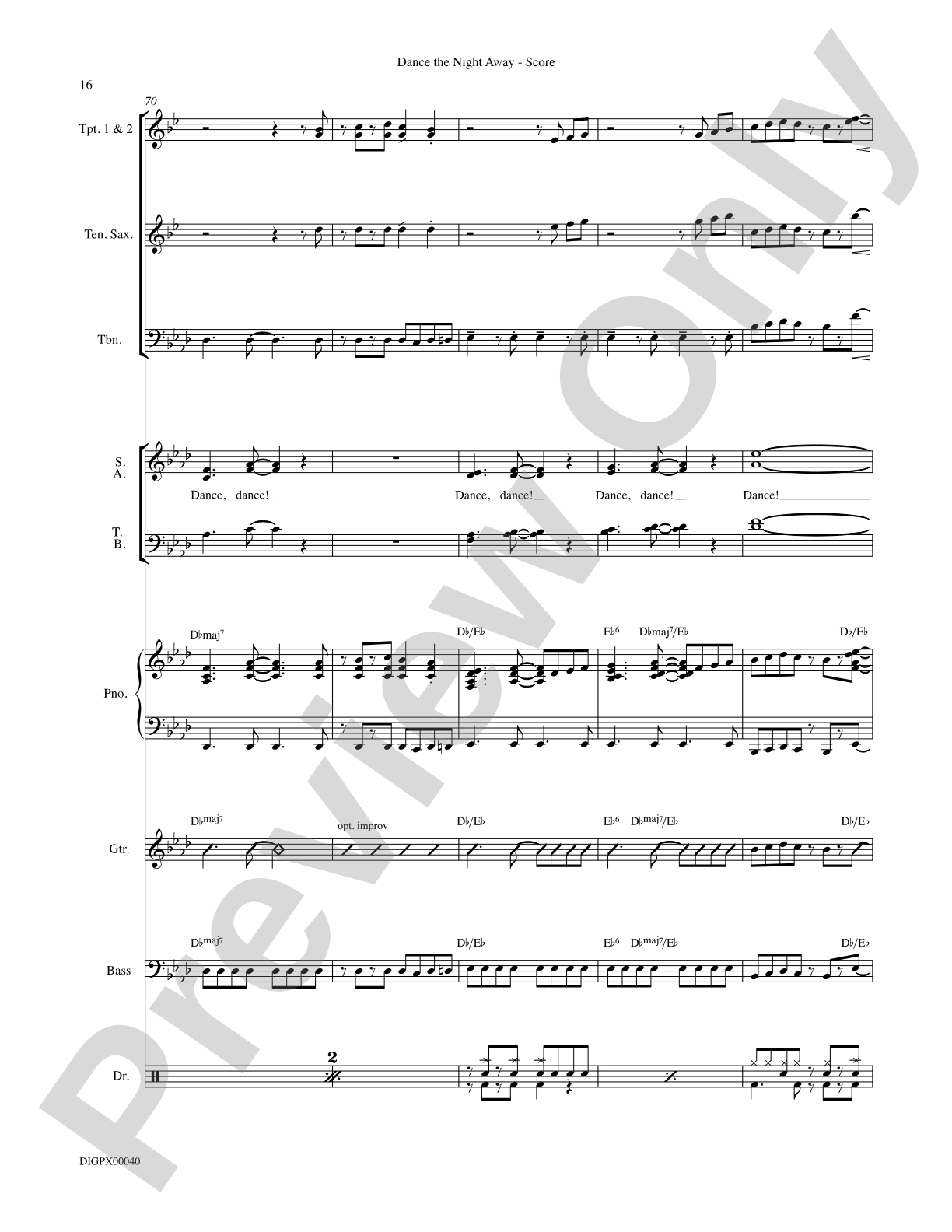
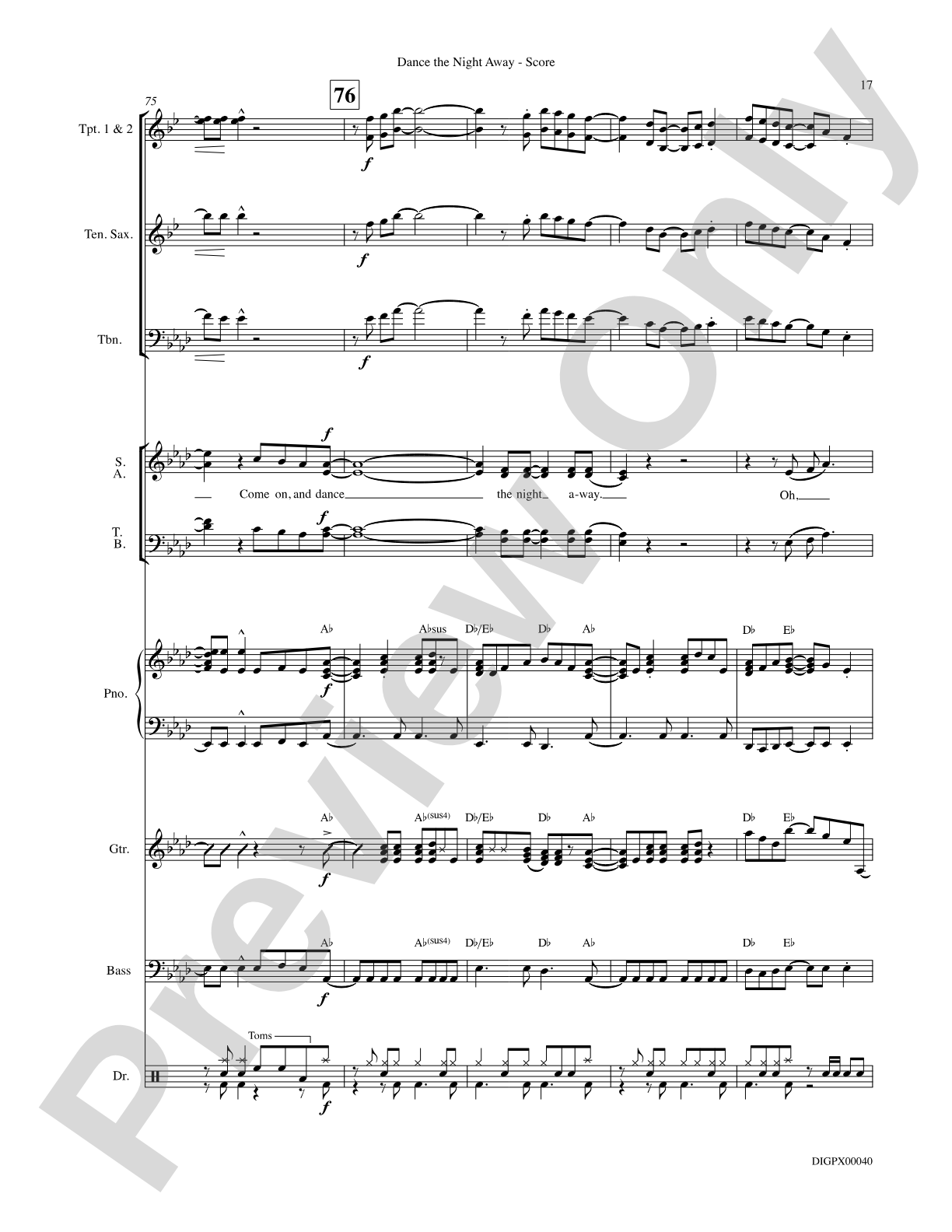
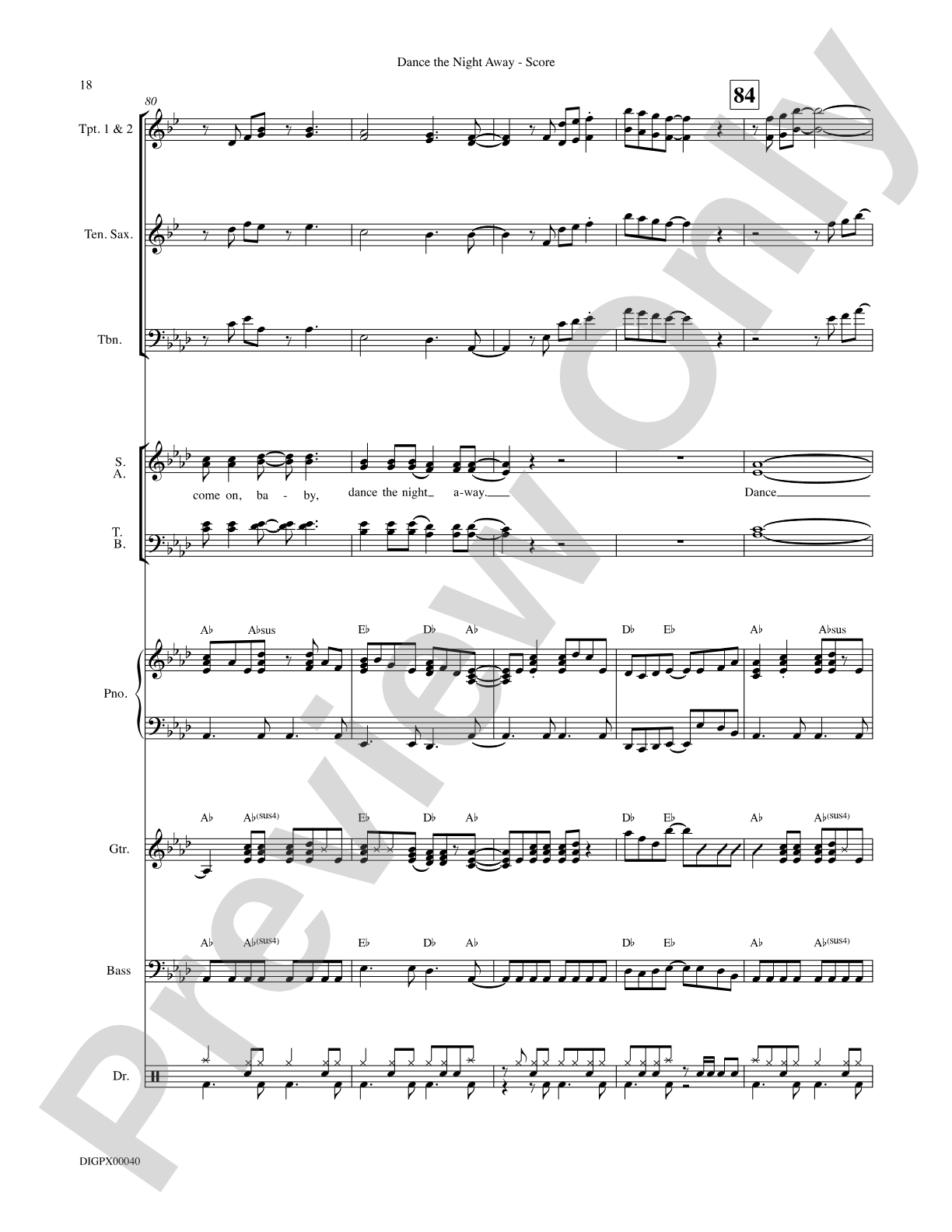
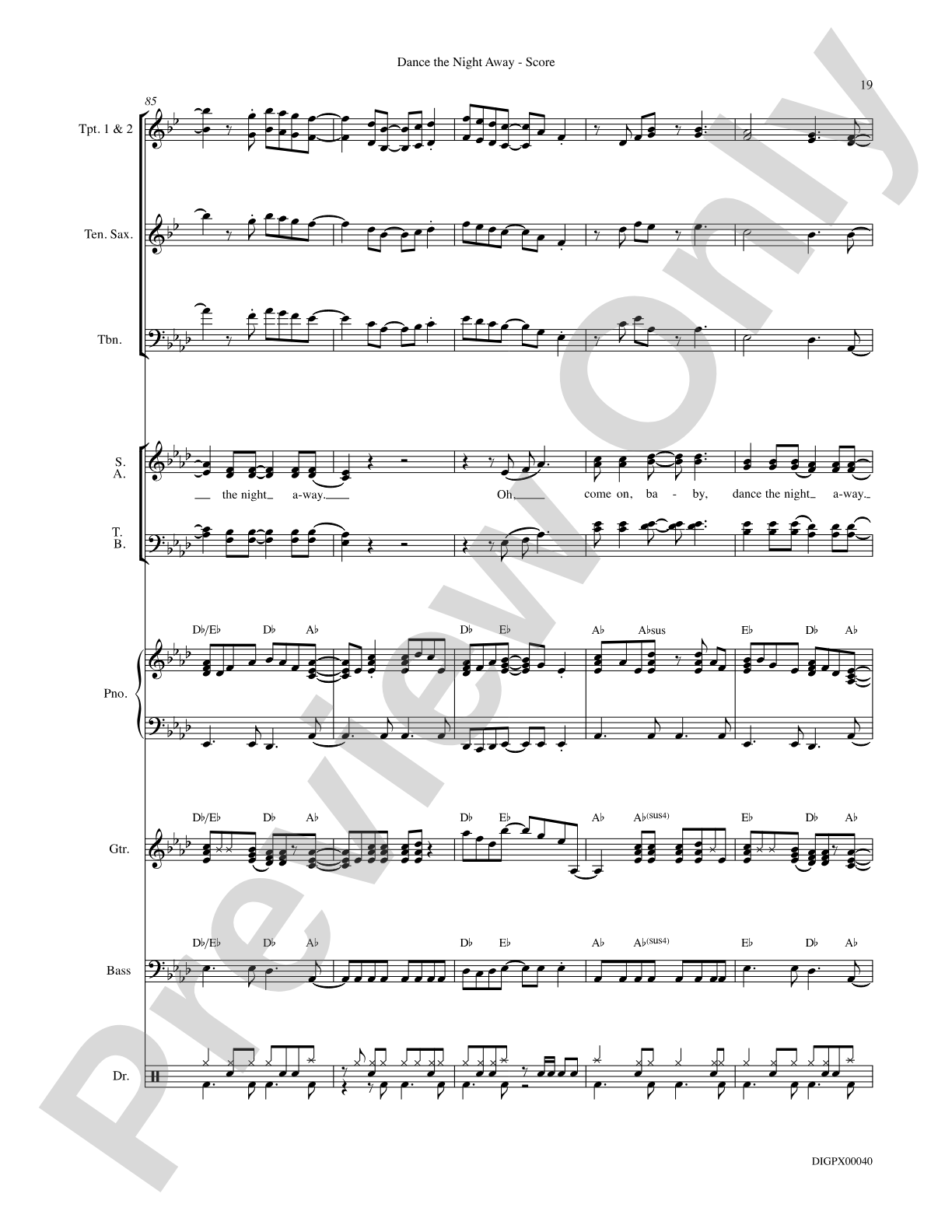
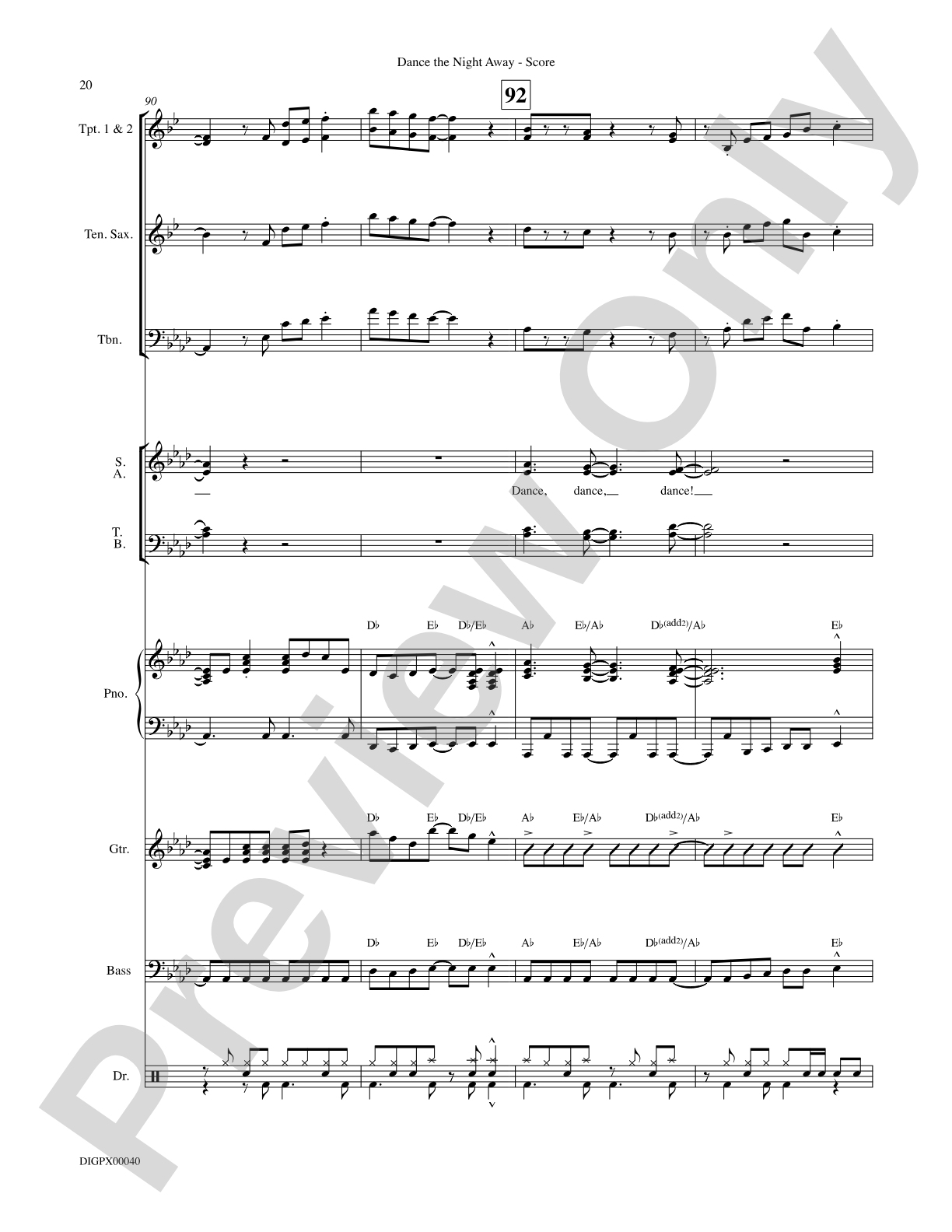
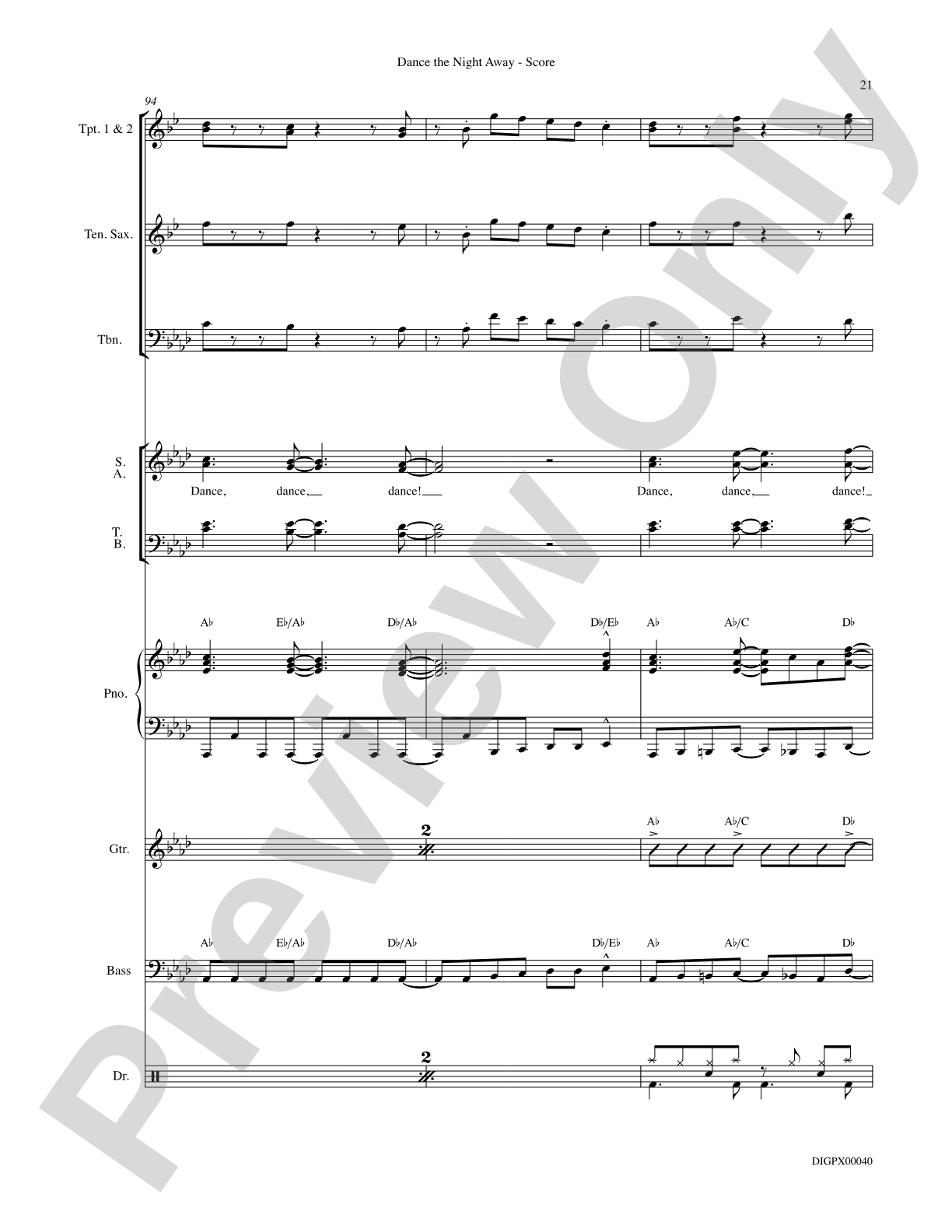
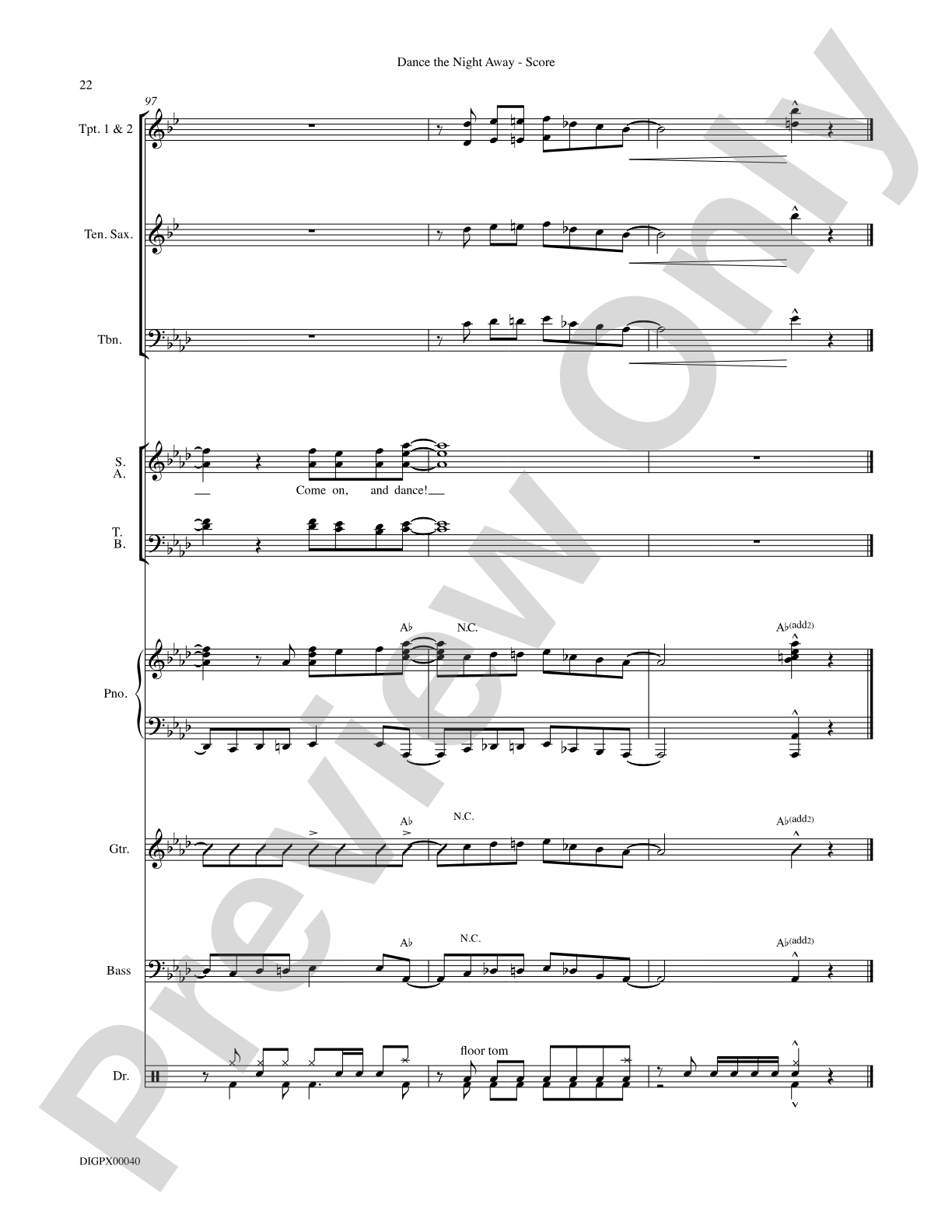

Dance the Night Away: Choral SoundPax
Words and music by Edward Van Halen, Alex Van Halen, Michael Anthony, and David Lee Roth / arr. Kirby Shaw
Item: 00-PK-0007483

$35.00
One moment…
Related Items
Dance the Night Away: SoundTrax Digital Audio Download |
$27.99
|
View | |
Dance the Night Away: SATB Choral Octavo |
$2.00
|
View | |
Dance the Night Away: SAB Choral Octavo |
$2.00
|
View | |
Dance the Night Away: TBB Choral Octavo |
$2.00
|
View | |
Dance the Night Away: SATB Choral Octavo |
$2.00
|
View | |
Dance the Night Away: SAB Choral Octavo |
$2.00
|
View | |
Dance the Night Away: TBB Choral Octavo |
$2.00
|
View | |
Dance the Night Away: Choral Octavo SoundTrax CD |
$27.99
|
View | |
Dance the Night Away: Choral SoundPax |
$35.00
|
View |
Description
Peaking at 15, this classic was Van Halen's first pop hit in the United States. Fun harmonies and a great hook make this one a real crowd-pleaser!


Don't just read it, hear it, play along with it, and watch your students grow with it. In MakeMusic Cloud, Dance the Night Away: Choral SoundPax comes alive with professional accompaniment, adjustable tempo, and built-in practice tools that turn solo practice into real progress.
Open in the Player
Jump straight in and assign it today.
Start Your Free Trial
Open this title and explore the full library in minutes.
Sample Audio
1
Audio File
--:--
0:00
0:00
Sample Video
No sample videos found.
Additional Details
Series:
Alfred Pop Choral Series
Publisher:
Alfred Music
Page Count:
28
SKU:
00-PK-0007483
Instrumentation:
SoundPax
More about this title
About the Composer: Edward Van Halen
Edward Van Halen (1955-2020) was a guitarist and composer whose technical innovations and melodic sensibility transformed rock music in the late 1970s and beyond. His work with Van Halen bridged the gap between hard rock virtuosity and radio-friendly pop songwriting, making complex musicianship accessible to mainstream audiences.
Van Halen's compositions, including "Dance the Night Away," demonstrate his gift for crafting memorable hooks alongside inventive harmonic movement. His influence on both rock composition and guitar technique remains central to music education, where his work appears in contemporary choral arrangements that engage students with repertoire they recognize and respect.
Why we love this
This arrangement captures what made the original irresistible: a hook that sticks with your singers and audiences alike, paired with harmonies that feel fresh rather than predictable. Kirby Shaw's treatment respects the pop sensibility while giving your choir genuine musical substance, making it ideal for concerts that need energy without sacrificing credibility.
What to expect
Upbeat and infectious, with the carefree energy of a summer hit. The harmonies add sophistication beneath the surface while the rhythmic momentum keeps everything propulsive and fun, creating that rare balance between accessibility and genuine musicianship.
Who it's for
Choirs seeking contemporary repertoire that audiences know and love will find a genuine crowd-pleaser here. This works equally well in mixed ensembles, show choirs, or pop/jazz vocal groups looking for a piece with immediate appeal and solid musical substance.
How to get the most out of it
- Lock the groove early in rehearsal. The rhythmic precision of the original is part of its appeal, so establish a steady tempo that lets the harmonies sit comfortably rather than feeling rushed.
- Balance the melody across your voice parts. With fun harmonies comes the risk of burying the hook; use blend exercises to ensure the primary melodic line cuts through without overwhelming the inner voices.
- Shape the dynamics to build momentum. The recorded accompaniment will provide a strong foundation, so let your singers lean into the climactic sections rather than staying static throughout.
- Articulate consonants crisply on the rhythmic figures. Pop writing lives or dies by rhythmic clarity, and clean articulation on fast syllables will make the harmonies pop without sounding overworked.
How to use it
Position this as a concert centerpiece or opener when you need to connect with your audience right away. It pairs well on a program with other pop standards or contemporary choral selections, especially if you're building a concert around music that bridges classical training with contemporary idiom.
Skills your students will build
- Rhythmic precision in pop contexts with syncopated figures
- Harmonic listening and blend in secondary voice parts
- Stylistic interpretation of contemporary popular music
- Balancing melody projection with ensemble cohesion
- Articulation and diction clarity in fast-moving text