
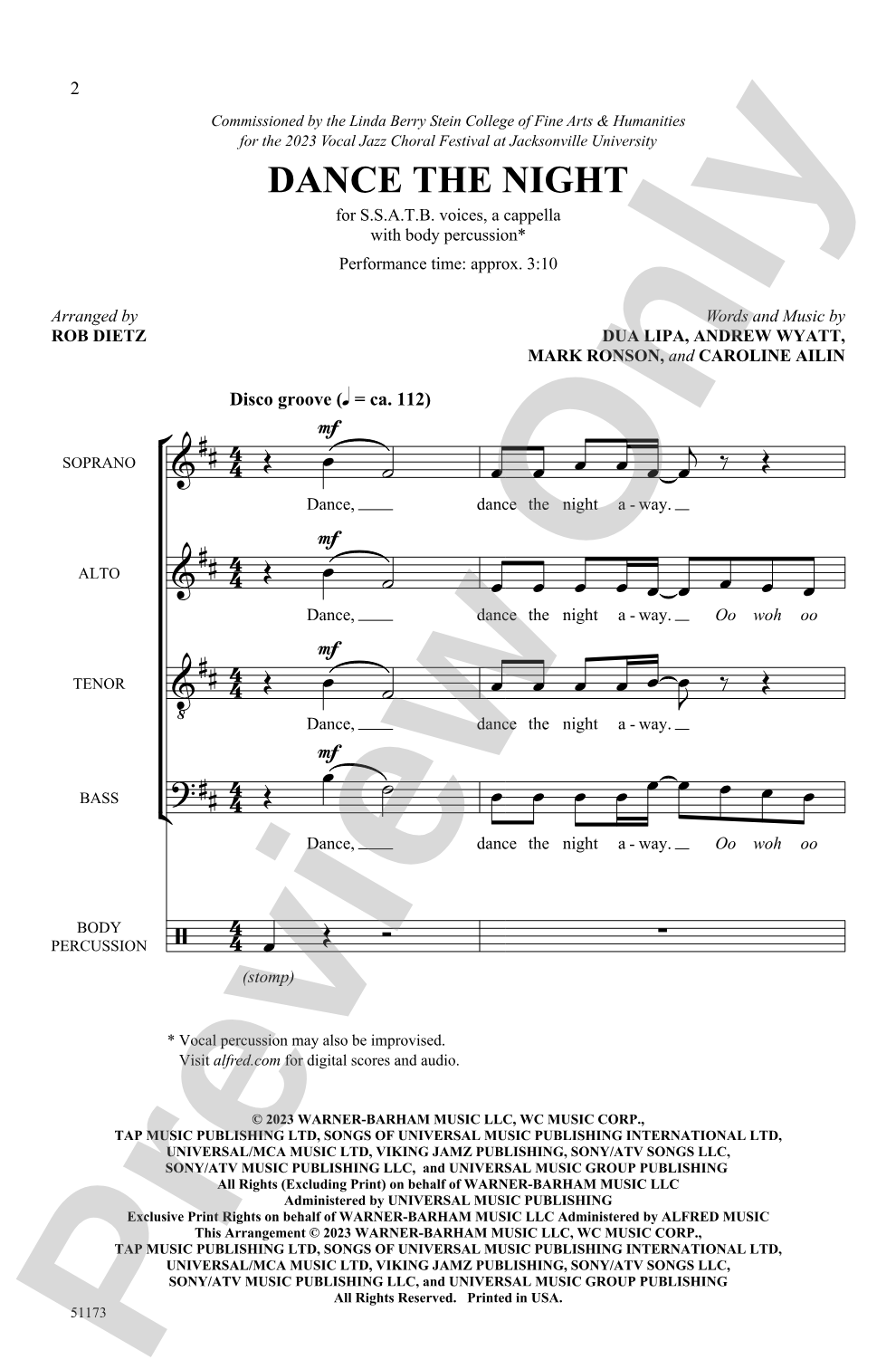

Dance the Night: SSATB, a cappella Choral Octavo
Recorded by Dua Lipa for Barbie
Words and music by Dua Lipa, Andrew Wyatt, Mark Ronson, and Caroline Ailin / arr. Rob Dietz
Item: 00-PO-0007157
$2.55
Minimum order quantity: 20 copies
One moment…
Related Items
Dance the Night: SSATB, a cappella Choral Octavo |
$2.55
|
View |
Description
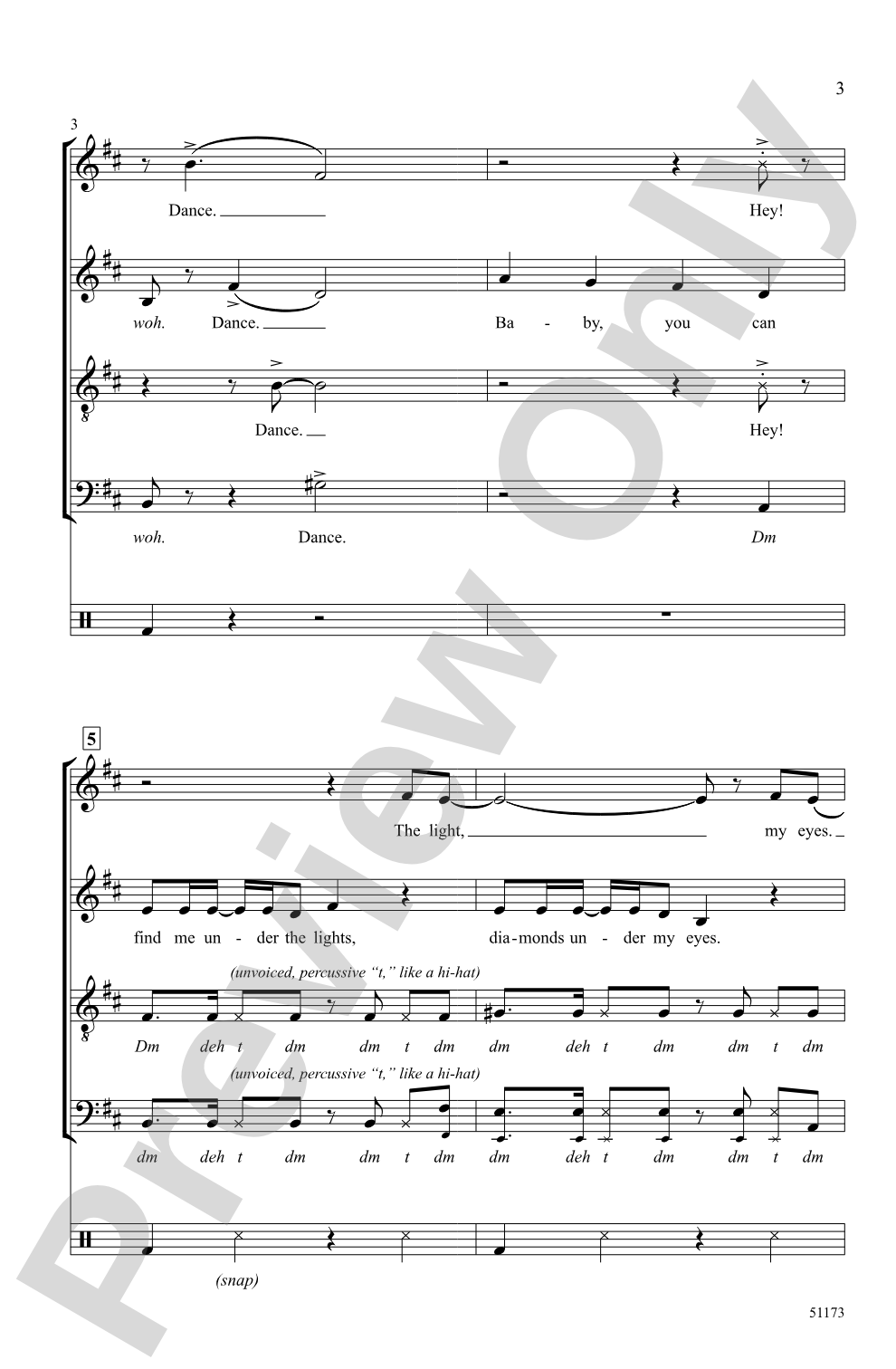
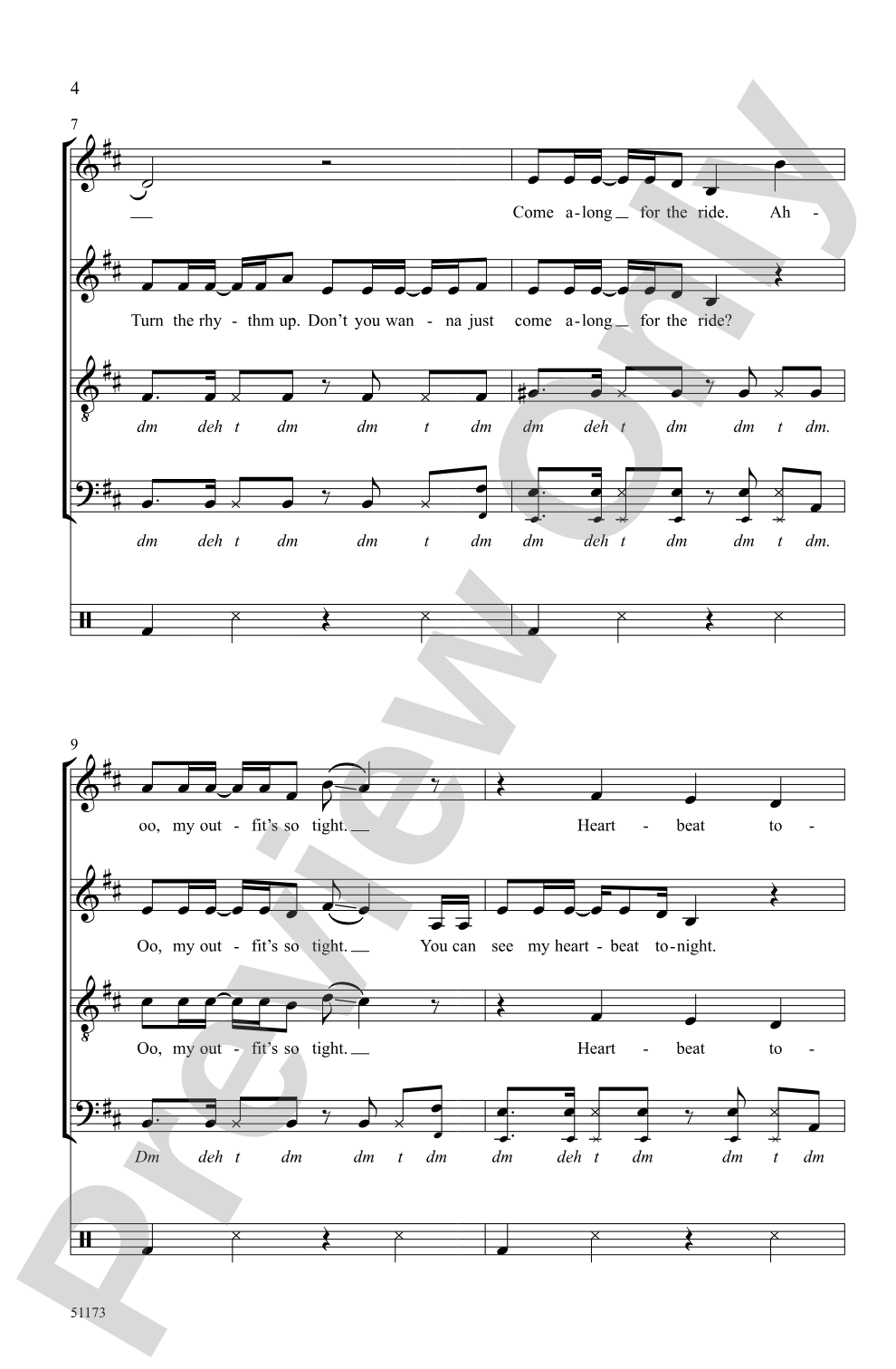
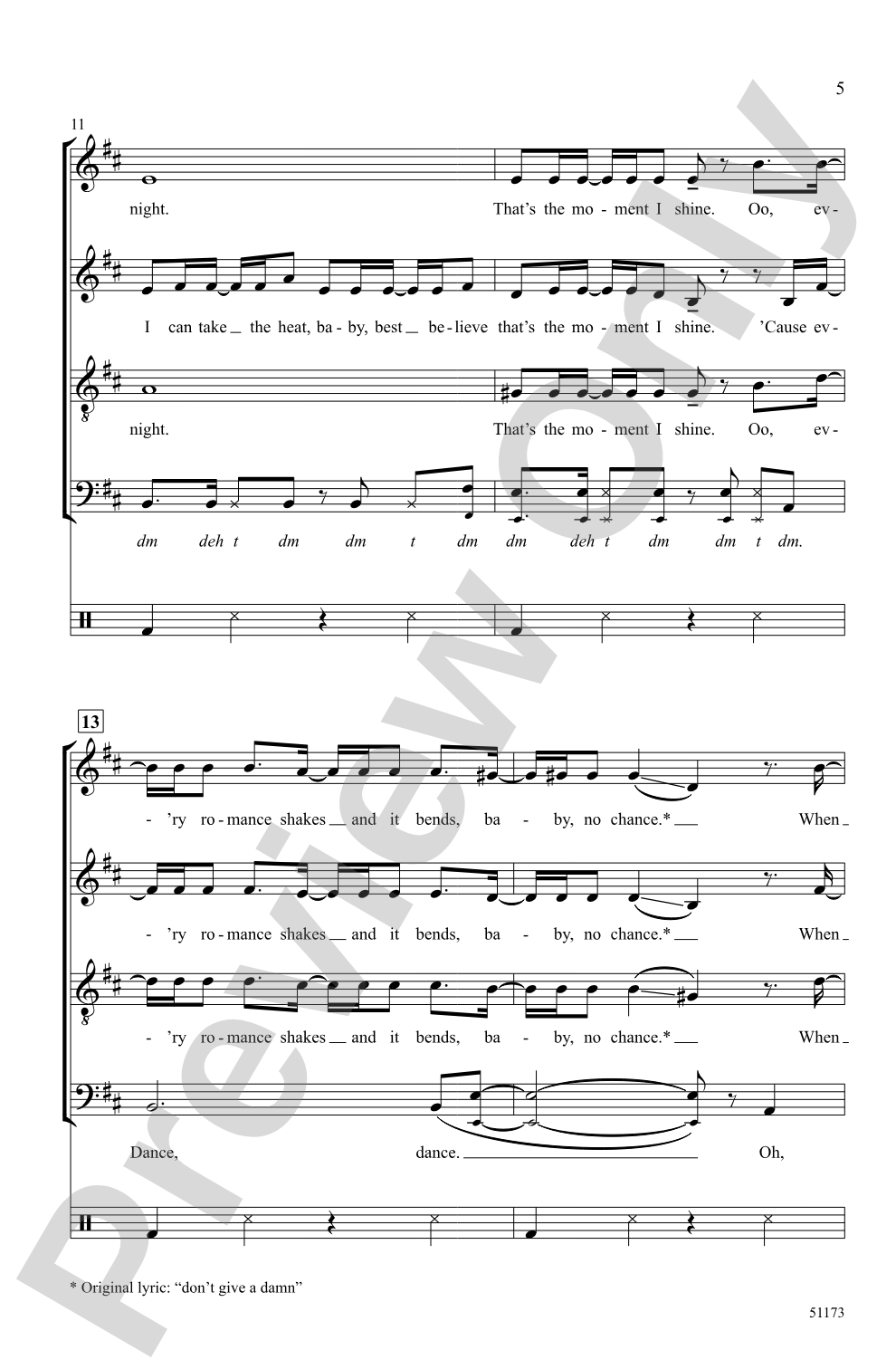
Here's the smash hit from Barbie in a contemporary a cappella setting by popular aca-pop arranger Rob Dietz. This driving adaptation gives every section of the choir a chance to shine, with no soloists required. For even more fun, simple body percussion kicks it up a notch, and optional vocal percussion may be improvised. "Dance the night away!"


Dance the Night: SSATB, a cappella Choral Octavo isn't in MakeMusic Cloud just yet...but it could be. Let us know you'd like to see it, and you'll help shape what comes next. In the meantime, start a free trial and dive into thousands of interactive titles your students can play along with today.
Request This Title
Tell us you want it.
Start Your Free Trial
Explore everything that's ready to play right now.
Sample Audio
1
Audio File
--:--
0:00
0:00
Sample Video
Additional Details
Series:
Alfred Pop Choral Series
Publisher:
Alfred Music
Page Count:
20
SKU:
00-PO-0007157
More about this title
About the Composer: Dua Lipa
Dua Lipa emerged as one of the defining pop voices of the 2020s, known for her distinctive contralto and infectious rhythmic sensibility. Her songwriting collaboration with producers Andrew Wyatt and Mark Ronson on "Dance the Night" demonstrates her ability to craft hooks that stick with listeners across radio, streaming, and live performance contexts.
In music education settings, Lipa's work represents contemporary pop songwriting at its most accessible. Her melodies sit naturally for student singers, and her production approach translates effectively to a cappella arrangements, making her material ideal for choirs seeking current, engaging repertoire that resonates with their audiences.
Why we love this
Rob Dietz's arrangement distributes the energy evenly across all four voices (with the double soprano line adding fullness), so every singer gets to feel the groove rather than following passively behind soloists. The optional body percussion and suggested vocal percussion elements turn a fun song into an engaging rehearsal experience that keeps singers invested without requiring extensive preparation.
What to expect
Energetic, rhythmically tight, and unapologetically contemporary. The a cappella setting strips away production layers but replaces them with vocal texture and groove, creating an arrangement that feels like a party rather than a formal performance.
Who it's for
This octavo works for mixed choirs at the intermediate level and above who want to perform current popular music with accessibility and fun intact. It suits ensembles looking to add a movie soundtrack moment to their concert programs or seeking material that connects with younger audiences.
How to get the most out of it
- Lock the rhythmic pocket early. The groove drives everything in this chart; spend rehearsal time establishing a steady, unified sense of pulse before focusing on individual voicing balance.
- Treat the soprano divisi as active participants, not filler. Both lines deserve clear articulation and dynamic shape to maintain the forward momentum Dietz built into the arrangement.
- Keep vowel shapes consistent across sustained notes, especially in longer passages. This maintains blend while letting the fun, contemporary character of the melody shine through.
- If you add body percussion, introduce it only after the singers are secure with their parts. Start with a single rhythmic layer and build gradually so it enhances rather than distracts.
How to use it
Use this as a concert closer or second-act opener where you want to shift the mood from classical or traditional repertoire into something more playful. Its recognizability and pop credentials make it a strong programming choice when you're reaching for crossover appeal without sacrificing musical integrity.
Skills your students will build
- Maintaining rhythmic precision in syncopated passages
- Blending within SSATB voicing while preserving textural clarity
- Performing contemporary pop music with stylistic authenticity
- Coordination between singers and optional body percussion
- Balancing part independence with ensemble cohesion in a cappella settings