
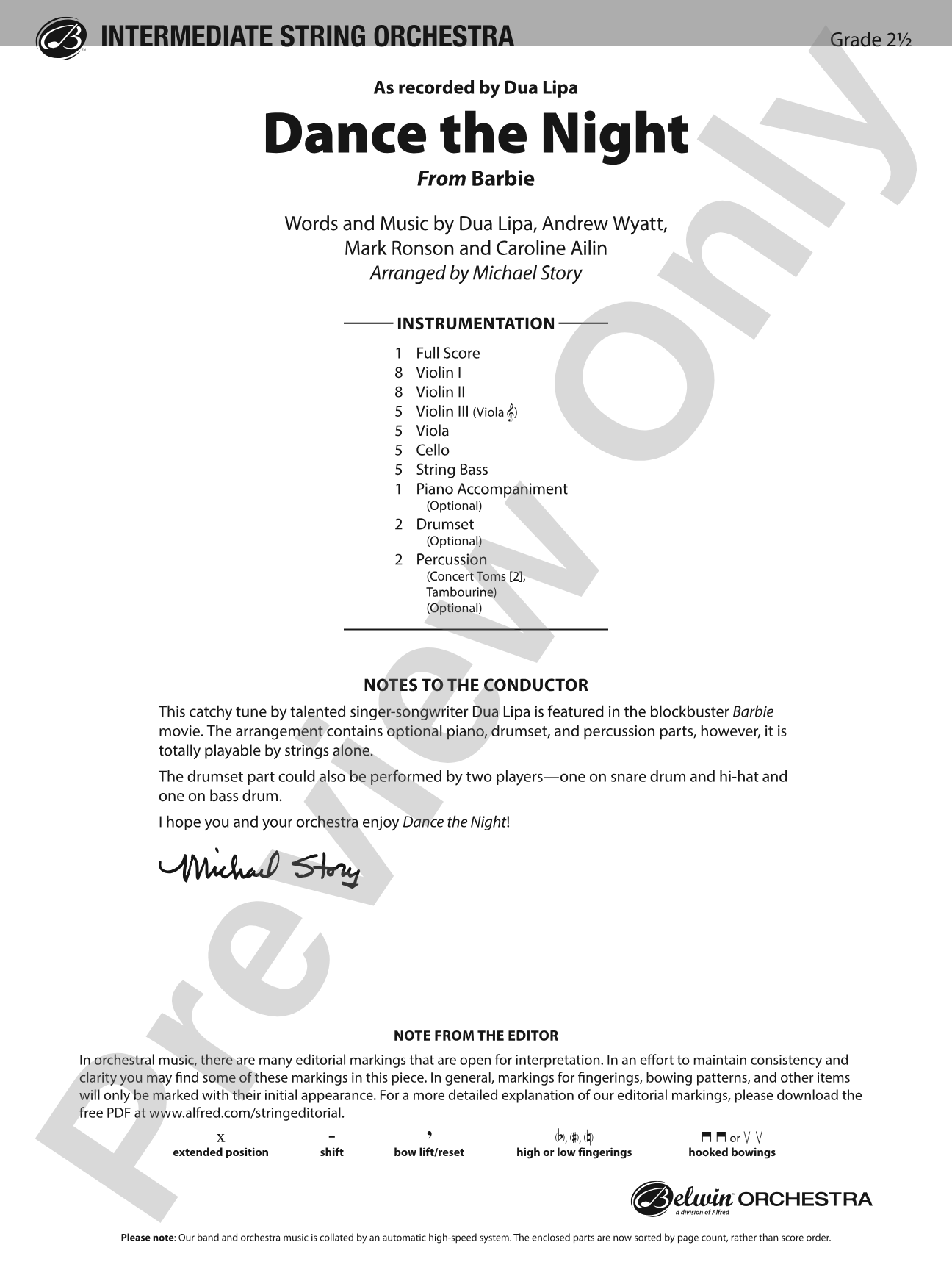

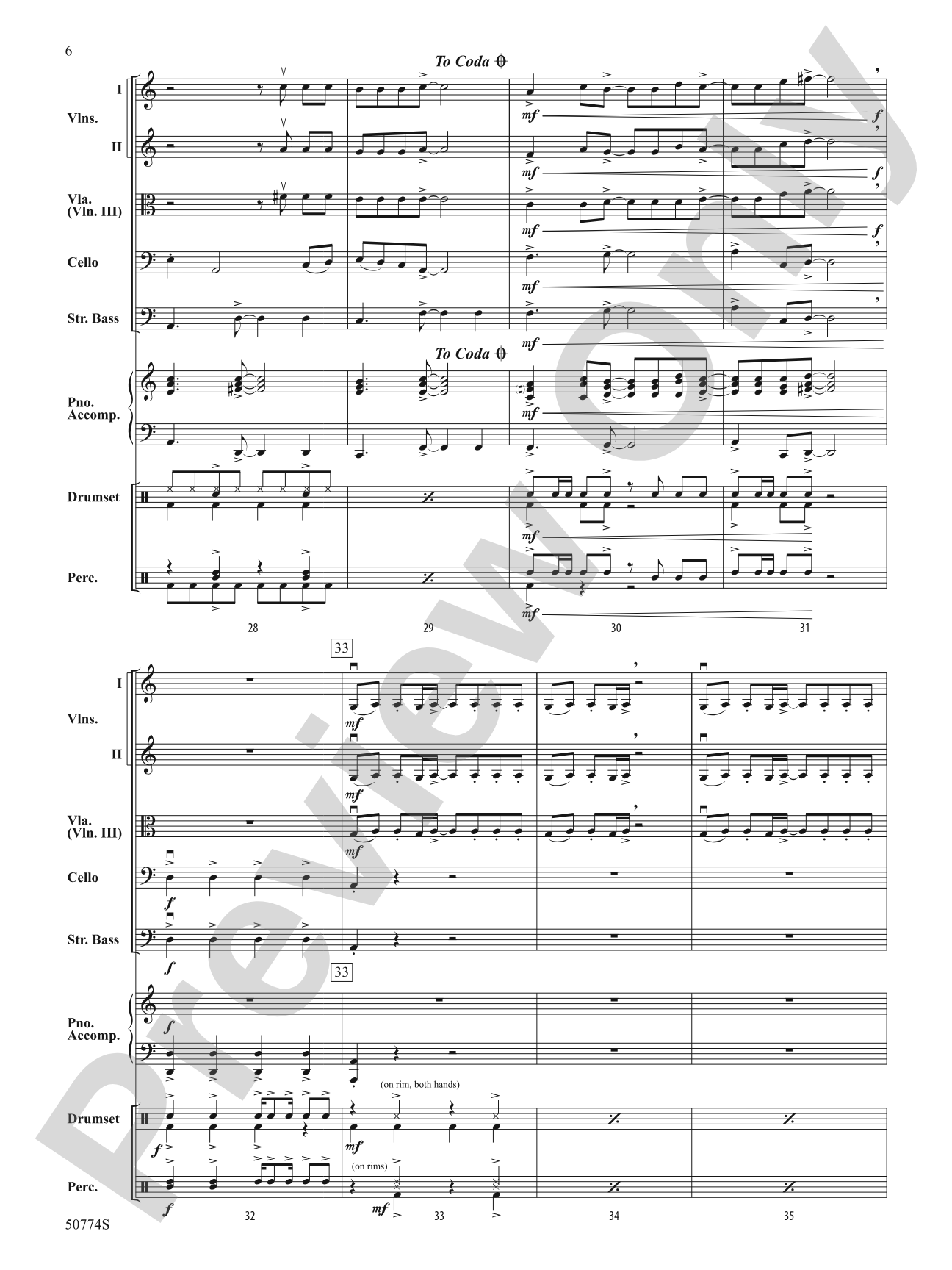
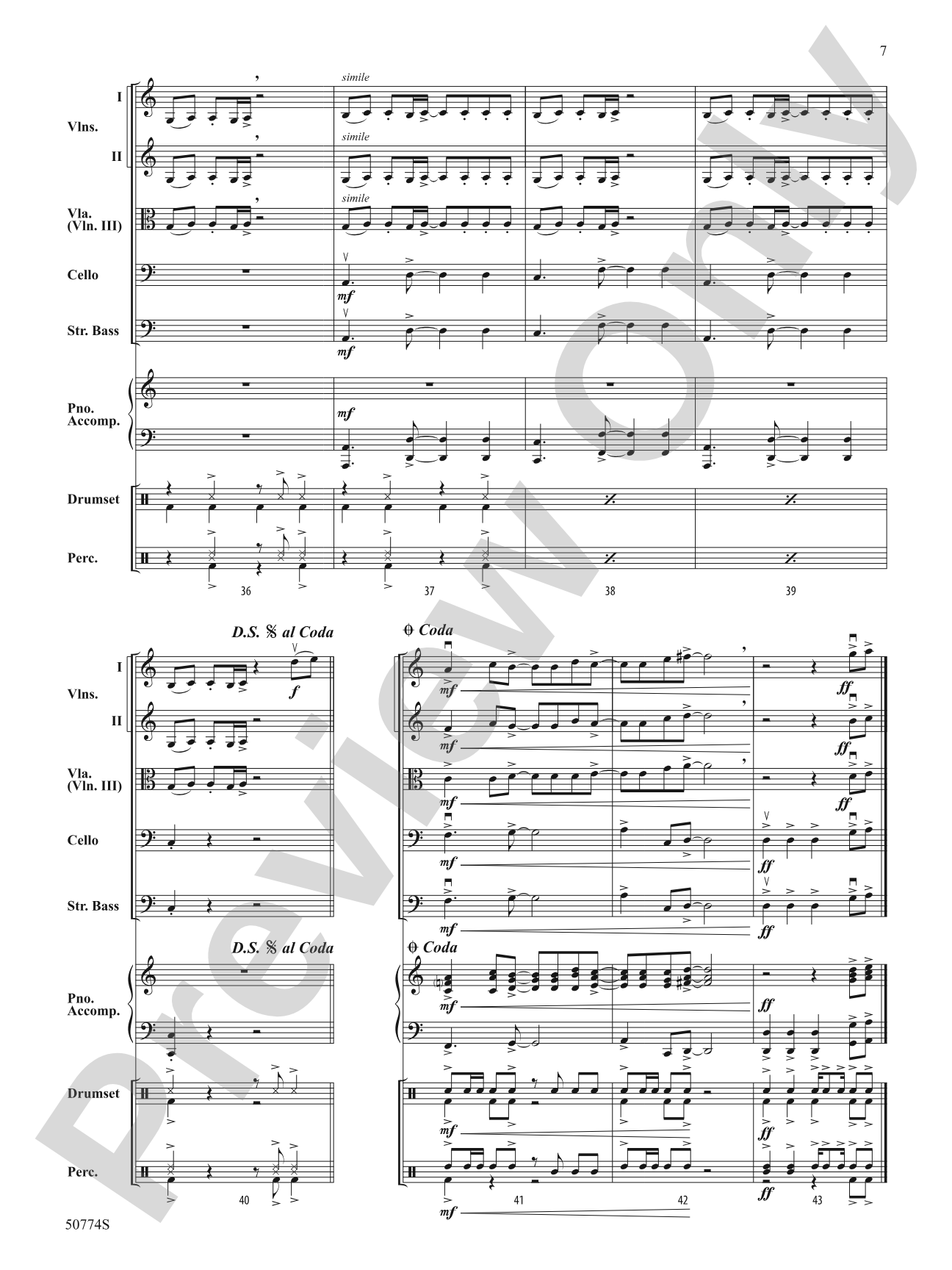

Dance the Night: String Orchestra Conductor Score & Parts
From Barbie
Words and music by Dua Lipa, Andrew Wyatt, Mark Ronson, and Caroline Ailin / arr. Michael Story
Grade: 2.5
Item: 00-PK-0008870

$60.00
Pickup currently not available
Buy Extra Parts (Digital PDF Download)
| Product | Price | Quantity |
|---|---|---|
| Dance the Night: Score | $10.00 | |
| Dance the Night: 1st Violin | $3.00 | |
| Dance the Night: 2nd Violin | $3.00 | |
| Dance the Night: 3rd Violin (Viola [TC]) | $3.00 | |
| Dance the Night: Viola | $3.00 | |
| Dance the Night: Cello | $3.00 | |
| Dance the Night: String Bass | $3.00 | |
| Dance the Night: Piano Accompaniment | $3.00 | |
| Dance the Night: 1st Percussion | $3.00 | |
| Dance the Night: 2nd Percussion | $3.00 |
Parts Added to Cart!
Related Items
Dance the Night: Concert Band Conductor Score & Parts |
$70.00
|
View | |
Dance the Night: String Orchestra Conductor Score & Parts |
$60.00
|
View | |
Dance the Night: String Orchestra Conductor Score |
$10.00
|
View | |
Dance the Night: Concert Band Conductor Score & Parts |
$70.00
|
View | |
Dance the Night: Concert Band Conductor Score |
$10.00
|
View |
Description
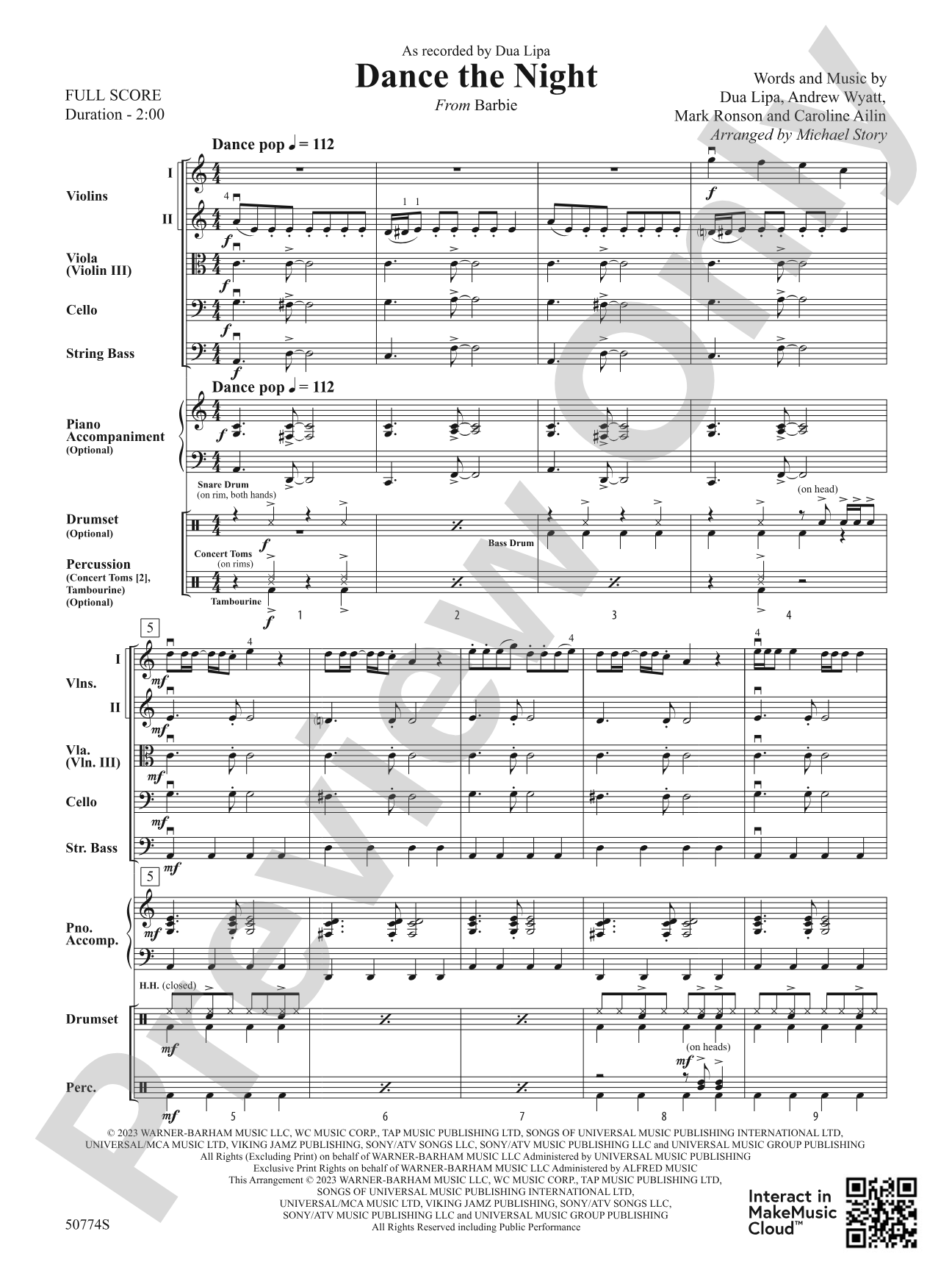
This catchy tune by talented singer-songwriter Dua Lipa is featured in the blockbuster Barbie movie. This earworm is going to be a hit with your students. Dance the Night is perfectly arranged by Michael Story for string orchestra and ready to energize your next concert. (2:00)


Don't just read it, hear it, play along with it, and watch your students grow with it. In MakeMusic Cloud, Dance the Night: String Orchestra Conductor Score & Parts comes alive with professional accompaniment, adjustable tempo, and built-in practice tools that turn solo practice into real progress.
Open in the Player
Jump straight in and assign it today.
Start Your Free Trial
Open this title and explore the full library in minutes.
Sample Audio
1
Audio File
--:--
0:00
0:00
Sample Video
Additional Details
Series:
Pop Intermediate String Orchestra
Publisher:
Alfred Music
SKU:
00-PK-0008870
More about this title
About the Composer: Dua Lipa
Dua Lipa emerged as one of the defining pop voices of the 2020s, earning Grammy Awards and international recognition for her distinctive alto and her ability to craft songs that combine personal vulnerability with infectious, radio-ready hooks. Her work spans multiple genres—pop, disco, dance, and hip-hop—and her collaborations with producers like Mark Ronson have resulted in some of the decade's most streamed tracks.
Why we love this
Michael Story's arrangement captures the effortless groove of the original without overwhelming players at this level. The piece sits perfectly for developing string players; rhythm sections stay straightforward while the melodic writing feels singable and memorable, so students stay engaged even through multiple rehearsals.
What to expect
A propulsive, feel-good groove wrapped in string textures. The arrangement channels the disco-influenced pulse of the original while keeping the orchestration light and playful. It's the kind of piece that makes students sit up straighter when they hear the opening notes.
Who it's for
String orchestras at the intermediate level who want accessible, contemporary repertoire that students recognize and actually want to play. This works equally well for middle school and early high school ensembles, and it's an excellent choice for programs looking to program pop and film music alongside standard classical literature.
How to get the most out of it
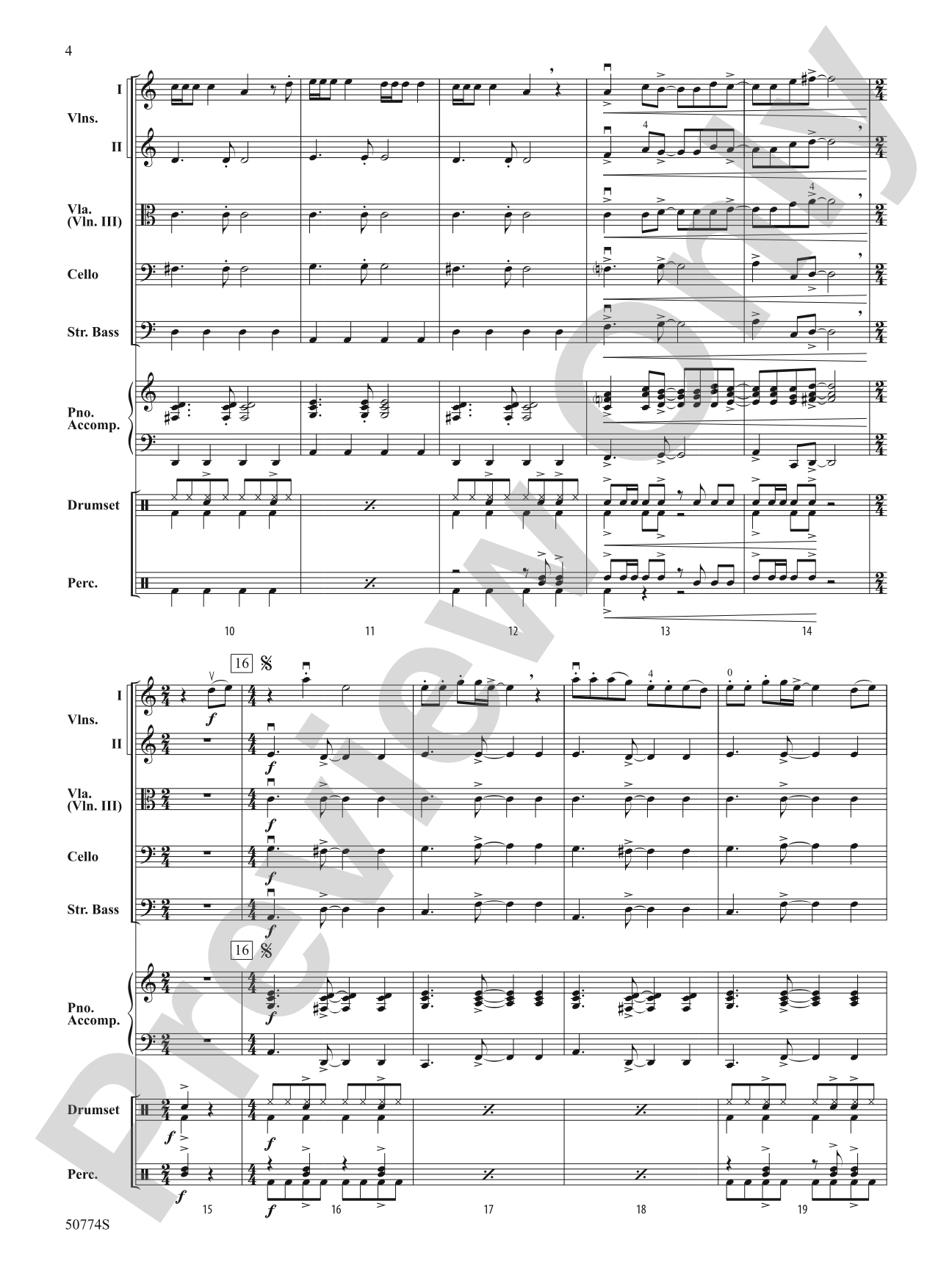
- Establish the groove in the rhythm section (cellos and basses) before rehearsing the melody line. These students need to feel confident that the pulse is locked before they layer on top.
- Keep the tempo conversational, around the 2-minute mark. Too slow and the energy sags; too fast and articulations become sloppy.
- Balance the violins carefully. The melody is meant to sparkle, not dominate. Second violins and violas should sit slightly below the first violin line so the arrangement stays cohesive.
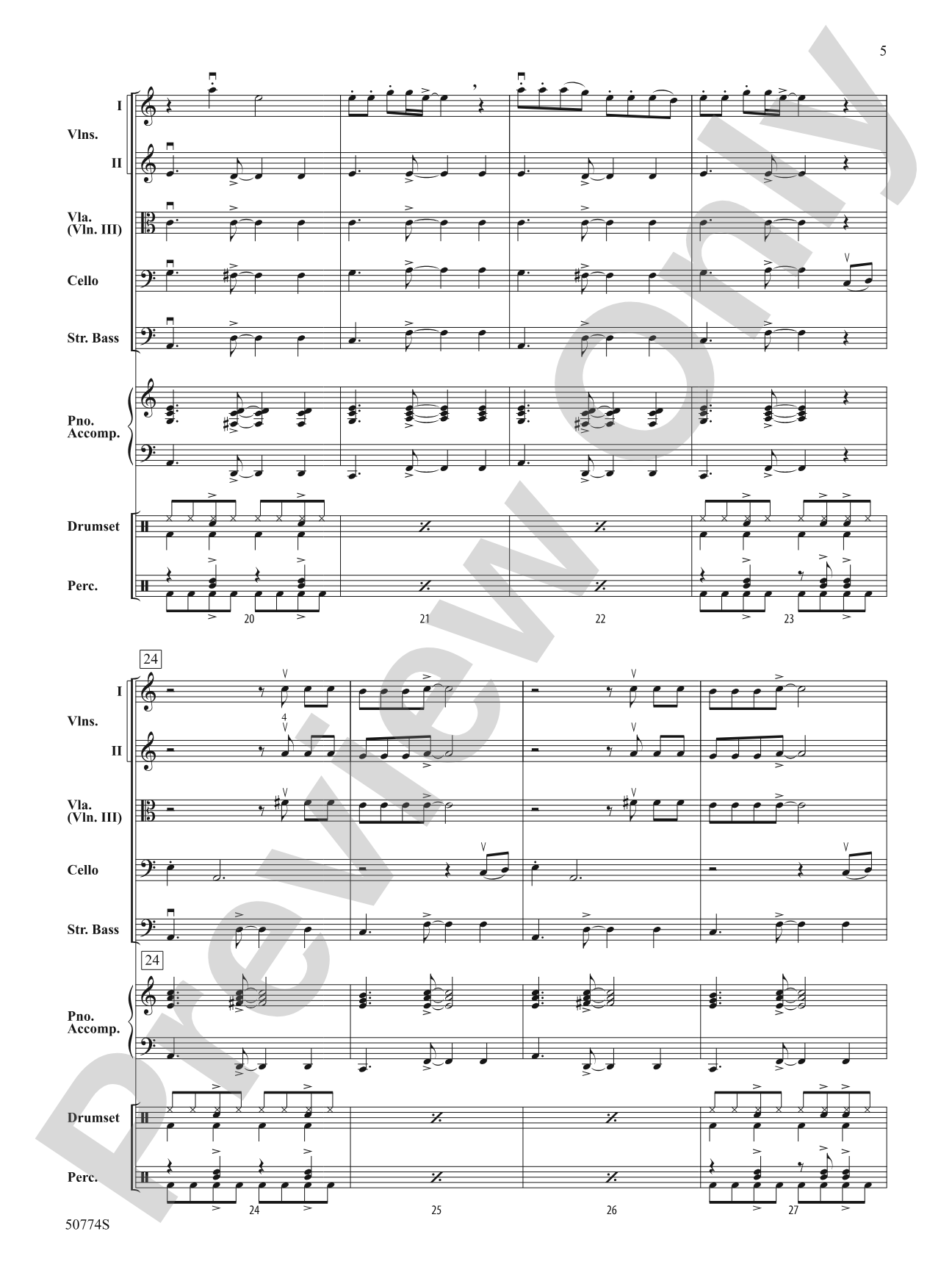
- Pay attention to the rhythmic subdivisions in the accompaniment figures. Clean attacks on eighth-note patterns will make the piece sound polished.
How to use it
Use this as an opener or closer on a concert featuring film music, contemporary composers, or a mixed repertoire set. It pairs well with lighter classical pieces or as a contrast to heavier romantic-era works. The 2-minute duration makes it ideal for filling concert slots or serving as a crowd-pleasing finale.
Skills your students will build
- Maintaining steady pulse in contemporary rhythmic grooves
- Balancing melodic and accompaniment voices in a pop-influenced arrangement
- Executing clean articulations on repeated rhythmic figures
- Reading and playing active eighth-note bass lines